


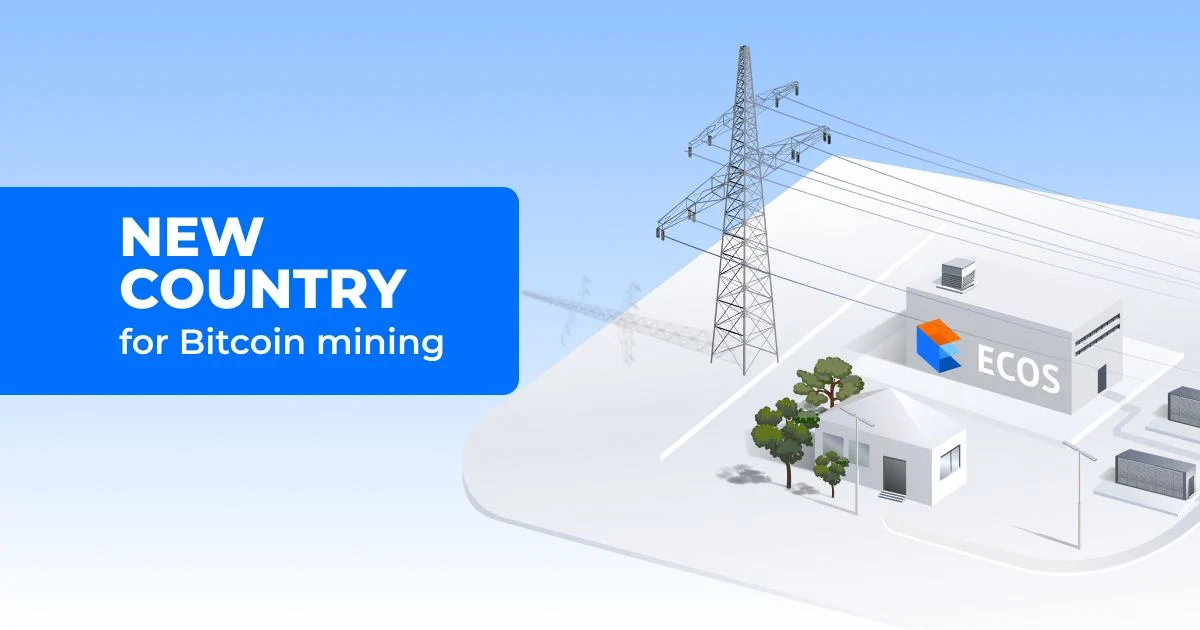
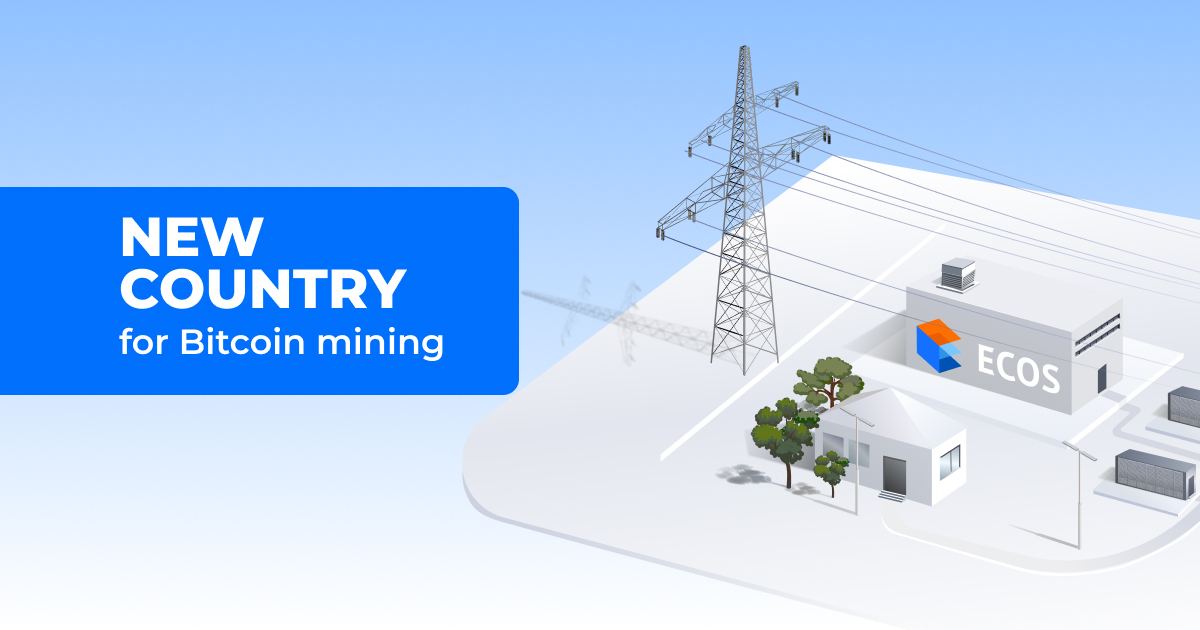
The global cryptocurrency mining landscape has undergone a significant transformation with the official inauguration of a new 60-megawatt (MW) data center in Hrazdan, Armenia, spearheaded by the infrastructure provider ECOS. This facility represents a cornerstone of the Armenian government’s strategic initiative to establish the nation as a premier hub for high-technology and blockchain development. Situated within a specialized Free Economic Zone (FEZ), the data center is designed to offer a comprehensive suite of mining services, leveraging state-backed incentives, a favorable climate, and robust energy infrastructure to cater to both institutional and retail investors.
The launch of this facility is not merely a corporate expansion but the culmination of a multi-year partnership between ECOS and the Armenian state. In 2018, the Armenian government officially designated ECOS as the organizer and manager of the Free Economic Zone in Hrazdan. This mandate was part of a broader legislative push to legalize and regulate the cryptocurrency sector, providing a stable legal framework that contrasts with the regulatory uncertainty seen in other global jurisdictions. Since its inception, the FEZ has been tailored to attract international capital by offering unparalleled fiscal benefits, which have now been fully integrated into the operations of the new 60 MW site.
Technical Infrastructure and Capacity
The new data center occupies a 2.2-hectare plot, meticulously engineered to house more than 20,000 high-performance mining devices. While the current operational capacity is set at 60 MW, the site has been designed with scalability in mind, possessing the necessary infrastructure to expand to a total of 200 MW as demand for hosting services grows. This scalability is supported by the facility’s direct connection to high-voltage power networks, ensuring a stable and near-continuous supply of electricity.
One of the most critical factors in large-scale cryptocurrency mining is the stability of the power grid. ECOS has secured access to clean and affordable energy, achieving an uptime rate that approaches 100%. This is particularly relevant in the current global energy climate, where many mining hubs in Europe and North America have faced rising costs and grid instability. By positioning the data center near the Hrazdan Thermal Power Plant, ECOS ensures that its hardware remains operational during peak demand periods, maximizing the hash rate for its global user base of over 250,000 individuals.
Furthermore, the physical security of the site is managed through a comprehensive 24/7 protocol. The territory is protected by armed guards and a permanent staff of specialized technicians and servicemen. An on-site service center and extensive warehouses for spare parts allow for immediate repairs and maintenance, minimizing the "down-time" that typically plagues decentralized or smaller-scale mining operations.
Geographic and Climatic Advantages
The choice of Hrazdan as the location for this infrastructure was dictated by geographic advantages that directly impact the operational efficiency of Bitcoin mining. Cooling is often the largest secondary expense for data centers, as mining hardware generates significant heat. However, Hrazdan’s high-altitude location provides a natural solution. The region maintains an average annual temperature of approximately 4.8°C (40.6°F).
This cool climate allows the ECOS facility to utilize ambient air cooling systems, effectively eliminating the need for expensive and energy-intensive industrial refrigeration. By leveraging the local environment, the data center significantly reduces its Total Cost of Ownership (TCO) and improves its Power Usage Effectiveness (PUE) ratio. For investors, this translates into lower maintenance fees and a higher net profit margin compared to facilities located in warmer climates like Texas or Dubai.
The Economic Framework of the Free Economic Zone
The most compelling aspect of the Hrazdan facility for international investors is the legal and fiscal framework provided by the Armenian Free Economic Zone. Under the agreement with the state, companies operating within the FEZ are granted a 25-year exemption from several major taxes. This includes:
- 0% Corporate Income Tax: Allowing companies to reinvest 100% of their profits.
- 0% Value Added Tax (VAT): Reducing the cost of services and internal transactions.
- 0% Import and Export Duties: Facilitating the cost-effective movement of high-tech mining hardware across borders.
- 0% Property and Real Estate Taxes: Lowering the overhead costs of maintaining large-scale physical infrastructure.
These incentives are designed to provide long-term stability for capital-intensive projects. In an industry where profit margins are often dictated by the "halving" cycles of Bitcoin and fluctuating market prices, the ability to operate in a tax-neutral environment for a quarter of a century provides a significant competitive edge. This fiscal policy is a deliberate move by the Armenian government to diversify its economy and foster a "Silicon Mountain" ecosystem within the Caucasus region.
End-to-End Service and the ECOS Ecosystem
ECOS has positioned itself as more than just a landlord for mining hardware; it offers a vertically integrated "end-to-end" service model. This approach is intended to lower the barrier to entry for individuals who wish to participate in Bitcoin mining but lack the technical expertise or physical space to manage hardware.
The company takes responsibility for the entire lifecycle of the mining process. This begins with the procurement of hardware directly from leading manufacturers like Bitmain. Once purchased, the equipment is transported, cleared through customs (benefiting from the 0% duty), and installed by ECOS technicians. The ongoing maintenance, software updates, and hardware optimization are handled by the on-site team 24/7.
To ensure transparency and user control, ECOS has integrated these physical operations with a digital platform. Clients can monitor their assets, track real-time hash rates, and manage their earnings through a dedicated mobile application. This "two-click" management system bridges the gap between complex industrial mining and the retail user experience, allowing for a form of passive income that is managed remotely.
Strategic Vision and Leadership
Ilya Goldberg, the Managing Partner of ECOS, emphasized that the launch of the 60 MW facility is the result of years of foundational work in the region. "We have come a long way from legalizing mining in Armenia to launching our own energy infrastructure that is ready for scaling," Goldberg stated. He noted that the company’s goal is to simplify the mining business, making it accessible to both institutional and retail clients regardless of their geographic location.
Goldberg’s comments highlight a strategic shift in the industry. As "crypto winter" cycles weed out less efficient operators, the companies that survive are those with robust physical infrastructure and favorable regulatory backing. ECOS is positioning itself as a "safe haven" for miners who are fleeing high-tax jurisdictions or regions with hostile regulatory environments.
Broader Impact and Industry Implications
The expansion of the ECOS data center has broader implications for Armenia’s role in the global digital economy. By providing a state-sanctioned environment for blockchain technology, Armenia is successfully attracting foreign direct investment (FDI) and creating high-skilled jobs in the tech sector. The project serves as a blueprint for how small nations can leverage specific industries—like cryptocurrency mining—to build modern energy and digital infrastructure.
From a global perspective, the launch reflects the ongoing decentralization of Bitcoin’s hash rate. Following the 2021 mining ban in China, the industry has seen a massive migration toward the United States, Kazakhstan, and Russia. However, as these regions face their own challenges—ranging from legislative hurdles in the U.S. to energy shortages in Kazakhstan—Armenia’s stable and supportive stance makes it an increasingly attractive alternative.
The timing of this launch is also significant. With the crypto market showing signs of recovery and the next Bitcoin halving events always on the horizon, the demand for efficient, low-cost mining hosting is at a premium. Investors are increasingly looking for "turnkey" solutions that mitigate the risks of hardware failure and regulatory interference.
Conclusion
The inauguration of the 60 MW ECOS data center in Hrazdan marks a definitive milestone in the professionalization of the cryptocurrency mining industry. By combining massive power capacity, a natural cooling climate, and a 25-year tax-free mandate, the facility offers a unique value proposition in the global market. As ECOS looks toward its potential 200 MW expansion, the Hrazdan Free Economic Zone stands as a testament to the power of public-private partnerships in fostering the next generation of financial and technological infrastructure. For the global mining community, this development offers a glimpse into a future where mining is not just a digital endeavor, but a deeply integrated component of a nation’s economic and industrial strategy.














