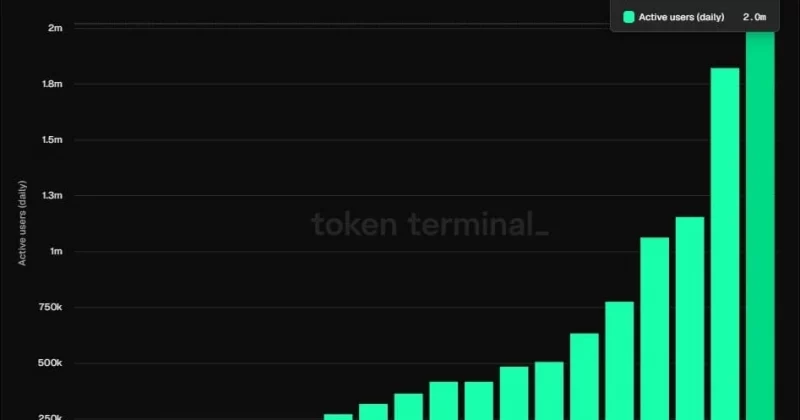
Tron has surged to the forefront of major blockchain networks, achieving a remarkable milestone of over 4 million daily active users (DAU). This significant growth trajectory has propelled Tron past its closest competitor, Solana, to claim the undisputed top position in user engagement. Crucially, this ascendance is not fueled by the speculative frenzy of Decentralized Finance (DeFi) or the ephemeral trends of Non-Fungible Tokens (NFTs). Instead, the engine driving Tron’s remarkable expansion is the ubiquitous presence and high volume of stablecoins, with Tether’s USDT standing out as the primary catalyst.
The Stablecoin Machine: A Sustained Engine of Growth
The narrative of Tron’s user growth reveals a consistent upward trend, particularly in recent quarters. In the fourth quarter of 2025, the network was consistently averaging approximately 2.8 million DAU, a figure that placed it just shy of Solana’s 2.9 million DAU during the same period. This close competition highlighted the dynamic landscape of blockchain adoption. However, by February 2026, Tron had already begun to assert its dominance, with DAU figures climbing to approximately 3.2 million. The most recent data confirms this sustained momentum, with the network now clearing the impressive threshold of 4 million DAU.
This exponential user growth is intrinsically linked to the robust activity of stablecoins on the Tron network. USDT transfer volumes on Tron frequently surpass the $20 billion mark on a daily basis. This sheer volume underscores the critical role USDT plays in facilitating transactions and serving as a medium of exchange. As of May 2025, the circulating supply of USDT on the Tron network had already exceeded $75 billion, a figure that represented more than half of Tether’s total global supply. This concentration of USDT on Tron signifies its status as a preferred platform for stablecoin operations, attracting a vast user base seeking stability and liquidity.
The sheer scale of transaction activity on Tron is further evidenced by its processing capabilities. The network consistently processes over 8 million daily transactions, a testament to its high throughput and efficient infrastructure. This high transaction volume has also contributed to the accumulation of an impressive user base, with more than 306 million total user accounts registered on the network to date. This expansive user base, coupled with the daily active user surge, paints a compelling picture of Tron’s growing influence in the blockchain ecosystem.
Why Stablecoins Outshine Speculation in Driving User Acquisition
The foundational principles upon which Tron was built appear to be the bedrock of its current success. Founded in 2017 by Justin Sun, Tron’s mainnet officially launched in 2018. From its inception, the network was engineered with a clear objective: to achieve high throughput and maintain exceptionally low transaction fees. This design philosophy has proven to be a crucial differentiator, particularly in attracting users who prioritize efficiency and cost-effectiveness for their digital asset activities.
Unlike many other blockchain networks that have experienced boom-and-bust cycles driven by speculative trading in volatile cryptocurrencies or the fleeting popularity of NFT markets, Tron’s growth story is anchored in a more fundamental utility. Stablecoins, by their very nature, offer a hedge against the volatility inherent in the broader cryptocurrency market. Their peg to fiat currencies makes them ideal for a multitude of real-world applications, including remittances, cross-border payments, and as a store of value within the digital economy.
The low fees and high transaction speeds offered by Tron make it an attractive platform for individuals and businesses engaged in frequent, small-value transactions, which are often characteristic of stablecoin usage. For instance, a migrant worker sending remittances home might prefer a platform that minimizes transaction costs and ensures rapid settlement. Similarly, businesses involved in international trade may leverage stablecoins on Tron for efficient and cost-effective cross-border commerce. This practical utility, driven by the stability and accessibility of USDT, has fostered a more organic and sustainable user growth pattern compared to networks reliant on speculative exuberance.
Implications for Investors and the Broader Blockchain Landscape
The substantial transaction volume observed on Tron, driven by stablecoin activity, suggests a structural tie to global remittance flows and cross-border commerce. This is a significant development for the blockchain industry, as it demonstrates the potential for decentralized networks to facilitate tangible economic activities beyond speculative trading. The native cryptocurrency of the Tron network, TRX, plays a vital role in this ecosystem. TRX is required to pay transaction fees, thereby creating inherent demand for the token. Furthermore, TRX holders can participate in the network’s governance, granting them a say in its future development and direction. This dual utility of TRX as both a transactional asset and a governance token can contribute to its long-term value proposition.
However, the concentration of activity on a single asset, in this case, USDT, presents a notable risk factor for Tron. When a network’s user numbers and transaction volumes are overwhelmingly dependent on the dominance of one particular stablecoin, any disruption to that asset’s stability or regulatory standing could pose an existential threat. For instance, if Tether (USDT) were to face significant regulatory scrutiny or enforcement actions, or if a competitor like USD Coin (USDC) were to gain substantial traction and market share on the Tron network, the current user base could potentially reverse its allegiance. Such a shift could lead to a dramatic decline in Tron’s DAU and overall network activity.
This concentration risk highlights the importance of diversification for blockchain networks. While Tron’s current success is undeniable, its long-term resilience may depend on its ability to foster a broader range of applications and asset types on its platform, thereby reducing its over-reliance on a single stablecoin. Investors in TRX would be wise to monitor the regulatory landscape surrounding stablecoins and the competitive dynamics within the stablecoin market.
A Closer Look at the Data and Timeline
The ascent of Tron to its current leading position has been a process of consistent development and strategic focus.
- 2017: Justin Sun founds Tron.
- 2018: Tron’s mainnet launches, emphasizing high throughput and low fees.
- Q4 2025: Tron averages approximately 2.8 million DAU, trailing Solana’s 2.9 million DAU.
- February 2026: Tron’s DAU increases to approximately 3.2 million, signaling a shift in the competitive landscape.
- May 2025: USDT circulating supply on Tron surpasses $75 billion, representing over 50% of Tether’s total supply.
- Present: Tron surpasses 4 million DAU, becoming the leading major blockchain network in terms of active users.
The daily transaction figures further underscore Tron’s robust infrastructure. Consistently processing over 8 million transactions per day, Tron demonstrates its capacity to handle a high volume of activity. This operational efficiency is a key factor in attracting and retaining users who require a reliable and performant platform. The accumulation of over 306 million total user accounts over time indicates a broad and established user base, with the recent surge in DAU representing a significant increase in active engagement from this cohort.
Expert Analysis and Future Outlook
Industry analysts have noted Tron’s strategic advantage in prioritizing utility over speculative appeal. "Tron’s success with stablecoins is a validation of its core design principles," commented blockchain analyst Sarah Chen. "By focusing on low fees and high throughput, they’ve created an environment where practical applications, like remittances and cross-border payments facilitated by stablecoins, can truly thrive. This is a more sustainable growth model than one solely reliant on volatile asset speculation."
However, the concentration risk remains a subject of discussion. "The over-reliance on USDT is a double-edged sword," noted Mark Jenkins, a senior researcher at a prominent crypto analytics firm. "While it’s the current driver of growth, it also exposes Tron to significant single-point-of-failure risks. Any negative development for Tether could have a disproportionate impact on Tron’s ecosystem. Diversification of stablecoin offerings and the promotion of other use cases will be crucial for long-term stability."
The broader implications for the blockchain industry are significant. Tron’s achievement suggests a maturing market where practical utility is increasingly valued. It also highlights the potential for stablecoins to become a primary driver of mainstream blockchain adoption, especially in regions where remittances and cross-border commerce are critical economic activities. The competition between Tron and Solana, and indeed other major networks, will likely continue to revolve around their ability to attract and retain users through a combination of technological innovation, fee structures, and the development of compelling use cases. Tron’s current trajectory, powered by the steady hum of its stablecoin machine, positions it as a key player to watch in the evolving landscape of decentralized technologies.