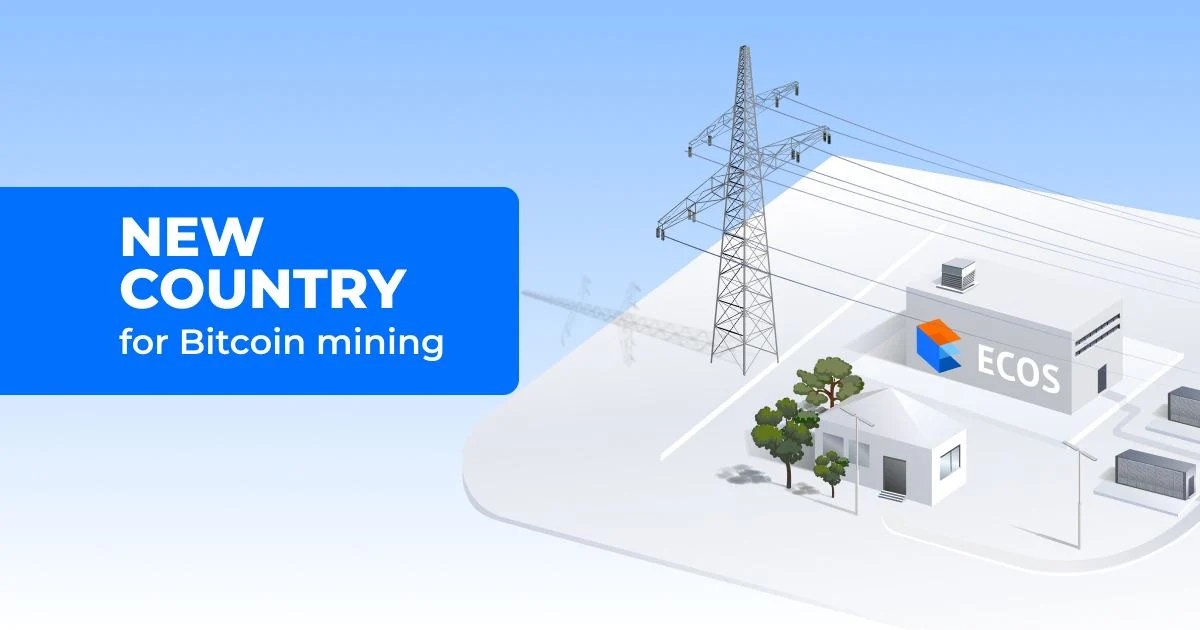
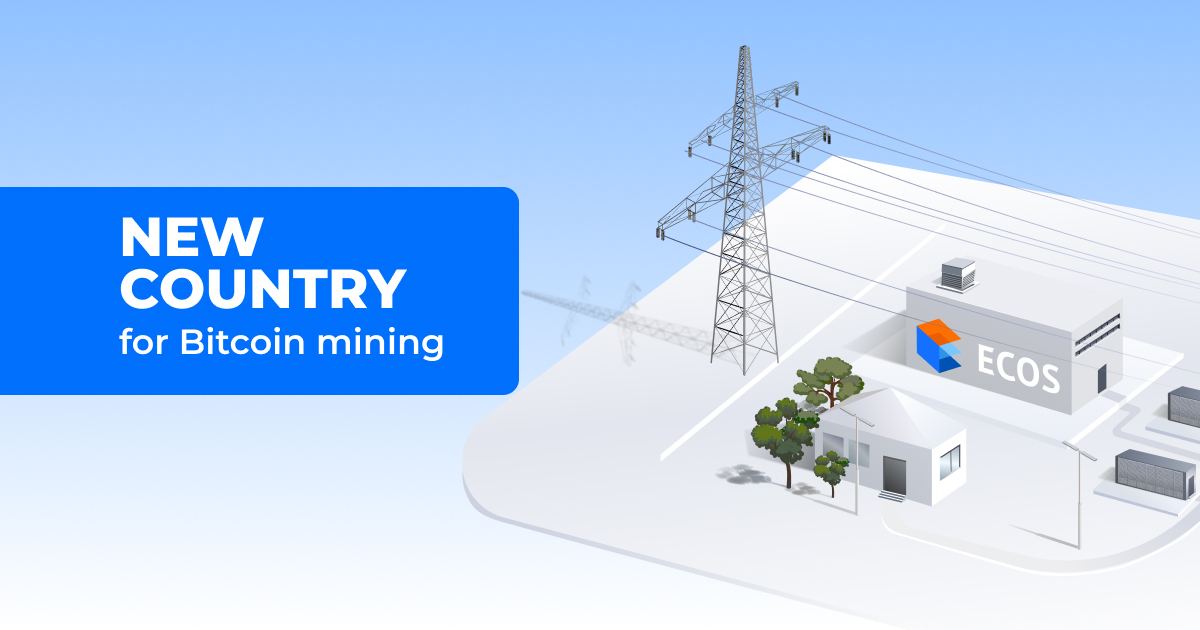
The global cryptocurrency mining landscape has witnessed a significant shift toward jurisdictions offering regulatory stability and energy efficiency, a trend underscored by the official launch of a new 60-megawatt (MW) data center by ECOS in Armenia. This facility, situated within a specialized Free Economic Zone (FEZ), represents a cornerstone of Armenia’s strategic push to become a premier hub for high-technology and blockchain development in the Caucasus region. Managed by ECOS, the data center is designed to provide institutional and retail investors with a streamlined, tax-advantaged environment for Bitcoin mining, leveraging both state-level support and the natural climatic advantages of the Hrazdan region.
The inauguration of this facility marks a pivotal moment in the partnership between the Armenian government and ECOS, which began in 2018 when the company was entrusted with the management of the country’s first Free Economic Zone dedicated to blockchain technology. With a current capacity of 60 MW and the infrastructure already in place to scale up to 200 MW, the site is positioned as one of the most significant mining operations in the region. The project encompasses a 2.2-hectare plot capable of housing over 20,000 mining devices, supported by a robust end-to-end service ecosystem that includes hardware procurement, maintenance, and real-time digital monitoring.
Historical Context and the Evolution of Armenia’s Blockchain Strategy
To understand the significance of the new ECOS data center, one must look back to the legislative environment of 2018. At a time when many nations were hesitant to engage with the nascent cryptocurrency industry, the Armenian government took a proactive stance. Recognizing the potential for digital assets to drive economic diversification and attract foreign direct investment, the state passed a decree to establish a Free Economic Zone specifically for the development of high technologies.
ECOS was selected as the designated organizer of this zone, tasked with building the physical and digital infrastructure necessary to support global mining operations. Since its inception, ECOS has grown its user base to over 250,000 individuals and entities worldwide, offering a blend of cloud mining and physical hosting services. The journey from the initial legalization of mining to the current launch of a massive 60 MW infrastructure reflects a long-term commitment to scaling the industry within a legal and transparent framework. This progression has been characterized by steady investment in the Armenian power grid and the creation of a secure environment for digital asset management.
Technical Specifications and Infrastructure Reliability
The new ECOS data center is engineered to address the two most critical challenges in the mining industry: energy stability and thermal management. The facility is connected directly to high-voltage networks, ensuring a stable supply of electricity with a projected uptime of nearly 100%. In an industry where even a few hours of downtime can lead to significant financial losses, the reliability of the Armenian energy grid—which draws from a mix of nuclear, thermal, and hydroelectric sources—provides a competitive edge.
Furthermore, the geographic location of the facility in Hrazdan offers a natural solution to the problem of hardware overheating. The region maintains an average annual temperature of 4.8°C (approximately 40.6°F), which significantly reduces the energy requirements for cooling systems. By utilizing the ambient cool air of the Armenian highlands, ECOS can maintain optimal operating temperatures for high-performance ASICs (Application-Specific Integrated Circuits) without the exorbitant electricity costs associated with industrial-grade air conditioning found in warmer climates.
The site is also equipped with a comprehensive on-site support system. This includes a dedicated service center for hardware repairs, climate-controlled warehouses for spare parts, and a 24/7 staff of technicians and armed security personnel. This "end-to-end" approach allows investors to outsource the complexities of physical mining—such as logistics, installation, and maintenance—to the ECOS team while retaining full control over their assets via a mobile application.
The Economic Advantage: Free Economic Zone Incentives
One of the primary drivers of interest in the ECOS data center is the suite of fiscal incentives provided by the Armenian Free Economic Zone status. Under the current legal framework, companies operating within the FEZ are granted extraordinary tax exemptions for a period of 25 years. These incentives are designed to maximize the return on capital for investors and include:
- 0% Income Tax: Companies do not pay taxes on profits generated from mining or blockchain activities within the zone.
- 0% Value Added Tax (VAT): All operations and internal transactions are exempt from VAT, reducing operational overhead.
- 0% Import and Export Duties: This is particularly relevant for the procurement of mining hardware, as it allows for the cost-effective shipment of the latest ASIC models from manufacturers like Bitmain.
- 0% Property and Real Estate Taxes: The physical infrastructure and land use are not subject to traditional property levies.
These conditions make Armenia one of the most tax-efficient jurisdictions in the world for cryptocurrency mining, rivaling established hubs in North America and the Middle East. By eliminating the tax burden on both the initial hardware investment and the ongoing revenue stream, the FEZ provides a buffer against the inherent volatility of the cryptocurrency markets.
Strategic Partnerships and Service Integration
A key component of the ECOS value proposition is its strategic partnership with Bitmain, the world’s leading manufacturer of Bitcoin mining hardware. ECOS facilitates the direct purchase of equipment on behalf of its clients, ensuring that users have access to the most efficient and powerful machines on the market. Once purchased, the equipment is tested, installed, and integrated into the ECOS monitoring system by on-site professionals.
Ilya Goldberg, Managing Partner at ECOS, emphasized the company’s focus on accessibility and scalability during the launch event. "We have come a long way from legalizing mining in Armenia to launching our own energy infrastructure that is ready for scaling," Goldberg stated. "We want to offer our partners simplicity in everything: from launching your mining business on our data center to daily monitoring of the result in the application without leaving your home. Our bundled product is made to serve both institutional and retail clients from any part of the world."
The integration of a mobile application allows users to track their hash rate, earnings, and equipment status in real-time. This level of transparency is intended to bridge the gap between traditional finance and the decentralized world of mining, providing a user experience that mirrors modern fintech platforms.
Broader Implications for the Global Mining Market
The launch of the 60 MW ECOS facility comes at a time of transition for the global mining sector. Following the "crypto winter" of previous years, the industry is seeing a resurgence in hash rate and a renewed focus on geographic decentralization. As countries like the United States and Kazakhstan face debates over energy consumption and regulatory oversight, Armenia’s clear-cut legal framework and government patronage offer an attractive alternative.
The stability of the Armenian energy sector is a particularly strong draw. Unlike regions that rely heavily on intermittent renewable sources or overburdened coal grids, Armenia’s energy mix provides a consistent baseload. This reliability is essential for institutional miners who require predictable operational costs to calculate their break-even points and long-term profitability.
Furthermore, the move toward "green" mining is supported by Armenia’s energy profile. The country’s reliance on the Metsamor Nuclear Power Plant and various hydroelectric projects means that a significant portion of the electricity powering the ECOS data center is carbon-neutral. As ESG (Environmental, Social, and Governance) criteria become increasingly important for institutional investors, the ability to mine Bitcoin using clean, stable energy will likely become a prerequisite for large-scale capital entry.
Conclusion and Future Outlook
The expansion of ECOS in Armenia is more than just the opening of a new data center; it is a testament to the viability of state-supported blockchain ecosystems. By combining high-voltage energy infrastructure, a cold climate, and a 25-year tax-free mandate, ECOS has created a resilient model for digital asset production.
As the facility looks toward its potential 200 MW expansion, the impact on the local economy is expected to grow. The project not only brings high-tech jobs to the Hrazdan region but also positions Armenia as a central node in the global digital economy. For the global mining community, the message is clear: the combination of legal certainty and optimized infrastructure is the new gold standard for the industry. With the "crypto winter" seemingly giving way to a new cycle of growth, the ECOS data center stands ready to accommodate the next generation of miners seeking a secure and profitable home for their operations.