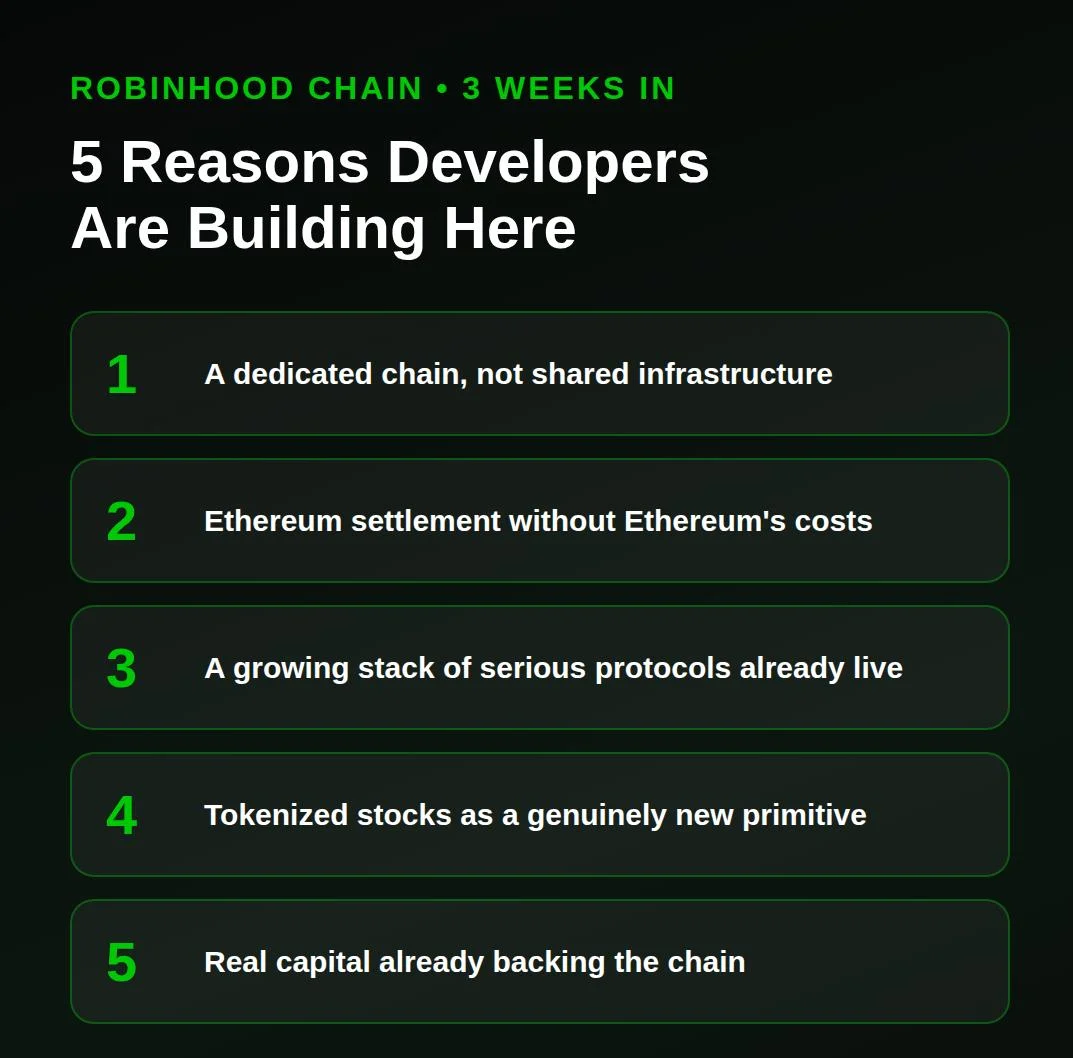
Unlike the myriad of new blockchain platforms that often generate initial excitement only to see developer interest wane within a month, Robinhood Chain has demonstrated a remarkably different trajectory. Barely three weeks after its public mainnet went live on July 1st, the platform is experiencing a surge in developer activity that surpasses many other infrastructure projects tracked this year. This rapid adoption is not accidental but stems from a confluence of strategic design choices and inherent advantages that position Robinhood Chain at the nexus of traditional finance and decentralized innovation.
Background and Context: Navigating the Evolving Digital Asset Landscape
To fully appreciate the momentum behind Robinhood Chain, it is essential to understand its foundational elements and the broader market it seeks to address. Robinhood, a prominent U.S. financial services company known for its commission-free trading platform, has been a significant player in democratizing access to financial markets for retail investors. With millions of users and hundreds of billions in assets under custody, Robinhood’s foray into blockchain technology is a natural extension of its mission, aiming to bridge the gap between conventional brokerage services and the burgeoning world of decentralized finance (DeFi).
Robinhood Chain is an Ethereum Layer 2 (L2) network, meaning it operates on top of the Ethereum blockchain, inheriting its robust security while offering enhanced scalability and reduced transaction costs. It is specifically built on Arbitrum using the Orbit stack, a customizable framework developed by Offchain Labs that empowers developers to launch their own dedicated L2 or Layer 3 (L3) chains. This architectural choice is crucial, as it allows for tailoring the blockchain’s parameters to specific use cases, rather than relying on general-purpose infrastructure.
The core product driving Robinhood Chain’s vision is a new generation of tokenized stocks and Exchange Traded Funds (ETFs). These digital representations of real-world equities are designed to trade around the clock, offering unprecedented liquidity and accessibility, and can plug directly into on-chain applications. This move aligns with a broader industry trend toward tokenizing real-world assets (RWAs), a sector projected by institutions like Boston Consulting Group to reach multi-trillion-dollar valuations by the end of the decade, signaling a significant shift in how assets are owned, traded, and utilized.
A Chronology of Robinhood’s Blockchain Ambitions
Robinhood’s journey into tokenized assets predates the launch of Robinhood Chain. The company initially ventured into this space in 2025, launching its first tokenized stock products on Arbitrum One. This strategic decision provided Robinhood with immediate access to an established Layer 2 network, benefiting from its existing liquidity pools and a vibrant developer ecosystem. However, this initial phase also highlighted the inherent limitations of shared infrastructure. While Arbitrum One offered a proven environment, building on a general-purpose chain meant competing for block space and gas efficiency with a multitude of other applications, each with differing priorities and demands. This experience underscored the need for a more specialized environment to truly optimize for Robinhood’s specific financial use cases.
Following the insights gained from its initial deployment, Robinhood embarked on developing a dedicated solution. Leveraging the Arbitrum Orbit stack, the development phase involved meticulous engineering to create a custom L2 tailored precisely to the requirements of tokenized securities and high-volume financial applications. This period likely included extensive security audits, performance testing, and strategic partnerships with leading DeFi protocols to ensure a robust and composable ecosystem from day one.
The culmination of these efforts was the public mainnet launch of Robinhood Chain on July 1st. This launch marked a pivotal moment, transitioning from theoretical design and private testing to a live, operational blockchain accessible to developers and users worldwide. The immediate and sustained developer interest observed since its launch attests to the efficacy of its strategic design and the compelling value proposition it offers to the blockchain community.
The Five Pillars of Developer Attraction: A Deeper Analysis
The rapid influx of developers to Robinhood Chain can be attributed to several distinct advantages, each reinforcing the others to create a powerful incentive for building on the platform.
1. Optimized Infrastructure: A Dedicated Chain for Financial Excellence
One of the primary draws for developers is Robinhood Chain’s architecture as a dedicated Layer 2, rather than a general-purpose network. General-purpose chains, by their nature, are optimized for a wide array of applications, making them "fine" for many tasks but "ideal" for very few. This often leads to performance bottlenecks, unpredictable gas fees, and competition for network resources, particularly during peak usage.
Robinhood Chain fundamentally alters this dynamic. By building a custom L2 using Arbitrum Orbit, Robinhood has engineered an environment specifically optimized for its core priorities: tokenized real-world assets, rapid transaction execution, predictable fee structures, and the capacity to handle significant transaction volumes characteristic of financial markets. For developers whose projects revolve around these use cases – such as lending protocols, derivatives platforms, or asset management tools – launching on infrastructure precisely tuned for their problems presents a significantly more attractive proposition than vying for space on a crowded, unspecialized chain. This specialization promises enhanced reliability and efficiency, crucial factors for demanding financial applications. Industry analysts suggest that purpose-built chains, often referred to as "app-chains," represent the next evolutionary step in blockchain infrastructure, offering sovereign environments that can prioritize specific application needs over generalized network demands.
2. Ethereum Settlement Without Ethereum’s Prohibitive Costs
The architecture of Robinhood Chain provides a compelling blend of security and cost-efficiency. While transactions are processed off-chain on the Robinhood Chain, they are periodically batched together and posted back to the Ethereum mainnet for final settlement and data availability. This optimistic rollup approach allows Robinhood Chain to offer significantly lower transaction fees and faster execution speeds compared to Ethereum’s mainnet, which often experiences high gas prices and network congestion.
Crucially, this design allows Robinhood Chain to inherit Ethereum’s robust security guarantees. Developers do not need to build a trust model from scratch; instead, they benefit from the battle-tested security of the world’s most decentralized and widely adopted smart contract platform. This aspect holds immense value for developers, perhaps even more so than for end-users. Building on an Ethereum-settled chain means tapping into an enormous, pre-existing ecosystem of tooling, security auditors, development frameworks, and a vast community of experienced engineers. This provides a substantial head start, mitigating risks associated with novel base layers that might have unproven security assumptions or a nascent support ecosystem. The average gas fees on a robust L2 like Robinhood Chain can be orders of magnitude lower than on Ethereum mainnet, making frequent, complex financial transactions economically viable for a broader user base.
3. A Robust and Growing Stack of Serious Protocols Already Live
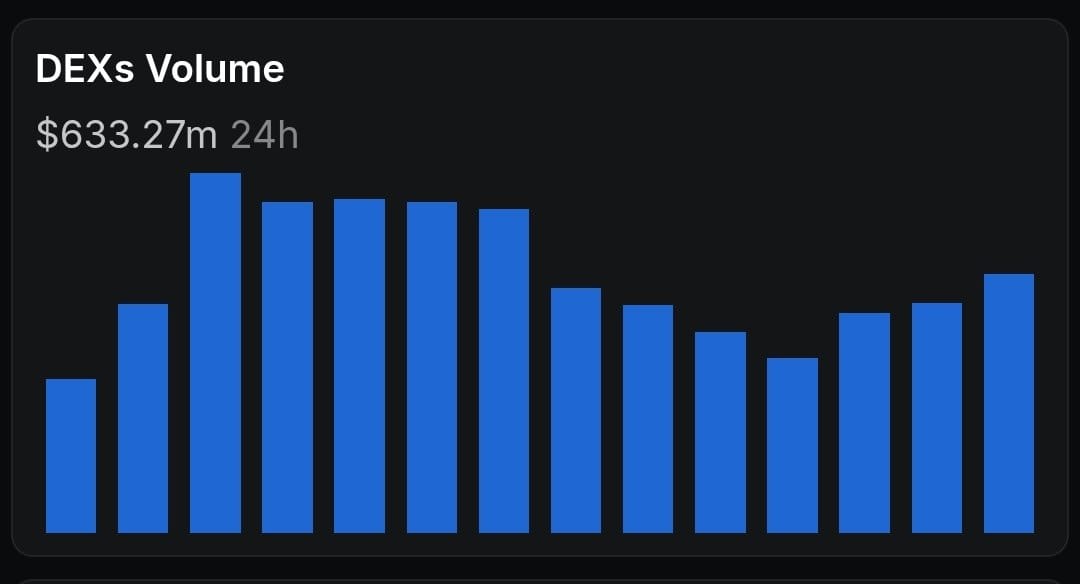
Developers do not operate in a vacuum; they seek environments where composability and liquidity already exist. Robinhood Chain has strategically launched with an impressive lineup of established DeFi protocols, creating a fertile ground for new builders from day one. This proactive approach significantly de-risks development and accelerates time-to-market for new projects.
Key protocols already live on Robinhood Chain include:
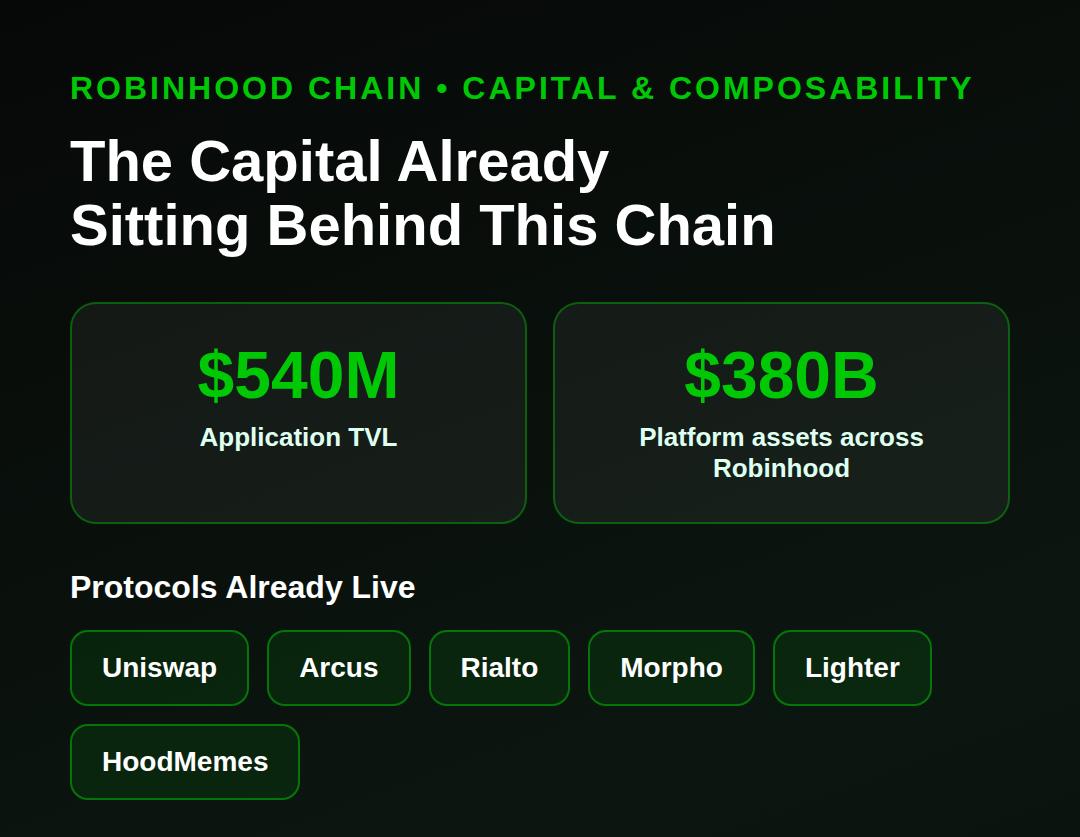
- Uniswap: As the chain’s core decentralized exchange (DEX), Uniswap provides foundational liquidity and facilitates seamless token swaps, essential for any thriving DeFi ecosystem.
- Arcus and Lighter: These platforms offer both spot DEX activity and perpetual trading, catering to more sophisticated trading strategies and derivatives markets.
- Rialto: Operating as another DEX and liquidity aggregator, Rialto enhances overall market depth and efficiency.
- Morpho: This protocol introduces crucial lending and borrowing infrastructure, allowing users to earn yield on their assets or access capital, which is vital for capital efficiency within DeFi.
- HoodMemes: While perhaps seeming incongruous with the serious financial focus, the inclusion of a dedicated memecoin launchpad demonstrates an understanding of community engagement and the cultural aspects often present in new blockchain ecosystems.
This comprehensive lineup signals that Robinhood Chain is not merely an empty canvas waiting for an ecosystem to emerge. Instead, it launched with sufficient, serious DeFi infrastructure in place, enabling new protocols to immediately plug into existing liquidity, user bases, and functionalities. This eliminates the arduous task of bootstrapping an ecosystem from scratch, a common hurdle for many nascent chains.
4. Tokenized Stocks: A Genuinely New Financial Primitive
Perhaps the most significant differentiator pulling developers to Robinhood Chain is its native support for tokenized stocks and ETFs. These real-world equities, available on-chain, represent a genuinely novel building block for decentralized finance. Unlike purely crypto-native collateral, tokenized stocks bridge the divide between traditional capital markets and blockchain-based applications.
This capability is unique because it leverages Robinhood’s extensive existing regulatory licenses, brokerage infrastructure, and custody solutions. Most other Layer 2s, even those focused on DeFi, cannot natively offer regulated real-world equities as on-chain assets due to the complex legal and operational requirements involved.
For developers building lending protocols, structured products, synthetic assets, or any application requiring exposure to real-world financial instruments, tokenized stocks unlock a new realm of possibilities. Imagine using shares of Apple or Tesla as collateral in a DeFi lending pool, or integrating them into automated strategies that combine traditional market movements with blockchain’s programmability. This innovation allows for the creation of sophisticated financial products that were previously impossible in either TradFi or pure DeFi silos. Analysts predict that the integration of RWAs will be a major catalyst for DeFi’s next growth phase, attracting institutional capital and broader user adoption by offering familiar, regulated assets in a transparent, programmable environment.
5. Leveraging a Colossal Capital Base: The Robinhood Advantage
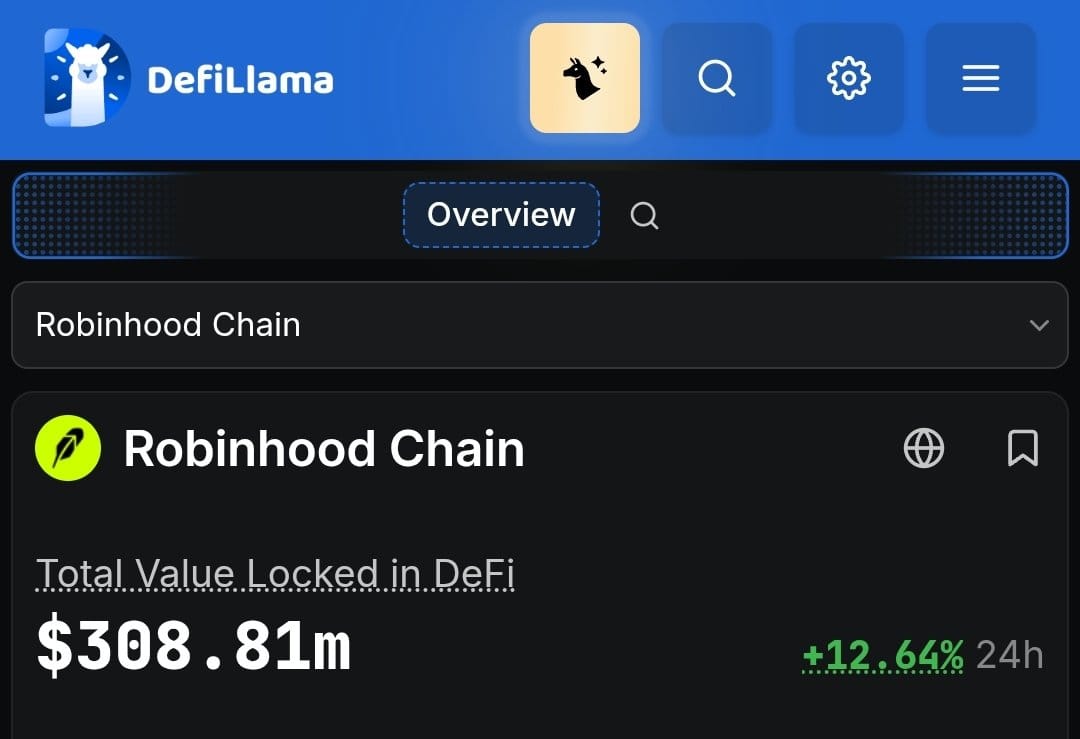
Ultimately, even the most innovative technology and robust ecosystem require capital to thrive. This is where Robinhood Chain possesses a unparalleled strategic advantage: the immense capital base of its parent company. According to data shared by Token Terminal, Robinhood Chain currently reports approximately $540 million in application Total Value Locked (TVL). While a respectable figure for a new chain, this pales in comparison to the staggering $380 billion in platform assets sitting across Robinhood’s broader business.
This $380 billion figure is the true game-changer and the "real reason" many developers are paying attention. Most new blockchain networks face the formidable challenge of convincing external capital to migrate organically to their platform, often a slow and uncertain process. Robinhood Chain, however, possesses an enormous existing user base and a colossal pool of assets that are, conceptually, "one step away" from on-chain integration.
This means that any protocol built on Robinhood Chain is not merely betting on hypothetical future liquidity; it is strategically positioning itself early for capital that has a clear, plausible, and direct path onto the chain. As Robinhood continues its strategic initiative to shift more of its platform assets on-chain over time, applications built on Robinhood Chain stand to gain access to a progressively larger and more robust on-chain capital base. This provides a level of inherent liquidity and user access that most new L2s can only dream of, significantly de-risking the launch and growth of new DeFi protocols.
Practicalities for End-Users: Interacting with Robinhood Chain
For individuals interested in interacting with Robinhood Chain directly, the entry points are designed to be straightforward. Users can send and receive digital assets, trade tokens at low fees, and interact with decentralized applications (dApps) through an ecosystem built for ease of navigation. To purchase a token, for instance, users connect a compatible Web3 wallet to a supported decentralized exchange (DEX) on Robinhood Chain, such as Uniswap, Arcus, or PancakeSwap. After selecting the desired token and amount, and reviewing transaction details, the swap can be confirmed. It is always prudent for users to verify a token’s official contract address before any transaction, irrespective of the blockchain, as this practice helps prevent scam losses.
It is important to note a key characteristic of Robinhood Chain: it does not have a native token of its own. Gas fees for transactions are paid in ETH, consistent with the operational model of most established Ethereum Layer 2 networks. This design choice implies there is no "NPRO-style" token play or airdrop speculation baked into the chain’s basic function, focusing instead on utility and integration with the broader Ethereum ecosystem.
Broader Implications and the Future Outlook
The rapid ascent of Robinhood Chain carries significant implications for the broader cryptocurrency and traditional finance landscapes. It represents a bold step in bridging the chasm between regulated financial markets and the permissionless innovation of DeFi. The ability to trade tokenized stocks 24/7, integrate them into complex financial primitives, and settle them with Ethereum’s security offers a glimpse into a future where capital markets are more liquid, accessible, and programmable.
Robinhood’s venture also highlights the ongoing evolution of the Layer 2 ecosystem. By demonstrating the power of a purpose-built, application-specific L2 that leverages existing institutional infrastructure, Robinhood Chain sets a precedent for how large incumbents can successfully enter the blockchain space. Its specialized focus differentiates it from general-purpose L2s, suggesting a future where a diverse array of optimized chains caters to specific industry verticals.
Navigating the regulatory complexities of tokenized securities will remain a critical challenge and a key area of focus for Robinhood Chain. Its success in this domain could pave the way for broader institutional adoption of RWAs on-chain, potentially unlocking trillions in value. The combination of purpose-built infrastructure, Ethereum-grade security, a pre-existing robust protocol stack, a genuinely new asset class, and an enormous addressable capital base with a clear on-chain migration path positions Robinhood Chain not just as another L2, but as a potentially transformative force in the digital finance arena. It is this unique synergy of factors that is compelling developers to build on it now, rather than waiting to observe its trajectory.
Disclosure: This article is for informational purposes only and does not constitute trading or investment advice. Always conduct thorough research before engaging with any cryptocurrency or investment service.