In a coordinated display of international legal force, the United States, the European Union, and the United Kingdom announced a massive expansion of sanctions on July 13, 2026, targeting a sophisticated global network of nation-state hackers, prolific cybercriminals, and the essential infrastructure providers that facilitate their operations. This sweeping action, described by officials as one of the most significant cyber enforcement efforts in history, marks a pivotal shift in how Western allies combat the escalating threat of ransomware and state-sponsored digital sabotage. The designated actors and their underlying infrastructure are collectively responsible for billions of dollars in damages to private enterprises, critical infrastructure, and government agencies worldwide.
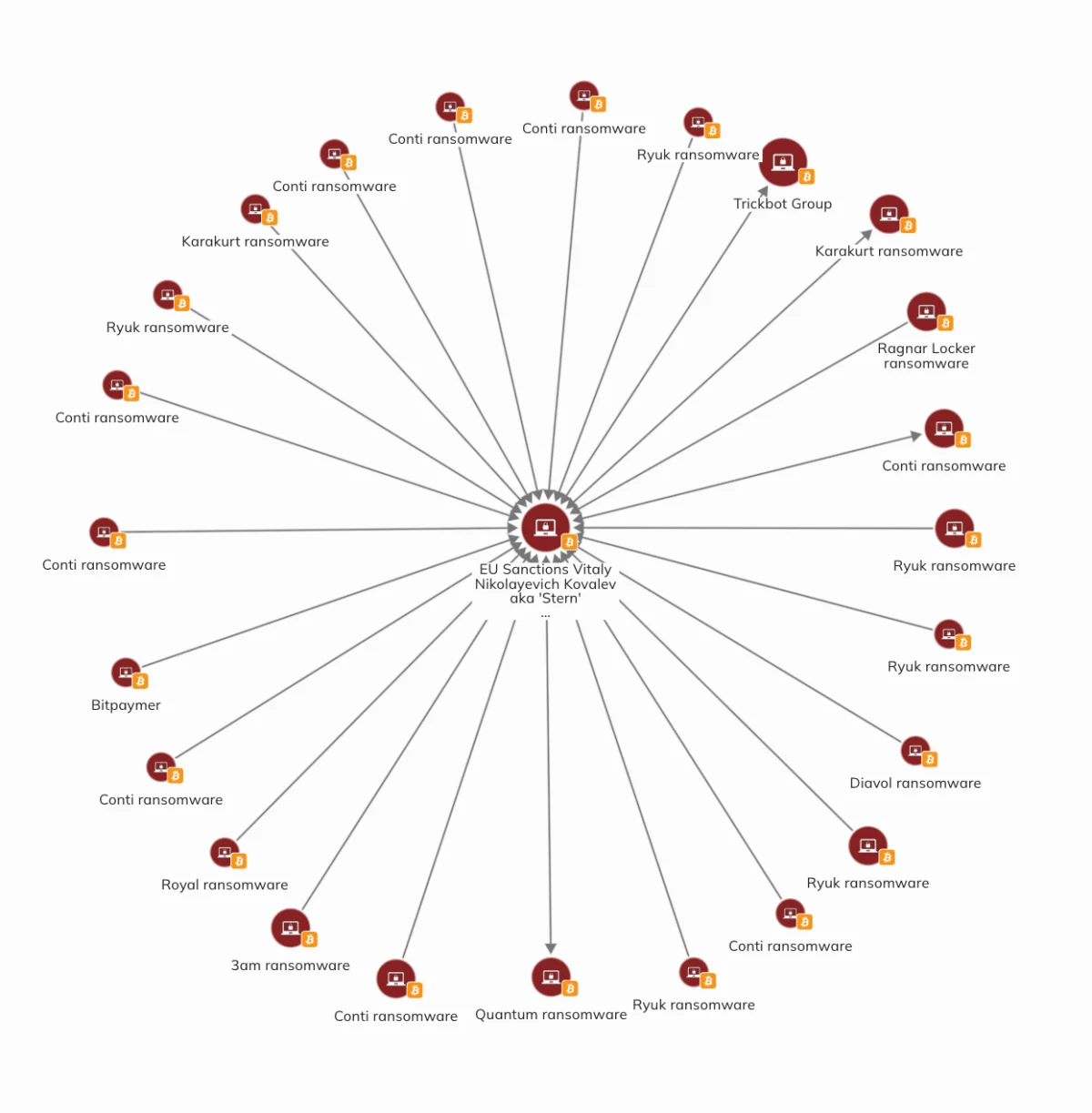
Central to this enforcement action is the identification and designation of Vitaly Nikolayevich Kovalev, a Russian national operating under the high-profile alias “Stern.” While Kovalev had been previously targeted by the U.S. Treasury’s Office of Foreign Assets Control (OFAC) and the U.K.’s Office of Financial Sanctions Implementation (OFSI) in early 2023, the European Union’s July 2026 designation provides the most comprehensive profile to date. For the first time, the moniker “Stern” has been officially linked to Kovalev by the EU, identifying him as the primary administrator of the Trickbot criminal syndicate. Investigative data suggests that cryptocurrency wallets directly associated with Stern have received in excess of $300 million in ransom payments, a figure that potentially makes him the most prolific individual ransomware operator ever identified by global law enforcement.
The Rise and Centrality of Stern in the Cybercrime Ecosystem
The revelation of Vitaly Kovalev’s role as “Stern” provides a rare glimpse into the corporate-like hierarchy of modern cybercrime. Within the Trickbot Group, Stern functioned as a “CEO-like” figure, exercising broad discretion over the syndicate’s budget, recruitment, procurement of specialized software, and strategic attack planning. The Trickbot Group, which evolved from a sophisticated banking trojan into a massive malware-delivery platform, has been the architectural backbone for several of the world’s most destructive ransomware strains, including Ryuk and Conti.
The EU designation clarifies that Stern’s influence extended across a vast array of offshoots and secondary operations. Forensic analysis of blockchain transactions reveals that Stern interacted with a "who’s who" of the ransomware world, including Diavol, Karakurt, Royal, 3am, Quantum, and Bitpaymer. While the $300 million attributed to his personal wallets is staggering, experts note that this represents only his personal share of the illicit proceeds. The total revenue generated by the Trickbot ecosystem over the last decade is estimated to be in the billions, illustrating the industrial scale of their operations.
The centrality of Stern was further confirmed by the "Conti Leaks"—a massive cache of internal chat logs from the criminal group leaked in 2022. These logs depicted Stern as a disciplinarian and a strategist, managing hundreds of employees across different departments, ranging from software development and quality assurance to human resources and "negotiation" teams. By sanctioning Stern, the international coalition is not merely targeting a hacker, but attempting to decapitate the administrative leadership of a transnational criminal enterprise.
A Strategic Shift: Targeting the Enablers and Infrastructure
The July 2026 sanctions represent a refined strategy by the U.S. and its allies. Rather than focusing solely on the individuals who execute the final stages of a ransomware attack, authorities are now aggressively targeting the "enablers"—the service providers who build the tools and host the environments that allow cybercrime to flourish.
One of the primary targets of the OFAC action is First VPN Service (1VPNS). This provider was identified as a critical tool for ransomware actors seeking to mask their geographic locations and bypass network security protocols. Alongside 1VPNS, its administrator Dmytro Rashevskyi and the "cryptor" provider Yevgeniy Vladimirovich Silayev were also designated. Cryptors are specialized software tools used by hackers to obfuscate malicious code, making it invisible to standard antivirus and endpoint detection systems.

The crackdown on 1VPNS follows a successful multi-agency operation in May 2026, where European law enforcement, supported by the FBI’s Boston Field Office, seized the provider’s physical infrastructure and took its website offline. The subsequent sanctions on Rashevskyi and Silayev include the identification of cryptocurrency addresses across eight different blockchains, including Bitcoin (BTC), Ethereum (ETH), Litecoin (LTC), Zcash (ZEC), Dash, TRON (TRX), Dogecoin (DOGE), and Solana (SOL). This multi-chain approach highlights the increasing diversification of payment methods used by cybercriminal infrastructure providers to evade detection.
Furthermore, the EU has moved against Media Land LLC, a Russian-based "bulletproof" hosting provider. Bulletproof hosts are a cornerstone of the cybercrime economy, offering servers that are intentionally placed in jurisdictions with lax law enforcement cooperation. Media Land LLC has allegedly facilitated operations for some of the most notorious ransomware collectives, including LockBit, EvilCorp, and BlackBasta, since at least 2016. By providing a safe haven for command-and-control (C2) servers, Media Land enabled these groups to operate with near-impunity for years.
Chronology of the Global Crackdown on Trickbot and its Affiliates
The sanctions announced in July 2026 are the culmination of a multi-year effort to dismantle the Trickbot and Conti networks. The timeline of this enforcement action reveals a persistent, escalating pressure campaign:
- February 9, 2023: The U.S. and U.K. launch their first joint sanctions against the Trickbot Group, designating seven key members. Vitaly Kovalev is included in this initial list, though his "Stern" alias is not yet publicly emphasized by all parties.
- September 2023: An additional 11 members of the Trickbot Group are sanctioned by the U.S. and U.K., bringing the total number of sanctioned individuals to 18. This action targets the group’s developers and mid-level managers.
- May 2026: A major international law enforcement operation seizes the servers and domain of First VPN Service (1VPNS), exposing the data of thousands of users, many of whom are linked to active ransomware campaigns.
- July 13, 2026: The current "Triple Threat" sanctions are issued. The EU joins the U.S. and U.K. in a unified front, officially identifying Kovalev as "Stern," sanctioning the 19th member of the Trickbot inner circle, and expanding the net to include infrastructure providers like Media Land LLC and LummaC2.
Expanding the Net: LummaC2 and Malware-as-a-Service
In addition to infrastructure hosting and VPNs, the July 2026 sanctions target the "Malware-as-a-Service" (MaaS) model. The EU specifically designated the operators of LummaC2, a highly effective information-stealing malware. LummaC2 is designed to exfiltrate sensitive data from infected machines, including browser credentials, cryptocurrency wallet private keys, and detailed system information.
The rise of MaaS platforms like LummaC2 has lowered the barrier to entry for aspiring cybercriminals. Instead of writing their own code, "affiliates" can rent the LummaC2 software for a monthly fee or a percentage of the stolen assets. By sanctioning the developers of these platforms, international authorities are aiming to disrupt the supply chain of the cybercrime industry. This approach recognizes that for every high-profile group like Conti, there are thousands of smaller actors using the same standardized tools to cause widespread economic damage.
Economic Impact and Cryptocurrency Compliance
The financial toll of the activities associated with these designated groups is difficult to overstate. Beyond the $300 million directly linked to Stern, the broader Trickbot and Conti networks are estimated to have extorted over $1 billion from victims in the healthcare sector alone during the COVID-19 pandemic and its aftermath. The cost of recovery, lost productivity, and secondary data breaches likely pushes the total economic impact into the tens of billions.
For the cryptocurrency industry, these designations have immediate and profound implications. Global exchanges, wallet providers, and decentralized finance (DeFi) protocols are now legally required to freeze any assets associated with the newly identified addresses. Blockchain intelligence firms have already begun labeling these addresses in their monitoring tools, enabling financial institutions to detect "hops" between criminal wallets and legitimate platforms.
The inclusion of addresses on newer blockchains like Solana and TRON signals that regulators are moving beyond Bitcoin-centric enforcement. As cybercriminals attempt to "chain-hop" to obscure the trail of stolen funds, the July 2026 actions demonstrate that law enforcement’s forensic capabilities have evolved to track assets across the entire crypto ecosystem.

Official Responses and Strategic Significance
The coordinated nature of the July 13 announcement was echoed in statements from all three jurisdictions. A spokesperson for the U.S. Department of the Treasury emphasized that "cybercriminals do not operate in a vacuum; they rely on a shadow economy of service providers who think they are untouchable. Today, we are making it clear that if you provide the tools for extortion, you will be held as responsible as the extortionist."
The EU Council’s statement highlighted the threat to democratic stability, noting that the sanctioned actors have participated in "defacement, DDoS attacks, and the sabotage of essential services" that undermine public trust. The U.K. Foreign Office reiterated its commitment to international cooperation, stating that "cybercrime is a borderless threat that requires a borderless response."
Security analysts suggest that these sanctions are a form of "financial attrition." While top-tier hackers in Russia may remain physically out of reach for Western law enforcement, the sanctions make it increasingly difficult for them to "cash out" their cryptocurrency or pay for the premium hosting and VPN services required to run their operations. By blacklisting their infrastructure, the coalition is effectively raising the cost of doing business for criminals, potentially making many ransomware campaigns no longer profitable.
Implications for Global Cybersecurity Policy
The July 2026 sanctions mark a new chapter in the "Grey Zone" conflict between Western nations and the cyber-sanctuaries that host these criminal groups. By targeting Russian nationals and entities so aggressively, the U.S., EU, and U.K. are sending a diplomatic signal to the Kremlin that the shielding of ransomware actors will carry a high economic price.
Furthermore, this action sets a precedent for future enforcement. The focus on "bulletproof" hosting and "cryptor" services suggests that any company providing technical services to known criminal entities is now at risk of being cut off from the global financial system. This "guilt by association" for infrastructure providers may force the legitimate hosting industry to implement stricter "Know Your Customer" (KYC) protocols, similar to those found in the banking sector.
As the digital landscape continues to evolve, the July 13 enforcement action stands as a landmark moment of international solidarity. It serves as a reminder that while the technology behind cybercrime is complex, the fundamental strategy of law enforcement remains the same: follow the money, disrupt the leadership, and dismantle the support structures that make the crime possible. For Vitaly "Stern" Kovalev and his network, the world has just become significantly smaller.