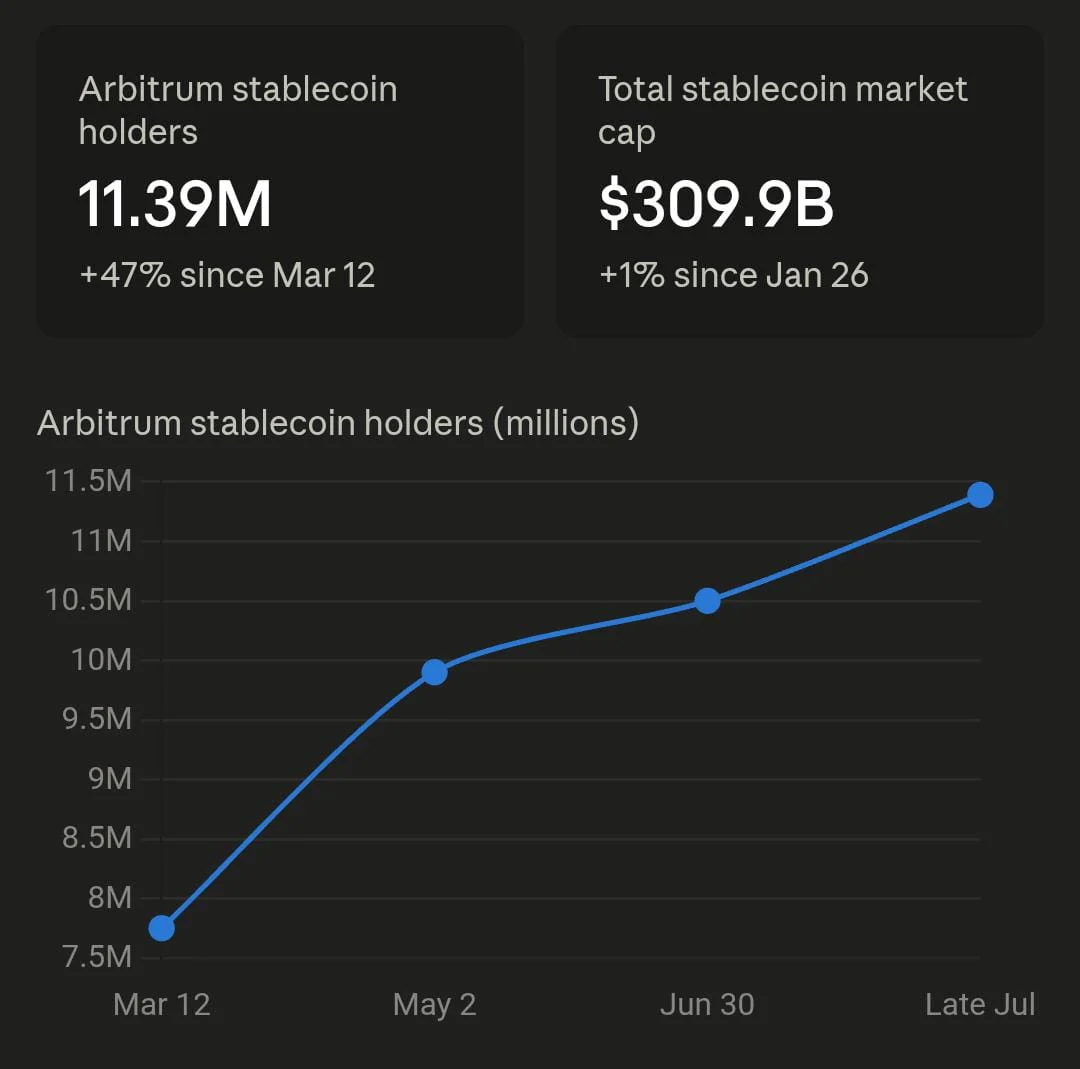
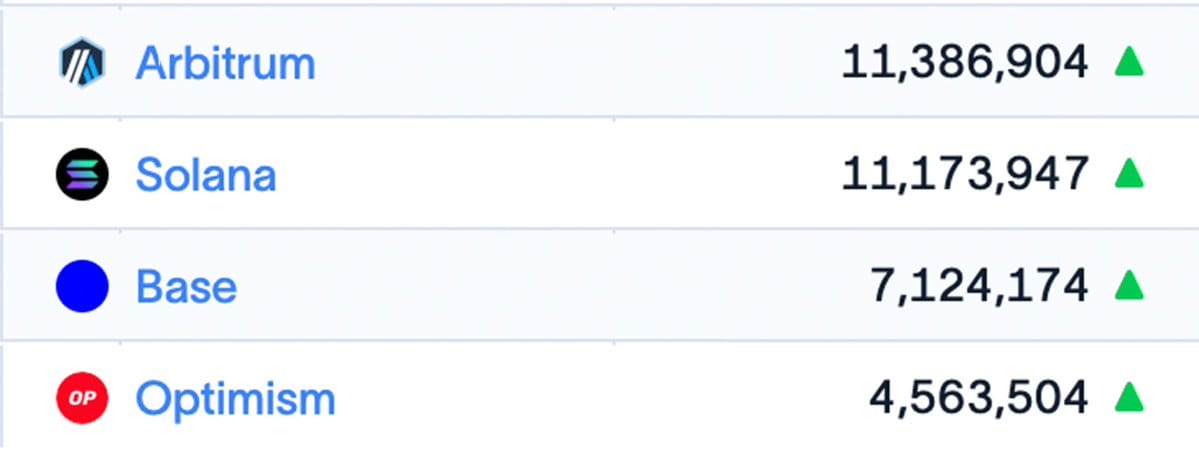
While the cryptocurrency market often fixates on the volatile price movements of assets like Solana and the burgeoning meme coin charts, alongside the rapid retail application growth on Base, a significant, albeit quieter, shift has occurred within the blockchain ecosystem. Arbitrum, a prominent Ethereum Layer-2 scaling solution, has surpassed Solana in total stablecoin holders, reaching an unprecedented all-time high of 11,386,904. This milestone, quietly achieved, positions Arbitrum ahead of Solana’s 11,173,947 stablecoin holders, establishing a narrow but critical lead of approximately 213,000 holders, representing about a 1.9% difference. This development highlights a deeper narrative about network utility and genuine economic activity beyond speculative trading.
The Significance of Stablecoin Holder Metrics
In the fast-paced world of digital assets, stablecoin holder counts are often overlooked in favor of more dramatic metrics like transaction volume or token price. However, industry analysts increasingly recognize this particular figure as a robust indicator of a network’s fundamental adoption and long-term viability. Unlike transient trading activity that sees funds quickly move in and out of a network, stablecoin holdings typically represent more durable economic engagement. Wallets holding stablecoins are often used for purposes such as payments, savings, collateral for decentralized finance (DeFi) applications, or simply as a stable store of value within the blockchain ecosystem. This "stickiness" differentiates stablecoin holders from speculative traders, suggesting a more ingrained user base and a deeper integration of the network into users’ financial behaviors.
For Arbitrum, a network historically associated with sophisticated DeFi protocols like GMX and Uniswap, achieving the top spot in stablecoin holders among major challenger chains underscores its maturation into a foundational layer for dollar-denominated activity. This quiet ascension suggests a strategic success in attracting and retaining users who value stability and utility, rather than purely speculative gains. The metric offers a unique lens into how many "real wallets" are actively choosing to park significant value on a network, a testament to its reliability, efficiency, and growing ecosystem.
Arbitrum’s Ascendant Trajectory: A Chronology of Growth
Arbitrum’s journey to becoming the leading stablecoin destination has been a calculated and consistent one, marked by strategic infrastructure development and ecosystem expansion. The network’s own team had previously highlighted its burgeoning stablecoin user base, reporting 7.75 million holders as early as March. This figure was a strong indicator of Arbitrum’s growing appeal as a dedicated settlement layer for dollar-denominated transactions.

The momentum continued unabated. By May, just two months later, Arbitrum’s stablecoin holder count had surged to nearly 10 million, marking an impressive 28% increase. This rapid growth coincided with a substantial increase in monthly stablecoin transfers, exceeding $50 billion, showcasing not only an expanding user base but also heightened activity within the ecosystem. Such growth trajectories often go unnoticed by mainstream observers until they reach a critical mass, at which point their significance becomes undeniable.
Now, approximately two months further, Arbitrum has not only surpassed the 11 million mark but has also established a new all-time high with over 11.3 million stablecoin holders. This isn’t an isolated event or a temporary spike; it represents the third all-time high recorded for this metric within the past year. Each successive peak has brought Arbitrum closer to, and now atop, the stablecoin leaderboard among its direct competitors, demonstrating a consistent and accelerating trend of adoption. This sustained growth pattern suggests a fundamental shift in user preference and trust towards Arbitrum as a preferred venue for stablecoin interaction.
The Competitive Landscape: Solana, Base, and Optimism
While Arbitrum currently holds the lead in stablecoin holders, the competitive landscape remains dynamic and intensely contested. Solana, with 11,173,947 stablecoin holders, remains a formidable contender, trailing Arbitrum by a minimal margin. Solana’s robust stablecoin base has expanded significantly, largely fueled by its vibrant meme coin trading ecosystem and the rapid expansion of its decentralized finance (DeFi) protocols. The network has demonstrated impressive growth, attracting a diverse range of users drawn to its high transaction throughput and low fees. Furthermore, Solana continues to lead in several other critical stablecoin metrics, including raw transaction throughput, indicating its ongoing strength in processing a high volume of stablecoin transfers. The narrow gap between Arbitrum and Solana means that a single strong week of inflows or a shift in market sentiment could easily see Solana reclaim the top position, underscoring the fierce competition between these two blockchain powerhouses.
Rounding out the picture are Base and Optimism, operating at a noticeably different scale but each with distinct strengths and growth drivers. Base, an Ethereum Layer-2 incubated by Coinbase, currently boasts 7,124,174 stablecoin holders. This is a remarkable achievement for a chain that only launched in 2023, and its rapid ascent can be largely attributed to Coinbase’s massive retail user funnel. The integration with Coinbase’s extensive user base provides Base with a direct conduit to millions of potential users, facilitating easy onboarding into its ecosystem and driving significant stablecoin adoption.
Optimism, another prominent Ethereum Layer-2, trails the group with 4,563,504 stablecoin holders. While its individual consumer footprint might be smaller compared to Arbitrum, Solana, or Base, Optimism plays a crucial role as the foundational layer for the broader OP Stack Superchain. This architectural design allows other networks to build upon Optimism’s infrastructure, potentially driving indirect stablecoin adoption and liquidity across a wider ecosystem. Each of these networks presents a unique value proposition and continues to attract users based on their specific features, ecosystem developments, and strategic alliances.
Why Stablecoin Holder Counts Signal Deeper Adoption
The emphasis on stablecoin holder counts, rather than transient price movements or even raw transaction volumes, stems from a deeper understanding of blockchain adoption. Price charts are inherently volatile and can be manipulated by short-term speculation. A token can be "flipped" in minutes, reflecting fleeting interest rather than sustained engagement. In contrast, a wallet holding stablecoins typically implies a more deliberate and long-term commitment. Whether these funds are earmarked for regular payments, long-term savings, or as collateral within complex DeFi protocols, the act of holding stablecoins signifies a user’s intent to utilize the network for tangible economic purposes.
This "stickiness" makes stablecoin holder growth one of the most reliable proxies for genuine, durable adoption within the blockchain space. It signifies that users are not merely passing through the network on their way to a quick trade but are actively integrating the network into their financial operations. Consequently, a growing number of analysts are treating stablecoin holder growth as a leading indicator for a chain’s long-term relevance and its potential to foster a sustainable economic ecosystem. For instance, recent comparisons of top Ethereum Layer-2 networks have shown Arbitrum commanding the largest share of Layer-2 stablecoin balances and institutional deposits, even in categories where competitors like Base might lead in raw transaction counts. This suggests that while other metrics might capture fleeting activity, stablecoin holders represent a different, and arguably more enduring, type of network win.
Fueling Arbitrum’s Stablecoin Surge: Infrastructure and Ecosystem Gravity
Arbitrum’s impressive stablecoin growth is not accidental; it is the culmination of strategic infrastructure development and the increasing gravitational pull of its robust ecosystem. A significant part of this success can be attributed to Arbitrum’s proactive efforts over the past year to enhance its stablecoin infrastructure. This includes actively courting native USDT support, integrating new stablecoins like PYUSD, and continuously rolling out low-cost rails. These improvements make it significantly cheaper and more efficient for users to move and manage dollar-denominated assets on the network, minimizing fees and enhancing user experience.
Beyond infrastructure, the "ecosystem gravity" of Arbitrum’s well-established DeFi protocols plays a crucial role. Deep liquidity pools on platforms like GMX and Uniswap provide compelling reasons for large holders and institutional players to keep their stablecoin balances parked on-chain. Rather than bridging assets back to the Ethereum mainnet for every transaction, users can execute complex trades, lend, borrow, and participate in yield farming directly within Arbitrum’s low-cost environment. This seamless integration encourages users to maintain substantial stablecoin balances within the Arbitrum ecosystem, contributing directly to the holder count.
Furthermore, a structural piece that is often underestimated is the impact of newer integrations and the expansion of Arbitrum’s Orbit stack. Orbit enables the creation of custom, dedicated Layer-3 chains that are built directly on Arbitrum’s technology. These new chains, by design, funnel fresh users and their stablecoin balances directly into the broader Arbitrum ecosystem. Every new wallet that interacts with one of these Orbit-powered integrations contributes to Arbitrum’s overall stablecoin holder count. This continuous pipeline of new users and assets, facilitated by a scalable and interconnected architecture, is a powerful driver of growth that shows no signs of slowing down.
Broader Implications for the Stablecoin Race
It is crucial to contextualize Arbitrum’s achievement within the broader stablecoin landscape. While this milestone is significant for the competition among challenger chains, it does not unilaterally settle the larger debate over which chain will ultimately "win" the stablecoin era. Ethereum, as the progenitor of smart contract platforms, still dwarfs every Layer-2 and alternative chain combined in terms of total stablecoin supply. Its foundational role and unparalleled security continue to attract the largest aggregate value of stablecoins. Similarly, Tron remains the undisputed volume king for raw dollar transfers, driven by its strong presence in regions where stablecoins are used for everyday payments and remittances. It would be premature to bet against the continued dominance of either Ethereum or Tron in these specific metrics.
However, within the fiercely competitive arena of challenger chains vying for retail and DeFi mindshare, the stablecoin holder count is emerging as one of the clearest and most meaningful scoreboards. It offers a tangible measure of a network’s ability to attract and retain a user base that engages with stable assets for genuine economic utility. For now, Arbitrum is leading this particular race.
The question of whether Arbitrum can maintain this lead remains genuinely open. Solana’s growth trajectory has been equally aggressive, driven by its vibrant ecosystem and efficient transaction processing. A single strong week of stablecoin inflows or a major ecosystem development on Solana could easily swing the lead back in its favor. Nevertheless, Arbitrum’s quiet ascent to the top of the stablecoin holder leaderboard marks a pivotal moment. The network, long recognized for its robust DeFi blue chips, has now solidified its position as a primary destination for stablecoin users, a milestone that deserves careful observation as the digital asset landscape continues to evolve.
Disclosure: This is not trading or investment advice. Always do your research before buying any cryptocurrency or investing in any services.