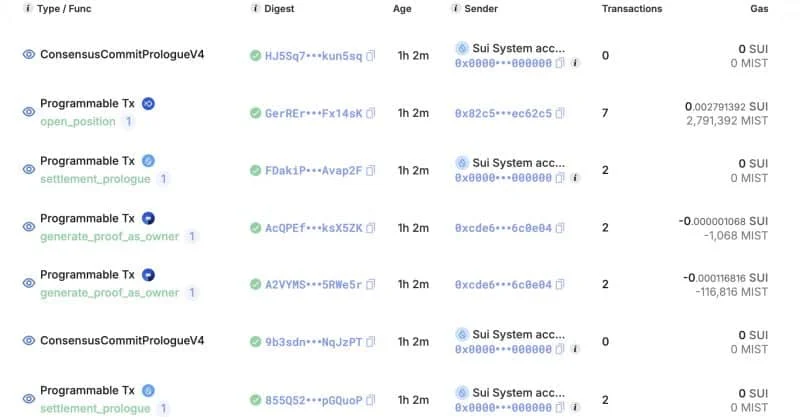
The Sui blockchain’s mainnet has successfully resumed operations following an extensive outage that lasted nearly six hours, from May 28th into May 29th. The disruption, which brought the network to a complete standstill, was attributed to a critical bug discovered in the gas charging logic within Sui’s latest software release, version 1.72. This flaw inadvertently halted the processing of new blocks and transactions, impacting all decentralized applications (dApps) and protocols operating on the Sui ecosystem. Validators, the decentralized network operators responsible for maintaining the blockchain, collaborated swiftly to implement a fix and upgrade to a patched version of the software, thereby restoring normal checkpoint production and network functionality.
The Anatomy of the Outage: A Gas Fee Glitch
The incident began on May 28th when validators executing the 1.72 software update encountered an unforeseen issue with the system designed to calculate transaction fees, commonly referred to as gas fees. In essence, the code responsible for determining how much users pay for their on-chain activities malfunctioned. This malfunction triggered a cascading failure, causing the entire network to cease the production of new blocks, effectively freezing all pending and new transactions. The consensus mechanism of the Sui network, which requires a supermajority of staked tokens to be held by validators running the correct software version, meant that recovery was not an instantaneous process. A significant portion of validators, exceeding two-thirds of all staked SUI tokens, needed to successfully upgrade to the patched software before the network could regain its operational capacity.
Timeline of the Disruption and Recovery
The exact timeline of the outage, while specific times may vary slightly depending on reporting sources, paints a clear picture of the event’s progression:
- Initial Outage Onset (May 28th): Validators running the 1.72 release began experiencing the gas fee bug. This immediately halted their ability to produce new checkpoints, the fundamental building blocks of the blockchain.
- Network Stasis: As the bug propagated through the validator set, the entire Sui network effectively froze. No new transactions could be finalized, and existing ones remained in a pending state, unable to be confirmed.
- Coordinated Recovery Efforts: Sui’s core development team and the validator community initiated immediate discussions and troubleshooting. The priority was to identify the root cause of the bug and develop a stable, patched version of the software.
- Patch Development and Deployment: Engineers worked to isolate the flaw in the gas charging logic and engineer a solution. This patch was then distributed to the validator community.
- Validator Upgrade and Network Resumption (May 29th): Validators began the process of upgrading their nodes to the patched software. The network’s consensus rules dictated that a substantial majority of staked power had to be on the new version for the chain to recommence. Once this threshold was met, normal checkpoint production was restored.
- Duration: The entire period from the onset of the outage to the resumption of normal operations spanned approximately 5 hours and 55 minutes.
Robust Safety Guarantees: No User Funds Compromised
Despite the nearly six-hour interruption, a crucial aspect of the Sui network’s resilience was its ability to safeguard user assets. The design of the Sui blockchain prevented any loss of user funds during the disruption. Furthermore, the network’s architecture ensured that no data inconsistencies emerged while the chain was stalled. This is a significant testament to the underlying safety mechanisms that are fundamental to blockchain technology, particularly for a network aiming to support high-value financial applications.
Impact on Decentralized Finance (DeFi) and dApps
The consequences of the outage extended directly to the decentralized applications and DeFi protocols built upon the Sui network. During the approximately six-hour period of inactivity, these platforms were effectively frozen. Users were unable to:
- Adjust Open Positions: In lending protocols or derivatives platforms, users could not modify their existing positions to manage risk or capitalize on market movements.
- Execute Trades: Decentralized exchanges (DEXs) and other trading platforms experienced a complete halt in transaction processing, preventing new buy or sell orders from being placed or filled.
- Trigger Liquidations: Automated liquidation mechanisms, designed to protect lenders in undercollateralized positions, could not be executed. While this may have temporarily benefited some borrowers, it also represented a risk for lenders if market conditions worsened significantly during the outage.
The inability to interact with these critical DeFi functions underscores the direct impact of network downtime on the usability and economic activity within an ecosystem.
A Recurring Pattern: A Second Significant Outage in 2026
The recent outage is not an isolated incident for the Sui network. This marks the second major disruption of this magnitude within a relatively short period. On January 14th, 2026, the Sui mainnet experienced a similar multi-hour stall, lasting for approximately six hours. That earlier incident was reportedly caused by a consensus commit bug, highlighting a different but equally critical area of network operation.
The recurrence of such extended downtime events, particularly within a five-month span, raises questions about the stability and maturity of the network’s software development and deployment processes. Both incidents share a common thread: a bug introduced through a software update, followed by a complex and time-consuming process of coordinating validator upgrades across a decentralized network. Such events can erode confidence among developers, users, and potential institutional investors.
Market Reaction: SUI Token Price Volatility
The cryptocurrency market, known for its sensitivity to network events, reflected investor sentiment in real-time. During the most recent outage, the price of the SUI token experienced a noticeable decline. Reports indicate that the token dropped to approximately $0.89, representing a decline in the range of 6-8%. This price movement suggests that traders and investors reacted to the uncertainty and potential risks associated with network instability. Following the resumption of normal operations, the SUI token saw a partial recovery, indicating that the market’s immediate reaction was to the news of the outage and subsequent recovery.
Implications for Investors and the Sui Ecosystem
Sui has positioned itself as a high-throughput Layer 1 blockchain, designed to offer the performance and scalability required for demanding decentralized finance applications and to attract significant institutional capital. The growth of the total value locked (TVL) across the Sui ecosystem, which has reached hundreds of millions of dollars since its launch, demonstrates the network’s potential and the growing confidence in its capabilities.
However, recurring outages present a significant challenge to this positioning. For institutional investors, reliability and uptime are paramount. Consistent network stability is a prerequisite for deploying substantial capital into any blockchain ecosystem. The current pattern of downtime, even if ultimately resolved, can create a perception of fragility.
For traders and active participants in the crypto market, the observed price action during the outage—a decline followed by a partial recovery—provides a potential playbook for future events. If another significant network disruption were to occur, it is plausible that a similar market reaction could be observed, with potential opportunities for short-term trading strategies.
Broader Analysis: The Challenges of Decentralized Network Maintenance
The Sui incidents highlight the inherent complexities of maintaining a decentralized network. Unlike centralized systems, where a single entity can push out patches and enforce updates, blockchains rely on the coordination and consensus of a distributed network of independent validators. While this decentralization is a core strength, it also introduces challenges during critical bug fixes.
- Coordination Overhead: Ensuring that a sufficient number of validators, representing the required staked power, upgrade to a patched version in a timely manner requires robust communication channels and incentives.
- Software Quality Assurance: The frequency of bugs impacting core network functionality suggests a need for enhanced software testing and quality assurance protocols before releases are deployed to the mainnet.
- Incentive Alignment: The economic incentives for validators to upgrade promptly are crucial. While the desire to maintain network integrity is a motivator, it must be balanced against the operational costs and complexities of frequent upgrades.
The Sui team and its community face the ongoing challenge of demonstrating consistent reliability. Future developments will likely focus on improving the robustness of its software releases, streamlining the upgrade process, and further fortifying its consensus mechanisms against such vulnerabilities. The long-term success of Sui, particularly in its ambition to attract institutional adoption and host mission-critical DeFi applications, will hinge on its ability to overcome these recurring stability challenges and build unwavering trust in its network’s uptime and security.