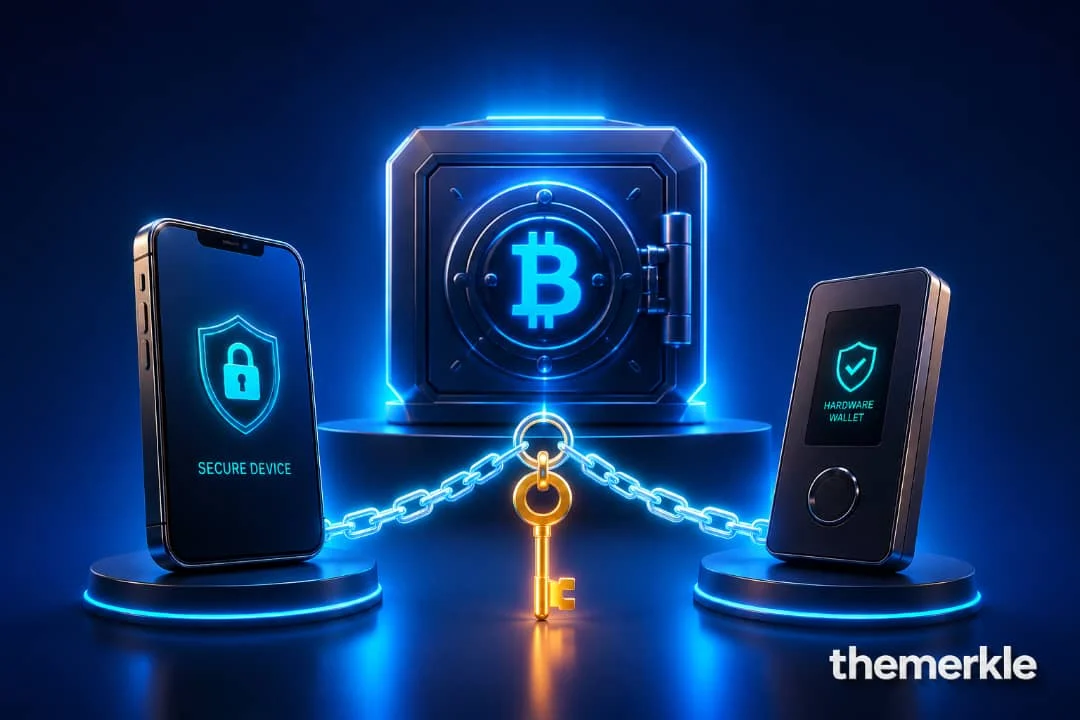
The crypto community, including prominent on-chain investigator ZachXBT, has been intensely discussing the optimal methods for securing digital assets. This discourse gained significant traction following ZachXBT’s public statements advocating for a dedicated, air-gapped iPhone as a superior alternative to traditional hardware wallets for managing substantial cryptocurrency holdings and executing critical transactions. His critique, primarily directed at the perceived instability and frustrating user experience of devices like Ledger, has ignited a broader conversation about the inherent risks and best practices in self-custody. However, while the initial reactions fixated on comparing the security merits of an iPhone versus a Ledger device, a more profound and less discussed question emerges: what happens to these digital assets when the original owner is no longer able to access or manage them?
Understanding ZachXBT’s Stance: A Critique of Hardware Wallet Ecosystems
ZachXBT, renowned for his meticulous on-chain investigations and exposure of crypto scams, expressed significant reservations regarding the current generation of hardware wallets. In a detailed post on Telegram, he articulated his distrust, particularly for signing critical transactions or safeguarding large sums of cryptocurrency. His primary recommendation was the use of a dedicated iPhone, stripped of all other applications and internet connectivity, to serve exclusively as a crypto management device. This "air-gapped" setup, he argued, minimizes attack vectors inherent in general-purpose devices.
His sharpest criticisms were reserved for Ledger, a market leader in hardware wallets. ZachXBT highlighted what he described as a persistent pattern of disruptive updates to Ledger Live, the accompanying software interface, which frequently impede basic functionality without delivering tangible benefits to users. This frustration with user experience (UX) and software stability is not isolated to ZachXBT; it mirrors a sentiment shared by a segment of the advanced crypto user base who find constant changes and occasional bugs counterproductive to secure and efficient asset management. While hardware wallets are designed to keep private keys offline, the user’s interaction with the blockchain often occurs through companion software, making the stability and security of this software equally critical. The constant need for updates, while often driven by security enhancements or new feature integrations, can introduce new vulnerabilities or simply create an inconvenient and less reliable user experience, particularly for those managing significant capital.
The Incidents Fueling the Debate: A Timeline of Vulnerabilities
ZachXBT’s intervention did not occur in a vacuum; it was set against a backdrop of recent, high-profile security incidents that have shaken user confidence in the crypto ecosystem, particularly concerning hardware wallets and their associated software. These events underscore the fragility of the self-custody model when confronted with sophisticated social engineering and supply chain attacks.
- The Fake Ledger Live App Scam (April 2024): In a significant incident in April, a fraudulent application masquerading as the official Ledger Live app infiltrated Apple’s App Store. This sophisticated phishing attempt successfully siphoned approximately $9.5 million from unsuspecting victims before it was identified and removed. The existence of such a sophisticated fake application on a supposedly secure platform like the App Store highlighted a critical vulnerability in the broader ecosystem: the reliance on official channels and the potential for impersonation. Users, accustomed to trusting app store listings, were left exposed to a meticulously crafted scam that leveraged the brand recognition of a reputable hardware wallet provider. This incident specifically demonstrated that even with hardware wallets designed to protect private keys, the interface through which transactions are initiated and confirmed remains a significant attack surface.
- The $282 Million Social Engineering Heist (January 2024): Earlier in January, a single individual became the victim of one of the largest individual crypto thefts on record, losing an astonishing $282 million through a highly elaborate social engineering scam targeting a hardware wallet user. While the exact mechanics of this particular exploit were not fully disclosed, such incidents typically involve attackers manipulating users into unknowingly approving malicious transactions or revealing critical information (like seed phrases) under false pretenses. This type of attack often bypasses the core security features of a hardware wallet by exploiting the "human element" in the security chain, demonstrating that even the most robust physical security cannot fully mitigate risks if the user is compromised through psychological manipulation.
- Broader Context of Ecosystemic Flaws: ZachXBT’s argument, therefore, wasn’t that the fundamental cryptographic principles underpinning hardware wallets were flawed. Instead, his criticism targeted the "ecosystem surrounding it": the companion apps, the pervasive risk of impersonation, and the ever-expanding phishing surface. These elements, he contended, consistently fail users, leading to significant financial losses despite the physical security of the hardware device itself. The recurring nature of such incidents, including past Ledger data breaches and the Ledger Connect Kit exploit in December 2023, has fostered a climate of apprehension, prompting advanced users like ZachXBT to seek alternative, more robust security paradigms.
The Author’s Counter-Argument: The Peril of the Single Point of Failure
While ZachXBT’s proposal of a dedicated iPhone appears conceptually sound for enhancing immediate transaction security, it introduces a critical, often overlooked vulnerability: the single point of failure regarding digital asset continuity and inheritance. This perspective forms the crux of the counter-argument, emphasizing that focusing solely on immediate security overlooks the long-term implications for asset accessibility.
- The Critical Gap in Digital Inheritance: A dedicated iPhone, used exclusively for crypto, concentrates all critical components – key storage, transaction signing capabilities, and potentially recovery information – onto a single physical device. Crucially, this setup often relies entirely on one person’s intimate knowledge of its operation, configuration, and recovery protocols. In the event of the owner’s incapacitation, disappearance, or death, this iPhone transforms into an impenetrable vault. Unlike traditional assets, which have established legal frameworks for inheritance, cryptocurrencies in self-custody lack such inherent mechanisms. Without a meticulously documented and tested recovery plan shared with trusted individuals, the digital assets secured on such a device could be irrevocably lost, rendering them inaccessible to heirs or beneficiaries. This represents a significant and growing challenge in the crypto space, with millions, if not billions, of dollars worth of crypto potentially being locked away forever due to inadequate digital estate planning.
- Seed Phrases and the Principle of Continuity: Hardware wallets, despite their perceived flaws, were fundamentally designed with continuity in mind. Their reliance on a seed phrase (a mnemonic sequence of words) provides a universally recognized and relatively straightforward method for recovery. This seed phrase can be written down, securely stored offline (e.g., in a safe deposit box, physically engraved), and, critically, handed off to a trusted party in accordance with an estate plan. This model explicitly accounts for scenarios where the original owner is unavailable, providing a pathway for designated individuals to access and manage the assets. A phone-only setup, unless accompanied by an equally robust, documented, and tested recovery and inheritance plan, subtly undermines this principle. Without clear instructions on how to access the phone, navigate its interface, locate relevant apps, or understand specific security protocols, the device becomes a digital tomb for the assets it holds. The perceived simplicity of using a familiar device like an iPhone can inadvertently lead users to neglect the complex, multi-layered planning required for true long-term security and succession.
Industry Perspective: Hardware Wallets and the On-Device Verification Imperative
The broader security community’s reaction to ZachXBT’s comments has been nuanced, acknowledging legitimate frustrations while defending core hardware wallet principles. While many agree that the user experience of hardware wallets "genuinely sucks" at times, with frequent UI updates and software changes disrupting basic functionality, the fundamental security primitive offered by these devices remains unparalleled in many contexts.
- The Unique Security Primitive of Hardware Wallets: A key point emphasized by security experts is that a hardware wallet provides a critical "air gap" for transaction verification. It allows users to confirm that the transaction details displayed on an internet-connected device (like a desktop or mobile phone) precisely match what is shown on the wallet’s own, isolated screen. This physical, on-device verification step is paramount for preventing sophisticated phishing attacks, malware, or malicious smart contract interactions where an attacker might tamper with the transaction data presented on the main screen. The hardware wallet’s secure element or isolated environment ensures that the user is signing exactly what they intend to sign, without external interference. A single-device setup, such as a dedicated iPhone, fundamentally gives up this crucial verification step. While the iPhone itself might be air-gapped for private key storage, the actual transaction signing and verification process would rely solely on the iPhone’s screen, which could theoretically be compromised by sophisticated malware, even on a dedicated device, if not managed with extreme caution. This loss of independent, air-gapped verification is a significant security trade-off that deserves more attention than the brand-versus-brand arguments that often dominate public discourse.
- User Experience vs. Core Security Functionality: The debate also highlighted the tension between user convenience and robust security. While Ledger has faced criticism for its update frequency and occasional bugs, other hardware wallet providers like Trezor, though not immune to issues, are often cited for their more stable or open-source software approach. However, even with improved UX, the core function of physically verifying transactions on an isolated screen remains a fundamental security advantage that mobile-only solutions struggle to replicate without introducing significant complexity (e.g., air-gapped signing using QR codes or SD cards, which then increases the user friction that ZachXBT criticizes). The challenge for hardware wallet manufacturers lies in delivering both top-tier security and a seamless user experience, a balance that the industry is still striving to perfect.
The Nuance of User Sophistication: Advanced Guidance vs. Mass Adoption
ZachXBT himself was clear that his advice was tailored for "advanced users" and not intended as a "mass migration plan." This caveat is crucial but often gets lost in the simplified narrative of device comparison.
- Bridging the Knowledge Gap in Self-Custody: Advanced users, by definition, possess a deeper understanding of cryptographic principles, operational security (OPSEC), and the intricacies of digital asset management. They are precisely the individuals most likely to have already implemented rigorous recovery plans, multi-signature setups, and robust inheritance strategies. For such users, a dedicated iPhone, meticulously secured and integrated into a broader, multi-layered security framework, could indeed offer a high degree of protection. However, the vast majority of cryptocurrency holders do not fall into this category. The average user, often drawn to crypto by promises of quick gains or technological innovation, may lack the technical expertise or the discipline to establish and maintain such a sophisticated, documented recovery plan. If these users uncritically adopt ZachXBT’s advice without understanding its underlying complexities and the necessity of comprehensive planning, they risk unknowingly creating the very "single point of failure" that the author of the original article warns against. This highlights a persistent challenge in the self-custody paradigm: empowering users with control over their assets while simultaneously educating them about the profound responsibilities and risks that accompany such autonomy.
Practical Security Considerations: iPhone vs. Android and Offline Storage
Beyond the philosophical debate, practical security considerations underpin device choices and storage methods.
- Operating System Security Architectures: The recommendation to use an iPhone over an Android device for crypto management is rooted in fundamental differences in their security architectures. Apple’s iOS benefits from a more closed and tightly controlled ecosystem, with stringent app review processes, faster security updates pushed directly by Apple to a homogenous device base, and robust hardware-level security features. This contrasts with Android’s more fragmented landscape, characterized by a multitude of manufacturers, varying update schedules, and a more open, customizable environment that can, at times, present a larger attack surface. While Android devices can be secured with careful configuration and vigilance, the inherent design of iOS often provides a baseline of security that is generally preferred for high-value asset management.
- Beyond Device Choice: The Paramountcy of Offline Backups: Irrespective of whether one chooses a hardware wallet or a dedicated iPhone, the secure, offline storage of seed phrases remains absolutely critical. Storing seed phrase backups digitally, whether as screenshots, text files, or cloud backups on the same device used for transactions, fundamentally negates the security benefits of both hardware wallets and air-gapped iPhones. Such practices create immediate vulnerabilities, making assets susceptible to device compromise, data breaches, or simple human error. The gold standard for seed phrase storage involves physical, tamper-resistant methods stored in secure, geographically dispersed locations, known only to trusted parties as part of a comprehensive estate plan.
The Mobile Interface Challenge: Reduced Visibility and Increased Risk
A smaller, but significant, aspect of the mobile-first approach to crypto security is the inherent limitation of mobile interfaces.
- Impact of Screen Size on Transaction Verification: Smaller mobile screens often display less information during a transaction compared to a desktop setup. This reduced visibility can make it easier for users to miss subtle clues indicative of a phishing site, a mismatched wallet address, or malicious smart contract parameters. A desktop environment typically offers a more expansive view, providing greater context and detail, which can aid in vigilant transaction verification. When a phone-only setup is used for both custody and transaction initiation, it compounds the single-point-of-failure problem by simultaneously introducing a reduced-visibility risk. Users might inadvertently approve malicious transactions due to an inability to fully scrutinize the details presented on a compact mobile interface. This issue is particularly relevant given the prevalence of mobile device usage for daily cryptocurrency interactions.
The Unresolved Question: Digital Asset Succession and the Future of Self-Custody
ZachXBT’s advice, while pragmatic for an expert with robust operational security, exposes a gaping hole in the broader self-custody ethos: the lack of a standardized, reliable, and user-friendly solution for digital asset inheritance and continuity.
- The Broader Challenge of Digital Inheritance: The real question this debate should pivot to is not merely "which device is safer today," but rather, "what happens to this money the day you’re not the one who needs to access it?" This question cuts to the heart of self-custody, which, while offering unparalleled autonomy, also places the entire burden of security and succession squarely on the individual. Traditional financial systems have centuries of legal precedent and infrastructure for inheritance. Cryptocurrency, being nascent and decentralized, has yet to develop widely adopted, secure, and legally recognized mechanisms for asset transfer upon incapacitation or death. This "digital asset succession" problem is a growing concern for individuals, families, and estate planners, with significant wealth now tied up in digital form.
- Emerging Solutions for Continuity and Recovery: The industry is slowly beginning to address this challenge. Solutions such as multi-party computation (MPC) wallets, which distribute private key shards across multiple custodians or devices, offer enhanced security and can be configured for social recovery or inheritance schemes. Smart contract wallets are also evolving, allowing for programmable recovery mechanisms or time-locked transfers to designated beneficiaries. However, these solutions are still relatively complex, not widely adopted, and often require a significant degree of technical understanding to implement correctly. The development of user-friendly, secure, and legally sound digital inheritance protocols remains one of the most pressing, yet under-addressed, challenges in the cryptocurrency landscape.
Conclusion: A Holistic View of Crypto Security
The debate initiated by ZachXBT serves as a crucial reminder that cryptocurrency security is not a monolithic concept, nor can it be reduced to a simple choice between device brands. It encompasses a complex interplay of hardware security, software integrity, user education, and, critically, robust long-term planning. While a dedicated iPhone may offer certain advantages for immediate transaction security for highly advanced users, its adoption by the general public without comprehensive recovery and inheritance strategies risks creating significant, irreversible losses.
The focus must shift from a narrow "Ledger vs. iPhone" comparison to a holistic understanding of self-custody that includes not only immediate threat mitigation but also provisions for the future. True self-custody demands a multi-faceted approach: understanding the unique security primitives of hardware wallets (like on-device verification), maintaining rigorous operational security, employing secure offline storage for seed phrases, and, most importantly, developing and testing a clear, documented digital inheritance plan that extends beyond the owner’s immediate ability to access their assets. Until the crypto community collectively solves the puzzle of digital asset succession, the promise of self-custody will remain incomplete, leaving a critical vulnerability that no single device, however secure, can fully address.