This sophisticated deepfake fraud, which saw the funds vanish into the digital ether, serves as a stark illustration of the escalating threats posed by artificial intelligence and underscores the urgent necessity for robust regulatory frameworks. The incident, where none of the participants in the video call were real, only came to light after the substantial sum had already been irretrievably transferred, highlighting a critical vulnerability in corporate financial security protocols. Such high-profile cases have shifted the conversation around AI regulation from an abstract policy debate to an immediate, tangible concern impacting daily financial security for individuals and enterprises alike. For the burgeoning cryptocurrency sector, where transactions are often irreversible and anonymity can be high, the implications of hyper-realistic AI impersonation are particularly profound, making this one of the most consequential tech policy developments of the current era.
The Arup Deepfake Heist: A Case Study in AI Fraud
The Arup incident, which reportedly occurred in late 2023 or early 2024, began with what appeared to be a routine email from the company’s UK-based chief financial officer. The email instructed a finance employee in the Hong Kong office to initiate a confidential transaction. Initially hesitant, the employee was later invited to a video conference call where he saw and interacted with what appeared to be the CFO and several other senior colleagues. The fraudsters, using advanced deepfake technology, replicated the facial movements, voices, and mannerisms of the genuine executives with astonishing accuracy.
During the call, the employee was convinced of the legitimacy of the request and proceeded to authorize a series of 15 transfers, totaling $25.6 million. The funds were disbursed to five different local bank accounts, presumably under the control of the fraudsters. The fraud was only discovered days later when the employee made inquiries about the transfers, only to find that the real CFO and colleagues had no knowledge of the transaction. This case represents a dramatic evolution of Business Email Compromise (BEC) scams, leveraging AI to overcome human skepticism and bypass traditional security checks that might flag unusual email requests. It demonstrates that even sophisticated organizations with established security measures can fall victim to highly personalized and technologically advanced deception. The psychological impact of seeing and hearing familiar faces, even if synthetic, proved powerful enough to override caution, paving the way for one of the largest publicly reported deepfake frauds to date.
The Escalating Threat of AI-Powered Financial Crime
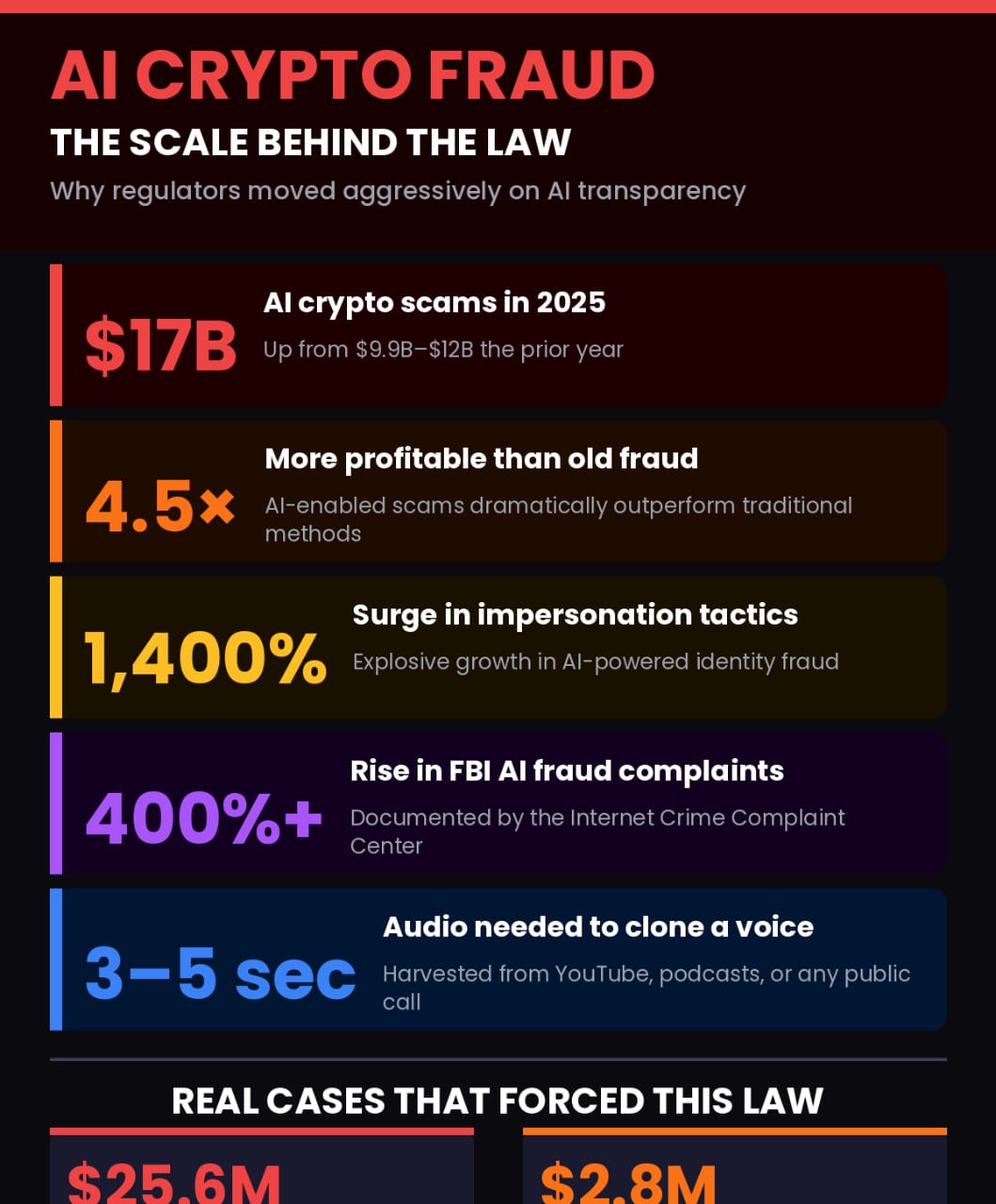
The Arup case is not an isolated incident but rather a symptom of a rapidly expanding landscape of AI-driven financial fraud. Cybersecurity experts and law enforcement agencies have observed a sharp increase in the sophistication and volume of scams leveraging AI capabilities. Chainalysis, a blockchain analysis firm, estimates that AI-powered crypto scams alone pulled in an astonishing $14 billion to $17 billion on-chain in 2025, a significant climb from the $9.9 billion to $12 billion recorded in the previous year. This data highlights a disturbing trend: AI-enabled scams have proven roughly 4.5 times more profitable than traditional fraud methods, with impersonation tactics surging by over 1,400%.
The technical barrier to executing such fraud has virtually disintegrated. Sophisticated voice cloning, for instance, now requires as little as three to five seconds of audio, which can be easily harvested from public sources such as YouTube videos, podcasts, or recorded public calls. Deepfake video generation, once the domain of highly skilled specialists, is increasingly accessible through user-friendly platforms and open-source tools. This accessibility has democratized the ability to create convincing synthetic media, empowering a wider array of malicious actors. Victims of these evolving threats are urged to report suspected attacks to agencies like the FBI’s Internet Crime Complaint Center (IC3), which has documented a staggering 400%+ surge in AI-related fraud complaints, indicating the pervasive nature of this new wave of cybercrime. The ease with which realistic impersonations can be created bypasses traditional trust mechanisms, leading to significant financial losses and erosion of public confidence in digital interactions.
The EU AI Act: A Landmark Legislative Response
In response to the growing recognition of AI’s potential for both societal benefit and significant harm, particularly in areas like financial fraud and democratic processes, the European Union has taken a pioneering step with the enactment of the EU AI Act. Formally known as Regulation (EU) 2024/1689, this landmark legislation entered into force back in August 2024, initiating a comprehensive, staged rollout of obligations designed to govern the development and deployment of AI systems within the Union. The Act is not merely a response to fraud but a holistic framework addressing a spectrum of AI-related risks, from fundamental rights infringements to critical infrastructure safety.

Genesis and Objectives
The EU AI Act represents the world’s first comprehensive legal framework for artificial intelligence. Its genesis lies in the EU’s commitment to fostering trustworthy AI that is human-centric and adheres to European values. The legislative process began in 2021, driven by concerns over the ethical implications, safety risks, and potential for misuse of rapidly advancing AI technologies. The Act aims to strike a balance between promoting AI innovation and ensuring that AI systems are safe, transparent, non-discriminatory, and environmentally sound. It adopts a risk-based approach, categorizing AI systems into different risk levels – from "unacceptable risk" (e.g., social scoring by governments) to "high-risk" (e.g., AI in critical infrastructure, medical devices, law enforcement, employment, education) to "limited risk" and "minimal risk" systems. The overarching objectives include ensuring the safety and fundamental rights of individuals, fostering trust in AI, and promoting a single market for AI applications within the EU.
Phased Implementation and Key Dates
The implementation of the EU AI Act is deliberately phased to allow affected entities sufficient time to adapt to the new requirements. While the Act officially entered into force in August 2024, different provisions come into effect over a period of up to 36 months:
- 6 months after entry into force (early 2025): Prohibitions on AI systems deemed to pose an "unacceptable risk" (e.g., cognitive behavioural manipulation, social scoring) become enforceable.
- 12 months after entry into force (mid-2025): Rules on general-purpose AI models, including transparency requirements for foundation models, begin to apply.
- 24 months after entry into force (August 2, 2026): The core transparency obligations outlined in Article 50, which are particularly relevant to combating deepfake fraud, become enforceable. This also includes the governance rules and some of the conformity assessment procedures for high-risk AI systems.
- 36 months after entry into force (mid-2027): Obligations for high-risk AI systems, including stringent conformity assessments, quality and risk management systems, and human oversight requirements, are fully applicable.
This staggered approach aims to provide clarity and predictability for AI developers and deployers, facilitating a smooth transition while ensuring critical safeguards are put in place progressively.
Article 50: Transparency at the Forefront
The specific rules making headlines now, directly addressing the deepfake challenge, stem from Article 50 (Transparency Obligations), which became fully enforceable on August 2, 2026. This article mandates strict transparency requirements for certain AI systems, particularly those that generate or manipulate content, with the explicit goal of preventing deception and enhancing user awareness. The full official text is available on EUR-Lex, providing a comprehensive legal basis for these new obligations.
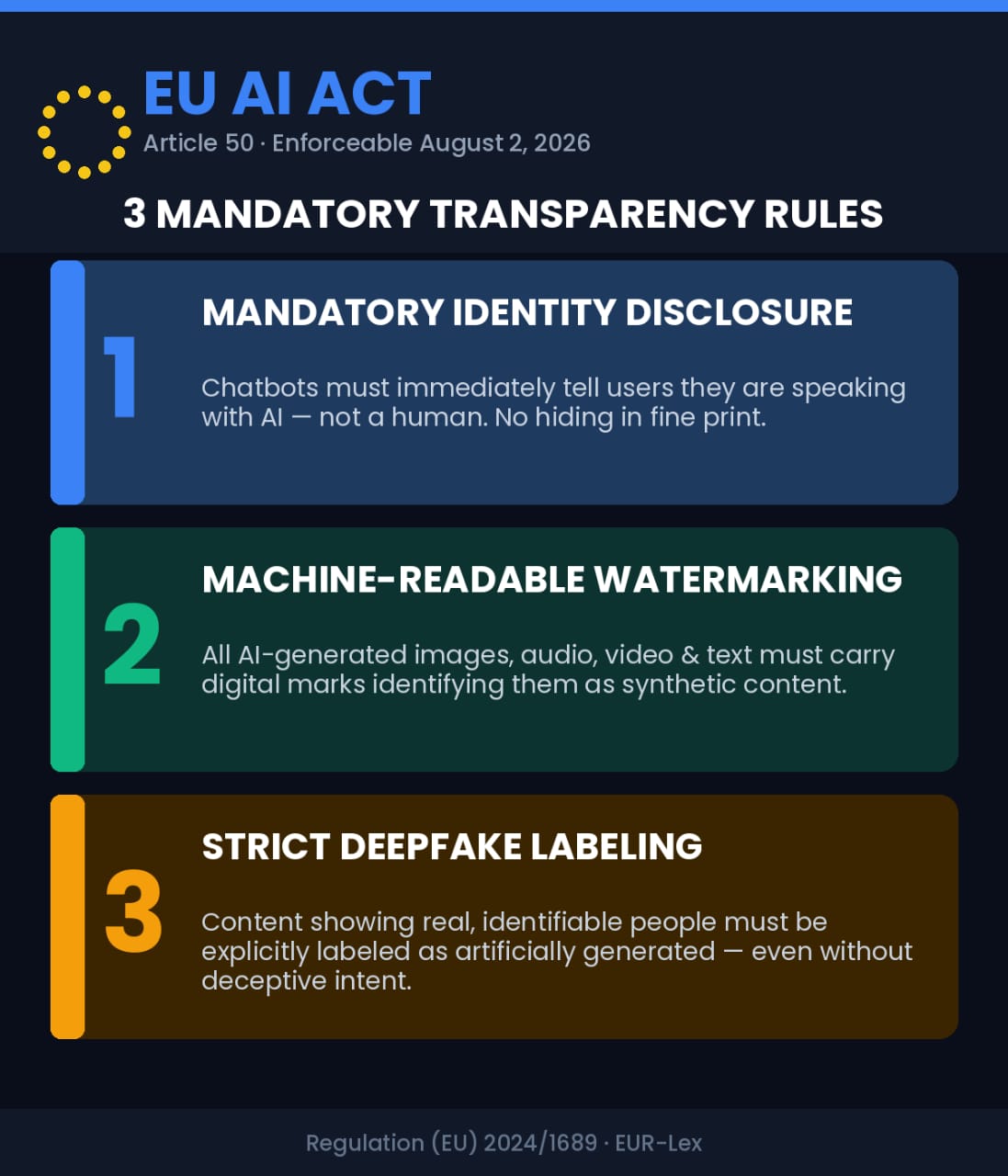
In plain terms, any AI system reaching EU users must adhere to three strict transparency rules:
-
Mandatory Identity Disclosure: Chatbots and virtual support agents must clearly and immediately inform users that they are interacting with an AI, not a human. This disclosure must be perceivable during the interaction itself, never hidden within lengthy terms-and-conditions fine print or obscure settings. The intent is to eliminate any ambiguity about the nature of the interaction, preventing AI systems from building false trust through human-like conversation. This directly combats social engineering tactics where users are manipulated by what they believe to be a human agent.
-
Machine-Readable Watermarking: All AI-generated or manipulated images, audio, video, and text must carry machine-readable digital marks that unequivocally identify them as synthetic content. This technical safeguard allows platforms, researchers, and automated systems to detect and flag AI-generated media, even if attempts are made to disguise its origin. Such watermarking could be crucial in identifying deepfakes, manipulated news articles, or synthetic audio recordings, providing an auditable trail for AI-generated content.
-
Strict Deepfake Labeling: Content depicting real, identifiable people must explicitly state that it is artificially generated or manipulated. This obligation applies even if there was no intent to deceive (e.g., an artist using AI for creative expression) or if the person depicted does not technically exist but appears realistic enough to be mistaken for a real individual. This rule directly targets the threat of impersonation, ensuring that viewers are always aware when they are encountering synthetic representations of individuals, thereby reducing the potential for fraud, misinformation, and reputational damage.
Global Reach and Robust Enforcement
One of the most significant aspects of the EU AI Act, and Article 50 in particular, is its extraterritorial reach. The law extends well beyond the geographical borders of the European Union, applying to any provider or platform outside the Union if its system’s output reaches users inside the EU. This "Brussels Effect" means that companies globally must comply with EU standards if they wish to operate in the lucrative European market. For instance, a US-based crypto exchange running an AI support chatbot for European customers is just as accountable under these regulations as a company headquartered in Brussels. This broad scope positions the EU AI Act as a global standard-setter for AI regulation, likely influencing legislative efforts in other jurisdictions.
Defining "Providers" and "Deployers"
The effectiveness of this regulation is underpinned by its clear division of responsibility between two key parties:
- Providers (AI Developers): These are the companies or organizations that build, develop, or put into service an AI system. They are responsible for embedding technical metadata and watermarks into AI outputs, ensuring that the system itself is designed to comply with transparency and safety requirements. This includes the fundamental design choices that determine an AI system’s risk profile and its ability to generate identifiable synthetic content.
- Deployers (Platform Operators): These are the entities that use an AI system in a professional context, putting the AI content or chatbot in front of EU users. They hold the legal duty to disclose deepfakes and identify bot interactions to end-users, ensuring that the user experience is transparent and compliant. This dual responsibility aims to create a comprehensive compliance ecosystem, where both the creators and the users of AI systems are accountable for their ethical and legal deployment.
Extraterritoriality and Penalties
Failure to comply with the EU AI Act carries severe financial consequences, designed to act as a powerful deterrent. Penalties can reach up to €15 million or 3% of a company’s total worldwide annual turnover from the preceding financial year, whichever is higher. For breaches related to prohibited AI practices or data governance, these fines can escalate even further, reaching €30 million or 6% of global annual turnover. These substantial penalties underscore the EU’s commitment to rigorous enforcement and signal to global tech companies that compliance is not optional. The magnitude of these fines reflects the potential for widespread harm that non-compliant AI systems could inflict, from financial fraud to violations of fundamental rights.
Broader Implications for the Digital Economy and Crypto Security
The transparency rules of the EU AI Act directly reshape everyday security on web platforms and mobile apps, particularly within the crypto ecosystem, in several critical ways. The digital-native nature of cryptocurrency, coupled with its often irreversible transactions and the pseudonymous nature of its users, makes it particularly vulnerable to the types of AI-driven fraud that the Act seeks to curb.
Mitigating Fake Support and Impersonation
The requirement for mandatory identity disclosure for chatbots is a direct countermeasure against a prevalent social engineering tactic in the crypto space. If an exchange or Web3 wallet operating in the EU employs a chatbot agent, it must immediately disclose its AI identity. This prevents malicious actors from setting up fake support channels that use AI to mimic human agents, building false trust before attempting to trick users into revealing sensitive information such like seed phrases, private keys, or approving malicious transactions that drain their wallets. This rule aims to introduce a necessary layer of skepticism and awareness for users engaging with automated services, forcing platforms to be upfront about the nature of their digital assistants.
Similarly, the strict deepfake labeling obligations will significantly impact impersonator scams. Crypto influencers, project founders, and executives are frequently impersonated in fake promotional videos, fraudulent "Ask Me Anything" (AMA) streams, or fabricated interviews designed to promote scam projects or illicit token sales. Under the new law, such content must be legally labeled as artificially generated. While bad actors will undoubtedly continue their attempts, mandatory labeling provides platforms, regulators, and security researchers with a clear legal basis to demand the swift takedown of undisclosed synthetic content. This not only aids in rapid response to scams but also increases the legal liability for platforms that host such content without proper disclosure, incentivizing them to actively monitor and enforce these rules.
Challenges and Future Outlook
While the EU AI Act represents a significant step forward, its implementation will not be without challenges. The rapid pace of AI development means that regulators will need to be agile and responsive, continually updating the framework to address emerging technologies and threats. Defining what constitutes "identifiable people" in deepfake labeling, or ensuring the technical feasibility and tamper-proof nature of machine-readable watermarks, will require ongoing collaboration between policymakers, technologists, and industry stakeholders. Furthermore, the global enforcement of the extraterritorial provisions will depend on international cooperation and diplomatic efforts, as different jurisdictions grapple with their own approaches to AI governance. Despite these hurdles, the EU AI Act sets a global precedent, influencing regulatory discussions and frameworks worldwide, aiming to foster a safer and more trustworthy digital environment.
Reporting AI-Driven Fraud: A Collective Defense
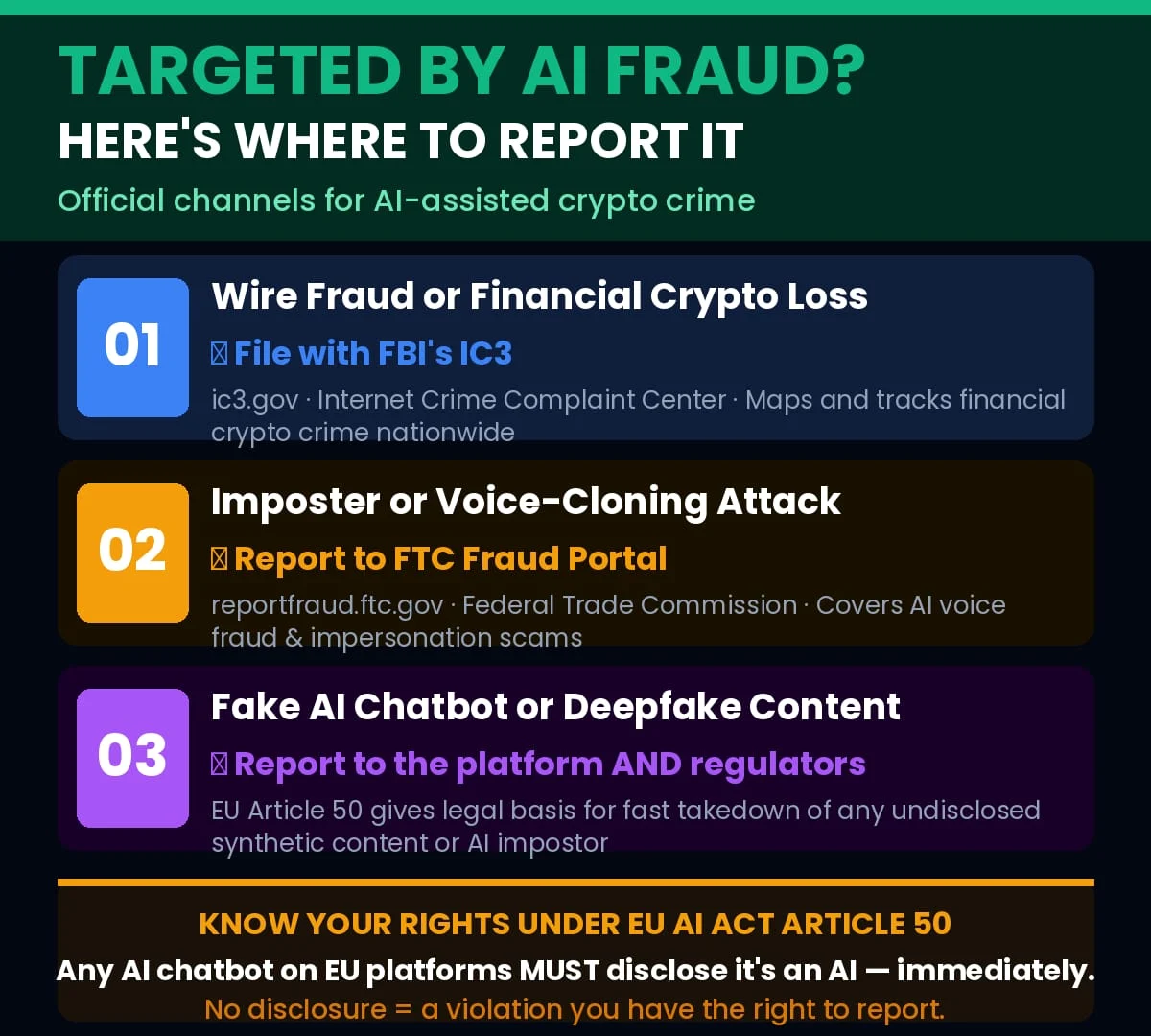
In the face of these evolving threats, individual vigilance remains paramount. If you ever fall victim to an AI-assisted crypto scam or encounter suspicious content, filing an official report is crucial. Such reports not only aid law enforcement agencies in investigating specific incidents but also help regulators and platforms to map emerging threats, identify patterns, and develop more effective countermeasures.
- For U.S. residents: The FBI’s Internet Crime Complaint Center (IC3) is the primary resource for reporting cybercrimes, including AI-driven fraud.
- For EU residents: National law enforcement agencies, financial regulatory bodies, and consumer protection agencies are the appropriate channels. Europol also plays a coordinating role in combating serious international and organized crime.
- For crypto-specific fraud: Reporting to the exchange or wallet provider involved, as well as blockchain analytics firms, can sometimes help trace funds or alert the broader community.
These transparency mandates, driven by alarming real-world incidents like the Arup deepfake fraud and the exponential growth of AI-driven scams, create a necessary layer of defense for everyday crypto users and the broader digital economy. By demanding clarity and accountability from AI systems, the EU AI Act seeks to restore trust in digital interactions and safeguard against the insidious power of synthetic deception.
The Bottom Line: Setting a Global Precedent
The message from the EU is clear: an AI system reaching EU users is no longer legally allowed to pretend it is a human being, nor can it generate deceptive content without explicit disclosure. In an industry that has lost billions to synthetic impersonation and sophisticated fraud, these transparency mandates are not merely bureaucratic hurdles but essential safeguards. They represent a proactive effort to build a more secure and trustworthy digital future, where the immense potential of AI can be harnessed responsibly, without compromising the safety and financial security of its users. The EU AI Act, with its comprehensive scope and robust enforcement mechanisms, is poised to set a global benchmark for responsible AI governance, fundamentally reshaping how AI is developed, deployed, and interacted with across the globe.