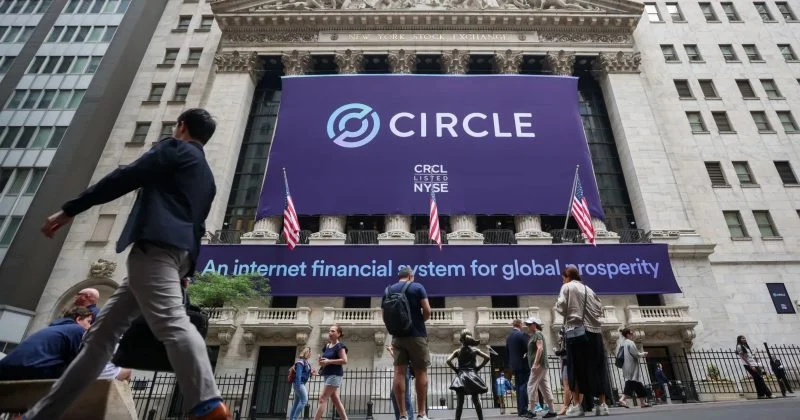
Circle Internet Financial, the global financial technology firm and primary issuer of the USDC stablecoin, has secured formal approval from the Office of the Comptroller of the Currency (OCC) to operate as a national digital currency bank. This landmark regulatory development represents the culmination of a multi-year effort by the company to transition from a state-regulated money transmitter to a federally chartered financial institution. By obtaining this charter, Circle moves into a select tier of financial entities, gaining a level of regulatory parity with the United States’ largest traditional commercial banks. The decision signals a profound shift in the federal government’s approach to the digital asset ecosystem, moving away from a policy of containment toward one of formal integration into the national banking system.
The OCC’s granting of a national bank charter to a crypto-native firm is not merely a symbolic victory; it is a structural transformation for Circle. Historically, stablecoin issuers have operated under a patchwork of state-level money transmitter licenses, which require individual applications and compliance regimes for every jurisdiction in which they operate. A national charter provides "federal preemption," allowing Circle to operate across the entire United States under a single set of federal rules. This streamlines operations, reduces the massive legal overhead associated with state-by-state compliance, and establishes a clear, uniform standard for oversight that is recognized both domestically and internationally.
The Evolution of Circle and the USDC Ecosystem
Founded in 2013 by Jeremy Allaire and Sean Neville, Circle initially focused on peer-to-peer payment technology before pivoting toward the development of blockchain-based financial infrastructure. The launch of USD Coin (USDC) in 2018, in partnership with the Coinbase exchange via the Centre Consortium, marked the beginning of Circle’s ascent as a pivotal player in the decentralized finance (DeFi) and broader crypto markets. Unlike many of its early competitors, Circle positioned itself as a "compliance-first" entity, emphasizing transparency and proactive engagement with regulators.
The growth of USDC has been exponential. From its inception, the stablecoin was designed to be fully collateralized by high-quality liquid assets, specifically U.S. dollar-denominated reserves held in the custody of regulated U.S. financial institutions. Over the last several years, the market capitalization of USDC has fluctuated between $25 billion and over $55 billion, reflecting its status as a primary source of liquidity for the digital asset markets. As of late 2023 and early 2024, USDC remains one of the most widely used stablecoins globally, facilitating trillions of dollars in cumulative transaction volume. The pursuit of a national bank charter has been a public goal for Circle since at least 2021, as the company sought to de-risk its business model and provide institutional-grade assurances to its corporate and retail users.
Chronology of the Path to Federal Chartering
The journey to this OCC approval was characterized by shifting political winds and evolving regulatory frameworks. In 2020, under the leadership of then-Acting Comptroller Brian Brooks, the OCC issued a series of interpretive letters that clarified the authority of national banks to provide custody services for digital assets and to use independent node verification networks (INVNs) and stablecoins for payment activities. These letters provided the initial legal bridge for firms like Circle to envision a future within the federal banking perimeter.
However, the transition to the current administration saw a more cautious approach. Michael Hsu, who took over as Acting Comptroller of the Currency in 2021, initiated a review of these interpretive letters and emphasized the need for "guardrails." Throughout 2022 and 2023, Circle faced rigorous scrutiny regarding its reserve management practices, particularly following the collapse of Silicon Valley Bank (SVB) in March 2023, where Circle held a portion of its cash reserves. The company’s swift action to migrate its reserves to larger, systemically important banks and to increase its holdings in the SEC-regulated Circle Reserve Fund, managed by BlackRock, demonstrated a level of maturity that likely influenced the OCC’s final deliberations. This timeline reflects a rigorous vetting process that tested Circle’s operational resilience during periods of extreme market volatility.
Supporting Data: The Composition of USDC Reserves
Central to the OCC’s approval was the transparency and quality of Circle’s reserves. Unlike some competitors that have historically faced criticism for holding opaque commercial paper or offshore assets, Circle’s reserve strategy is built on a foundation of "low-risk" assets. According to recent attestation reports provided by Deloitte, the USDC reserve consists of approximately 80% short-dated U.S. Treasury bills and 20% cash held at a variety of U.S. banking partners.
The inclusion of BlackRock as a manager for the Circle Reserve Fund has provided a layer of institutional oversight that is rare in the crypto industry. The fund is a government money market fund, and its holdings are public and subject to the Investment Company Act of 1940. This level of transparency was a prerequisite for federal chartering. By becoming a national bank, Circle’s reserve management will now be subject to direct, ongoing supervision by OCC examiners, ensuring that the "one-to-one" peg is maintained with the same level of rigor applied to the capital requirements of traditional lending institutions.
Comparative Analysis: Circle vs. Tether (USDT)
The granting of the OCC charter creates a stark divergence between the two largest stablecoin issuers in the world. Circle’s primary rival, Tether, issues the USDT token and remains the largest stablecoin by market capitalization. However, Tether operates primarily from the British Virgin Islands and Hong Kong, largely outside the direct purview of U.S. federal regulators. While Tether has made strides in improving its transparency reports, it has yet to undergo a full financial audit by a "Big Four" accounting firm or seek a formal banking license in a major Western jurisdiction.
For institutional investors—such as hedge funds, asset managers, and corporate treasuries—the OCC charter provides a "flight to safety" mechanism. The regulatory certainty of a national bank charter allows these entities to use USDC for cross-border settlements, payroll, and treasury management without the "regulatory hair" associated with offshore issuers. This approval effectively transforms USDC from a "crypto asset" into a "digitized dollar" issued by a federally regulated bank, potentially shifting the competitive landscape in favor of Circle for regulated financial use cases.
Legislative Implications and Official Responses
The OCC’s decision arrives at a critical juncture for U.S. policy. Congress is currently debating several pieces of legislation, including the Clarity for Stablecoins Act and the Lummis-Gillibrand Responsible Financial Innovation Act. These bills seek to define which agencies—the Federal Reserve, the OCC, or state regulators—should have primary authority over stablecoin issuers. By granting a charter now, the OCC has created a "fact on the ground" that will likely influence how these laws are drafted.
While the OCC has not released a lengthy public commentary on the specific approval, sources close to the matter suggest the agency view this as a way to bring stablecoin activity into the "regulated tent." The logic is that it is safer to have these massive pools of capital under federal supervision than to leave them in the shadows of the "shadow banking" system. Critics of the move, including some consumer advocacy groups, have expressed concerns that granting a bank charter to a crypto firm could "import" crypto volatility into the traditional banking system. However, Circle’s proponents argue that the company does not engage in fractional reserve banking or risky lending, which significantly mitigates those systemic risks.
Broader Impact on the Financial Industry
The implications of Circle becoming a national bank extend far beyond the crypto markets. This move paves the way for several transformative shifts in the broader financial landscape:
- Direct Access to the Federal Reserve: While not guaranteed, a national bank charter is a prerequisite for a master account with the Federal Reserve. Direct access to the Fed’s payment rails would allow Circle to settle transactions in central bank money, bypassing the need for intermediary commercial banks and further reducing settlement risk.
- Mainstream Integration: Traditional banks that were previously hesitant to interact with stablecoin issuers due to "reputational risk" or "AML/KYC concerns" will now find it much easier to partner with Circle. A national bank charter is the ultimate "stamp of approval" in the financial world.
- DeFi as a Regulated Utility: Much of the liquidity in decentralized finance is denominated in USDC. By having a regulated bank at the heart of the DeFi ecosystem, the industry moves closer to a hybrid model where the efficiency of blockchain technology meets the safety of federal regulation.
- Standardization of Stablecoins: This approval sets a high bar for other issuers. To compete with a federally chartered Circle, other firms will likely be forced to seek similar levels of oversight or risk being marginalized by institutional users.
Potential Risks and Future Outlook
Despite the positive momentum, the transition to a national bank is not without risks. Circle must now comply with the Bank Secrecy Act (BSA), Anti-Money Laundering (AML) laws, and the Community Reinvestment Act (CRA) at a federal level. The cost of compliance will be substantial. Furthermore, the OCC’s supervision framework for a "digital currency bank" is still being written in real-time. There is a risk that the agency could impose capital requirements or operational constraints that limit the speed and flexibility that made Circle successful as a fintech startup.
Moreover, the political landscape remains a factor. A change in administration or a shift in the leadership at the Treasury Department could result in a more restrictive environment for digital asset banks. Circle will need to navigate these political waters while maintaining its technological edge in an increasingly crowded field of competitors, including potential central bank digital currencies (CBDCs) and stablecoins launched by traditional giants like PayPal or JPMorgan Chase.
In conclusion, the OCC’s approval of Circle as a national digital currency bank is a defining moment in the history of money. It represents the formal recognition that stablecoins are not a passing fad, but a legitimate evolution of the monetary system. By choosing to play by the rules of the traditional financial system, Circle has not only secured its own future but has also provided a blueprint for how the digital asset industry can achieve long-term stability and mainstream adoption. The eyes of the global financial community will now be on the OCC and Circle as they navigate this new frontier of regulated digital finance.