Prediction markets, envisioned as sophisticated mechanisms to distill collective intelligence into quantifiable probabilities, are facing a critical challenge at Polymarket, the world’s largest cryptocurrency-based prediction platform. A recent analysis by The Wall Street Journal has unearthed a significant concentration of power within the platform’s dispute resolution process, revealing that the "crowd" deciding contested outcomes is, in reality, a select group of just nine wallets. This revelation casts a shadow over the integrity and fairness of Polymarket’s operations, raising serious questions about the reliability of its predictions and the alignment of interests between its arbiters and its users.
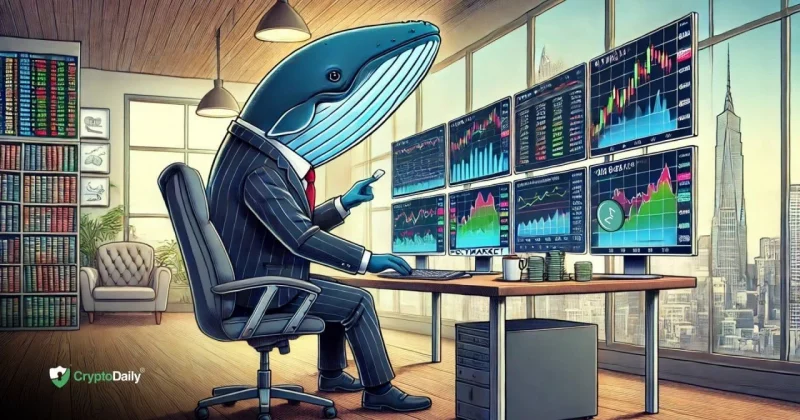
The core of Polymarket’s resolution mechanism relies on UMA’s Optimistic Oracle, a decentralized system designed to settle disputes over market outcomes through token holder voting. However, the WSJ’s investigation found that the ten largest holders of UMA tokens wield disproportionate influence, controlling over 50% of the voting power in the majority of Polymarket disputes. This concentration means that a small cadre of "whales"—individuals or entities holding substantial amounts of cryptocurrency—can significantly sway the outcome of critical market resolutions. The crucial concern is that these powerful voters are not dispassionate arbiters; they are active participants in the prediction markets themselves, with direct financial stakes in how specific outcomes are settled. Their personal financial interests, therefore, may not always align with the objective truth or the equitable resolution of a dispute.
The "Oracle Problem" and its Real-World Consequences
The reliance on a token-voting system for dispute resolution is a manifestation of what is often termed the "oracle problem" in blockchain technology. Oracles are essential intermediaries that bring real-world data onto the blockchain, enabling smart contracts to execute based on external events. In Polymarket’s case, the UMA Optimistic Oracle is intended to serve this function for prediction markets. However, the current implementation at Polymarket appears to be susceptible to manipulation due to the concentrated ownership of UMA tokens.
The WSJ’s reporting further substantiates this concern by highlighting that a significant portion of active UMA voters over the past year—at least 60%—have been directly linked to Polymarket accounts. This indicates a self-referential loop where market participants are also the arbiters of disputes, creating a clear conflict of interest. When traders disagree on the payout for a market, the decision rests not with an independent, neutral body, but with individuals who have "skin in the game." Their votes can directly impact their own financial positions, potentially incentivizing them to vote in a manner that benefits them personally, rather than to accurately reflect the true outcome.
This issue is not merely theoretical; it has already manifested in high-stakes geopolitical betting markets. Reports suggest that whale voters have intervened in disputes related to markets tied to the ongoing conflict in Ukraine and the political standing of its president, Volodymyr Zelenskyy. Such interventions underscore the real-world implications of this concentrated power, where even events of global significance can be subject to the influence of a few financially powerful individuals. This raises profound questions about the reliability of Polymarket as a platform for serious, data-driven prediction and hedging, especially on sensitive topics.
Attempts at Reform: Paper Promises and Stalled Progress
In response to the challenges inherent in decentralized governance, UMA, the protocol underpinning Polymarket’s oracle system, has implemented changes. In August 2025, UMA passed a governance update known as UMIP-189, or MOOV2. This update aimed to refine the voting process by introducing a whitelist of approximately 37 addresses. The intention was to restrict participation in dispute resolution voting to a more curated group of "seasoned, vetted participants." The goal was to filter out noise from less informed or malicious actors and reduce the clogging of the system with trivial disputes.
However, the effectiveness of MOOV2 in addressing the core issue of power concentration is debatable. While it represents a step toward filtering participants, it does not fundamentally resolve the problem of whale dominance. If the same influential wallets that currently control the majority of voting power are simply included in this whitelist of 37 addresses, the concentration of influence remains largely intact. The mechanism, therefore, may have shifted the power to a slightly smaller, but still concentrated, group, without fundamentally democratizing the resolution process.
Meanwhile, Polymarket itself has been exploring more radical structural changes to mitigate its dependence on UMA’s voting apparatus. The platform has floated the idea of launching its own native token, tentatively referred to as POLY. Such a move would aim to internalize the oracle functions directly within Polymarket. This would grant the platform greater control over its dispute resolution mechanisms, potentially reducing its reliance on external, and as it turns out, compromised, decentralized voting systems.
Despite these explorations, the POLY token initiative remains in the "considering" phase, indicating that a tangible solution is not yet imminent. The MOOV2 reforms, while a move in the right direction on paper, appear to have stalled in practice regarding their ability to meaningfully decentralize power. The underlying problem of concentrated wealth dictating outcomes persists, leaving the platform vulnerable to the influence of a select few.
Implications for Traders and the Broader Crypto Market
The concentration of governance power at Polymarket has significant implications for its users, particularly retail traders. For individuals participating in prediction markets, especially on contentious or complex outcomes, the assurance of a fair and objective resolution is paramount. The WSJ’s findings reveal an asymmetric playing field, where the payout of a bet may ultimately hinge on the decisions of a handful of wealthy wallet holders. This can erode trust in the platform and discourage participation from smaller investors who fear their legitimate predictions could be overturned by the vested interests of whales.
The fact that Polymarket is actively exploring the launch of its own native POLY token signals a clear acknowledgment of UMA’s current architecture as a liability rather than an asset. By seeking to internalize oracle functions, Polymarket aims to gain direct control over its dispute resolution design. This could allow them to implement more robust and transparent mechanisms that are less susceptible to the influence of large token holders. It also presents an opportunity for Polymarket to potentially align its governance more closely with its active user base, rather than an external token’s concentrated ownership.
This situation also has broader implications for the cryptocurrency market as a whole. Prediction markets, when functioning correctly, can serve as valuable tools for information aggregation and risk management. They can provide insights into public sentiment and potential future events. However, if these markets are perceived as being easily manipulated by a few powerful actors, their utility diminishes significantly. This can lead to a decline in confidence in decentralized prediction platforms and, by extension, broader decentralized finance (DeFi) applications that rely on similar governance models. The lack of a readily available, robust, and decentralized solution to the oracle problem, as highlighted by Polymarket’s predicament, remains a critical area for innovation and development within the blockchain space.
The current situation at Polymarket serves as a cautionary tale. It underscores the persistent challenges in achieving true decentralization and fair governance within complex blockchain ecosystems. While the promise of "wisdom of the crowd" is appealing, the reality often involves navigating the intricate interplay of economic incentives, power dynamics, and the inherent difficulties of creating truly immutable and incorruptible decentralized systems. The platform’s future, and indeed the credibility of large-scale prediction markets, may depend on its ability to move beyond theoretical reforms and implement tangible solutions that ensure a more equitable and transparent resolution process for all its participants.