Michael Saylor, the prominent Bitcoin maximalist and CEO of MicroStrategy, has publicly addressed recent criticisms regarding the company’s decision to sell a portion of its Bitcoin holdings, totaling $200 million. Saylor, long an advocate for an unwavering "never sell your Bitcoin" philosophy, found himself at the center of accusations of hypocrisy from various quarters within the cryptocurrency community and financial analysis circles. In response, Saylor took to the social media platform X (formerly Twitter) to clarify his stance and the rationale behind MicroStrategy’s strategic financial adjustments.
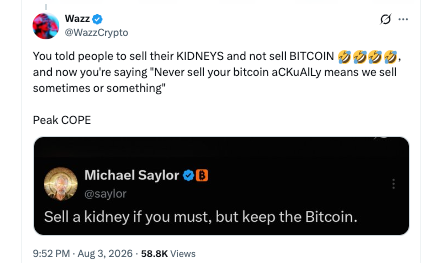
Saylor’s defense hinges on a crucial distinction: his personal advocacy versus corporate policy. He emphasized that his widely publicized "never sell" narrative was always directed at individual investors, advising them against liquidating their personal Bitcoin holdings. He firmly stated that he, personally, has not divested a single satoshi from his own Bitcoin reserves. The decision to sell, he explained, was a corporate one, driven by MicroStrategy’s obligations as a publicly traded entity and its prerogative to manage its assets in a manner deemed most beneficial for the company and its shareholders.
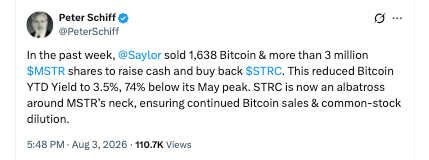
The sale in question, amounting to 1,638 Bitcoin, occurred at an approximate price of $63,957 per Bitcoin. The proceeds from this transaction were strategically allocated to repurchase the company’s Series A convertible preferred stock, referred to as STRC. This move was disclosed in a filing with the Securities and Exchange Commission (SEC) via a Form 8-K, a standard document used to report significant events that are of interest to shareholders.

MicroStrategy’s Evolving Bitcoin Strategy
The recent Bitcoin divestment by MicroStrategy, while drawing sharp criticism from some corners, was not entirely unexpected within the broader financial and crypto landscape. The company’s aggressive accumulation of Bitcoin, often financed through debt instruments and high-yield offerings, had previously raised concerns among on-chain analysts, cryptocurrency entrepreneurs, and even blockchain developers. These concerns primarily revolved around the perceived risk associated with leveraging high-yield financial products, such as the STRC preferred stock, to fund substantial Bitcoin acquisitions.
Historically, Saylor had been a staunch defender of his company’s aggressive Bitcoin acquisition strategy, often doubling down on his public endorsements of the cryptocurrency as a primary corporate treasury asset. However, the recent sale signals a potential recalibration of this strategy. It suggests that Saylor and MicroStrategy may have heeded some of the criticisms and are now implementing a more balanced approach to their Bitcoin holdings.
The company’s actions indicate an effort to reduce its exposure to high-yield debt while simultaneously bolstering its dollar reserves. Although the recent sale represents a relatively small portion of MicroStrategy’s overall Bitcoin holdings, it is being interpreted by some as a symbolic gesture towards greater financial prudence and a de-escalation of previously perceived aggressive risk-taking.
Despite this divestment, MicroStrategy remains one of the largest institutional holders of Bitcoin globally. The company currently holds an impressive 842,138 BTC, acquired at an aggregate cost basis of approximately $63.5 billion. This substantial reserve underscores MicroStrategy’s continued commitment to Bitcoin as a core component of its long-term strategy, even as it navigates the complexities of corporate finance and market volatility.

The Backlash and Contrasting Perspectives
The news of MicroStrategy’s Bitcoin sale triggered a predictable wave of reactions, particularly from individuals and entities known for their critical stance on Bitcoin and Michael Saylor’s investment philosophy.
Peter Schiff, a vocal gold advocate and a long-time critic of Bitcoin, was quick to weigh in on X. His tweet highlighted the perceived irony of Saylor selling Bitcoin, a move that directly contradicts his fervent public pronouncements. Schiff’s commentary often frames Bitcoin as a speculative asset destined for collapse, and he views any indication of selling by prominent holders as validation of his bearish outlook.
Beyond prominent critics, the broader cryptocurrency community also expressed a range of opinions. Some users on X voiced disappointment, interpreting the sale as a sign of weakening conviction in Bitcoin. Others, however, adopted a more nuanced perspective. One user acknowledged Saylor’s distinction between personal and corporate advice, suggesting that as a public company, MicroStrategy has a fiduciary duty to its shareholders that might necessitate strategic adjustments, even if they diverge from Saylor’s personal Bitcoin maximalist creed.
Another user pointed to the financial realities faced by companies like MicroStrategy, especially when their investments are leveraged. The argument presented was that while Saylor’s personal advice to "never sell" might hold true for individuals with different financial structures and risk tolerances, a publicly traded company operates under different imperatives. The need to manage debt, meet financial obligations, and respond to market pressures can compel strategic decisions that differ from an individual’s purely conviction-based investment approach.

Analysis of Implications and Market Context
The sale of Bitcoin by MicroStrategy, even a modest one, carries significant implications for both the company and the broader cryptocurrency market. For MicroStrategy, this move can be seen as a strategic pivot towards mitigating financial risks associated with its aggressive Bitcoin accumulation strategy. By repurchasing its preferred shares, the company is effectively deleveraging its balance sheet and reducing its exposure to potential interest rate hikes or market downturns that could impact the cost of servicing its debt.
This recalibration might also be a response to the increasing scrutiny from financial regulators and investors regarding the use of high-yield instruments for cryptocurrency purchases. A more conservative approach could enhance investor confidence and improve the company’s financial stability in the long run.
From a market perspective, MicroStrategy’s sales, while currently small in scale, can influence market sentiment. Given Saylor’s influential status in the Bitcoin community, any indication of selling by MicroStrategy can lead to a ripple effect, potentially prompting other institutional investors to re-evaluate their own Bitcoin holdings or strategies. However, the relatively small size of the sale and the stated purpose of repurchasing preferred stock suggest that this is not an indication of a wholesale exit from Bitcoin.
It is also important to consider the context of Bitcoin’s price action around the time of the sale. Bitcoin had experienced a period of price appreciation leading up to this event, potentially creating a favorable environment for MicroStrategy to realize some gains or manage its cost basis more effectively. The average cost basis of MicroStrategy’s Bitcoin holdings is reportedly around $75,000, which is above the current market price of approximately $63,000. This suggests that the recent sale might not have been driven by a desire to capture immediate profits, but rather by a need to rebalance the company’s financial structure and reduce the pressure of carrying high-cost debt.
The company’s continued holding of over 842,000 Bitcoin underscores its deep commitment to the cryptocurrency. This massive reserve solidifies MicroStrategy’s position as a major player in the Bitcoin ecosystem, and its future actions will continue to be closely watched by investors, analysts, and the broader crypto community. Saylor’s defense, while facing criticism, highlights the complex interplay between personal investment conviction and the financial responsibilities of a publicly traded corporation. The long-term success of MicroStrategy’s Bitcoin strategy will ultimately be judged by its ability to navigate market volatility, manage financial risks, and deliver value to its shareholders.
Background and Chronology of Events
MicroStrategy’s journey with Bitcoin began in August 2020, when the company first announced its decision to adopt Bitcoin as its primary treasury reserve asset. This move was considered groundbreaking at the time, marking one of the first major publicly traded companies to allocate a significant portion of its corporate treasury to the volatile cryptocurrency.
The company’s Bitcoin accumulation strategy has been characterized by consistent purchases, often made during periods of price volatility. Michael Saylor, as the public face of this strategy, has been an ardent evangelist for Bitcoin, frequently appearing in interviews and on social media to extol its virtues as a digital store of value and a hedge against inflation.
Timeline of Key Events:
- August 2020: MicroStrategy announces its initial purchase of $250 million worth of Bitcoin, signaling a paradigm shift in corporate treasury management.
- September 2020: The company further increases its Bitcoin holdings, raising its total investment to over $425 million.
- December 2020: MicroStrategy announces a new financing arrangement, including a $650 million convertible debt offering, to fund additional Bitcoin purchases.
- February 2021: The company raises another $1.05 billion through a convertible note offering, demonstrating its unwavering commitment to accumulating Bitcoin. During this period, Bitcoin’s price experienced significant rallies, with MicroStrategy often buying at or near price peaks.
- 2021-2022: MicroStrategy continues its Bitcoin buying spree, utilizing various financing methods, including debt, to acquire tens of thousands of Bitcoin. This period saw the company’s Bitcoin holdings grow substantially, making it the largest corporate holder of the cryptocurrency.
- Mid-2022: As Bitcoin’s price experienced a significant downturn, concerns about MicroStrategy’s leveraged Bitcoin holdings intensified. The company faced potential margin calls, though Saylor maintained that the company had sufficient liquidity to manage such situations.
- Late 2022 – Early 2023: MicroStrategy begins exploring more complex financing structures, including the use of preferred stock offerings like STRC, to fund further Bitcoin acquisitions and manage its financial obligations. This period also saw increased scrutiny from financial analysts regarding the sustainability of its strategy.
- May 2024: MicroStrategy files an 8-K with the SEC, disclosing the sale of 1,638 Bitcoin for approximately $200 million. The proceeds are earmarked for repurchasing STRC preferred shares.
- Post-Sale: Michael Saylor addresses criticisms on X, differentiating his personal "never sell" advice from corporate financial strategy. The market reacts with mixed sentiment, with some viewing it as a sign of caution and others as a potential weakening of conviction.
This chronology illustrates MicroStrategy’s aggressive and sustained engagement with Bitcoin, punctuated by periods of significant accumulation, periods of market downturns, and now, a strategic adjustment in its financial management. The company’s ongoing narrative is one of navigating the inherent volatility of Bitcoin while striving to maintain financial stability and shareholder value.