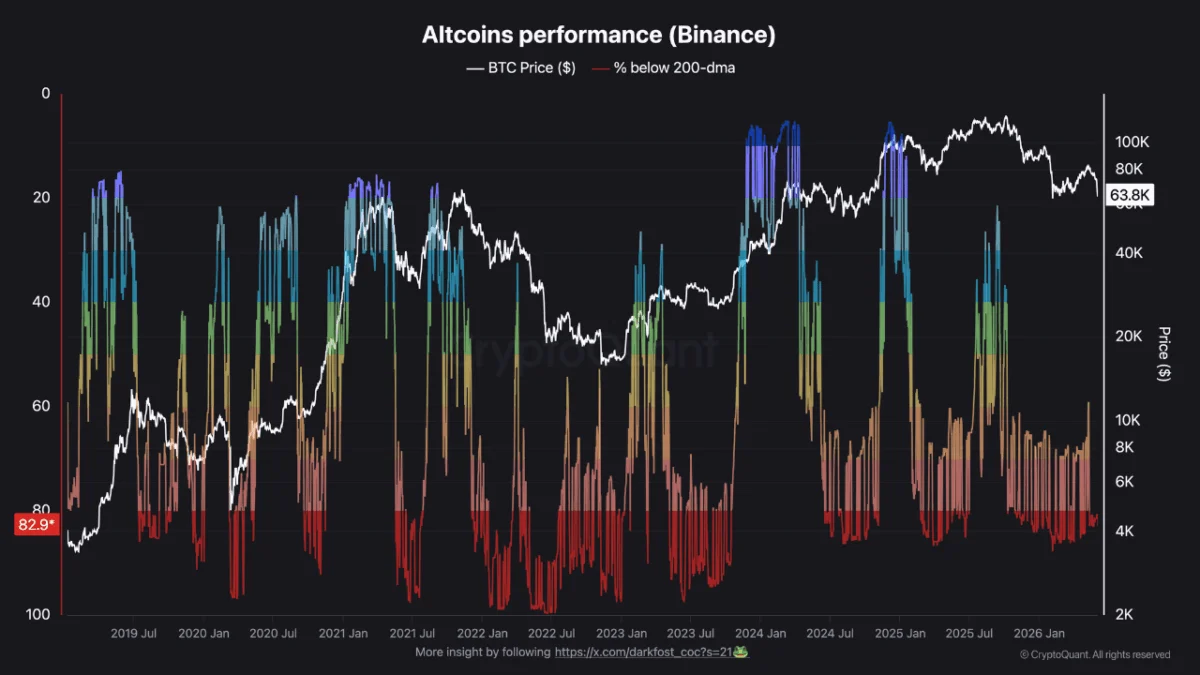
The global cryptocurrency market is currently grappling with a profound structural shift as alternative cryptocurrencies, commonly referred to as altcoins, face one of their most challenging periods in the current market cycle. According to recent data and analysis from seasoned market observer Darkfost, the altcoin sector has entered a state of significant distress, characterized by a massive exodus of capital and a breakdown of long-term technical support levels. This downturn is not occurring in a vacuum; it follows a tumultuous period for global financial markets where over $1 trillion in value was evaporated from U.S. equities in a single Friday session. The catalyst for this broader financial contagion was a sharp decline in investor confidence surrounding artificial intelligence (AI) and semiconductor stocks, which led to a 2.6% drop in the S&P 500 and a 4.7% plunge in the Nasdaq. While Bitcoin also felt the pressure, losing 4% of its value, the impact on the altcoin market has been disproportionately severe and remarkably persistent.
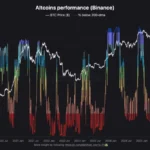
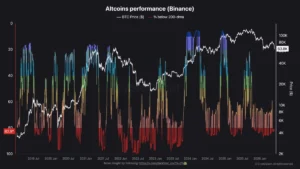
The current state of the market reveals a stark divergence between Bitcoin and the rest of the digital asset landscape. For much of the last two years, investors have looked for signs of a traditional "altcoin season"—a period where smaller-cap tokens outperform the market leader. However, since December 2024, altcoins have consistently underperformed, showing a weakening correlation with Bitcoin’s price movements. Darkfost’s analysis, utilizing data from CryptoQuant, highlights a sobering statistic: 83% of all altcoins are currently trading below their 200-day moving average (200DMA). This technical indicator is widely regarded by institutional and retail traders alike as the definitive "line in the sand" for long-term trends. When an asset trades below this level, it is generally considered to be in a long-term bearish phase, signaling that selling pressure is overwhelming any attempts at a sustained recovery.
The Technical Breakdown: Understanding the 200-Day Moving Average
The 200-day moving average is a cornerstone of technical analysis, representing the average closing price of an asset over the preceding 200 trading sessions. It serves as a barometer for the overall health of a market segment. When the vast majority of a sector—83% in this instance—falls below this threshold, it suggests a systemic lack of demand. In previous cycles, the percentage of altcoins trading below their 200DMA typically fluctuated between 60% and 90%. The current reading, which sits at the higher end of that spectrum, underscores a period of extreme weakness that hasn’t been seen with such intensity since the depths of previous bear markets.
This technical deterioration is a reflection of shifting investor sentiment. Throughout the 2024-2025 cycle, capital has increasingly concentrated in Bitcoin, largely driven by the success of spot Bitcoin Exchange-Traded Funds (ETFs) in the United States. These institutional vehicles have created a "flight to quality" within the crypto space, where professional investors favor the liquidity and regulatory clarity of Bitcoin over the higher-risk profiles of decentralized finance (DeFi) protocols, Layer 1 platforms, and memecoins. As a result, the "breadth" of the market—the number of individual assets participating in a rally—has narrowed significantly, leaving the majority of the altcoin market in a state of stagnation or decline.
Financial Impact: The $520 Billion Valuation Gap
The practical consequence of this technical breakdown is a staggering loss in market capitalization. Data from TradingView’s TOTAL3 index, which monitors the total market value of all cryptocurrencies excluding Bitcoin and Ethereum, shows a dramatic contraction. Since reaching a local peak in late 2024, the TOTAL3 valuation has shed approximately $520 billion. The index, which previously flirted with the $1.2 trillion mark, has retreated to approximately $670 billion. This decline has effectively erased several months of gains, returning the broader altcoin market to valuation levels last seen in November 2024.
This $520 billion wipeout represents a massive destruction of paper wealth and has significant implications for the broader ecosystem. Many of these projects rely on the value of their native tokens to fund development, incentivize network participants, and maintain liquidity in decentralized exchanges. When valuations plummet by nearly 50% across the board, the operational sustainability of smaller projects comes into question. Furthermore, the sharp contraction underscores the extent of capital flight; investors are not merely rotating from one altcoin to another, but are instead exiting the altcoin ecosystem entirely in favor of Bitcoin or stablecoins.
A Chronology of Market Decline and Global Contagion
The current crisis can be traced back to a series of macroeconomic and sector-specific events that converged to create a "perfect storm" for risk assets.

- The AI Sentiment Shift: In late 2024 and early 2025, the exuberant trade in AI and semiconductor stocks began to show signs of exhaustion. After nearly two years of parabolic growth, concerns over the actual return on investment (ROI) for AI infrastructure led to a massive sell-off in giants like NVIDIA and AMD. This "AI fatigue" spilled over into the crypto market, particularly affecting "AI-themed" tokens that had previously benefited from the hype.
- Global Equity Rout: The $1 trillion loss in U.S. markets on a single Friday served as a major de-risking event. As margin calls were triggered in traditional finance, institutional players liquidated their most liquid and speculative assets—often starting with cryptocurrencies—to cover positions elsewhere.
- Institutional Dominance: Throughout 2024, the narrative was dominated by the Bitcoin ETF. While Bitcoin reached new all-time highs, the expected "trickle-down" effect into altcoins failed to materialize. Unlike the 2017 or 2021 cycles, where retail investors moved aggressively into "cheaper" tokens, the 2024-2025 cycle has been characterized by institutional precision, focusing almost exclusively on Bitcoin.
- The August-December Stagnation: While Bitcoin managed to recover from various dips, altcoins remained tethered to their lows. The inability of the TOTAL3 index to make a higher high in early 2025 served as a warning sign for analysts like Darkfost, who noted that the market was becoming increasingly top-heavy.
Contrarian Perspectives: Is Maximum Pessimism an Opportunity?
Despite the prevailing gloom, some analysts argue that these conditions are the necessary precursor for a genuine market bottom. Darkfost points out that periods of extreme pessimism, where nearly 90% of assets are trading below their long-term averages, have historically offered the most attractive entry points for long-term investors.
The analyst notes a historical inverse relationship between market breadth and future returns. For example, in March and December 2024, nearly 90% of altcoins were trading above their 200DMA. While those periods were marked by intense euphoria and "moon" predictions, they actually represented local peaks where the upside potential was exhausted. Conversely, when the market is "washed out"—as it appears to be now—the lack of remaining sellers often paves the way for a gradual recovery. The current lack of participation is the strongest recorded since 2017, which, while painful for current holders, suggests that the market is reaching a state of capitulation.
Broader Implications and the Road Ahead
The ongoing struggle of altcoins raises fundamental questions about the future of the digital asset industry. If the majority of tokens continue to underperform Bitcoin, the "utility" narrative of many blockchain projects will face increased scrutiny. We are seeing a "flight to quality" that may result in a permanent culling of the herd, where only projects with genuine adoption, revenue, and institutional interest survive.
For retail investors, the current environment is a stark reminder of the risks inherent in the altcoin market. The high volatility that provides massive returns on the upside also works with equal force on the downside. As the TOTAL2 (Altcoins + Ethereum) and TOTAL3 charts suggest, the path to recovery will likely be slow and dependent on a stabilization of the global macroeconomic environment.

Market participants are now closely watching the Federal Reserve’s interest rate policy and the stability of the U.S. tech sector. A pivot toward more accommodative monetary policy could provide the liquidity needed to jumpstart the altcoin market. However, until the percentage of assets trading below the 200-day moving average begins to trend downward, the altcoin market remains in a precarious "danger zone." The $520 billion loss is not just a statistic; it is a testament to a market in the midst of a painful but perhaps necessary correction, as it seeks to find its footing in an increasingly institutionalized financial landscape.