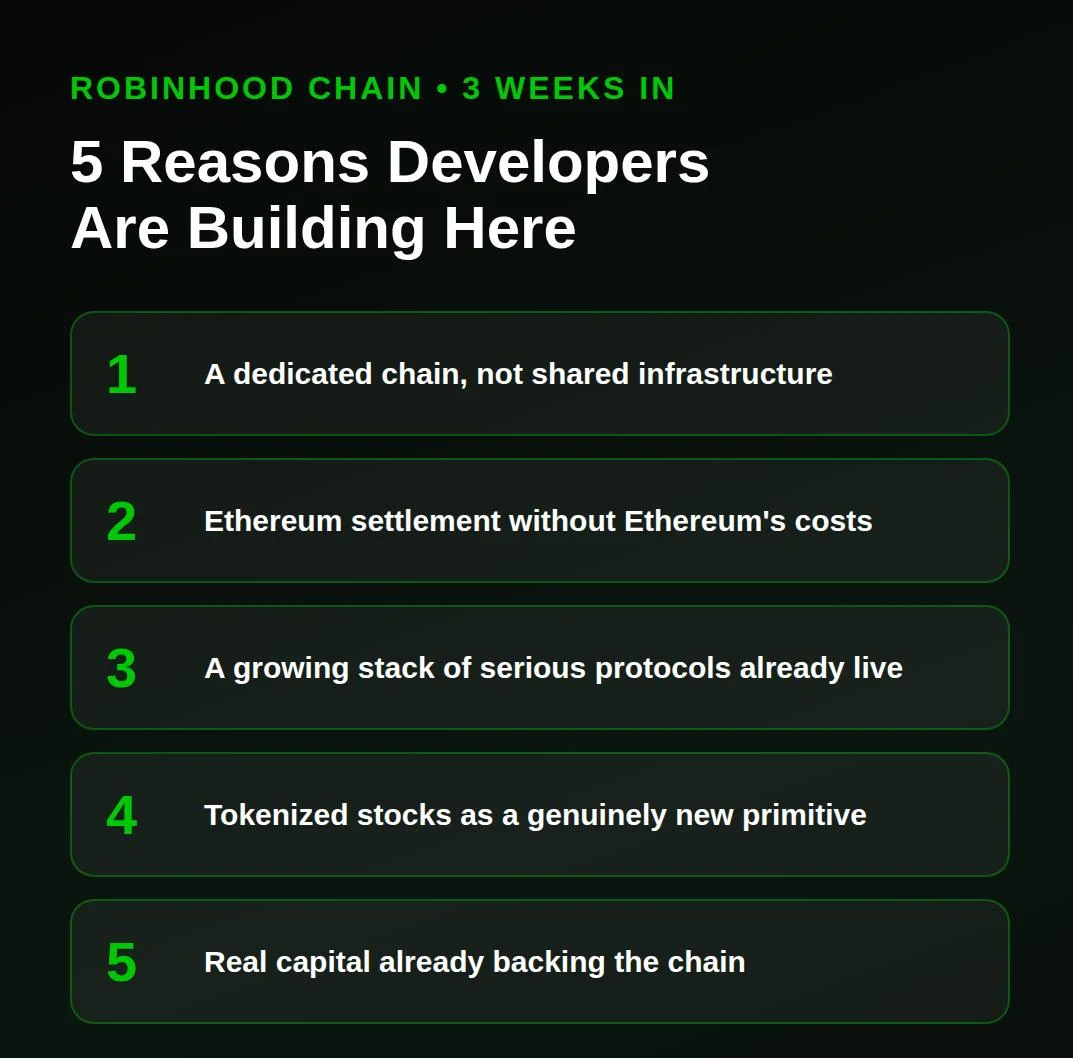
Barely three weeks after its public mainnet launch on July 1st, Robinhood Chain has emerged as a formidable new player in the blockchain ecosystem, defying the typical trajectory of nascent layer 2 (L2) solutions whose initial hype often dissipates within a month. This Ethereum L2, backed by the prominent fintech brokerage Robinhood and built on Arbitrum’s Orbit stack, is witnessing an unprecedented pace of developer engagement, rapidly attracting builders at a rate that has surpassed many other infrastructure projects observed this year. The underlying appeal, upon closer examination, stems from a confluence of strategic design choices, robust technical foundations, and Robinhood’s unique market position.
The Genesis of Robinhood Chain: A Strategic Pivot in Digital Assets
Robinhood’s foray into the blockchain space is not a sudden leap but rather an evolution of its digital asset strategy. The company, known for democratizing access to financial markets, initially dipped its toes into cryptocurrency trading, providing a user-friendly gateway for retail investors. This engagement expanded significantly when, as early as 2025, Robinhood began experimenting with tokenized stock products on Arbitrum One. This initial move allowed Robinhood to leverage an established L2, gaining access to its existing liquidity and a burgeoning developer ecosystem. However, operating on shared infrastructure presented inherent limitations, particularly the need to compete for block space and gas efficiency with a multitude of other applications. This competition often leads to unpredictable transaction costs and slower execution times, which are significant drawbacks for financial applications requiring high throughput and cost predictability.
Recognizing these constraints and foreseeing the burgeoning potential of tokenized real-world assets (RWAs), Robinhood made a strategic decision to develop its own dedicated L2. Utilizing the Arbitrum Orbit stack, a highly flexible framework that empowers developers to launch their own customizable L2 or L3 chains without the arduous task of building consensus infrastructure from scratch, Robinhood Chain was born. This approach allowed Robinhood to tailor the chain specifically to its core priorities: facilitating tokenized RWAs, ensuring fast execution, offering predictable fees, and handling the substantial transaction volumes characteristic of sophisticated financial applications. The launch on July 1st marked a pivotal moment, introducing a new generation of tokenized stocks and ETFs designed for round-the-clock trading and seamless integration into on-chain applications. This foundational shift from a shared environment to a purpose-built one is a critical differentiator, offering developers an infrastructure precisely tuned for their specialized needs, rather than a generic platform requiring extensive workarounds.
Optimized Infrastructure: Tailoring for Real-World Asset Integration
One of the primary drivers behind the rapid developer adoption on Robinhood Chain is its dedicated infrastructure. Unlike general-purpose L2s that strive to be "good enough" for a wide array of applications, Robinhood Chain has been meticulously optimized for a specific, high-value use case: real-world asset tokenization and related financial applications. This distinction is often underestimated in the broader blockchain landscape. General-purpose chains, by their very nature, are optimized for nothing in particular, making them suitable for many things but ideal for very few.
Robinhood Chain fundamentally alters this paradigm. By building a dedicated L2, Robinhood has created an environment where resources are not contended for by unrelated applications. This allows for a focus on critical performance metrics essential for financial services: high transaction throughput, minimal latency, and consistent, predictable transaction fees. For developers building decentralized finance (DeFi) protocols, lending platforms, or structured products that aim to interact with tokenized equities and ETFs, launching on an infrastructure engineered for precisely these problems represents a profoundly different and more attractive proposition. It eliminates the need to "fight for space" or compromise on performance, enabling more efficient and robust application design. This specialized optimization directly translates into a superior user experience and greater operational efficiency for protocols operating within its ecosystem.
Leveraging Ethereum’s Security, Mitigating Its Costs
The architecture of Robinhood Chain strategically combines the best of both worlds: the unparalleled security of Ethereum and the scalability and cost-efficiency of an L2. The chain settles its transactions to Ethereum, meaning that while transactions are processed off-chain on Robinhood Chain, they are periodically batched together and posted back to Ethereum’s main network for final settlement and data availability. This rollup architecture is the cornerstone of its ability to offer significantly lower fees and faster transaction execution compared to transacting directly on Ethereum, all while inheriting Ethereum’s robust security guarantees. It eliminates the need for Robinhood Chain to build a trust model from scratch, a monumental and often risky undertaking for new blockchain networks.
This architectural choice holds immense significance for developers, arguably more so than for end-users. Building on an Ethereum-settled chain grants immediate access to an enormous, mature ecosystem of tooling, security auditors, and infrastructure providers who are already intimately familiar with securing and interacting with Ethereum-compatible systems. This represents a substantial head start, providing developers with proven resources and best practices from day one. In contrast, building on an entirely novel base layer with unproven security assumptions or a nascent tooling ecosystem introduces considerable risks and development overhead. The established security paradigm and the deep talent pool surrounding Ethereum provide a crucial layer of confidence and reliability, which is paramount for financial applications dealing with significant capital.
A Flourishing Ecosystem: Composability from Day One
Developers do not build in isolation; they gravitate towards ecosystems where composability and existing liquidity are readily available. Robinhood Chain has remarkably assembled a robust lineup of serious protocols faster than anticipated for a network of its age. This strategic approach ensures that new protocols are not tasked with bootstrapping an ecosystem from scratch, but rather plug into an already vibrant and functional DeFi landscape.
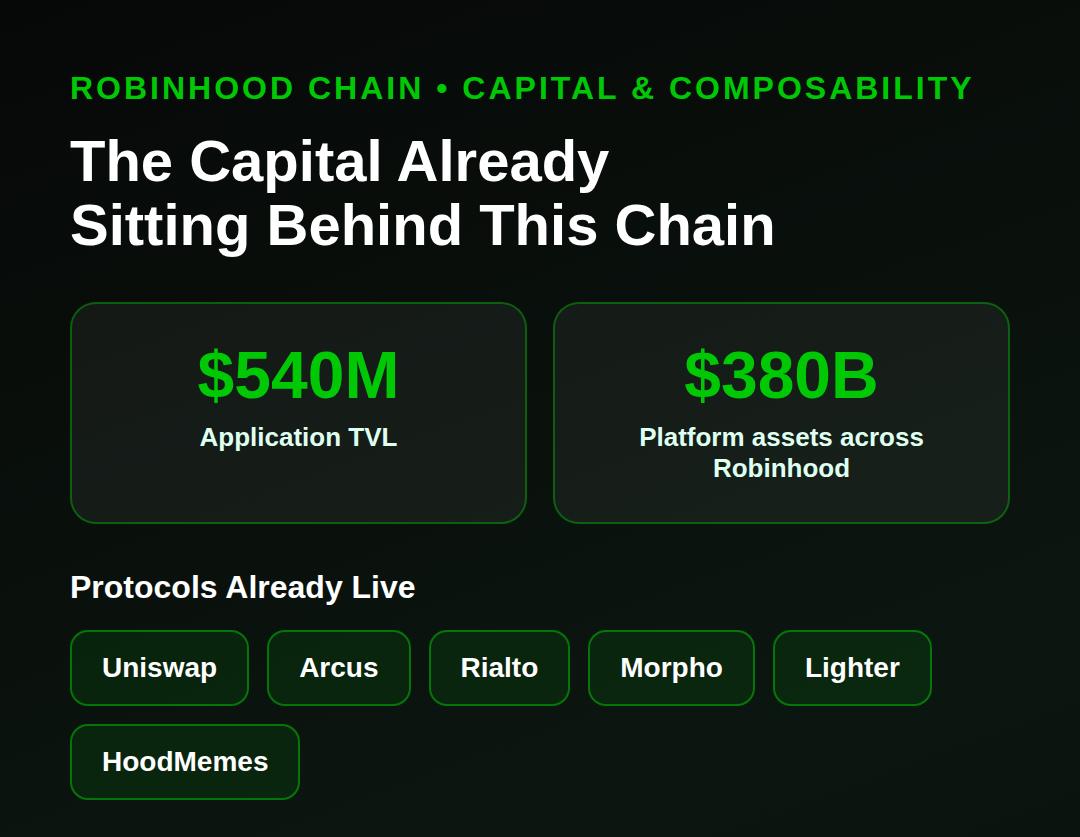
Key protocols already live on Robinhood Chain include:
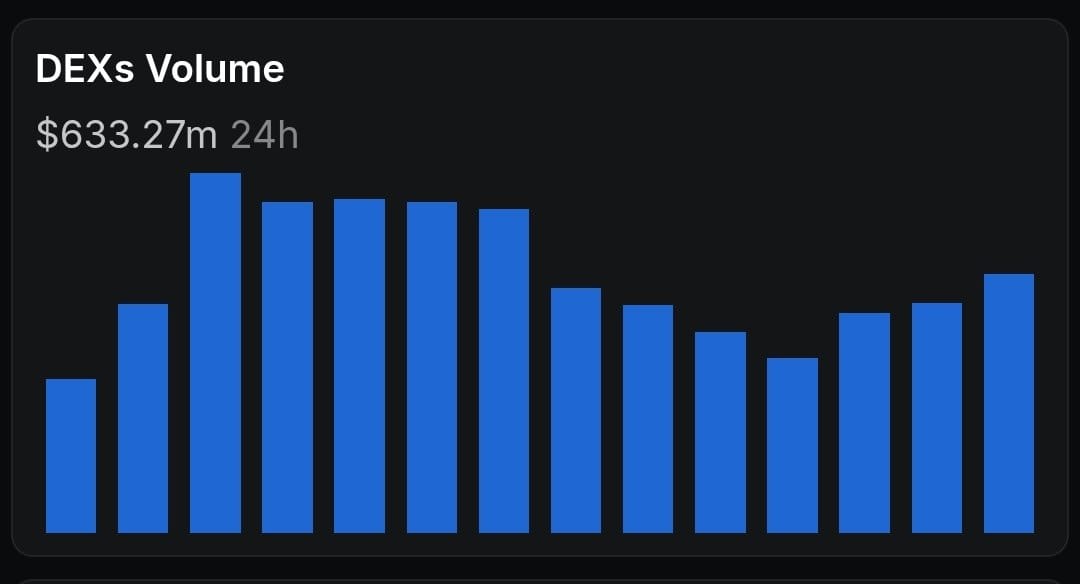
- Uniswap: Serving as the chain’s core decentralized exchange (DEX), providing essential liquidity and trading infrastructure for various tokens.
- Arcus: Handling both spot DEX activity and perpetual trading, offering advanced financial instruments.
- Rialto: Operating as another crucial DEX and liquidity aggregator, enhancing trading efficiency and depth.
- Morpho: Bringing sophisticated lending and borrowing infrastructure, enabling users to leverage assets and earn yield.
- Lighter: Adding another venue for perpetual trading, catering to more complex derivative strategies.
- HoodMemes: Functioning as a dedicated memecoin launchpad, catering to a specific, culturally driven segment of the crypto market and demonstrating the chain’s flexibility.
This impressive lineup signifies that Robinhood Chain launched with enough critical DeFi infrastructure already in place. For a new protocol, this means immediate access to existing liquidity, established trading venues, and lending/borrowing mechanisms, fostering a dynamic environment where applications can build upon one another. This "composability" is a powerful magnet for developers, reducing time-to-market and increasing the likelihood of successful project launches. The ecosystem tells a clear story: it is not a chain passively waiting for its community to materialize; it is a chain actively cultivating it with essential building blocks.
The Game Changer: Native Tokenized Stocks and ETFs
Perhaps the single most compelling differentiator pulling developers to Robinhood Chain is its native support for tokenized stocks and ETFs. These are real-world equities and exchange-traded funds made available on-chain, opening up entirely new possibilities for DeFi applications. Unlike purely crypto-native collateral, these tokenized assets can be used as collateral in lending protocols, lent out to earn yield, or integrated into structured products that bridge traditional finance with decentralized applications.
This capability is not easily replicated by most other blockchain networks. It is uniquely dependent on Robinhood’s extensive existing regulatory and brokerage infrastructure, which sits underneath and supports the blockchain itself. Robinhood, as a regulated financial entity, possesses the necessary licenses, compliance frameworks, and operational expertise to legally and securely tokenize traditional securities. This integration allows for a seamless conversion of conventional assets into their on-chain counterparts, offering a level of authenticity and regulatory backing that generic L2s cannot provide.
For developers aiming to build lending protocols, derivative platforms, or any application that seeks exposure to real-world assets rather than being confined to purely crypto-native collateral, tokenized stocks represent a genuinely novel and powerful building block. This feature positions Robinhood Chain as a unique proposition in the crowded L2 landscape, offering a tangible bridge between the multi-trillion-dollar traditional financial markets and the burgeoning DeFi space. No other general-purpose L2 launching today can cleanly plug in real equities as a native on-chain asset class with the same level of institutional backing and regulatory clarity.
Unlocking Institutional Capital: The $380 Billion Catalyst
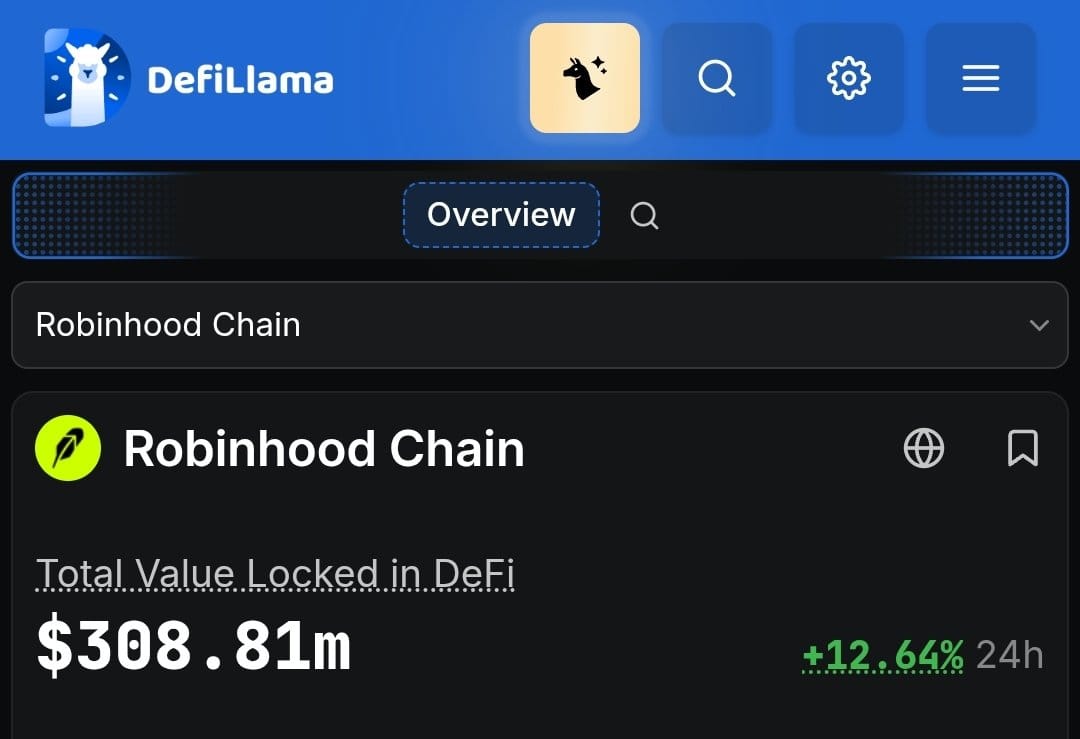
While technical prowess and innovative features are crucial, the true long-term viability and attractiveness of any blockchain ecosystem depend significantly on the capital flowing through it. This is where Robinhood Chain presents an exceptionally compelling case. According to data shared by Token Terminal, Robinhood Chain currently shows approximately $540 million in application Total Value Locked (TVL) – an impressive figure for such a young chain. However, this number pales in comparison to the staggering $380 billion in platform assets held across Robinhood’s broader business operations.
This $380 billion figure is arguably the most significant magnet for developers. Most new chains face the arduous task of organically attracting capital, a process that can take years and is often highly competitive. Robinhood Chain, in contrast, possesses an enormous existing user base and a colossal asset pool that is, metaphorically speaking, "one step away" from being on-chain. This means that any protocol built on Robinhood Chain is not betting on hypothetical future liquidity; it is strategically positioning itself early for capital that has a clear, plausible, and institutionally backed path onto the chain as Robinhood continues its strategic shift to integrate more of its platform on-chain.
The potential for this massive existing capital to migrate onto the chain over time creates an unparalleled opportunity for applications built within the ecosystem. As more of Robinhood’s platform assets become tokenized and accessible on-chain, protocols gain access to a progressively larger and deeper capital base. This pre-existing, enormous pool of assets provides a level of confidence and a foundation for liquidity that is virtually unmatched by other independent L2 initiatives, making Robinhood Chain an incredibly attractive proposition for serious financial developers and institutions.
Navigating the Robinhood Chain: User Experience and Accessibility
For individuals looking to interact with Robinhood Chain directly, rather than building on it, the entry points are designed to be straightforward and user-friendly. Users can seamlessly send and receive digital assets, trade tokens with low fees, and interact with decentralized applications (dApps) through an ecosystem built for intuitive navigation.
To engage in token trading, users typically connect a compatible Web3 wallet (such as MetaMask) to a supported decentralized exchange (DEX) like Uniswap, Arcus, or PancakeSwap operating on Robinhood Chain. After selecting the desired token and amount, and reviewing the transaction details, the swap can be confirmed. A critical security best practice, universally applicable across all blockchain networks, is to always verify a token’s official contract address before initiating any purchase. This simple step is highly effective in preventing most scam-related losses by ensuring interaction with legitimate assets.
It is noteworthy that Robinhood Chain does not feature a native token of its own. Gas fees, which are necessary to process transactions, are paid in ETH, consistent with the operational model of most established Ethereum layer 2 networks. This design choice implies there is no speculative "NPRO-style token play" or airdrop mechanism baked into the chain’s fundamental function, focusing instead on utility and integration with the broader Ethereum ecosystem. This simplicity around gas fees further streamlines the user experience and aligns with established L2 practices.
Broader Implications and the Future of Hybrid Finance
The rapid emergence and developer traction of Robinhood Chain carry significant implications for the broader blockchain industry, traditional finance, and the evolving landscape of hybrid finance (TradFi-DeFi integration). Robinhood Chain represents a potent example of a regulated financial entity leveraging blockchain technology to innovate beyond mere crypto trading. Its success could accelerate the mainstream adoption of tokenized real-world assets, demonstrating a scalable and secure model for integrating traditional securities into decentralized ecosystems.
The project also puts a spotlight on the Arbitrum Orbit stack as a powerful tool for enterprises seeking to launch custom L2s tailored to specific business needs. This trend towards application-specific or enterprise-specific chains, while settling on a robust base layer like Ethereum, is likely to grow, offering greater control, performance, and compliance capabilities.
However, challenges remain. The regulatory landscape for tokenized securities is still evolving globally, and Robinhood Chain will undoubtedly face scrutiny as it pushes the boundaries of what’s possible. User education and bridging the knowledge gap between traditional finance users and decentralized applications will also be crucial for mass adoption. Competition from other L2s and established financial institutions exploring similar avenues will intensify.
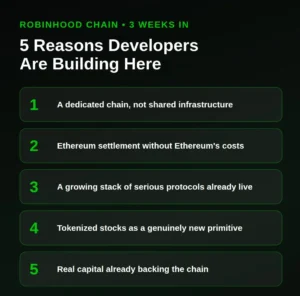
Ultimately, the combination of purpose-built infrastructure, Ethereum-grade security, a pre-seeded DeFi ecosystem, truly novel tokenized assets, and a colossal, existing capital base with a clear migration path makes Robinhood Chain a formidable force. It is not merely another L2; it is a strategic initiative poised to reshape how traditional assets interact with the decentralized world, potentially ushering in a new era of financial interoperability and innovation. The synergistic effect of these five factors explains the current pace of building and positions Robinhood Chain as a critical project to watch in the ongoing convergence of TradFi and DeFi.