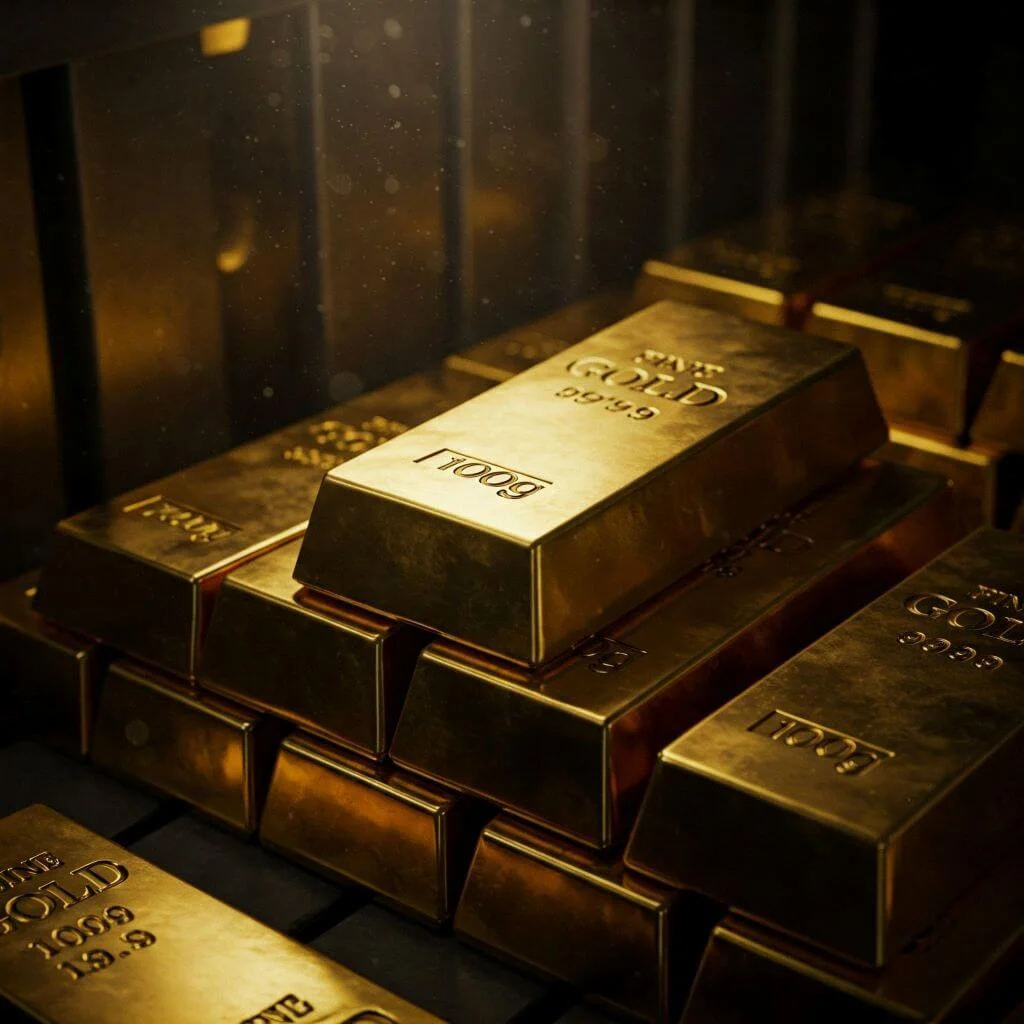
The precious metal experienced a significant rally on Friday, propelling its price to levels not seen in months, following the release of disheartening employment figures that substantially diminished market expectations for aggressive Federal Reserve policy tightening. Gold, a traditional safe-haven asset, advanced by a robust 2.3% to settle at $4,340.70 per ounce, marking its strongest closing price since mid-June of the previous year. This upward movement was mirrored by silver, which posted comparable strength, climbing 3.1% to reach $63.33 per ounce, achieving its highest close since late June. The combined performance contributed to gold’s strongest weekly showing since late January, with a 7.2% appreciation, while silver surged 10% for its best weekly performance since the conclusion of February.
The Economic Catalyst: A Stuttering Labor Market
The primary driver behind gold’s resurgence was a series of unexpectedly weak labor market statistics released by the Labor Department. Figures revealed that the U.S. economy shed 23,000 positions in July, a stark contrast to economist projections that had called for a significant increase of 85,000 jobs. This substantial miss not only highlighted a potential slowdown in economic activity but also prompted a rapid reassessment of the Federal Reserve’s likely trajectory for interest rates.
Adding to the concern, previous months’ employment growth figures underwent substantial downward adjustments, painting an even weaker picture of the labor market’s underlying health. June’s employment growth was revised down to a meager 20,000 positions from the originally reported 57,000, indicating that the initial assessment of job creation was overly optimistic. Similarly, May’s numbers saw a dramatic cut, dropping from an initial report of 129,000 jobs to just 63,000. These consecutive and significant downward revisions suggest that the U.S. labor market has been losing momentum for several months, rather than the July data being an isolated anomaly. The cumulative effect of these revisions implies a broader deceleration in hiring and economic expansion than previously understood, reinforcing the narrative of a cooling economy.
Shifting Federal Reserve Expectations and Monetary Policy Implications
The Federal Reserve operates under a dual mandate: to achieve maximum employment and maintain price stability. When employment figures unexpectedly decline, especially when coupled with significant downward revisions to prior data, it signals a potential weakening in one of the Fed’s key objectives. This weakening labor market reduces the pressure on the central bank to aggressively tighten monetary policy through interest rate hikes, as concerns about economic growth may begin to outweigh fears of persistent inflation.
Market participants swiftly adjusted their expectations in response to the disappointing jobs report. According to CME Group’s widely monitored FedWatch tool, which tracks the probability of future rate changes, the likelihood of a September rate increase by the Federal Reserve declined markedly. Prior to the employment release, the market had priced in a 57% chance of a rate hike; immediately after the data, this probability plummeted to just 42%. This shift reflects a growing conviction among investors that the Fed may either pause its tightening cycle sooner or even consider rate reductions earlier than previously anticipated, should economic weakness persist.
A less hawkish Federal Reserve policy stance has several direct implications for gold. Primarily, declining rate expectations tend to compress real yields—the return on an investment after accounting for inflation. As interest rates fall or are expected to remain stable while inflation persists, the real return on fixed-income assets diminishes. This makes non-yielding assets like gold, which do not offer interest payments, relatively more attractive. Furthermore, a dovish shift by the Fed typically pressures the U.S. dollar, as lower interest rates reduce the currency’s appeal to international investors seeking higher returns. Since gold is denominated in dollars, a weaker dollar makes gold cheaper for holders of other currencies, thereby boosting demand. These dynamics collectively strengthen investment appetite for the yellow metal, enhancing its appeal as both a safe-haven and an inflation hedge in an environment of perceived monetary policy loosening.
Broader Market Reactions and Investor Sentiment
The impact of the employment data reverberated across global financial markets. Beyond the immediate effect on gold, bond yields, particularly for U.S. Treasuries, saw a notable decline as investors moved into safer assets and adjusted to lower interest rate expectations. This drop in yields further underscored the diminished prospects for aggressive monetary tightening. Equity markets, while initially showing some volatility, often interpret a less hawkish Fed as a positive for corporate earnings and economic growth, although significant weakness in the labor market can temper such optimism.
The immediate reaction highlighted gold’s enduring role as a primary safe-haven asset, a store of value that investors flock to during times of economic uncertainty or shifts in monetary policy. The sustained accumulation observed in gold-backed exchange-traded funds (ETFs) such as the SPDR Gold Shares ETF (GLD) and comparable investment vehicles provided tangible evidence of this heightened investor confidence. This inflow into physical gold-backed instruments indicates that institutional and retail investors are actively positioning themselves to benefit from or hedge against the current economic climate, signaling a robust underlying demand beyond speculative trading.
Expert Analysis and Ambitious Price Projections
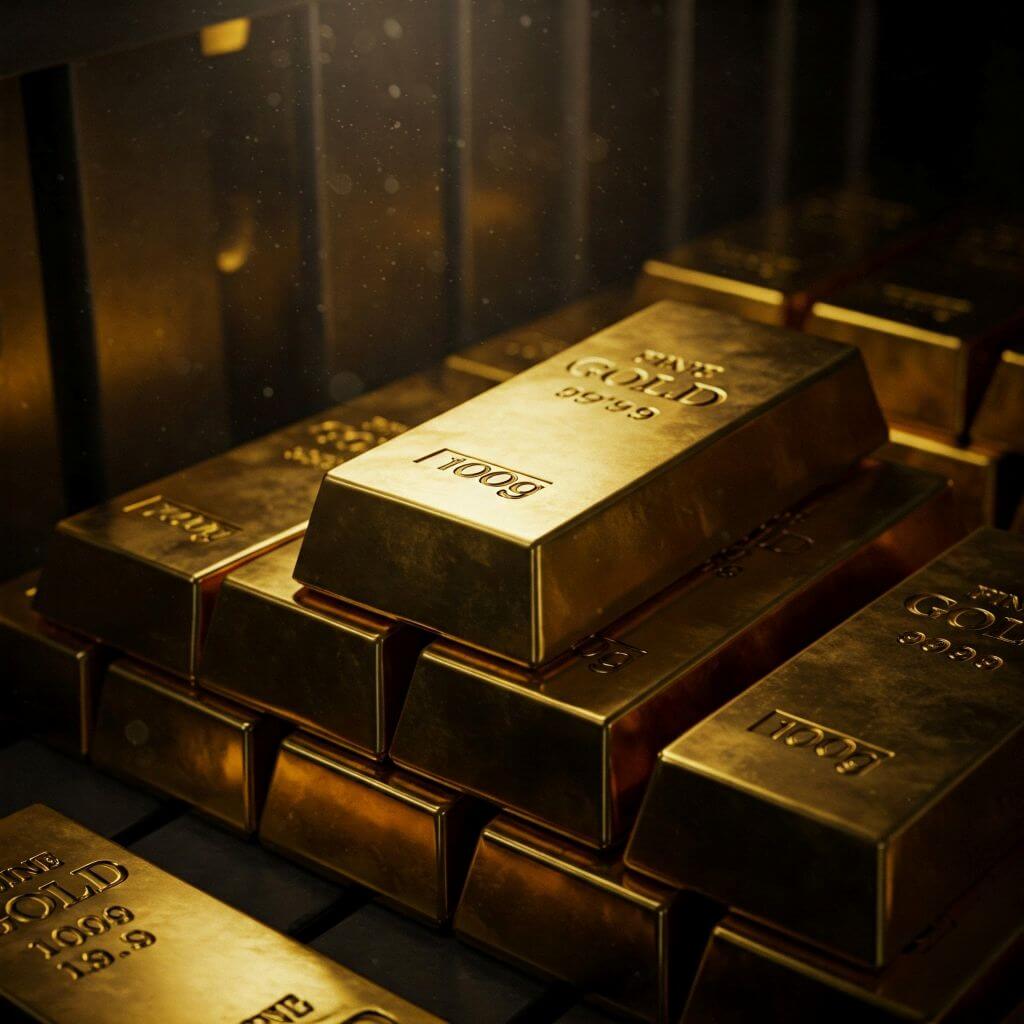
Amidst this market recalibration, prominent financial institutions have reinforced their bullish outlooks for gold. Ulrike Hoffmann-Burchardi, Chief Investment Officer at UBS, conveyed in a recent research note that gold’s recent upward trajectory is underpinned by strong fundamental factors. UBS, a major Swiss bank, maintains an ambitious price projection, anticipating that the precious metal could reach $5,000 per ounce during the first six months of 2027.
The firm’s analysis is predicated on the expectation that global inflation will progressively ease from its recent highs, a scenario that would provide the Federal Reserve with the flexibility to maintain its current policy through the remainder of this year before embarking on interest rate reductions in 2027. Such a policy path, characterized by declining rate expectations, would inevitably lead to a compression of real yields, exert downward pressure on the U.S. dollar, and consequently bolster the investment appetite for gold. UBS analysts specifically suggested that any potential pullbacks in gold prices, particularly those approaching the $4,000 level, could present strategic entry points for investors with longer time horizons, signaling confidence in the metal’s long-term appreciation potential.
However, UBS also acknowledged potential headwinds that could temper gold’s ascent. Significant increases in energy prices, for instance, could reignite inflationary pressures, forcing the Federal Reserve to adopt a more hawkish stance than currently anticipated. Similarly, any unexpected shifts in market expectations toward a more aggressive tightening cycle by the Federal Reserve could enhance the appeal of fixed-income assets, thereby creating downward pressure on precious metals. Such scenarios underscore the delicate balance between inflation management, economic growth, and central bank policy that continuously influences gold’s valuation.
Official Sector Demand and Asian Investor Momentum
Beyond the immediate market reactions and expert forecasts, two significant underlying demand drivers have provided consistent support for gold: official sector accumulation and robust demand from Asian retail investors and investment funds.
Central banks globally have been net buyers of gold for several years, seeking to diversify their foreign exchange reserves away from traditional fiat currencies like the U.S. dollar and hedge against geopolitical and economic uncertainties. China’s monetary authority, the People’s Bank of China (PBOC), stands out in this trend, having added to its gold reserves for an uninterrupted 21 consecutive months. During July, the PBOC acquired 20 tons of gold, marking its most substantial monthly addition since October 2023, according to data compiled by the World Gold Council. This sustained accumulation by one of the world’s largest economies underscores a strategic shift towards increasing gold’s share in national reserves, a move often interpreted as a long-term hedge against currency volatility and geopolitical risks. Other central banks, particularly those in emerging markets, have also been significant buyers, collectively contributing to a robust floor for gold prices.
Concurrently, Asian retail investors and investment funds have played a meaningful role in the recent appreciation of gold. In many Asian cultures, gold holds deep cultural significance and is traditionally viewed as a reliable store of wealth, a hedge against inflation, and a symbol of prosperity. Strong economic growth in several Asian nations, coupled with sometimes volatile local equity markets and currency fluctuations, often drives investors towards gold as a tangible and trustworthy asset. This persistent demand from a diverse base of buyers across the continent, ranging from individual savers to large investment funds, contributes significantly to the global demand dynamics, providing crucial momentum for gold prices.
Historical Context and Future Outlook
The current rally positions gold at a critical juncture. Year-to-date, gold prices remain approximately unchanged, a seemingly modest performance given the recent surge. However, this figure is juxtaposed against a remarkable 65% surge throughout 2025, which saw the metal break multiple historical records. That previous unprecedented rally was largely fueled by a confluence of factors including elevated global inflation, significant geopolitical tensions (such as those in Eastern Europe and the Middle East), and widespread economic uncertainty that led investors to seek safety in tangible assets. The current price level, therefore, reflects a consolidation after that dramatic ascent, with the recent rally indicating renewed upward pressure.
Looking ahead, market attention now shifts to the upcoming consumer price index (CPI) release, scheduled for next week. The CPI data will provide crucial insights into the current state of inflation, directly influencing market expectations for the Federal Reserve’s monetary policy decisions. A higher-than-expected inflation reading could re-ignite fears of aggressive rate hikes, potentially dampening gold’s appeal, while a softer reading could reinforce the narrative of easing inflationary pressures and further support gold.
Furthermore, energy markets remain a focal point, with unresolved negotiations between Washington and Tehran following tensions that emerged in late February. Geopolitical instability in critical oil-producing regions can lead to spikes in crude oil prices, which can, in turn, contribute to inflationary pressures globally. Such a scenario could present a complex challenge for the Federal Reserve, potentially forcing a difficult choice between curbing inflation and supporting economic growth. Elevated energy prices and persistent geopolitical risks traditionally enhance gold’s appeal as a safe-haven asset, providing an additional layer of support for its price in the coming months. The interplay of these economic indicators and geopolitical developments will be critical in determining gold’s trajectory in the immediate future.