
Global financial markets are poised for a profoundly consequential week, navigating a dense schedule packed with critical economic indicators, renewed debates surrounding Federal Reserve autonomy, and a highly anticipated round of quarterly earnings from pivotal artificial intelligence infrastructure providers. The confluence of these factors presents a complex landscape for investors and policymakers alike, potentially shaping market trajectories for the remainder of the year.
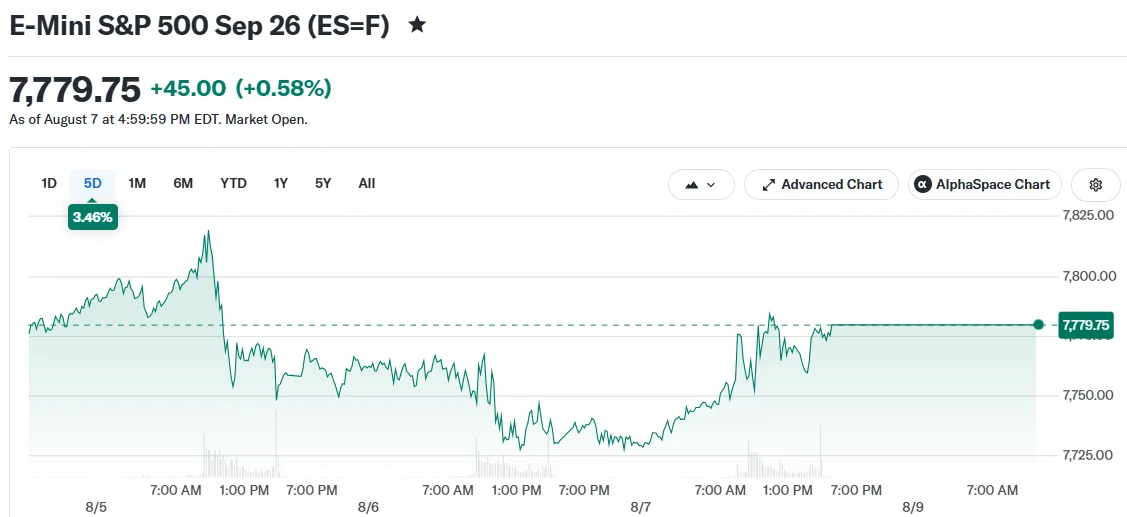
The preceding week concluded on a high note for equities, with the S&P 500 achieving record territory on Friday, advancing 0.6% during the session. This strong finish capped an impressive five-day performance across major benchmarks. The technology-heavy Nasdaq Composite led the charge, climbing 5.2%, while the broader S&P 500 jumped 3.6%, and the Dow Jones Industrial Average increased by 3%. These substantial gains marked the most robust weekly performance for all three indices since April, signaling a notable resurgence in investor confidence. A significant catalyst for Friday’s rally was the release of employment figures, which served to alleviate market anxieties regarding the immediate prospect of Federal Reserve interest rate increases. The data suggested a cooling, yet still robust, labor market, interpreted by many as providing the Fed with greater flexibility, thus reducing the urgency for further aggressive monetary tightening.
Inflation Metrics Command Central Attention
The spotlight this week will undoubtedly fall on a series of inflation metrics, which are crucial for the Federal Reserve’s monetary policy decisions and directly impact consumer purchasing power. On Wednesday morning at 8:30 a.m. ET, the Bureau of Labor Statistics will release the highly anticipated July Consumer Price Index (CPI). Economic forecasters are anticipating a 0.2% monthly gain for both the headline CPI, which includes volatile food and energy prices, and the core CPI, which strips out these components to provide a clearer picture of underlying inflation trends.
This forecast comes after June saw a welcome, albeit potentially fleeting, decline in CPI. However, circumstances have shifted substantially since then. Geopolitical tensions, particularly escalating conflicts in the Middle East, have significantly interrupted petroleum transport through critical global waterways. These disruptions have directly translated into elevated energy costs, a primary driver of inflationary pressures that could negate some of the progress made in the preceding month. The CPI report is a paramount indicator for the Federal Reserve, which operates under a dual mandate of achieving maximum employment and maintaining price stability, typically defined as a 2% average inflation target. A higher-than-expected CPI reading could reignite concerns about persistent inflation and pressure the Fed to maintain a hawkish stance.
Following the CPI, Thursday will feature the release of the Producer Price Index (PPI), which measures inflation at the wholesale level. The PPI tracks the average change over time in the selling prices received by domestic producers for their output. After a notable surge in May, June brought a decline in wholesale prices, offering some relief. However, wholesale price increases often serve as a leading indicator, frequently foreshadowing movements in consumer prices as businesses pass on higher input costs to their customers. Therefore, a significant uptick in the July PPI could signal sustained inflationary pressures building in the supply chain, which would eventually filter through to the consumer level, further complicating the Fed’s inflation fight.

Economists are closely watching these reports for signs of whether inflation is truly on a sustainable downward path or merely experiencing temporary fluctuations. Stephen Juneau, an economist at Bank of America, characterized last month’s CPI drop as "probably a one-off event." His analysis suggests that if the July CPI results align with or exceed consensus expectations, it would bolster arguments for a September rate adjustment. While he didn’t specify the nature of the adjustment, the prevailing market sentiment implies that persistent inflation could necessitate further interest rate hikes, or at least delay any potential rate cuts, to bring price pressures under control. The stakes are high, as the Fed’s credibility in managing inflation is consistently under scrutiny.
The economic data deluge concludes on Friday with the release of retail spending statistics and the University of Michigan’s consumer sentiment index. Consumer expenditures are a crucial component of economic growth, reflecting the health and confidence of the American consumer. June witnessed a modest 0.2% uptick in consumer expenditures, indicating continued, albeit tempered, spending. However, a concerning detail from that report was the savings rate, which dropped to its lowest level in four years. This trend raises questions about the sustainability of current spending levels, suggesting that consumers might be drawing down savings to maintain their consumption, potentially indicating underlying financial strain rather than robust economic health. The University of Michigan’s sentiment index provides a qualitative measure of consumer confidence, which can influence future spending and investment decisions. A decline in sentiment could signal consumer unease about the economic outlook, potentially impacting future retail sales.
Central Bank Autonomy Questions Resurface
Adding another layer of complexity to this already dense week are renewed debates surrounding the independence of the Federal Reserve, sparked by two significant developments on Friday. The integrity and autonomy of the U.S. central bank are considered cornerstones of its ability to conduct monetary policy free from short-term political interference, ensuring decisions are based on economic fundamentals rather than electoral cycles.
The first development involved the White House transmitting correspondence that indicated presidential consideration of the removal of Fed Governor Lisa Cook. This extraordinary action follows a Supreme Court ruling issued in late June, which reportedly expanded the President’s authority over certain agency appointees. While the specifics of the Supreme Court’s ruling and its direct applicability to Fed governors are subject to legal interpretation, the very suggestion of presidential intervention in the tenure of a Fed governor is unprecedented in recent history and sends shockwaves through financial markets. The Federal Reserve Act is designed to insulate governors from political pressure by granting them fixed 14-year terms, intended to foster long-term decision-making. Any perceived threat to this insulation can undermine confidence in the institution’s independence.
Further fueling these concerns, White House National Economic Council Director Kevin Hassett publicly disclosed that potential Fed Chair candidate Kevin Warsh and the president "talk about the economy all the time." While dialogue between the executive branch and central bank officials is not inherently problematic, the frequency and nature of such discussions, particularly with a named potential successor to the current Fed Chair, deviates significantly from established norms. Traditionally, Fed officials maintain a degree of public distance from the White House to underscore their non-partisan status. Frequent, publicly acknowledged dialogue with a sitting president and a potential future chair can easily trigger concerns about undue influence and compromise the perception of central bank autonomy.
Bond market participants, who are highly sensitive to signals about economic policy and institutional stability, are monitoring these developments carefully. Last week, bond yields experienced increases that analysts characterized as signaling "credibility concerns" at the Federal Reserve. Higher bond yields indicate that investors are demanding greater compensation for holding government debt, often reflecting increased perceived risk, including political risk or a lack of confidence in the central bank’s ability to effectively manage the economy. Should these concerns about Fed independence escalate, they could lead to further yield increases, potentially raising borrowing costs for the government, businesses, and consumers, and adding another layer of instability to an already uncertain economic outlook. The broader implication is that if the Fed’s independence is seen as compromised, its policy decisions might be perceived as politically motivated, leading to a loss of market trust and potentially exacerbating economic volatility.
AI Company Results Provide Crucial Market Test
Beyond the macroeconomic and monetary policy discussions, this week also features a critical test for the burgeoning artificial intelligence sector, as several key AI infrastructure firms announce their quarterly results. The performance of these companies will offer vital insights into the real-world economics of the AI boom, moving beyond the hype to reveal which firms are successfully capitalizing on the surging demand for AI computing power.
The market has witnessed highly divergent stock performances among these players year-to-date, illustrating that the widespread excitement surrounding AI investment doesn’t uniformly benefit all companies. Nebius Group, a prominent AI infrastructure provider, has seen its stock surge by an astonishing 122% year-to-date, reflecting strong investor confidence in its growth trajectory. Similarly, CoreWeave, another significant player in specialized cloud infrastructure for AI, has advanced a robust 25%. In contrast, Cerebras Systems, known for its wafer-scale AI chips, has experienced a decline of 35% from its initial public offering (IPO) price, indicating that not all AI-focused companies are meeting investor expectations or achieving sustainable market traction post-listing.
These divergent stock performances underscore a crucial point: while the demand for AI technologies is undeniable, success in the sector hinges on various factors, including technological differentiation, market execution, scalability, and profitability. This week’s earnings announcements will provide a much-needed granular look into which firms are effectively capturing market share, demonstrating operational efficiency, and translating the immense demand into tangible financial results, and which are struggling to meet the high bar set by investor enthusiasm.
Both CoreWeave and Nebius Group garnered significant market validation earlier this summer by securing inclusion in the prestigious Nasdaq 100 index, a benchmark composed of the 100 largest non-financial companies listed on the Nasdaq stock market. This inclusion not only boosts their visibility but also reflects their growing market capitalization and importance within the tech landscape. Furthermore, Nvidia, the undisputed leader in AI chips and a bellwether for the entire sector, holds strategic investment positions in both CoreWeave and Nebius. Nvidia’s backing serves as a powerful endorsement, suggesting these companies are integral to the broader AI ecosystem and likely benefit from strategic partnerships and access to cutting-edge technology. Cerebras Systems, despite its stock performance, did exceed analyst projections in its inaugural public company earnings report during June, suggesting that its underlying business fundamentals may be stronger than its stock price indicates, making its upcoming report particularly important for a clearer assessment.
The week’s earnings calendar kicks off with Super Micro Computer (SMCI), a critical supplier of high-performance servers and storage solutions optimized for AI workloads, releasing its results on Tuesday. The company has already provided preliminary figures that revealed expanding profit margins and unprecedented order volumes, sending its stock soaring previously. These initial signals suggest robust demand for its specialized hardware, positioning it as a key beneficiary of the AI infrastructure build-out. Following SMCI, Applied Materials, a leading supplier of equipment for the semiconductor industry, will announce its results on Thursday. Applied Materials’ performance is often viewed as a proxy for the health of the broader chip manufacturing sector, which is foundational to the development and deployment of AI. Its report will complete a significant week for the semiconductor and AI hardware sectors, offering a comprehensive view of the supply chain’s capacity and demand dynamics.
In conclusion, the coming days represent a high-stakes period for financial markets. Investors will be dissecting inflation data for clues on the Federal Reserve’s next move, while simultaneously grappling with unprecedented questions about the central bank’s political independence. Concurrently, the earnings reports from leading AI infrastructure providers will serve as a vital reality check, distinguishing genuine market leaders from those struggling to keep pace in a rapidly evolving technological landscape. The intertwined nature of these economic, monetary, and technological narratives ensures that this week’s events will have far-reaching implications, potentially setting the tone for market sentiment and economic policy for months to come.