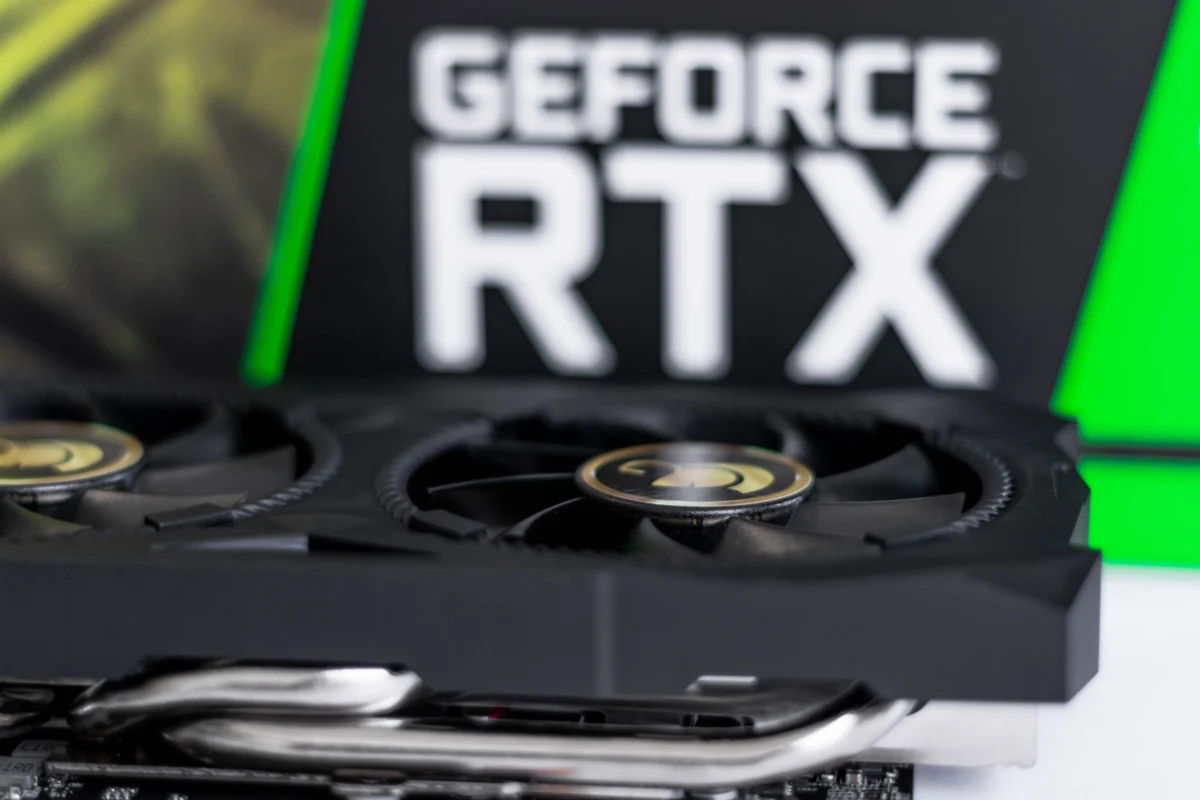
The secondary market for high-end graphics processing units (GPUs) is experiencing a historic influx of inventory as cryptocurrency miners across China begin a massive liquidation of their hardware. This surge in supply, triggered by the Chinese government’s aggressive and multi-pronged offensive against the domestic crypto industry, has driven the price of the popular Nvidia GeForce RTX 3060 down to as low as $270 on regional used-goods platforms. The rapid devaluation of these components marks a significant turning point in the global hardware shortage that has plagued gamers and professional creators since late 2020, signaling a paradigm shift in the intersection of digital asset regulation and the global technology supply chain.
For several years, China served as the global epicenter for cryptocurrency mining, at one point accounting for over 65% of the total Bitcoin hash rate. However, a series of stringent directives from the Chinese State Council and various provincial authorities has forced a total cessation of operations. While some industrial-scale mining operations have initiated the "Great Migration" to energy-rich regions like Kazakhstan, Russia, and the United States, a substantial segment of smaller to mid-sized miners has opted to exit the industry entirely. This exit has resulted in thousands of GPUs, primarily from Nvidia’s Ampere and AMD’s RDNA2 architectures, flooding online marketplaces like Xianyu and various industrial hardware forums.
The Dynamics of the Market Flood
The current pricing structure on the Chinese second-hand market reflects a desperate attempt by miners to recoup capital before hardware values depreciate further. Recent listings have shown the Nvidia RTX 3060—a card that carried a significantly higher street value during the peak of the mining boom—selling for approximately $270. Higher-tier cards are also seeing drastic reductions; the RTX 3070 is frequently spotted for roughly $400, while the RTX 3060 Ti is being offered for approximately $350. Even mining-specific hardware, such as specialized laptops equipped with RTX 3060 mobile chips, is appearing on the market with price tags hovering around $1,000 per unit.
However, these attractive price points come with significant caveats. The majority of these listings are not intended for individual consumers or "one-off" buyers. Sellers are predominantly demanding bulk purchases, often requiring buyers to acquire between 100 and 200 units in a single transaction. This wholesale approach indicates that the sellers are institutional miners or large-scale "farms" looking to clear warehouse space and settle debts rapidly. For the average gamer, accessing these prices remains difficult, though the downward pressure on bulk prices is beginning to trickle down to individual unit listings across international borders.
A Chronology of the Chinese Regulatory Crackdown
The catalyst for this market saturation can be traced back to a series of escalating policy decisions by the Chinese government throughout the first half of 2021. The timeline of these events illustrates a systematic dismantling of the domestic mining infrastructure:
- March 2021: Inner Mongolia, a region previously favored for its low electricity costs, announced plans to ban new cryptocurrency mining projects and shut down existing ones to meet energy consumption targets.
- May 2021: The Chinese State Council, led by Vice Premier Liu He, issued a high-level warning stating that the government would "crack down on Bitcoin mining and trading behavior" to prevent financial risks from being transmitted to the broader society.
- June 2021: Authorities in Sichuan, a province known for its abundant hydroelectric power, ordered the immediate shutdown of 26 major mining projects. This was followed by similar directives in Xinjiang and Qinghai, effectively eliminating the primary hubs of Chinese mining activity.
- July 2021: The People’s Bank of China (PBOC) and local police forces increased pressure on financial institutions to identify and block transactions related to crypto exchanges, making it nearly impossible for miners to convert their digital assets into fiat currency within the country.
This sequence of events left miners with little choice but to dismantle their rigs. The suddenness of the enforcement meant that thousands of units of hardware were pulled from data centers almost overnight, leading to the current oversupply on the used market.
Technical Risks and the "Miner’s Discount"
Despite the allure of low-cost Nvidia and AMD hardware, the tech community remains cautious regarding the longevity and reliability of these specific units. GPUs used in cryptocurrency mining are typically operated 24 hours a day, 365 days a year. To maximize efficiency, miners often "overclock" the video memory (VRAM) while "undervolting" the core clock.
Continuous high-temperature operation can lead to several forms of degradation:
- Thermal Pad and Paste Wear: Constant heat causes the thermal interface materials to dry out or leak silicone oil, leading to reduced cooling efficiency.
- VRAM Discoloration: High-speed memory modules on cards like the RTX 30-series can reach temperatures exceeding 100 degrees Celsius during Ethereum mining, which can lead to permanent PCB discoloration or "yellowing."
- Fan Failure: Mechanical wear on the cooling fans is significantly higher in mining cards than in gaming cards, as they are rarely, if ever, cycled off.
- BIOS Modifications: Many miners flash custom BIOS firmware onto their cards to optimize hash rates. If not properly reverted, these cards can exhibit instability or display errors in standard Windows environments or gaming applications.
Industry analysts suggest that the "hard life" of a mining card is the primary reason why prices continue to fall despite the global demand. Buyers are essentially gambling on the remaining lifespan of the silicon, which has led to a stagnant sell-through rate for many Chinese liquidators.

The Global Ripple Effect and the Ethereum Factor
The liquidation in China is occurring simultaneously with broader shifts in the global GPU market. In Europe, particularly in Germany and Austria, retail prices for new GPUs have begun to stabilize, with some reports indicating a 40% drop from the peak prices seen earlier in the year. This is partly due to Nvidia’s introduction of "Lite Hash Rate" (LHR) models, which are hardware-limited to be less efficient at mining Ethereum, thereby making them less attractive to miners and more available for gamers.
Furthermore, the impending transition of Ethereum—the primary cryptocurrency mined with GPUs—from a Proof-of-Work (PoW) consensus mechanism to Proof-of-Stake (PoS) looms over the market. This transition, often referred to as "The Merge," will effectively end the need for GPU mining on the Ethereum network. Nvidia CEO Jensen Huang noted during the E3 2021 period that while crypto mining has been a significant driver of demand, the company is focused on the gaming and professional visualization markets, which provide more stable long-term growth. As the profitability of GPU mining diminishes globally, the "dumping" of cards seen in China may become a more widespread phenomenon.
Strategic Shift: Digital Yuan and ESG Goals
China’s decision to purge its mining industry is not merely a financial regulatory move; it is also tied to the country’s strategic environmental and monetary goals. By removing the energy-intensive Bitcoin mining sector, China is better positioned to meet its carbon neutrality targets. Simultaneously, the removal of decentralized cryptocurrencies clears the path for the Digital Yuan (e-CNY), the central bank digital currency (CBDC).
As the "void" left by private cryptocurrencies grows, the Chinese government has accelerated its pilot programs for the Digital Yuan, integrating it into public transport, retail, and government services. This state-sponsored digital currency provides the PBOC with unprecedented oversight of the domestic money supply, a level of control that was fundamentally challenged by the anonymous and borderless nature of Bitcoin and Ethereum.
Market Outlook and Bitcoin’s Price Stagnation
While the hardware market is in flux, the underlying assets remain in a period of consolidation. At the time of this report, Bitcoin (BTC) is trading in a narrow range around $33,000. Despite a marginal 2% recovery over a 24-hour period, the asset remains down significantly from its all-time high. Technical analysts point to a stubborn resistance level at $35,000, which the market has struggled to breach.

The exodus of Chinese miners has resulted in a temporary drop in the Bitcoin network’s total hash rate, which in turn triggered a downward difficulty adjustment—the largest in the network’s history. This adjustment makes it more profitable for the remaining miners, particularly those located in the West. As North American and European mining firms expand their capacity, the "hash power" is becoming more geographically distributed, potentially making the network more resilient to the type of single-nation crackdown witnessed in China.
In conclusion, the $270 Nvidia RTX 3060 is a symptom of a massive geopolitical and economic realignment. For the hardware industry, the influx of used cards represents a "reset" of sorts, potentially ending the era of hyper-inflated GPU prices. For the cryptocurrency industry, it marks the end of the Chinese era and the beginning of a more decentralized, and perhaps more regulated, global future. As the secondary market continues to absorb the surplus, the long-term impact on manufacturer revenue and the speed of next-generation hardware adoption remains to be seen. For now, the "Great Dump" continues, offering a glimpse into the volatility that occurs when the digital economy meets the hard reality of state power.