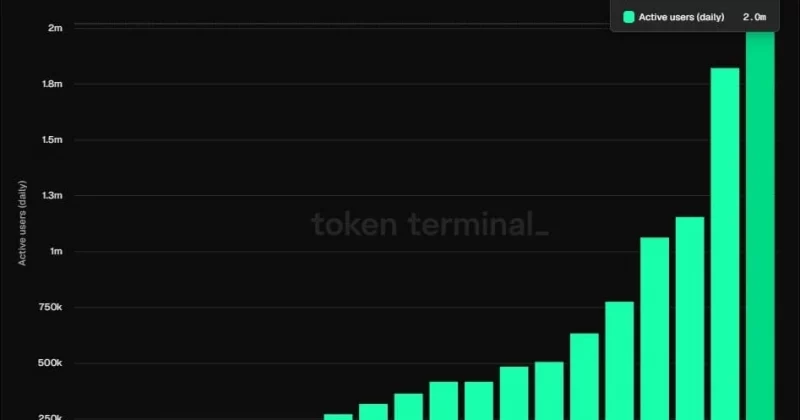
Tron has achieved a significant milestone, surpassing the 4 million daily active user (DAU) mark and eclipsing Solana to claim the premier position among major blockchain networks. This remarkable growth is not primarily driven by the speculative fervor of Decentralized Finance (DeFi) or the hype surrounding Non-Fungible Tokens (NFTs). Instead, the engine powering Tron’s ascent is its robust stablecoin ecosystem, with Tether (USDT) emerging as the undisputed heavyweight champion. This strategic reliance on stablecoins has fundamentally reshaped Tron’s user engagement and transaction landscape, presenting both unprecedented opportunities and potential vulnerabilities.
The Enduring Power of the Stablecoin Machine
The trajectory of Tron’s user growth has been nothing short of dramatic. In the fourth quarter of 2025, the network was averaging approximately 2.8 million daily active users, placing it just behind Solana’s 2.9 million. This parity, however, was short-lived. By February 2026, Tron’s DAU figure had climbed to an impressive 3.2 million, signaling a shift in momentum. The latest data, revealing a surge past the 4 million DAU threshold, solidifies Tron’s position at the apex of blockchain network activity.
The sheer volume of stablecoin activity on Tron is staggering. Tether (USDT) transfer volumes on the network frequently exceed $20 billion on a daily basis. This indicates a massive and continuous flow of value, primarily facilitated by stablecoins. As of May 2025, the circulating supply of USDT on the Tron network had already surpassed an astounding $75 billion, accounting for more than half of Tether’s total global supply. This concentration underscores Tron’s critical role in the stablecoin economy, acting as a primary conduit for USDT transactions.
Beyond daily active users, Tron’s overall network activity paints a picture of immense scale. The network consistently processes over 8 million daily transactions, a testament to its high throughput capabilities. Furthermore, Tron has cultivated a vast user base, amassing more than 306 million total user accounts since its inception. This broad adoption, driven by stablecoin utility, highlights a fundamental difference in user acquisition strategies compared to networks more heavily reliant on speculative assets.
Stablecoins as the Bedrock of User Growth: A Strategic Advantage
The sustained growth of Tron, particularly its ability to attract and retain a massive user base through stablecoins, stands in contrast to the more volatile, speculation-driven expansion seen on other blockchain networks. While DeFi and NFTs can generate bursts of activity and attract significant capital, their inherent speculative nature often leads to fluctuating user numbers and market sentiment. Stablecoins, on the other hand, offer a stable store of value and a reliable medium of exchange, making them indispensable for everyday financial transactions, remittances, and cross-border commerce.
Tron’s architecture, designed from its inception in 2017 by founder Justin Sun, with its mainnet launching in 2018, was inherently geared towards achieving high throughput and minimizing transaction fees. These foundational principles created an ideal environment for stablecoin adoption. Low fees make it economically viable to move significant volumes of value frequently, a crucial factor for individuals and businesses engaging in international money transfers or conducting commerce across borders. High throughput ensures that these transactions can be processed quickly and efficiently, even under peak load.
This strategic focus on utility and cost-effectiveness has allowed Tron to capture a significant share of the stablecoin market, particularly USDT. Unlike networks where speculative trading or complex DeFi strategies might dominate user activity, Tron’s growth appears to be rooted in fundamental economic use cases. This implies a more sustainable and resilient user base, less susceptible to the dramatic swings often associated with purely speculative assets.
Implications for Investors: A Double-Edged Sword
The sustained high transaction volume on Tron, intrinsically linked to global remittance flows and cross-border commerce, presents a compelling investment thesis for TRX, its native token. TRX is essential for paying transaction fees on the network and also plays a vital role in network governance, allowing token holders to participate in decision-making processes. As stablecoin activity continues to grow, the demand for TRX to facilitate these transactions and govern the network is likely to increase, potentially driving up its value.
However, this remarkable success also introduces a significant element of risk: concentration. When a blockchain network’s activity becomes overwhelmingly dependent on a single asset, such as USDT on Tron, any disruption to that asset’s stability or dominance can pose an existential threat to the network. The potential for such disruptions is multifaceted.
Firstly, regulatory scrutiny surrounding stablecoins is intensifying globally. If Tether, the issuer of USDT, were to face severe regulatory action, such as a ban in major jurisdictions, a significant portion of Tron’s user activity and transaction volume could evaporate overnight. This could lead to a sharp decline in TRX’s value and a collapse in Tron’s DAU metrics.
Secondly, competition within the stablecoin market is fierce. While USDT currently dominates on Tron, other stablecoins like USD Coin (USDC) are continuously vying for market share. If USDC or another stablecoin were to gain significant traction on the Tron network, perhaps through strategic partnerships or superior features, it could dilute USDT’s dominance and, consequently, impact the network’s overall reliance on a single issuer. A substantial shift in stablecoin preference could lead to a reversal of the user growth that Tron has so effectively cultivated.
Therefore, investors in TRX must carefully consider this concentration risk. While the current growth trajectory is impressive, it is intrinsically tied to the continued success and stability of Tether. Diversification of stablecoin offerings on Tron, or a broader adoption of Tron for use cases beyond stablecoin transfers, could mitigate this risk in the long term.
A Deeper Dive into Tron’s Ecosystem Growth
The foundational principles of Tron – high throughput and low fees – have created a fertile ground for a variety of applications, though stablecoin transactions have proven to be the primary catalyst for mass adoption. This focus on efficiency is crucial for any blockchain aiming to compete on a global scale for transactional utility. Early in its development, Tron aimed to be a decentralized internet, but its practical application has found a powerful niche in facilitating rapid and cost-effective movement of value.
Historical Context and Evolution
Since its inception, Tron has undergone significant development and strategic pivots. The initial vision was ambitious, aiming to decentralize the internet and challenge existing platforms like YouTube and social media giants. While these broader ambitions are still being pursued, the network’s ability to facilitate high volumes of stablecoin transactions has become its most defining characteristic and a significant driver of its current success.
The launch of the TRON Mainnet in 2018 marked a crucial step, enabling the network to operate independently from Ethereum, where it initially existed as an ERC-20 token. This independence allowed for greater control over its infrastructure, paving the way for the optimization that has made it so attractive for high-frequency, low-cost transactions.
The growth of USDT on Tron can be traced back to several factors:
- Early Adoption and Strategic Partnerships: Tether recognized the potential of Tron’s infrastructure early on and actively promoted its USDT stablecoin on the network. This symbiotic relationship allowed both entities to grow in tandem.
- Developer Incentives: Tron has historically offered incentives and support for developers building on its platform, encouraging the creation of applications that leverage its high transaction capabilities.
- Global Remittance Market: The increasing demand for efficient and affordable cross-border money transfer services has been a significant tailwind for stablecoins, and Tron has become a dominant player in facilitating these flows.
Supporting Data and Network Metrics
To further illustrate the scale of Tron’s stablecoin dominance, consider the following:
- Transaction Count: Tron consistently processes tens of millions of transactions daily, a significant portion of which are stablecoin-related. This dwarfs the transaction volumes of many other major blockchains when solely considering stablecoin activity.
- Active Addresses: While DAU is a key metric, the sheer number of unique addresses interacting with the Tron network daily signifies broad-based utility. This implies that the stablecoin usage is not concentrated among a few large players but is spread across a wider user base.
- Total Value Locked (TVL) in DeFi: While DeFi speculation is not the primary driver of DAU, Tron does host a growing DeFi ecosystem. The TVL within Tron’s DeFi protocols, often denominated in stablecoins, further underscores the network’s role as a hub for dollar-pegged assets. As of recent reports, Tron’s DeFi TVL has been steadily increasing, often surpassing billions of dollars.
Official Statements and Industry Reactions (Inferred)
While direct quotes from Tron representatives or Tether executives regarding this specific milestone might not be immediately available in the provided text, the implications of Tron’s rise are significant for the broader blockchain industry.
From a Tron Foundation perspective, this achievement would likely be framed as a validation of their core mission: to build a high-performance, low-cost blockchain that facilitates real-world economic activity. They would likely emphasize the utility-driven growth and the network’s ability to serve a massive global user base through stablecoins.
From a Tether perspective, this signifies a critical endorsement of their strategy to deploy USDT across multiple, highly efficient blockchain networks. Tron’s success validates Tether’s commitment to providing liquidity and facilitating transactions for its users on a network that can handle immense volume.
Other blockchain networks, particularly those competing for transactional dominance, would likely view Tron’s ascent with a mixture of admiration and concern. Solana, having been surpassed, would be under pressure to demonstrate its own competitive advantages and potentially re-evaluate its growth strategies.
Broader Impact and Future Outlook
Tron’s achievement of surpassing 4 million DAU, primarily driven by stablecoin activity, has several broader implications:
- The Primacy of Utility: It reinforces the notion that sustainable blockchain growth can be driven by fundamental utility rather than speculative hype. For many users globally, stablecoins represent a more accessible and practical entry point into the blockchain ecosystem.
- The Future of Cross-Border Payments: Tron’s role as a stablecoin hub positions it as a significant player in the evolving landscape of global remittances and cross-border commerce. This could lead to increased adoption by businesses and financial institutions seeking efficient payment solutions.
- Regulatory Considerations: The heavy reliance on USDT on Tron will inevitably draw more attention from regulators. The industry will be watching closely how Tron navigates potential regulatory headwinds and how Tether responds to increasing oversight.
- Diversification Strategies: For Tron to maintain its leading position and mitigate the concentration risk, fostering the growth of other use cases beyond stablecoin transfers will be crucial. This could include expanding its DeFi ecosystem, supporting gaming or metaverse applications, or facilitating the development of decentralized applications (dApps) for various industries.
In conclusion, Tron’s remarkable surge to the top of blockchain network rankings, fueled by the ubiquitous presence of USDT, represents a significant development in the cryptocurrency space. It highlights the power of stablecoins as a driver of mass adoption and underscores the importance of efficient, low-cost infrastructure for facilitating global economic activity. While this success brings immense opportunities, the inherent concentration risk associated with its reliance on a single stablecoin issuer warrants careful monitoring and strategic planning for sustained long-term growth.