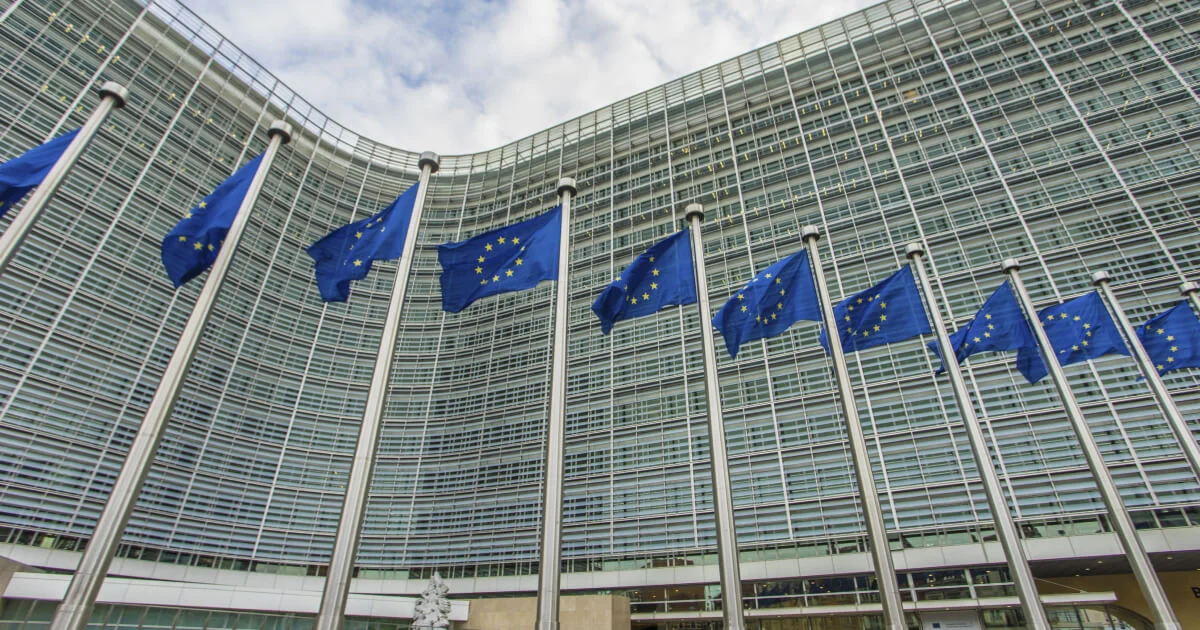
On July 23, 2026, the European Union formally adopted its 21st package of restrictive measures against the Russian Federation, representing the most significant expansion of the sanctions regime in four years. This latest round of designations, totaling 218 entities and individuals, signals a decisive shift in Brussels’ strategy to dismantle the financial and technological bypasses Moscow has utilized to sustain its war economy. By targeting over 100 financial institutions and introducing unprecedented legal mechanisms for the cryptocurrency sector, the EU aims to close persistent loopholes that have allowed the Kremlin to weather previous waves of economic pressure.
The centerpiece of this package is a comprehensive assault on Russia’s financial connectivity. For the first time since the early stages of the conflict, the EU has moved to disconnect a massive tranche of the Russian banking sector from international networks, while simultaneously launching a "first-of-its-kind" regulatory framework designed to isolate third-country crypto-asset service providers (CASPs) that facilitate sanctions evasion.
Decoupling the Russian Financial Sector: SWIFT and SPFS
The 21st sanctions package imposes asset freezes on 94 major banks and financial institutions, a move that effectively paralyzes a significant portion of Russia’s remaining liquid assets within European jurisdictions. Furthermore, the European Council extended transaction bans to an additional 33 Russian credit and financial institutions. These measures are specifically designed to complete the isolation of the Russian banking system from the SWIFT international payment messaging system.
A notable inclusion in this round is the targeting of non-Russian financial entities that have integrated with Russia’s System for Transfer of Financial Messages (SPFS). The SPFS was developed by the Central Bank of Russia as an alternative to SWIFT following the 2014 annexation of Crimea. By sanctioning a Kyrgyz bank connected to the SPFS, the EU has sent a clear warning to financial institutions in Central Asia and the Caucasus: facilitating Russian financial traffic via domestic messaging systems will no longer be tolerated and will result in a loss of access to the European market.
The Cryptocurrency Crackdown: 14 Platforms Designated
As traditional banking routes have narrowed, the use of crypto-assets for cross-border settlements and capital flight has become a primary concern for EU regulators. The 21st package extends a total transaction ban to 14 crypto-related service platforms operating across six distinct jurisdictions: Georgia, Panama, the United Arab Emirates (UAE), the Marshall Islands, Kyrgyzstan, and Belarus.
According to the European Council, these platforms have functioned as vital conduits for Russian entities seeking to move funds while evading the scrutiny of the traditional banking system. The jurisdictions selected—ranging from the high-traffic financial hubs of the UAE and Panama to the increasingly relevant "middle corridor" of Georgia and Kyrgyzstan—reflect the geographical diversity of Russia’s evasion tactics. The transaction ban prohibits any EU person or entity from conducting business with these platforms, effectively cutting them off from European liquidity and institutional partnerships.
Introduction of the Third-Country Ban Mechanism
Beyond individual designations, the EU has introduced a revolutionary legal mechanism that allows for jurisdiction-level restrictions on crypto-asset services. This "third-country ban" mechanism empowers the EU to prohibit transactions between EU entities and any crypto provider located in a specific country if that country is found to be hosting services used systematically by Russia for sanctions evasion.
While this mechanism has not yet been triggered for an entire nation, its existence creates a powerful deterrent. It places the onus on third-country regulators to ensure their domestic crypto sectors are not being used as "sanctions havens." For CASPs operating in these regions, the risk of losing access to the European market is no longer tied solely to their own actions, but to the regulatory environment of the country in which they are based. This move aligns with the EU’s broader Transfer of Funds Regulation (TFR) and the Markets in Crypto-Assets (MiCA) framework, emphasizing that digital assets must adhere to the same stringent anti-money laundering (AML) and sanctions compliance standards as traditional finance.
Energy Restrictions and the Shadow Fleet
The 21st package also addresses the ongoing challenge of Russia’s energy exports. The EU has frozen the oil price cap at $44.10 per barrel, a level intended to severely restrict the Kremlin’s profit margins while maintaining global market stability. This cap is slated to remain in place until July 15, 2027, providing a long-term horizon for energy policy.
To enforce this cap, the EU has sanctioned 41 additional "shadow fleet" vessels. These are tankers—often older, under-insured, and with opaque ownership structures—that Russia uses to transport oil above the price cap. By listing these specific vessels, the EU prevents them from receiving services such as insurance, flagging, or technical assistance from European companies, significantly increasing the operational cost and risk for Russian maritime exports.
Impact on the Military-Industrial Complex
Directly targeting the Russian war machine, the package includes 56 new listings tied to the military-industrial complex. Of these, 37 are directly linked to the production and procurement of long-range drones, which have become a staple of Russian aerial strategy. By targeting the supply chains of these unmanned aerial vehicles (UAVs), the EU aims to disrupt the flow of Western-made components that continue to find their way into Russian hardware via third-party distributors.
Chronology of EU Sanctions Evolution (2022–2026)
The adoption of the 21st package marks a four-year trajectory of escalating economic warfare. To understand the significance of this latest round, it is necessary to view it within the broader timeline:
- February 2022 – May 2022 (Packages 1-5): Initial response focusing on major banks, the central bank’s reserves, and individual oligarchs.
- June 2022 – February 2023 (Packages 6-10): Introduction of the oil embargo, the initial SWIFT bans, and bans on Russian media outlets.
- June 2023 – June 2024 (Packages 11-14): Focus shifted toward anti-circumvention, targeting third-country entities and strengthening the "No Russia" clause in export contracts.
- 2025 (Packages 15-20): Refinement of technology bans, focusing on dual-use goods and expanding the list of sanctioned entities to include more Chinese and Indian firms assisting Moscow.
- July 2026 (Package 21): The current escalation, representing the most aggressive move against crypto and secondary financial networks to date.
Official Responses and Inferred Reactions
European Commission President Ursula von der Leyen characterized the 21st package as a "clear signal that our resolve is unwavering." In a statement following the announcement, she noted, "We are closing the doors that Moscow thought would remain open. By targeting crypto and the shadow fleet, we are hitting the Russian economy where it is most vulnerable."
While the Kremlin has not issued a specific rebuttal to every designation, previous responses to EU packages suggest a standard rhetoric of "illegal unilateral measures" and "economic aggression." However, internal Russian economic reports have increasingly highlighted the rising costs of cross-border payments, suggesting that the EU’s focus on the financial plumbing of the Russian economy is having a tangible impact.
Market analysts suggest that the inclusion of the third-country ban mechanism will likely lead to a "compliance chill" in jurisdictions like the UAE and Kyrgyzstan. Financial institutions in these regions may become increasingly hesitant to handle any Russia-related business, fearing that a broad EU ban could jeopardize their status as global financial hubs.
Implications for Global Compliance and the Crypto Industry
For the global cryptocurrency industry, the 21st package signals the end of the "regulatory arbitrage" era. Platforms can no longer rely on being based in non-EU jurisdictions to avoid the reach of European sanctions. The message from Brussels is clear: if a platform facilitates Russian evasion, it will be barred from the European market, regardless of its headquarters.
Compliance officers at European CASPs and traditional banks must now conduct even more rigorous due diligence. Under the Transfer of Funds Regulation, EU entities are required to scrutinize the regulatory status and ownership of third-country counterparties. The new sanctions package adds a layer of jurisdictional risk that must be factored into every transaction monitoring system.
Blockchain forensics firms, such as Chainalysis, have already begun labeling the designated entities within their software suites. This allows institutional users to identify exposure to the 14 newly sanctioned platforms in real-time. For the broader market, these measures are expected to drive a flight to quality, where users and institutions migrate toward platforms with the most robust and transparent compliance frameworks.
Conclusion
The EU’s 21st sanctions package represents a sophisticated evolution of economic statecraft. By moving beyond simple asset freezes to target the systemic infrastructure of evasion—banks, messaging systems, shadow tankers, and crypto platforms—the European Union is attempting to exert a level of pressure that transcends traditional trade barriers. As the mechanism for third-country bans becomes a permanent fixture of the EU’s legal toolkit, the global financial landscape will likely see a further hardening of borders between the Western financial system and those jurisdictions still willing to facilitate Moscow’s economic interests.