The cryptocurrency market is currently navigating a complex transition as the initial euphoria surrounding the approval of Spot Bitcoin and Ethereum Exchange-Traded Funds (ETFs) gives way to a more sober assessment of the broader altcoin landscape. While retail investors have long speculated that institutional behemoths like BlackRock, Fidelity, and Franklin Templeton might eventually "bail out" the altcoin market by launching a flurry of new investment products, industry analysts are increasingly skeptical. The prevailing sentiment among Wall Street strategists suggests a fundamental disconnect between retail expectations and institutional objectives, casting doubt on the immediate future of speculative assets while highlighting a shift toward tokenized real-world assets (RWAs).
The Institutional Disconnect and the Myth of the Altcoin Bailout
Recent market speculation has suggested that the success of Bitcoin ETFs would naturally lead to a "waterfall effect," where capital flows into more exotic assets like XRP, Cardano (ADA), and even meme-based tokens like Shiba Inu (SHIB). However, several prominent industry analysts have dismissed this notion as a misunderstanding of how traditional finance (TradFi) operates. To firms like BlackRock, the vast majority of the altcoin market is viewed through a lens of risk management rather than growth potential.
Experts emphasize that institutional giants generally perceive most altcoins as fundraising vehicles for specific projects rather than decentralized commodities or viable long-term stores of value. Unlike Bitcoin, which has established itself as "digital gold," or Ethereum, which serves as the foundational layer for decentralized finance (DeFi), many mid-cap and small-cap tokens lack a clear connection between their underlying utility and the market value of the token itself. Consequently, the narrative that BlackRock will eventually "absorb the bags" of retail investors is being replaced by a more pragmatic reality: institutions are interested in infrastructure and tokenization, not speculative volatility.
Technical Stagnation: The 200-Day Moving Average Crisis
The internal health of the altcoin market reflects this institutional hesitation. Recent data indicates that approximately 84% of altcoins listed on Binance, the world’s largest cryptocurrency exchange by volume, are currently trading below their 200-day moving average (DMA). The 200-day DMA is a critical technical indicator used by traders to determine the long-term trend of an asset. When a significant majority of the market remains below this line, it signals a deep-rooted bearish sentiment that is difficult to reverse without a massive influx of new capital.
This current streak of underperformance has persisted for nearly eight months, marking the second-longest period of altcoin stagnation since 2020. The only period that surpassed this duration was the grueling ten-month bearish cycle during the height of the 2022 crypto winter. This prolonged period of "sideways-to-down" price action has exhausted retail participation, as evidenced by the CoinMarketCap Altcoin Season Index, which currently sits at 48 out of 100. A score below 50 indicates that the market is firmly in "Bitcoin Season," where Bitcoin outperforms the top 50 altcoins, further draining liquidity from the rest of the ecosystem.
The ETF Pipeline: From Solana to XRP
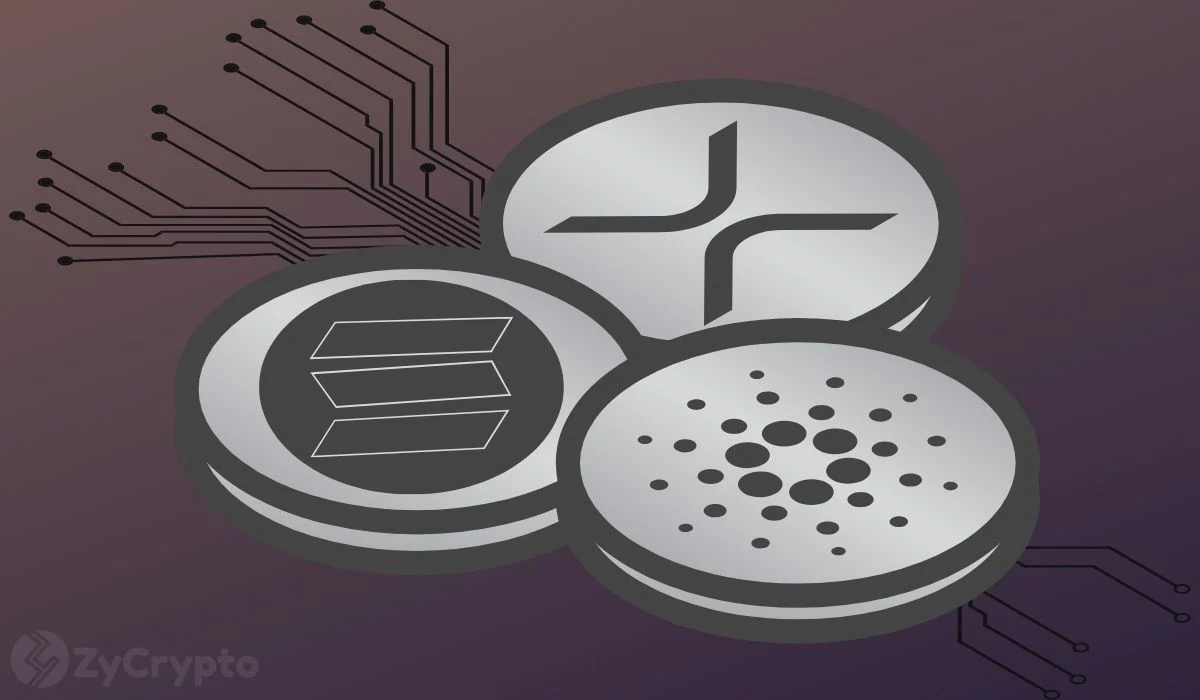
Despite the technical gloom, the regulatory front remains active. Following the surprise approval of Spot Ethereum ETFs by the U.S. Securities and Exchange Commission (SEC), the focus has shifted to which asset will be next in line. Solana (SOL) has emerged as the frontrunner, with firms like VanEck and 21Shares officially filing for a Spot Solana ETF. These filings represent a significant "headway into Wall Street," as Solana is increasingly viewed as a high-performance alternative to Ethereum, capable of handling the transaction throughput required for institutional-grade applications.
The path for XRP, Cardano, and Shiba Inu, however, is more fraught with regulatory hurdles. For XRP, the primary obstacle remains the SEC’s long-standing legal battle with Ripple Labs. While a 2023 court ruling determined that XRP is not a security when sold on public exchanges, the SEC’s ongoing appeals and the lack of a regulated futures market for XRP—a prerequisite the SEC has historically demanded for ETF approval—suggest that an XRP ETF may still be several quarters, if not years, away.
Cardano faces similar challenges. Despite its high degree of decentralization and academic-led development process, the SEC has previously labeled ADA as a security in various lawsuits against exchanges. Until there is legislative clarity from the U.S. Congress regarding the classification of digital assets, the SEC is unlikely to approve an ADA-based investment product. As for Shiba Inu, while the community remains vocal, the sheer volatility and "meme" origins of the token present a significant reputational and custodial risk that most institutional issuers are currently unwilling to bridge.
The Shift Toward Tokenized Real-World Assets (RWA)
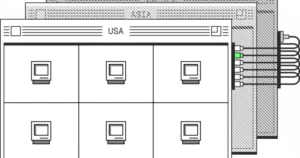
As the prospect of "pure-play" altcoin ETFs remains uncertain, a more profound transformation is occurring in the background: the integration of blockchain technology with traditional financial instruments. Weiss Crypto and other research firms project that the future of crypto on Wall Street will be defined by the tokenization of real-world assets (RWAs) rather than the trading of speculative utility tokens.
In this envisioned future, traditional stock exchanges could eventually be bypassed in favor of high-performance Layer-1 networks like Solana or Ethereum. Financial institutions are exploring the possibility of listing stocks, bonds, and real estate directly on-chain. This would allow investors to hold actual ownership of assets in a digital format, benefiting from 24/7 trading, instant settlement, and reduced intermediary costs. BlackRock’s launch of the BUIDL fund on the Ethereum network—a tokenized liquidity fund that invests in cash, U.S. Treasury bills, and repurchase agreements—serves as a primary example of this trend. For institutions, the "value" lies in the efficiency of the blockchain as a ledger, not necessarily in the speculative price action of the native tokens that secure those ledgers.
Current Market Performance and Pressure Points
The broader market continues to feel the weight of macroeconomic uncertainty and internal liquidity drains. Ethereum (ETH), the benchmark for the altcoin market, recently dipped 2.54% to approximately $1,579.21. This decline is attributed to hawkish signals from central banks, which have kept interest rates elevated, and a strong negative correlation with the S&P 500. As traditional equities face pressure, crypto assets—still viewed as "risk-on" investments—are often the first to be liquidated.
Other top-tier assets are also struggling to find a floor:
- Binance Coin (BNB): Declined 2.57% following a technical breakdown below critical support levels, exacerbated by ongoing regulatory scrutiny of its parent exchange.
- XRP: Currently trading around $1.04, down 2.36%. Traders are laser-focused on defending the psychological $1.00 support level. A breach below this mark could trigger a cascade of liquidations, further depressing the "Total 3" index, which tracks the total market capitalization of all cryptocurrencies excluding Bitcoin and Ethereum.
The Total 3 index continues to slide, reflecting a lack of "new money" entering the space. Without a meaningful catalyst—such as a surprise regulatory win, a significant shift in Federal Reserve policy, or a breakthrough in blockchain adoption—the market is likely to remain in this state of prolonged stagnation.
Chronology of Key Events
The current market state is the result of a sequence of pivotal events over the last year:
- January 2024: The SEC approves the first Spot Bitcoin ETFs, leading to a massive surge in Bitcoin’s price to new all-time highs while altcoins largely lagged behind.
- March 2024: BlackRock launches its USD Institutional Digital Liquidity Fund (BUIDL), signaling a shift in focus toward tokenization.
- May 2024: In a sudden reversal, the SEC approves 19b-4 filings for Spot Ethereum ETFs, catching the market off guard and briefly igniting hope for an "Altcoin Season."
- June 2024: VanEck files for the first Spot Solana ETF, officially bringing the debate over "non-commodity" ETFs to the SEC’s table.
- July-August 2024: Altcoin performance continues to degrade relative to Bitcoin, with the majority of tokens falling below their 200-day moving averages as institutional interest fails to materialize for smaller assets.
Implications for Investors and the Industry
The current environment serves as a "great filter" for the cryptocurrency industry. The era of "blind accumulation," where investors could buy almost any altcoin and expect a return during a bull cycle, appears to be coming to an end. Instead, the market is bifurcating into two distinct categories: "Institutional Grade" assets (Bitcoin, Ethereum, and potentially Solana) and "Speculative Assets" (the remainder of the altcoin market).
For the industry to move forward, there must be a shift away from pure speculation and toward demonstrable economic value. The "bags" held by retail investors in aging projects or utility-less tokens are unlikely to be rescued by Wall Street capital. Instead, the next wave of growth is expected to come from the infrastructure that supports tokenization and the few Layer-1 networks that can prove their necessity to the global financial system.
As the SEC prepares to review the growing pile of ETF applications for assets like Solana and potentially XRP, the outcome will define the regulatory boundary for the next decade. Until then, the altcoin market remains in a state of high-stakes suspense, testing the conviction of even the most resilient investors as they wait for a catalyst that may—or may not—arrive.