
A recent Commodity Futures Trading Commission (CFTC) roundtable on the burgeoning prediction markets sector erupted into a heated exchange Thursday, as Terry Duffy, Chairman and CEO of CME Group, and Luana Lopes Lara, co-founder of Kalshi, publicly traded barbs over critical issues of market manipulation and regulatory oversight. The confrontation, which quickly became the focal point of the Washington, D.C. gathering, underscored the deep divisions and high stakes involved as regulators grapple with how to classify and govern these innovative, yet controversial, event contracts. The session brought together a diverse group of stakeholders, including executives from established traditional finance institutions, emerging crypto platforms, and dedicated prediction market operators, all vying to shape the future regulatory framework for a market valued in the tens of millions and poised for significant growth.
The Heated Exchange Unfolds
The catalyst for the direct confrontation was Terry Duffy’s opening remarks, where the head of the world’s largest futures exchange by volume expressed profound concerns regarding prediction markets. Duffy articulated his apprehension about the potential for market manipulation within this nascent sector, emphasizing the rigorous standards of established financial markets. "We’re not a bunch of carnival barkers at a circus," Duffy declared, highlighting the perceived professionalism and integrity of traditional exchanges. "We are running the most envious markets in the world in the United States of America." His statement set a clear tone, positioning traditional finance as the bastion of stability and credibility against what he implied were less robust, potentially exploitable new ventures.
Duffy then specifically targeted the types of event contracts offered by Kalshi, a prominent prediction market platform that has sought and received CFTC approval for many of its offerings. He sarcastically singled out a contract related to the Nathan’s Hot Dog Eating Contest as an example of what he considered economically trivial and potentially frivolous offerings. "There’s another really economic contract that has been massively important for the United States. That’s a Nathan’s hot dog eating contest," Duffy quipped, his tone dripping with disdain. He further questioned the regulatory disparity, noting that Kalshi could offer a "compute prediction market" while the CME Group’s own proposed compute contracts remained under a protracted review process by the Commission. This pointed critique highlighted a perceived imbalance in regulatory treatment, suggesting that newer, less established players might be benefiting from a more lenient approach.
Luana Lopes Lara, whose company Kalshi had been directly called out, wasted no time in responding. With a calm but firm demeanor, she challenged Duffy on the historical integrity of CME Group itself. "I just wanted to respond since we were called by name here," Lara began. "I would actually have to ask Terry: Has CME ever had any issues with any market manipulation, any issues ever in its history?" Her direct question aimed to turn the spotlight back on traditional finance, suggesting that no market, regardless of its age or size, is entirely immune to manipulation or past regulatory infractions.
Duffy, momentarily taken aback, responded with a challenge of his own: "If you’d like to have a debate, I’m happy to have a debate with you." Lara, however, insisted on a direct answer. "I’m just asking a simple answer to a question," she reiterated. The exchange escalated as Duffy leveraged the vast scale of CME Group against Kalshi, stating, "I have more people in my regulatory department than you have in your whole company." Lara quickly retorted, "Maybe you should learn a bit about efficiency then," implying that size does not necessarily equate to superior regulation. Duffy’s final jab, "Well, maybe you should learn about credible markets," was met with the intervention of moderator Walt Lukken, who stepped in to de-escalate the rapidly intensifying verbal sparring match.
Following the direct exchange, Lara broadened her argument, asserting that the risks of manipulation were not unique to prediction markets. She emphasized that "every market has risk and every nascent market will have risks as well, and there have been issues in every single traditional market and every single exchange here, onshore and offshore." Her point was clear: the existence of risk is inherent to all financial markets, and the purpose of regulation is to identify and address these issues effectively and appropriately, rather than to stifle innovation outright.
Clash of Philosophies: Traditional Finance vs. Fintech Innovation
The heated exchange between CME Group and Kalshi represents more than just a personal squabble between executives; it embodies a fundamental clash of philosophies between established financial institutions and burgeoning fintech innovators. CME Group, a venerable institution with over 170 years of history, operates within a meticulously structured and heavily regulated ecosystem. Its business model thrives on offering standardized, highly liquid futures and options contracts on everything from interest rates and agricultural commodities to energy products and stock indices. Duffy’s insistence on "credible markets" and robust regulatory departments reflects the deeply ingrained ethos of a firm that has weathered countless market cycles and regulatory changes, building trust through stringent oversight and clear rules. The CME’s long-standing success is predicated on minimizing systemic risk and ensuring market integrity, which often translates into a conservative approach to new market structures.
Kalshi, on the other hand, represents the vanguard of a new wave of financial technology. Founded on the premise of allowing individuals to "trade on anything," Kalshi’s vision is to democratize access to event-based risk management and information aggregation. Their offerings, ranging from macroeconomic indicators to cultural events, aim to provide novel hedging opportunities and more accurate probabilistic insights. Lara’s retort about "efficiency" speaks to the agile, lean operational models often favored by startups, which leverage technology to streamline processes and reduce overhead. This philosophical divide centers on how much risk appetite regulators should have, how quickly new products should be approved, and whether existing regulatory frameworks are agile enough to accommodate novel financial instruments without stifling innovation. The core tension is between the imperative for market integrity and consumer protection, championed by established players, and the desire for innovation, efficiency, and broader market access, advocated by new entrants.
Understanding Prediction Markets: A Nascent but Contentious Sector
Prediction markets, also known as event markets or information markets, are platforms where users can buy and sell contracts whose payouts are tied to the outcome of future events. These contracts typically settle at a fixed value (e.g., $1) if a specific event occurs and $0 if it does not. The current price of a contract on the market is interpreted as the crowd’s aggregated probability of that event occurring. For instance, if a contract for "Bitcoin reaches $75,000 in August" is priced at 59 cents, it implies that market participants collectively believe there is a 59% chance of this outcome. This mechanism allows prediction markets to serve as powerful tools for aggregating dispersed information and forecasting future events, often outperforming traditional polling or expert opinions.

The potential benefits of prediction markets are multifold. They can provide valuable real-time insights into future probabilities across a wide array of topics, from economic indicators and political outcomes to scientific discoveries and corporate performance. Businesses and policymakers could potentially use these insights to make more informed decisions. Furthermore, they can offer unique hedging opportunities against specific real-world events that traditional financial instruments may not cover. For example, a farmer might hedge against a specific weather event, or a business might hedge against a particular regulatory change.
However, these benefits are accompanied by significant risks and controversies, which form the crux of the regulatory debate. A primary concern, articulated by Duffy, is market manipulation. Due to their often smaller trading volumes and sometimes less liquid nature compared to traditional futures markets, prediction markets could theoretically be more susceptible to attempts by bad actors to influence contract prices for personal gain. There are also concerns about insider trading, where individuals with privileged information could exploit market movements.
Another major point of contention is the fine line between a legitimate financial derivative and an unregulated gambling product. Many jurisdictions consider wagering on future events to be gambling, which falls under state-level gaming laws, rather than federal financial regulations. This distinction is crucial, as the regulatory burden and legal implications differ vastly. Contracts tied to political elections, sports outcomes, or even controversial events like natural disasters raise ethical questions about "disaster profiteering" or creating perverse incentives. The fear is that some contracts could incentivize harmful behavior, such as arson for a wildfire prediction market, or provide a means for malicious actors to profit from public misfortune. These ethical and moral hazard concerns contribute significantly to the regulatory skepticism surrounding the industry.
The Regulatory Labyrinth: CFTC’s Stance and State Challenges
The regulatory landscape for prediction markets in the United States is complex and highly contentious, characterized by a jurisdictional tug-of-war between federal agencies and state authorities. At the heart of this struggle is the question of whether event contracts constitute federally regulated derivatives under the Commodity Exchange Act (CEA), thereby falling under the purview of the CFTC, or if they are primarily gambling products subject to state-level gaming laws.
The CFTC, as the primary federal regulator for futures and derivatives markets, has asserted its jurisdiction over certain prediction markets, particularly those that it deems to be legitimate event contracts designed for risk mitigation or price discovery. CFTC Chair Rostin Behnam has been a vocal proponent of the agency’s authority in this space. In a clear message delivered in February, Behnam explicitly defended the agency’s jurisdiction, warning states that challenge this authority: "We will see you in court." This aggressive stance was reinforced by subsequent legal actions taken by the CFTC against states attempting to regulate event contracts under their gambling statutes, signaling a firm commitment to establishing and maintaining federal oversight.
This federal assertion of authority, however, has not gone unchallenged. Various states, citing their long-standing powers to regulate gambling within their borders, have pushed back against the CFTC’s claims. They argue that many prediction market contracts, especially those related to sports, elections, or celebrity events, resemble traditional betting more than sophisticated financial instruments. This creates a patchwork of legal uncertainty, forcing prediction market operators to navigate a complex and often contradictory regulatory environment.
A Chronology of Recent Regulatory Actions and Legal Battles
The past year has seen a flurry of regulatory and legal activity surrounding prediction markets, illustrating the escalating tensions:
- February [Year -1]: CFTC Chair Rostin Behnam publicly asserts the agency’s sole jurisdiction over federally regulated prediction markets, declaring "We will see you in court" to states challenging this authority. This statement marked a significant hardening of the CFTC’s position.
- June [Current Year]: The CFTC proposes new restrictions on certain types of prediction market contracts. These proposed rules specifically target contracts involving war or assassination outcomes, as well as some sports proposition bets, which the agency deems particularly susceptible to manipulation or ethically problematic. This move reflects a cautious approach, seeking to carve out categories of contracts that pose unacceptable risks.
- Early August [Current Year]: A group of nine Democratic senators writes to CFTC Chair Selig, urging the agency to prohibit "wildfire event contracts." The senators expressed serious concerns that such contracts could inadvertently create incentives for arson, facilitate insider trading based on non-public information about environmental conditions, and enable "disaster profiteering" from human suffering. This intervention highlights the moral hazard concerns that extend beyond purely financial risks.
- Mid-August [Current Year]: Kalshi faces a significant legal setback in Washington State. A Washington judge issues an order mandating the company to cease offering contracts on sports, elections, politics, and other general events within the state. The judge’s ruling found that Kalshi’s operations likely violated existing state gambling and consumer protection laws, representing a victory for state-level regulatory claims.
- Two Days Prior to Washington Ruling [Current Year]: In a counter-move illustrating the federal-state conflict, the CFTC invokes its emergency powers to issue an order allowing Kalshi to continue trading its contracts despite a separate legal dispute initiated by New York State seeking to block its operations. This CFTC action underscored its commitment to upholding its jurisdiction and protecting its approved entities, even in the face of state-level legal challenges. This complex interplay of orders and counter-orders vividly demonstrates the fragmented regulatory environment.
Industry Reactions and Calls for Collaboration
The contentious roundtable and the ongoing regulatory battles have elicited varied reactions across the industry. While Terry Duffy’s remarks clearly articulated the skepticism and protective stance of traditional finance, other voices within the broader market ecosystem have called for a more constructive and collaborative approach.
Jason Robins, CEO of DraftKings, a prominent player in the regulated sports betting and daily fantasy sports industry, offered a plea for decorum and cooperation during the CFTC hearing. Robins urged all participants, "both in this hearing and then also in future communications, to try to refrain from taking shots at each other’s business models or decisions you may not 100% agree with." He emphasized that such adversarial tactics do not advance the critical discussion around effective regulation. Robins’ perspective, coming from a company that has successfully navigated the complexities of state-by-state gambling regulation, highlights the importance of finding common ground and focusing on practical solutions rather than inter-industry rivalry. His intervention underscored a desire for a more unified front in engaging with regulators, recognizing that a fractured industry only makes the regulatory path more arduous.
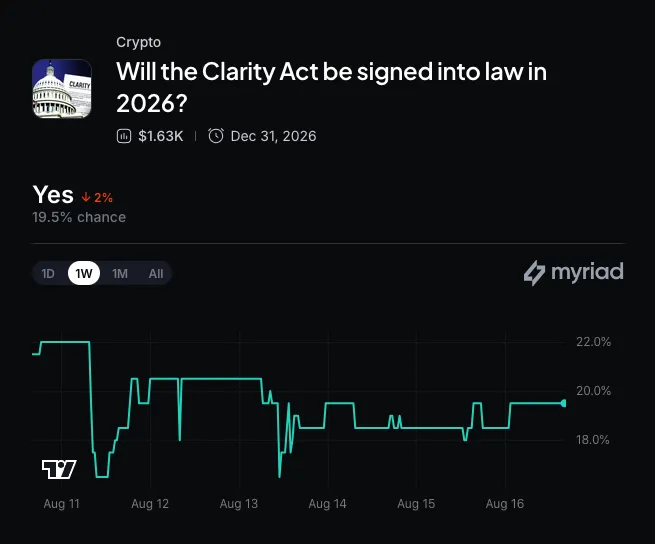
The call for collaboration extends beyond mere politeness. Many industry proponents of prediction markets argue that a clear, consistent federal framework is essential for the sector to mature and realize its full potential. The current state of regulatory ambiguity and jurisdictional disputes creates significant hurdles for innovation, investment, and consumer adoption. Companies like Kalshi, Polymarket, and Myriad (operated by Decrypt’s parent company Dastan) are operating under a cloud of uncertainty, making it difficult to scale operations, attract capital, and ensure legal compliance across different states.
From the perspective of regulators, the challenge is immense. They are tasked with balancing the desire to foster financial innovation and harness the information-aggregating power of prediction markets, while simultaneously upholding their mandate to protect consumers, prevent market manipulation, and maintain the integrity of the financial system. The lack of a clear legislative mandate specifically addressing prediction markets further complicates the CFTC’s role, forcing it to interpret existing derivatives laws in novel contexts.
Broader Implications for Market Innovation and Oversight
The outcome of the current regulatory fight will have profound implications for the future of market innovation and financial oversight in the United States.
For Prediction Markets: A clear, consistent regulatory framework, ideally at the federal level, could unlock significant growth for prediction markets. It would provide legal certainty, attract more institutional investors, and allow platforms to expand their offerings without fear of state-level injunctions. Conversely, if prediction markets are largely relegated to state-by-state gambling regulations, their growth would likely be stunted, fragmented, and limited in scope, potentially driving innovation offshore. The current ad-hoc approach creates a disincentive for legitimate businesses to invest heavily in the space.
For Traditional Finance: The debate forces traditional exchanges like CME Group to confront the evolving landscape of financial products. While they might view prediction markets with skepticism, the underlying technology and demand for event-based risk management are undeniable. The CME’s own interest in "compute contracts" demonstrates a recognition of the potential, even if they advocate for these new products to conform to existing, rigorous standards. This competition could spur innovation within traditional finance, pushing them to offer more diverse and granular event-based derivatives.
For Regulatory Philosophy: The CFTC’s aggressive stance highlights a broader trend among federal regulators to assert jurisdiction over novel financial products, particularly in the crypto and fintech space, to prevent regulatory arbitrage. The conflict with states also underscores the ongoing tension in American federalism, where new technologies often expose gaps or ambiguities in existing legal frameworks. The outcome of these battles could set precedents for how other emerging financial technologies are regulated.
For Consumer Protection and Market Integrity: The core debate revolves around how best to protect consumers and maintain market integrity in a new asset class. Advocates argue that robust federal oversight, with clear rules for disclosure, anti-manipulation, and capital requirements, is the best path. Opponents fear that such regulation might legitimize what they perceive as gambling, or that the CFTC’s current powers are insufficient to adequately oversee the unique risks of prediction markets. The challenge is to craft regulation that is proportionate to the risks without stifling the potential benefits.
The Path Forward: Seeking Clarity Amidst Controversy
The path forward for prediction markets is likely to remain complex and contentious for the foreseeable future. A definitive resolution may require legislative action from Congress to clearly define the legal status of event contracts and explicitly assign jurisdictional authority. Without such clarity, the current state of legal challenges and inter-agency/state disputes will persist, creating an environment of uncertainty that hinders both innovation and effective oversight.
In the interim, the CFTC will likely continue to refine its proposed rules, seeking to delineate acceptable and unacceptable contract types. The industry, for its part, must demonstrate a commitment to robust compliance, transparency, and consumer protection to build trust with regulators and the public. Collaboration, as urged by figures like Jason Robins, will be crucial. Finding common ground between the established players and the innovators, focusing on shared goals of market integrity and responsible growth, rather than engaging in rhetorical battles, will be essential to navigating this turbulent regulatory landscape and shaping a sustainable future for prediction markets. The intense exchange at the CFTC roundtable serves as a stark reminder of the deep ideological and commercial chasms that must be bridged if these promising, yet problematic, financial instruments are to find their rightful, regulated place in the global economy.