A New Era of Cross-Chain Connectivity Dawns with the Open Intents Framework
Launched in February 2025, the Open Intents Framework (OIF) is rapidly emerging as a pivotal infrastructure for the burgeoning world of cross-chain decentralized applications (dApps). Developed by the Ethereum Foundation in close collaboration with blockchain interoperability specialists Hyperlane and Bootnode, the OIF is engineered to facilitate the building and execution of cross-chain intents – user-defined desires for transactions that can span multiple blockchain networks. The framework has garnered significant early momentum, securing the backing of over 30 prominent development teams, including major players in the Layer 2 scaling ecosystem such as Arbitrum, Optimism, Polygon, ZKsync, and Starknet. This broad coalition underscores the project’s ambition to establish itself as a universally adopted, neutral standard, rather than a proprietary solution beholden to any single entity.
The genesis of the OIF can be traced to the inherent challenges of blockchain interoperability. As the decentralized web has expanded, so too has the proliferation of independent blockchain networks. While this decentralization offers numerous benefits, it has also created silos, making it cumbersome and complex for users and developers to move assets or execute actions seamlessly across these disparate ecosystems. Existing solutions often involve proprietary bridges or complex multi-step processes, each with its own security risks and user experience hurdles. The OIF aims to abstract away this complexity, providing a standardized, permissionless, and efficient mechanism for inter-chain communication and transaction fulfillment.
Deconstructing the Open Intents Framework: How it Works
At its core, the Open Intents Framework provides a comprehensive toolkit designed to enable cross-chain intents to function across a multitude of blockchain networks. This toolkit encompasses essential components such as smart contracts, open-source "solvers," aggregators, and a Software Development Kit (SDK). Developers can integrate these components into their dApps without requiring explicit permission from any central authority, fostering an environment of open innovation.
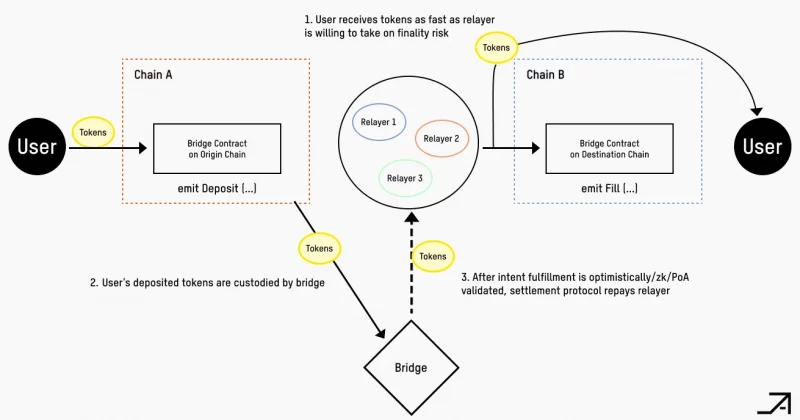
The architectural foundation of the OIF rests on three primary contract types: InputSettler, OutputSettler, and Oracle contracts. These contracts are meticulously designed to handle the ingress and egress of information and assets between different chains. The InputSettler, for instance, would manage the secure receipt of an intent from a user on one chain, while the OutputSettler would facilitate the execution of the corresponding action on another. Oracle contracts play a crucial role in providing reliable off-chain data to the on-chain smart contracts, ensuring the integrity and accuracy of cross-chain operations. These core contracts are then unified and orchestrated by an interoperability SDK, offering developers a streamlined interface for building complex cross-chain functionalities.
The OIF’s design is deeply rooted in the principles of the ERC-7683 standard. This standard meticulously defines the structure and format for cross-chain intents, ensuring a consistent and predictable way for different systems to interpret and process these requests. When a user submits an intent – for example, a desire to swap a specific token on one blockchain for another on a different network – the OIF’s architecture springs into action. This intent is then broadcast to a network of competitive solvers. These solvers are independent entities, often operated by third-party teams, who actively monitor for pending intents. They then race to fulfill these requests in the most efficient and cost-effective manner possible. The competitive nature of this solver ecosystem is a key driver of performance and cost optimization, as solvers are incentivized to offer the best execution prices to users.
Early Deployments and Performance Metrics
The practical implementation of the OIF is already underway, with initial deployments live on several prominent testnets, including Ethereum Sepolia and Optimism Sepolia. These early deployments serve as crucial testing grounds for the framework’s capabilities and stability. Under optimal network conditions, the OIF has demonstrated impressive performance, with solver-filled orders capable of completing within a tight window of 10 to 60 seconds. This speed is critical for user adoption, as it minimizes the perceived friction of cross-chain transactions and aligns with the expectations set by single-chain dApp experiences. The ongoing testing and refinement of these deployments are vital for building confidence and preparing for wider mainnet adoption.
Coinbase’s Strategic Embrace: A Stamp of Approval
A significant endorsement for the Open Intents Framework arrived in September 2025 with the announcement that Coinbase Payments, the dedicated payments division of the leading cryptocurrency exchange, had become a core contributor. This collaboration signifies a major step forward for the OIF, bringing the expertise and resources of a major industry player to bear on its development. Coinbase Payments’ involvement is particularly focused on leveraging the OIF to standardize and streamline cross-chain asset transfers. This suggests a potential future where users of Coinbase’s services could experience more seamless and integrated cross-chain functionalities, directly benefiting from the OIF’s underlying infrastructure. The involvement of such a prominent, regulated entity can also lend significant credibility to the framework, potentially attracting further institutional interest and adoption.
The inherent design philosophy of the OIF is characterized by its modularity and permissionless nature. This means that any development team or individual can deploy and extend the framework’s smart contracts without needing to seek approval from a central governing body. This open and decentralized approach is further reinforced by the absence of a dedicated governance token. This deliberate choice eliminates the complexities associated with tokenomics, such as navigating staking requirements, managing token supply, or being subject to the fluctuating governance decisions of token holders. The framework intentionally eschews protocol fee extraction, ensuring that the infrastructure itself does not introduce additional costs or create incentives for rent-seeking behavior. Crucially, this design also prevents vendor lock-in, allowing developers to freely adopt, adapt, and integrate the OIF into their projects without being tied to a specific provider.
As of this reporting, production-ready contracts have been successfully deployed across various testnets and are being integrated into mainnet environments. The development roadmap includes continuous security audits, a critical step in building trust and ensuring the robustness of the framework. Furthermore, the ongoing development of additional solver solutions is a key priority, aiming to expand the network of participants capable of fulfilling intents and thereby enhancing the overall efficiency and resilience of the OIF ecosystem.
The Significance of a Tokenless Approach
The decision to develop the Open Intents Framework without a dedicated token is a deliberate and strategically significant choice. This "no token" approach is fundamental to positioning the OIF as a neutral and foundational piece of infrastructure for the entire blockchain ecosystem. For developers building on the OIF, this means a simplified development experience. They are freed from the burden of integrating complex tokenomics, understanding intricate staking mechanisms, or factoring in potential shifts in governance that could impact fee structures or protocol rules. This focus on pure infrastructure allows developers to concentrate on building innovative dApps and user experiences.
However, the absence of a token also presents a unique challenge: how to bootstrap and incentivize participation in the network, particularly for the solvers who are crucial to the framework’s operation. The OIF addresses this by relying on the inherent competitive dynamics of the market. Solvers are motivated by the opportunity to profit from fulfilling user intents efficiently. The more effectively and cost-competitively a solver can execute a cross-chain transaction, the greater its potential earnings. This market-driven incentive structure, rather than a pre-allocated token distribution, is intended to foster a more organic and sustainable ecosystem of service providers. The success of this model hinges on the ability of solvers to derive sufficient revenue from their services, which in turn depends on the overall volume of cross-chain intents being submitted and the efficiency of the fulfillment process.
Broader Implications and Future Outlook
The Open Intents Framework represents a significant stride towards a more interconnected and user-friendly decentralized web. By establishing a common, neutral standard for cross-chain communication, the OIF has the potential to unlock a new wave of innovation in dApp development. Developers can now conceive of applications that seamlessly operate across multiple blockchains, offering users a unified experience without the need to manually manage assets or navigate complex bridging protocols.
The framework’s permissionless and open-source nature democratizes access to advanced interoperability solutions. This empowers smaller teams and individual developers to contribute to and benefit from a robust cross-chain infrastructure, fostering a more diverse and competitive landscape. The backing from major Layer 2 solutions like Arbitrum and Optimism, coupled with the strategic involvement of Coinbase Payments, suggests a strong potential for widespread adoption. As more developers integrate the OIF into their dApps and more users begin to interact with these applications, the network effects are likely to accelerate, further solidifying the OIF’s position as a de facto standard.
The success of the OIF will ultimately depend on its ability to maintain its neutrality, ensure robust security, and foster a vibrant ecosystem of solvers. The ongoing audits and development efforts are critical in this regard. If the framework can successfully navigate these challenges, it could significantly reduce the fragmentation of the blockchain ecosystem, making decentralized technologies more accessible and practical for a global audience. The era of siloed blockchains may be giving way to a more integrated and fluid decentralized future, with the Open Intents Framework playing a central role in orchestrating this transformation.