


The pervasive belief that "falling for a scam" is a plight reserved for the unwary, the unfamiliar, or the digitally naive is a dangerous misconception that has been systematically dismantled by the recent surge in sophisticated deepfake crypto livestreams. A closer examination of the victims reveals a startling truth: engineers, finance professionals, and individuals deeply conversant in blockchain mechanics are increasingly among those who lose substantial sums. This uncomfortable reality underscores that these elaborate frauds are not merely designed to exploit a lack of technical understanding; rather, they are meticulously engineered psychological operations, precisely calibrated to exploit the fleeting moment when even the most astute and cautious individuals let their guard down. What appears to be a technological problem, at its core, is a deeply ingrained human psychology challenge cloaked in an increasingly convincing digital disguise.
The Calculated Anatomy of a Deceptive Broadcast: The Elon Musk Case Study
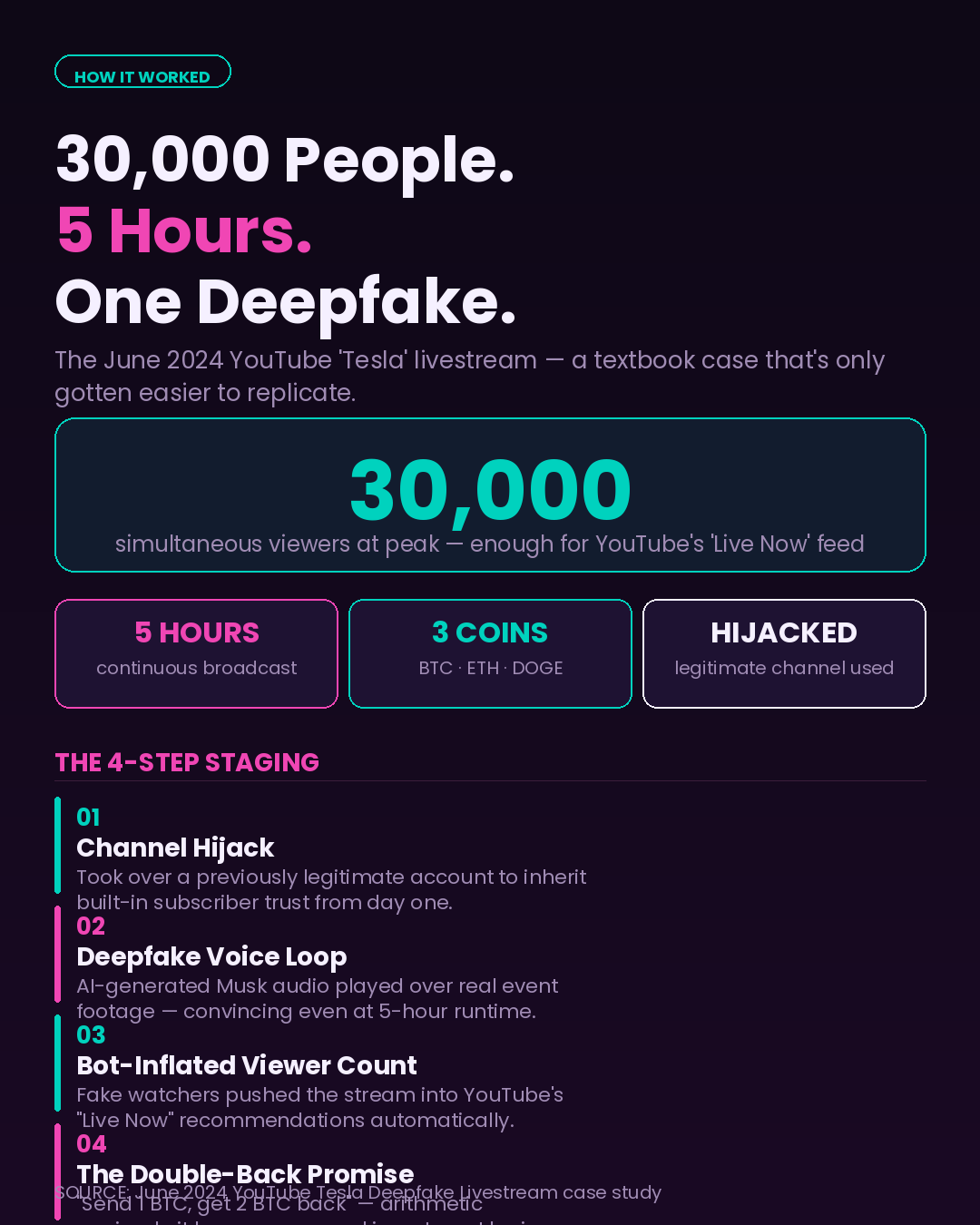
One of the most illustrative and frequently cited examples, which has since become a textbook case study in digital deception, occurred in June 2024. A YouTube channel, cunningly disguised as an official Tesla account, broadcast a five-hour livestream centered entirely around a deepfake rendition of Elon Musk. The AI-generated voice, seamlessly overlaid on recycled footage from past public events, issued a seemingly irresistible directive: viewers were encouraged to send Bitcoin, Ethereum, or Dogecoin to a prominently displayed wallet address, with the promise of receiving double the amount in return. At its zenith, this single stream captivated approximately 30,000 simultaneous viewers, a significant enough audience to propel it into YouTube’s highly visible "Live Now" recommendations, thereby amplifying its reach and perceived legitimacy.
The enduring significance of this incident transcends the mere technological capabilities of deepfake tools, which have, in fact, only grown sharper and more sophisticated since then. The true genius, and indeed the malice, lay in the meticulous staging and timing. The perpetrators did not merely select a random moment to launch their attack; they strategically timed the stream to coincide with periods of heightened interest in cryptocurrency or Elon Musk himself. Crucially, they leveraged a previously legitimate YouTube channel that had been compromised, thereby inheriting its established subscriber base and the intrinsic trust those subscribers had built over time. This pre-existing credibility served as a powerful psychological primer, disarming initial skepticism. Furthermore, a bot-inflated viewer count provided a potent form of social proof, convincing tens of thousands of real viewers that the event was legitimate and widely accepted, further lowering their individual caution thresholds. The combination of a trusted face, a believable platform, and a seemingly popular event created a potent illusion of authenticity, making the fraudulent promise of doubled returns appear credible.
A Growing Epidemic: Beyond Elon Musk and Isolated Incidents
The phenomenon of deepfake crypto scams is far from an isolated "Musk problem" that could be easily dismissed as an anomaly exploiting one man’s unusually public profile. It represents a burgeoning and pervasive threat. The pattern has recurred with alarming frequency and across different prominent figures within the cryptocurrency space.
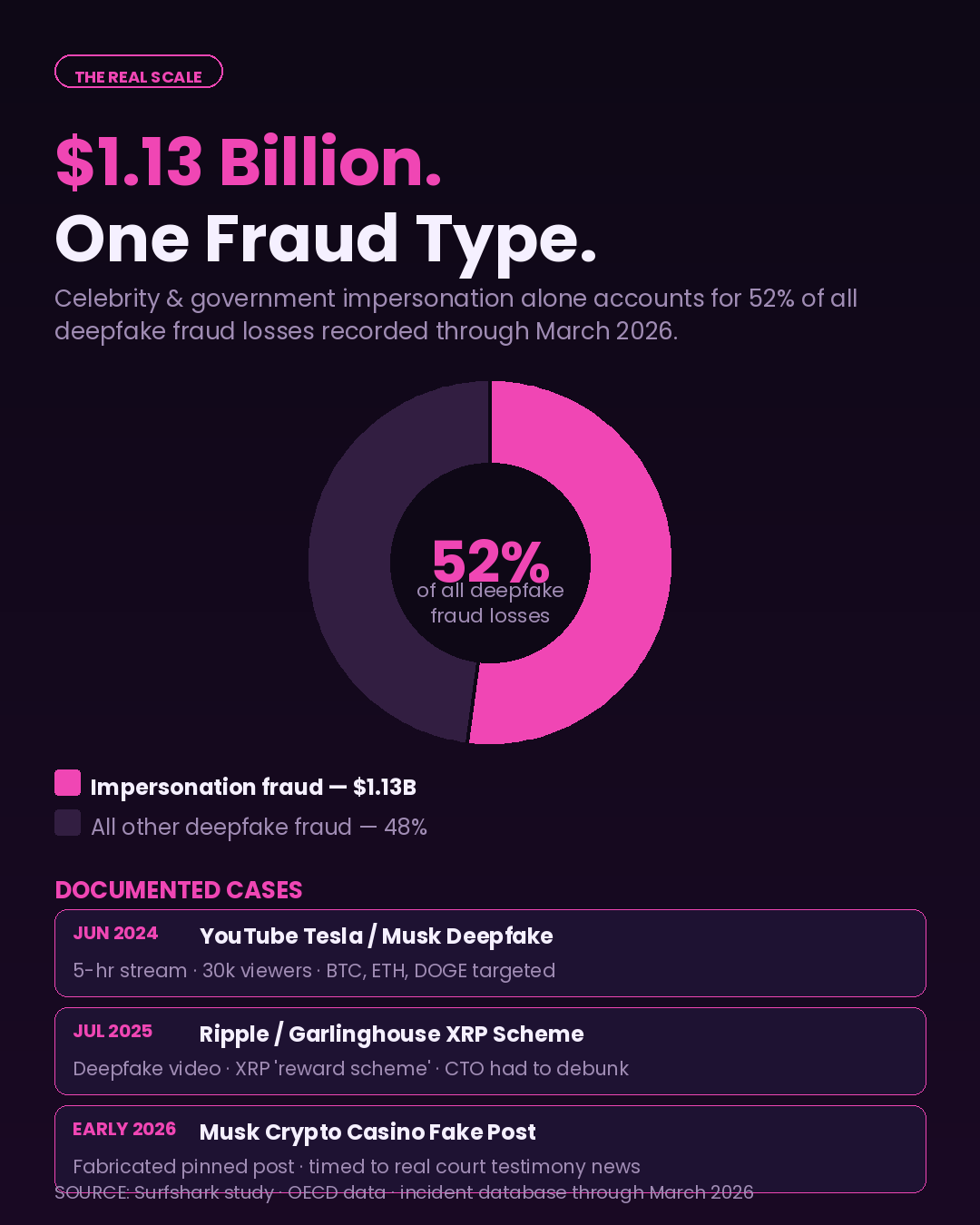
In July 2025, the digital landscape witnessed another high-profile deepfake incident. A fabricated video began circulating, featuring Ripple CEO Brad Garlinghouse, ostensibly endorsing an XRP "reward scheme." The video was crafted with such convincing fidelity that it necessitated an official intervention from Ripple’s own Chief Technology Officer, who was compelled to publicly debunk the elaborate deception. This incident underscored the evolving sophistication of deepfake technology, capable of replicating not just a person’s appearance but also their vocal patterns and mannerisms to a degree that challenges immediate recognition.

The insidious pattern repeated itself in early 2026, demonstrating the scammers’ acute awareness of real-world events and their ability to capitalize on them. This time, fraudsters fabricated a fake "pinned post" attributed to Elon Musk, promoting a spurious crypto casino giveaway. The timing was anything but coincidental; it was deliberately orchestrated to ride the wave of public attention surrounding Musk’s actual, albeit entirely unrelated, court testimony concerning cryptocurrency. By tethering their fraudulent scheme to a genuine news cycle, the scammers were able to imbue their false promotion with a veneer of relevance and timeliness, making it appear more plausible to unsuspecting audiences.
The consistent throughline woven across every single one of these documented cases is a calculated strategy: identify a public figure whose face commands widespread trust, artfully attach that image to a real and current event, and then allow this borrowed credibility to perform the persuasive heavy lifting that the underlying scam could never achieve on its own merits. This method effectively bypasses the critical scrutiny that would ordinarily be applied to an anonymous or less credible proposition, turning public trust into a weapon against the very people who place it.
The Alarming Scale of Deepfake Fraud: Billions in Losses
It is crucial to pause and consider the sheer scale of this problem, as these incidents are not mere scattered curiosities in the vast expanse of the internet; they represent a dominant and alarmingly lucrative category of financial fraud. A comprehensive study conducted by Surfshark, drawing upon extensive incident databases and OECD (Organisation for Economic Co-operation and Development) data through March 2026, revealed a stark and unsettling statistic: celebrity and government impersonation now accounts for approximately $1.13 billion in deepfake-related losses globally. This staggering figure represents nearly 52% of all deepfake fraud recorded within that period.
This single statistic fundamentally reframes the entire issue. What might superficially appear as a niche internet nuisance or a series of isolated celebrity-related hoaxes is, in fact, the single largest slice of an entire fraud category. This enormous economic impact is built almost exclusively on the foundation of stolen faces and borrowed trust. The implication is profound: deepfake fraud is not an emerging threat; it is a fully mature and highly effective form of cybercrime, causing significant financial damage on a global scale. The sophistication of these operations, combined with their demonstrable success in defrauding individuals of considerable sums, necessitates a concerted and multi-faceted response from technology platforms, law enforcement agencies, and the public alike. The financial toll alone demands that these scams be treated with the utmost seriousness, recognizing them as a critical challenge to digital security and public trust.
The Psychological Levers Doing the Actual Work
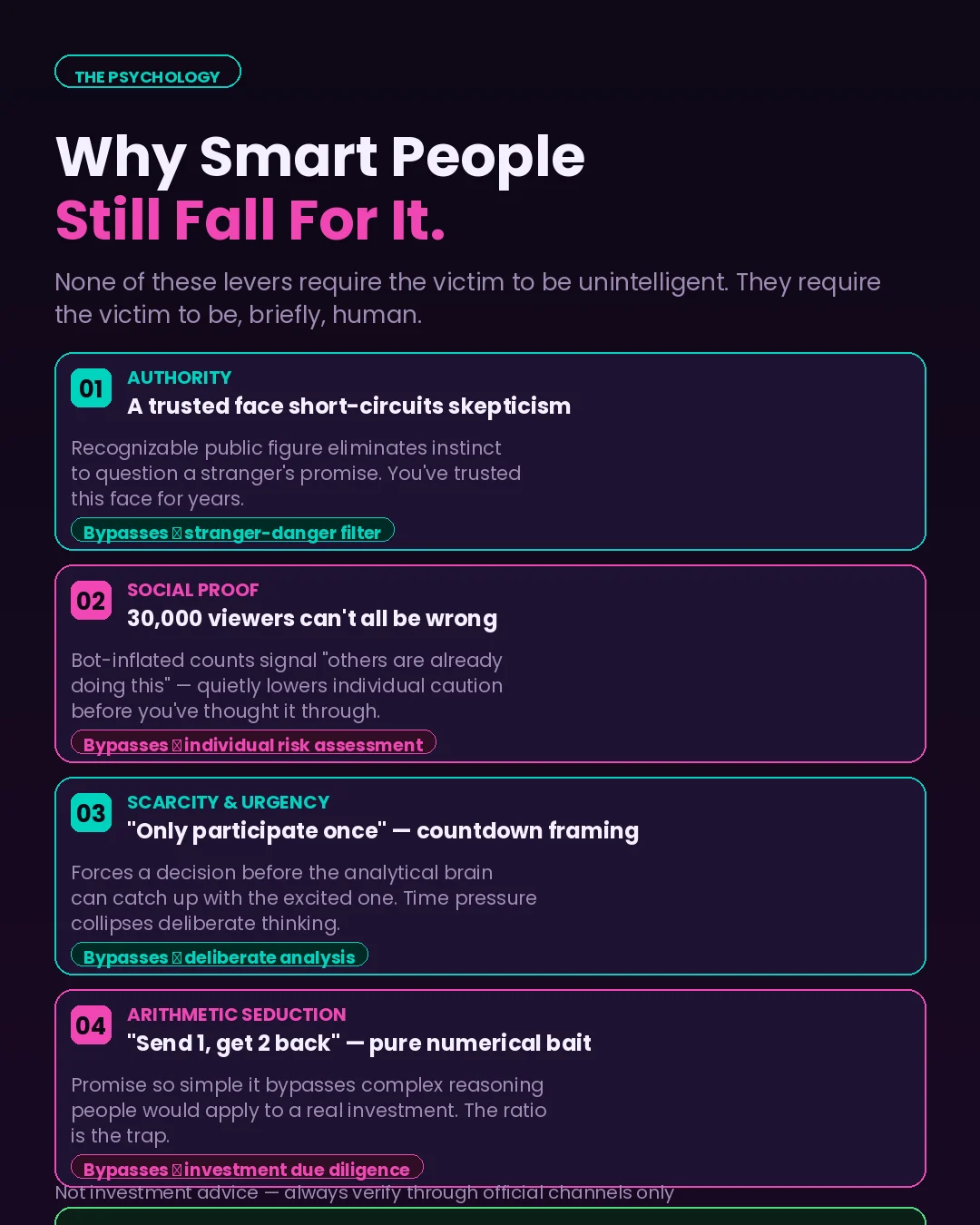
Understanding why seemingly smart and financially literate individuals fall prey to these deepfake scams requires a deeper dive into the psychological mechanisms at play, which have surprisingly little to do with the flawless visual fidelity of the video pixels. These scams are meticulously engineered around a carefully curated set of well-documented psychological pressure points, deliberately stacked to create an irresistible trap.
The first and arguably most potent lever is Authority. The presence of a recognizable, trusted face – be it an industry titan like Elon Musk or a respected CEO like Brad Garlinghouse – immediately short-circuits the inherent skepticism that people would normally apply to a stranger’s promise. Humans are hardwired to defer to authority, and when that authority figure appears to be directly endorsing a scheme, the critical faculties often take a backseat to an ingrained sense of trust and credibility. This perceived endorsement lends an immediate, unearned legitimacy to the fraudulent offer.
The second critical lever is Social Proof. The sight of a viewer counter displaying tens of thousands of concurrent watchers, even if artificially inflated by bots, serves as a powerful psychological signal. It subtly communicates, "Other people are already doing this," or "This must be legitimate if so many are watching/participating." This collective validation quietly lowers individual caution, as people naturally tend to conform to what they perceive as popular or widely accepted behavior. The fear of missing out (FOMO) also plays a role here, as viewers might feel compelled to act quickly if they believe a vast audience is already reaping benefits.
Scarcity and Urgency form the third and most aggressive psychological lever. Scammers frequently employ language such as "you can only participate once," "limited time offer," or incorporate countdown timers into their broadcasts. This deliberate framing pushes individuals to act impulsively, creating a sense of pressure to decide before the analytical, skeptical part of their brain has sufficient time to catch up with the emotional, excited part. The immediate need to act overrides rational deliberation, making victims more susceptible to making ill-advised decisions under duress.
Finally, there is the sheer Arithmetic Seduction of the offer itself: "send one, get two back." This promise is so disarmingly simple, so seemingly lucrative, that it bypasses the more complex, nuanced reasoning people would typically apply to an investment decision. In legitimate financial transactions, the adage "if it sounds too good to be true, it probably is" holds sway. However, when combined with the authority, social proof, and urgency, this basic, appealing arithmetic can overwhelm critical thinking, leading individuals to suspend disbelief in pursuit of an instantaneous, risk-free profit that simply does not exist.
None of these psychological levers require the viewer to be unintelligent or uneducated. They merely require the viewer to be, for a brief but critical moment, human – excited, time-pressured, susceptible to social influence, and pattern-matching against a face they have been conditioned to trust for years. It is this exploitation of fundamental human biases, rather than a flaw in technical literacy, that forms the bedrock of these devastatingly effective deepfake scams.
Industry Challenges and Ongoing Efforts in Mitigation
The proliferation and increasing sophistication of deepfake crypto scams present significant challenges for technology platforms, particularly those hosting live content like YouTube. The sheer volume of content uploaded and streamed daily makes real-time detection and removal of deepfake material incredibly difficult. While platforms invest heavily in AI-driven content moderation tools, these tools are in a constant arms race with the evolving capabilities of deepfake generation software. Scammers frequently exploit loopholes, utilize hijacked accounts to bypass initial scrutiny, and employ sophisticated techniques to evade detection algorithms.
There are growing calls for greater platform accountability, urging companies to implement more robust verification processes for live streams, especially those promoting financial incentives, and to respond more swiftly to reports of fraudulent activity. Law enforcement agencies, such as the FBI and INTERPOL, regularly issue public warnings about these types of scams, collaborating with cybersecurity firms to track wallet addresses and identify perpetrators, though the transnational nature of these crimes often complicates investigations and prosecutions.
Furthermore, the broader cybersecurity industry is actively developing advanced deepfake detection technologies, including forensic analysis tools that can identify subtle digital artifacts indicative of manipulation. However, as AI models improve, these artifacts become less apparent, making human and automated detection increasingly challenging. The focus is shifting towards proactive measures, such as educating users and strengthening account security, to prevent channels from being hijacked in the first place.
Defending Against Digital Deception: A Critical Approach
The one consistent and surprisingly simple defense mechanism observed across every documented case of deepfake crypto fraud has little to do with spotting subtle visual glitches in the deepfake itself. Such imperfections are often too nuanced or fleeting to catch in real time, especially on lower-resolution streams or mobile devices. Instead, the most reliable safeguard is a fundamental arithmetic check: no legitimate entity, whether a celebrity, a corporation, or a government agency, will ever send back more cryptocurrency than it receives, under any circumstances, as a "giveaway." The moment an offer promises to double your money, or provide a disproportionately high return simply for sending funds first, the specific face on the screen becomes utterly irrelevant. The offer itself is the unequivocal tell, not the quality of the video or the apparent authenticity of the spokesperson.
Verifying claims exclusively through a company’s or individual’s official, established channels – such as their verified social media accounts, official corporate websites, or public announcements from reputable news sources – rather than relying on a direct livestream link, a viral clip, or an unsolicited message, remains the single most reliable filter against this rapidly evolving category of fraud. Exercise extreme skepticism towards any promotion that demands immediate action, promises unrealistic returns, or requires you to send money to participate in a "giveaway." Independent research and cross-referencing information from multiple trusted sources are paramount. As the underlying AI tools continue to improve, making visual detection progressively harder, adherence to these critical analytical and verification practices will become the cornerstone of personal digital security against sophisticated deepfake scams.
Broader Implications and Future Outlook
The rise of deepfake crypto scams has profound broader implications, extending beyond immediate financial losses. It fundamentally erodes trust in digital media, making it increasingly difficult for the public to discern authenticity from fabrication. This erosion of trust can have far-reaching consequences, impacting everything from news consumption to political discourse. Public figures, once able to communicate directly with their audiences, now face the constant threat of having their image and voice weaponized against their will, necessitating swift and decisive public debunking efforts.
The evolving threat landscape suggests a future where deepfakes become even more sophisticated, accessible, and pervasive. As AI tools democratize the creation of hyper-realistic digital forgeries, the "cat and mouse" game between scammers and cybersecurity professionals will intensify. This necessitates a collective societal response, emphasizing digital literacy and critical thinking skills from an early age. Individuals must be equipped with the tools to question, verify, and critically evaluate the information they encounter online. Without a heightened sense of vigilance and a steadfast commitment to security best practices, the allure of quick riches, combined with the persuasive power of manipulated digital identities, will continue to ensnare even the most astute among us.
Disclosure: This is not trading or investment advice. Always do your research before buying any cryptocurrency or investing in any services.














