In a cryptocurrency market often dominated by tokens boasting elaborate roadmaps, significant venture capital backing, and complex tokenomics, the recent performance of DOG, officially listed as Dog (Bitcoin) on CoinMarketCap, presents a compelling anomaly. This Bitcoin Layer 1 native memecoin, operating on the Runes protocol, has distinguished itself by outperforming a significant portion of the market despite lacking the traditional institutional support and structured development pathways common to many contemporary digital assets. Its unique "fair launch" model, coupled with robust community engagement and strategic institutional interest, positions DOG as a noteworthy subject for in-depth analysis within the broader crypto landscape.
The Genesis of DOG: A Fair Launch on Bitcoin Layer 1
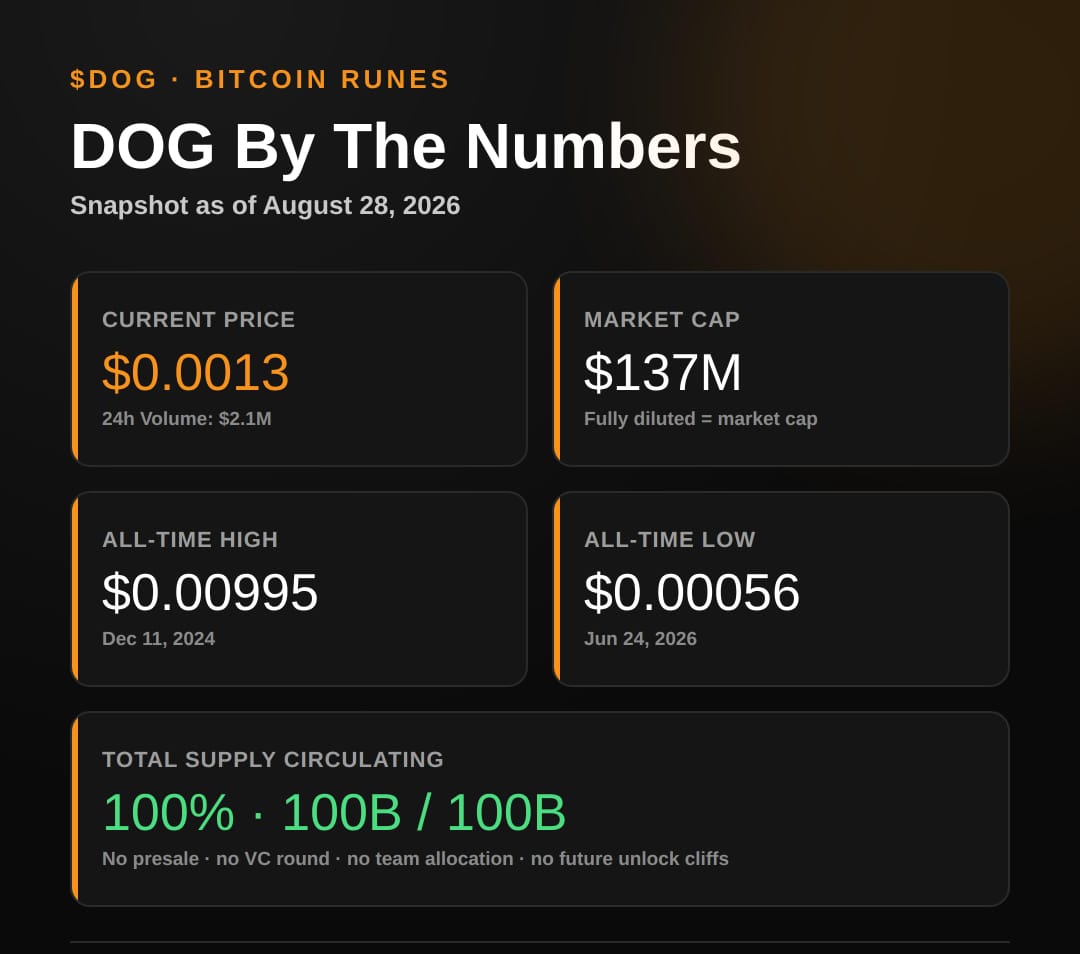
DOG emerged onto the cryptocurrency scene in 2024, not through a conventional initial coin offering (ICO) or venture capital rounds, but through a truly decentralized "fair launch." All 100 billion DOG tokens were airdropped for free to early adopters of Ordinals, a protocol that enables inscription of digital artifacts directly onto the Bitcoin blockchain. This distribution method immediately set DOG apart from many modern crypto projects. Unlike tokens with presales, private funding rounds, or developer allocations, DOG had no centralized team holding a significant portion of the supply, eliminating the potential for large-scale sell-offs often associated with vesting schedules and future unlock events. The entire supply of DOG tokens entered circulation simultaneously, fostering a level playing field for all participants and removing the "cliff" or "dilution overhang" that can exert downward pressure on a token’s price as locked supplies are released. This structural integrity, born from its fair launch, is often cited by proponents as a core strength, insulating it from certain market dynamics that plague other projects.
The decision to launch DOG natively on Bitcoin Layer 1 via the Runes protocol is also a critical differentiator. The Runes protocol, introduced to enhance fungible token issuance on Bitcoin, allows for more efficient and less costly creation and transfer of tokens compared to previous methods like BRC-20. This integration aligns DOG with the foundational principles of Bitcoin’s security and decentralization, a factor that resonates deeply with a segment of the crypto community that prioritizes native Bitcoin solutions. This technical foundation provides a robust and secure environment for the token, leveraging Bitcoin’s established network effects and unparalleled security.
Market Performance and Price Dynamics
As of the latest data, DOG trades at approximately $0.0013, commanding a market capitalization of around $137 million, with a 24-hour trading volume hovering near $2.1 million. While these figures indicate a significant presence, the token’s journey has been marked by considerable volatility, a characteristic common among memecoins but particularly pronounced given its unique origins. DOG reached an all-time high of $0.009947 on December 11, 2024, demonstrating its capacity for rapid appreciation. However, it subsequently experienced a significant correction, bottoming out at an all-time low of $0.000559 on June 24, 2026. This recent low is now being viewed by some analysts as a potential "final flush" or capitulation event, preceding a more sustained upward trajectory. The subsequent bounce from this level has fueled speculation regarding a potential reversal and renewed investor interest.
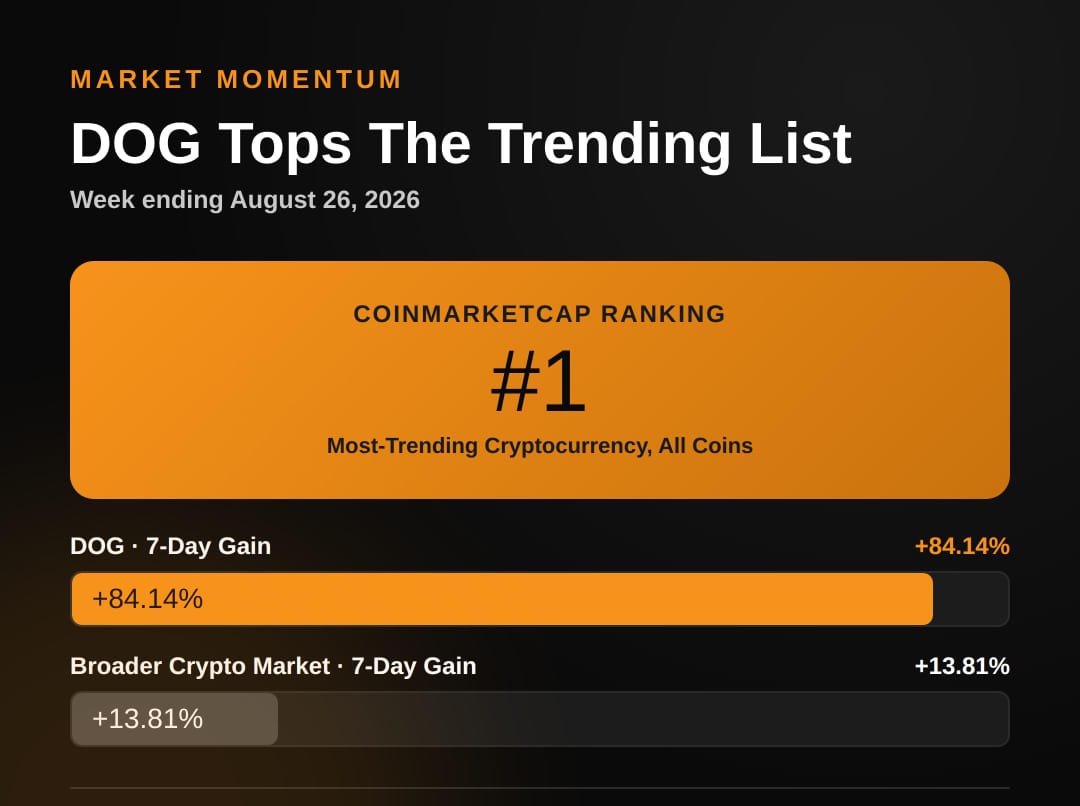
The broader market context is crucial for understanding DOG’s recent movements. On August 26, 2026, CoinMarketCap’s trend tracking identified DOG as the single most-trending cryptocurrency on its platform. This surge was underpinned by an impressive 84.14% seven-day gain, significantly outperforming the broader crypto market, which saw an average increase of "only" 13.81% over the same period. This decisive outperformance occurred during a phase when the Crypto Fear & Greed Index was in "Extreme Greed" territory, a psychological indicator suggesting high market confidence and speculative activity. In such an environment, fully distributed, low-float-adjacent memecoins with recognizable branding often become prime targets for retail capital rotation, as investors seek high-beta assets that can capitalize on bullish sentiment. The "DOG" brand itself, leveraging a universally recognized and often endearing animal, likely plays a role in its memetic appeal and widespread recognition within the crypto community, making it easily accessible to new retail investors.
Institutional Validation and Strategic Accumulation
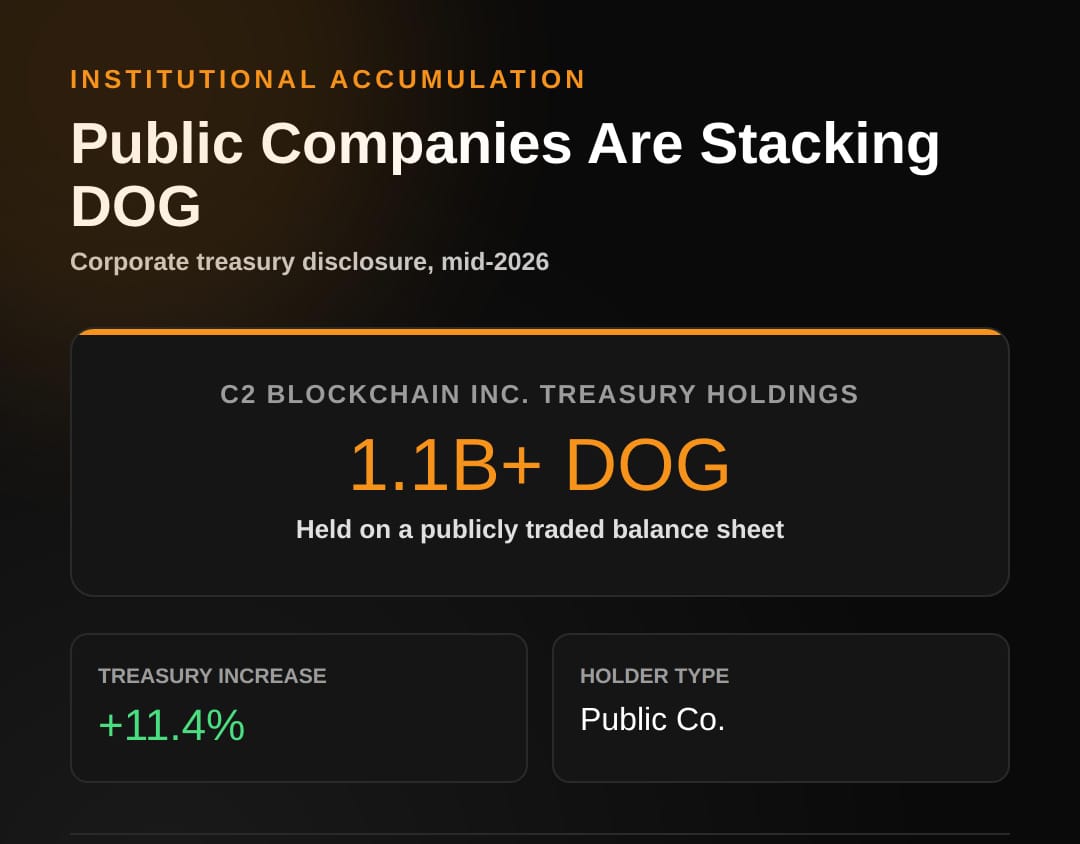
Beyond retail interest, DOG has garnered attention from institutional players, adding a layer of credibility that is rare for a memecoin. Publicly traded entity C2 Blockchain has been transparently accumulating a significant treasury position in DOG. By mid-2026, C2 Blockchain disclosed holdings exceeding 1.1 billion tokens, representing an 11.4% increase from its prior filing. This strategic accumulation by a public company signifies a distinct form of validation, differing fundamentally from influencer endorsements or speculative trading. When a corporate entity chooses to hold a digital asset like DOG on its balance sheet, it suggests a long-term strategic view and an acknowledgment of the asset’s potential value as a Bitcoin-native component. Such actions tend to reduce the circulating supply available for trade, effectively tightening the "float" and potentially amplifying price movements in response to demand. This institutional backing, even from a single entity, provides a counter-narrative to the perception of memecoins as purely speculative and fleeting assets.
Community-Driven Development and Infrastructure Proposals
A defining characteristic of DOG’s ecosystem is its robust and proactive community, which has taken on responsibilities typically associated with a core development team. This community-driven approach is exemplified by the "$DOG Mode" proposal, championed by Leonidas, a prominent Bitcoin Runes advocate. Documented on CoinMarketCap’s community platform, this proposal aims to introduce significant modifications to Bitcoin’s relay policy. Specifically, it seeks to lower the "dust limit" – the minimum value required for a transaction to be processed – from hundreds of satoshis down to just one satoshi, and simultaneously raise the maximum standard transaction size.
The implications of the "$DOG Mode" proposal are far-reaching. If adopted by Bitcoin Core, these changes would liberate an estimated $25 million currently locked as "padding" across Ordinals and Runes transactions, including those involving DOG. More importantly, it would make the movement of Runes assets significantly cheaper and more efficient across the board. This initiative, originating from the DOG community, highlights a proactive engagement with Bitcoin-level infrastructure, rather than merely relying on external developers. This grassroots effort to enhance the fundamental utility of the underlying blockchain is a powerful testament to the community’s commitment and a factor often underestimated in market analysis. It demonstrates a genuine desire to contribute to the broader Bitcoin ecosystem, benefiting not just DOG holders but all users of Runes and Ordinals.
Building a Sustainable Ecosystem: Beyond the Meme
The efforts of the DOG community extend beyond technical proposals, encompassing a range of initiatives aimed at building institutional scaffolding around the token. Over the past year, the community has established the Dog of Bitcoin Foundation as a registered 501(c)(3) nonprofit organization. This move signals a serious commitment to long-term sustainability and a desire to formalize the ecosystem. Furthermore, they launched DOG Swap in partnership with Xverse, a prominent Bitcoin wallet provider. DOG Swap enables holders to trade DOG natively on Layer 1 without the need for bridging to other blockchains, enhancing user experience and reducing friction.
The community has also leveraged the Ordinals protocol to launch multiple collections that fund real-world initiatives. Notably, some of these initiatives are directed towards securing homes for disabled dogs, a detail that, while sentimental, underscores the community’s ability to connect digital assets with tangible social impact. This blend of philanthropic activity with technological development fosters deep community engagement and loyalty, factors that can contribute to a token’s resilience between market rallies. The official DOG homepage currently teases "The Moon Mission," described vaguely as "launches soon." While specifics are scarce, the community’s track record of delivering on smaller commitments suggests this upcoming initiative warrants close monitoring for potential catalysts.
Outlook and Potential Trajectories
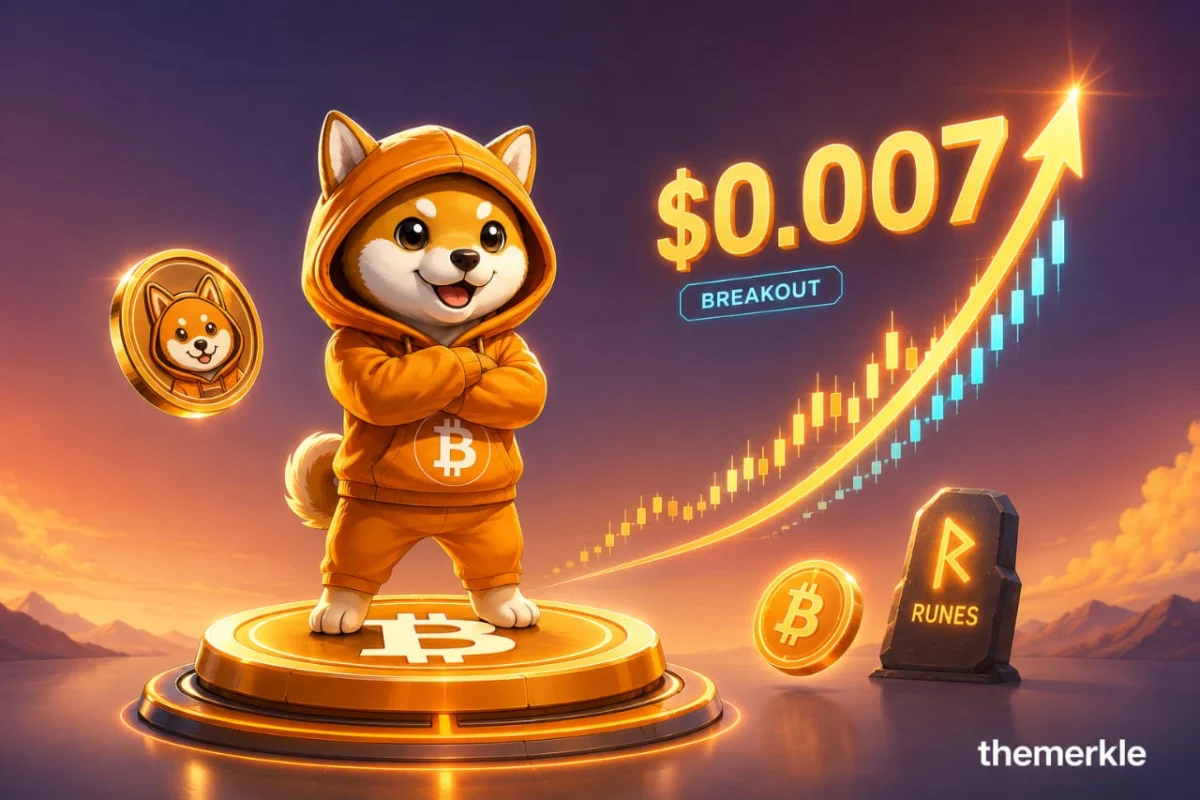
The confluence of these factors – a fully circulating supply free from dilution concerns, active accumulation by a publicly traded entity, a community-driven technical proposal with potential Bitcoin-level impact, and a well-organized community consistently delivering on initiatives – paints a compelling bull case for DOG. In the near term, a continuation of the current trend could see DOG retesting the $0.0025–$0.0035 range. A more ambitious "stretch scenario" could push the token towards the $0.005–$0.007 zone, particularly if the "$DOG Mode" proposal gains significant traction within the Bitcoin Core development community and if a tier-1 exchange listing, a long-stated community goal, materializes. Such a listing would dramatically increase liquidity and exposure, attracting a broader investor base.
However, the inherent characteristics of DOG also present certain considerations. The absence of a traditional "team" means there is no central entity accountable for roadmaps, quarterly updates, or strategic direction. All development and momentum are community-driven, which, while authentic, can lead to periods of reduced activity or a lack of clear communication. Furthermore, despite its $137 million market cap, liquidity for DOG remains relatively thin. This can result in sharper price movements in both directions, making it more susceptible to volatility than highly liquid assets. Investors tracking DOG should closely monitor the progress of the "$DOG Mode" proposal, any announcements related to "The Moon Mission," and whether the recent trending status translates into sustained trading volume rather than a fleeting spike.
Conclusion: A New Paradigm for Memecoins?
DOG represents a fascinating case study in the evolving landscape of digital assets. Its success, born from a fair launch on Bitcoin Layer 1 and sustained by a dedicated community, challenges the conventional wisdom that dictates token success through venture capital and elaborate corporate structures. While the memecoin label often implies speculative and transient value, DOG’s community has demonstrated a commitment to foundational infrastructure improvements and real-world impact, potentially carving out a new archetype for what a "memecoin" can achieve. Its journey underscores the power of decentralized, community-led initiatives in the crypto space and highlights the potential for Bitcoin-native assets to drive both cultural phenomena and meaningful technical innovation. The narrative of DOG is not just about price action; it’s about the resilience of a decentralized ideal and the unexpected avenues through which value and utility can emerge in the digital economy.
Disclosure: This is not trading or investment advice. Always conduct thorough research before purchasing any cryptocurrency or investing in any services.
Follow us on Twitter @themerklehash to stay updated with the latest Crypto, NFT, AI, Cybersecurity, and Metaverse news!