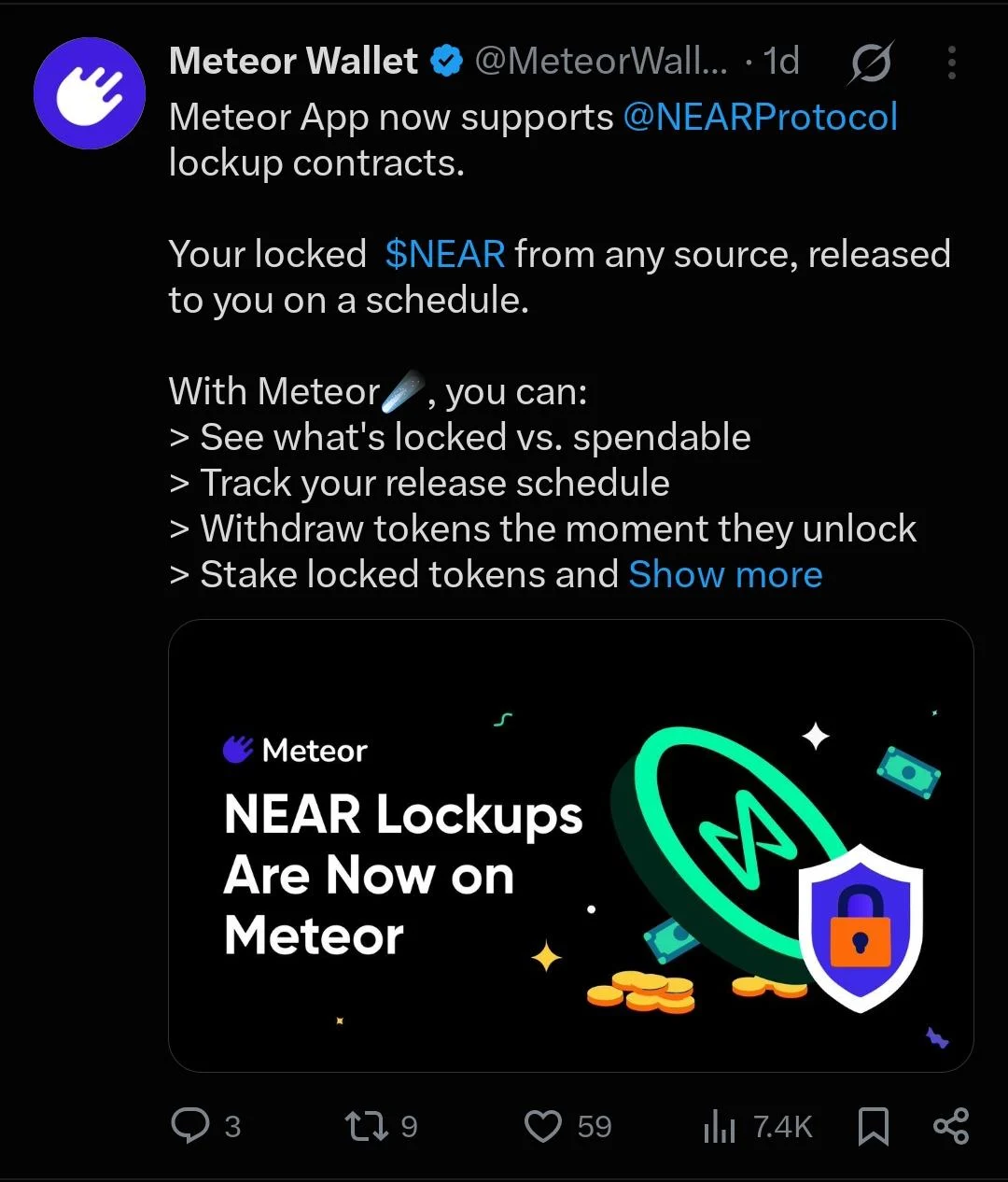
Meteor Wallet and NEAR Protocol are both built for accessibility without sacrificing power, helping bridge the gap between simplicity and deep functionality for crypto users, a proposition that positions Meteor Wallet as a pivotal tool within the burgeoning Web3 landscape, particularly for those engaged with the NEAR ecosystem. In an environment where most cryptocurrency wallets present a stark choice between an intuitive, clean interface that often conceals underlying complexity, and a feature-rich dashboard that can overwhelm newcomers, Meteor Wallet has dedicated years to demonstrating that this trade-off is not inevitable. A comprehensive examination of its current feature set, sophisticated staking mechanics, and strategic plans for a crypto-linked Mastercard reveals a genuinely impactful and useful wallet, meticulously designed for the NEAR Protocol ecosystem. While acknowledging a few areas for potential refinement, its comprehensive offering marks it as a significant advancement in non-custodial wallet technology.
The Foundational Identity of Meteor Wallet: A NEAR-Native Non-Custodial Solution
At its core, Meteor Wallet is a non-custodial digital wallet, engineered with a singular focus on the NEAR Protocol. This non-custodial design is fundamental, empowering users with complete control over their private keys and seed phrases, thereby eliminating reliance on third parties for fund custody—a critical tenet of true decentralization and user sovereignty in the cryptocurrency space. The wallet offers versatility in access, available as a robust web application, a convenient browser extension, and dedicated native mobile applications for both iOS and Android platforms, ensuring broad accessibility across various user preferences and devices. The founding team behind Meteor Wallet possesses a notable track record within the NEAR ecosystem, having previously developed impactful projects such as Near Tinker Union and Enleap Near. This deep-seated experience not only lends credibility but also underscores an intimate understanding of the NEAR Protocol’s architecture, community needs, and developmental trajectory, directly translating into a wallet designed from the ground up to seamlessly integrate and enhance the NEAR user experience.
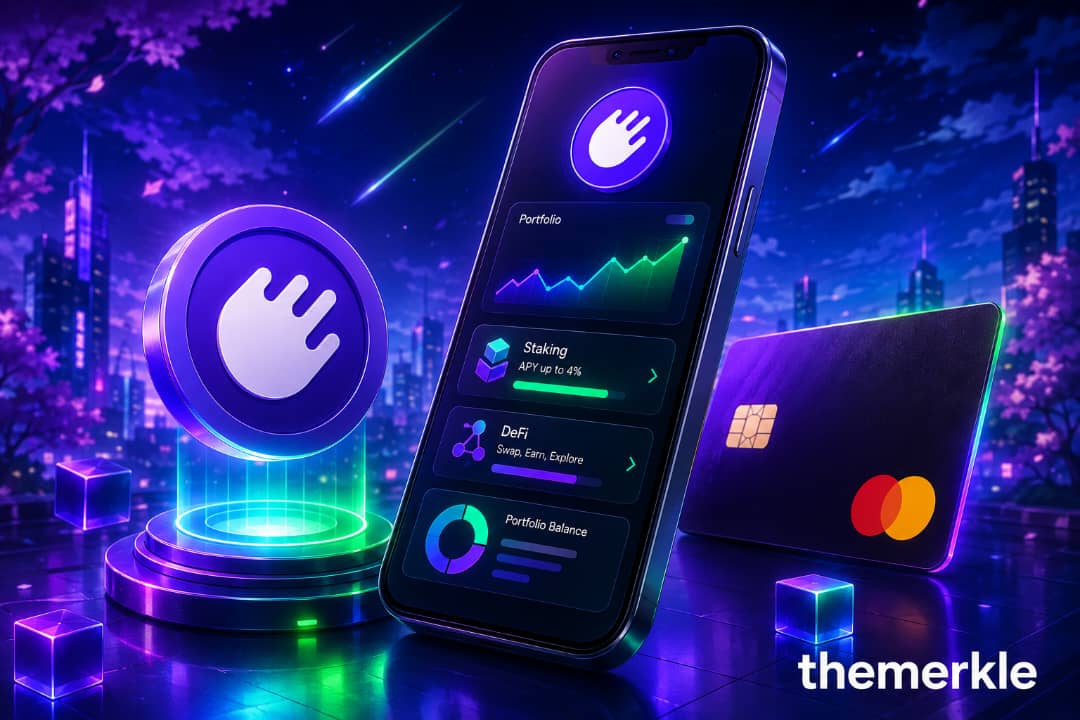
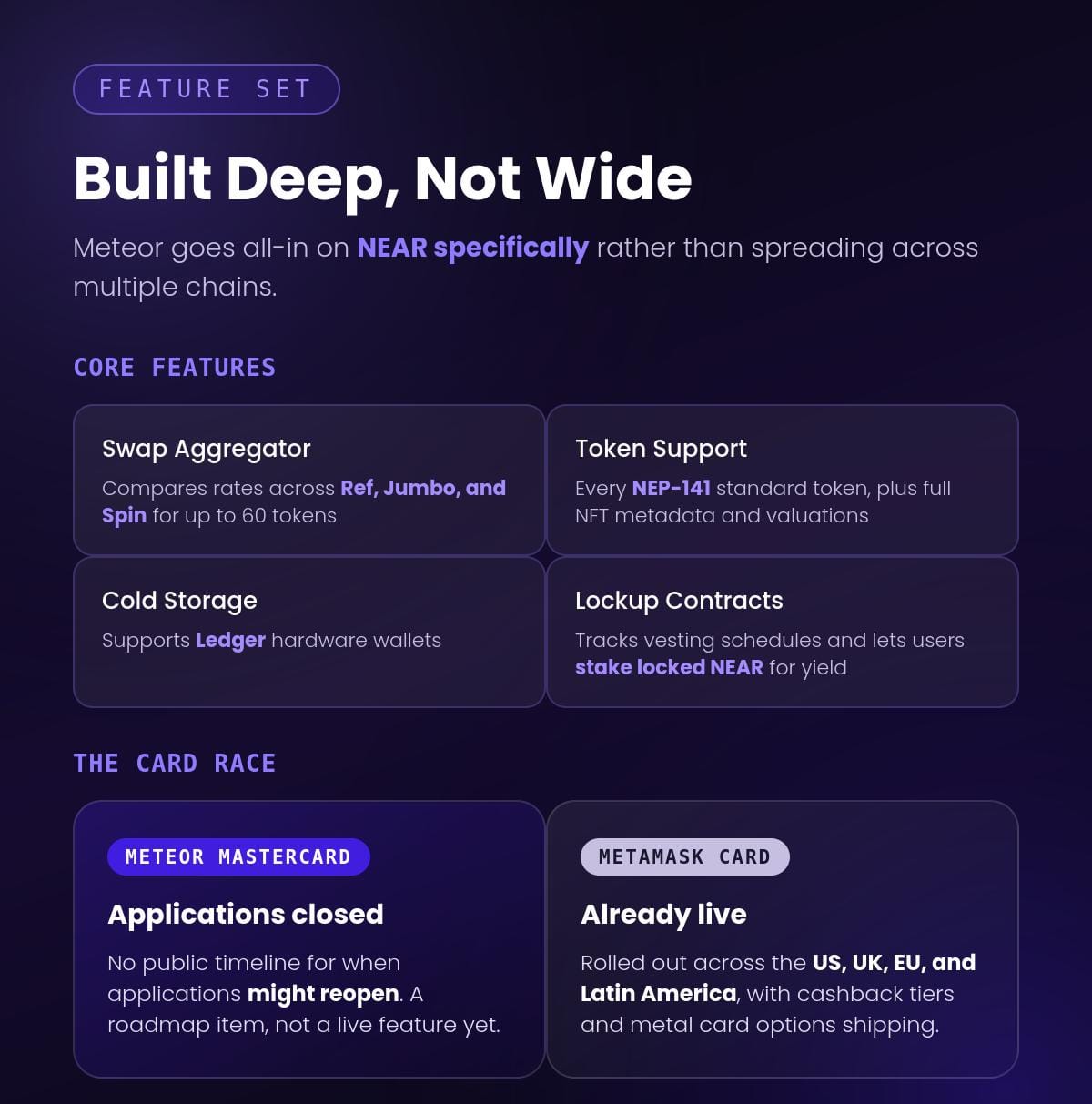
The wallet’s functionality extends to robust support for all tokens adhering to NEAR’s NEP-141 standard, a crucial technical specification that ensures broad compatibility within the ecosystem. For non-fungible token (NFT) holders, Meteor Wallet elevates the experience beyond a mere list of digital collectibles, providing full metadata and accurate asset valuations directly within the interface. This rich display of information is vital for collectors and traders, offering comprehensive insights into their digital assets without the need for external explorers. A standout feature is its integrated swap aggregator, which Meteor Wallet proudly markets as the first of its kind on the NEAR Protocol. This innovative tool intelligently compares exchange rates across multiple prominent liquidity providers within the NEAR ecosystem, including Ref Finance, Jumbo Exchange, and Spin. By aggregating these options, the wallet enables users to efficiently swap up to 60 different tokens, encompassing major stablecoins, while actively working to minimize slippage and transaction fees, thereby optimizing trading outcomes. On the security front, Meteor Wallet employs industry best practices, encrypting sensitive user data, offering seamless integration with Ledger hardware wallets for enhanced cold storage capabilities, and explicitly stating its policy of not logging or retaining personal information beyond what is publicly visible and auditable on the blockchain. These measures collectively underscore a strong commitment to user privacy and asset protection.
Revolutionizing Staking on NEAR: Flexibility and Engagement
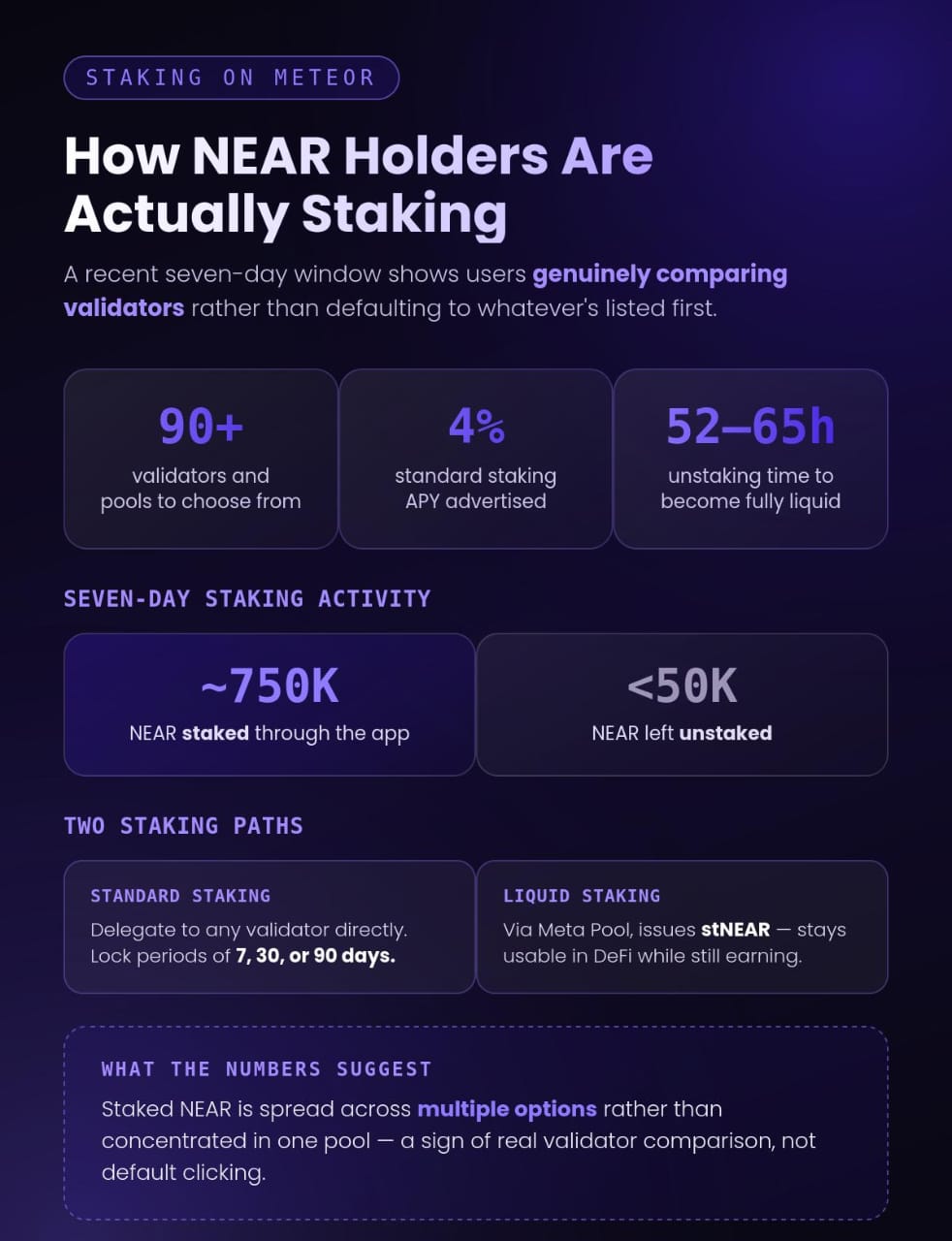
Staking functionality represents a cornerstone of Meteor Wallet’s development efforts, offering users two distinct and thoughtfully designed pathways that cater to varying degrees of flexibility and desired engagement with their NEAR tokens. The Standard Staking option empowers users to directly delegate their NEAR tokens to any of the more than 90 active validators and staking pools available within the NEAR network, all managed conveniently from within the wallet interface. This traditional staking method currently advertises attractive annual percentage yields (APY) of up to 4%, with users having the flexibility to choose lock periods of 7, 30, or 90 days, depending on their investment strategy and liquidity needs. The appeal of this standard route is clear: it provides a straightforward method for users to contribute to the network’s security and earn rewards. The user experience is streamlined, requiring only a few clicks to initiate a stake: users input the desired amount, select a validator from a searchable list that transparently displays fee percentages and estimated returns, and confirm the transaction. It is important to note that unstaking typically involves an unbonding period of approximately 52 to 65 hours before funds become fully liquid again, a standard feature of NEAR’s proof-of-stake consensus mechanism rather than a specific Meteor Wallet limitation.
Complementing this, Meteor Wallet offers Liquid Staking through a strategic partnership with Meta Pool, a prominent liquid staking solution on NEAR. This innovative approach addresses the capital inefficiency often associated with traditional staking by issuing a receipt token, known as stNEAR, in exchange for staked NEAR. The key advantage of stNEAR is its transferability and usability across various decentralized finance (DeFi) protocols within the NEAR ecosystem, even while the underlying NEAR tokens remain staked and continue to accrue rewards. This mechanism allows users to maintain liquidity and participate in other DeFi activities, such as lending or providing liquidity, without sacrificing their staking rewards. The integration of both standard and liquid staking options positions Meteor Wallet as a comprehensive hub for maximizing NEAR token utility.
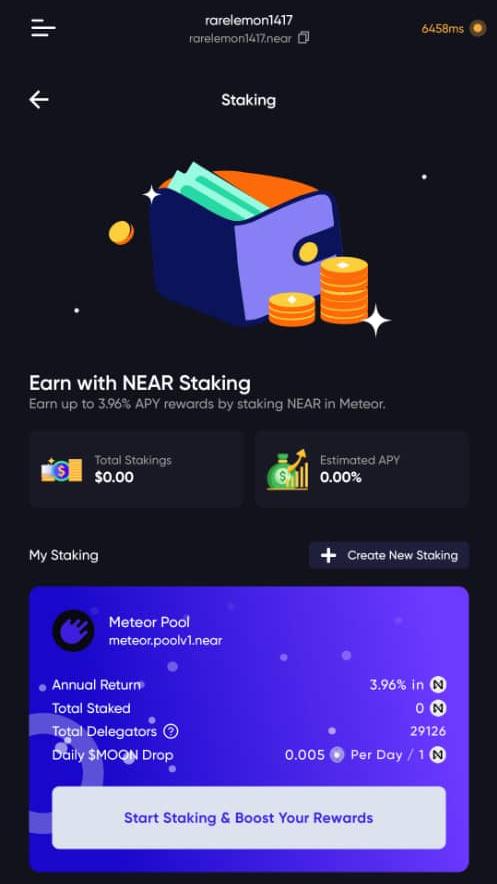
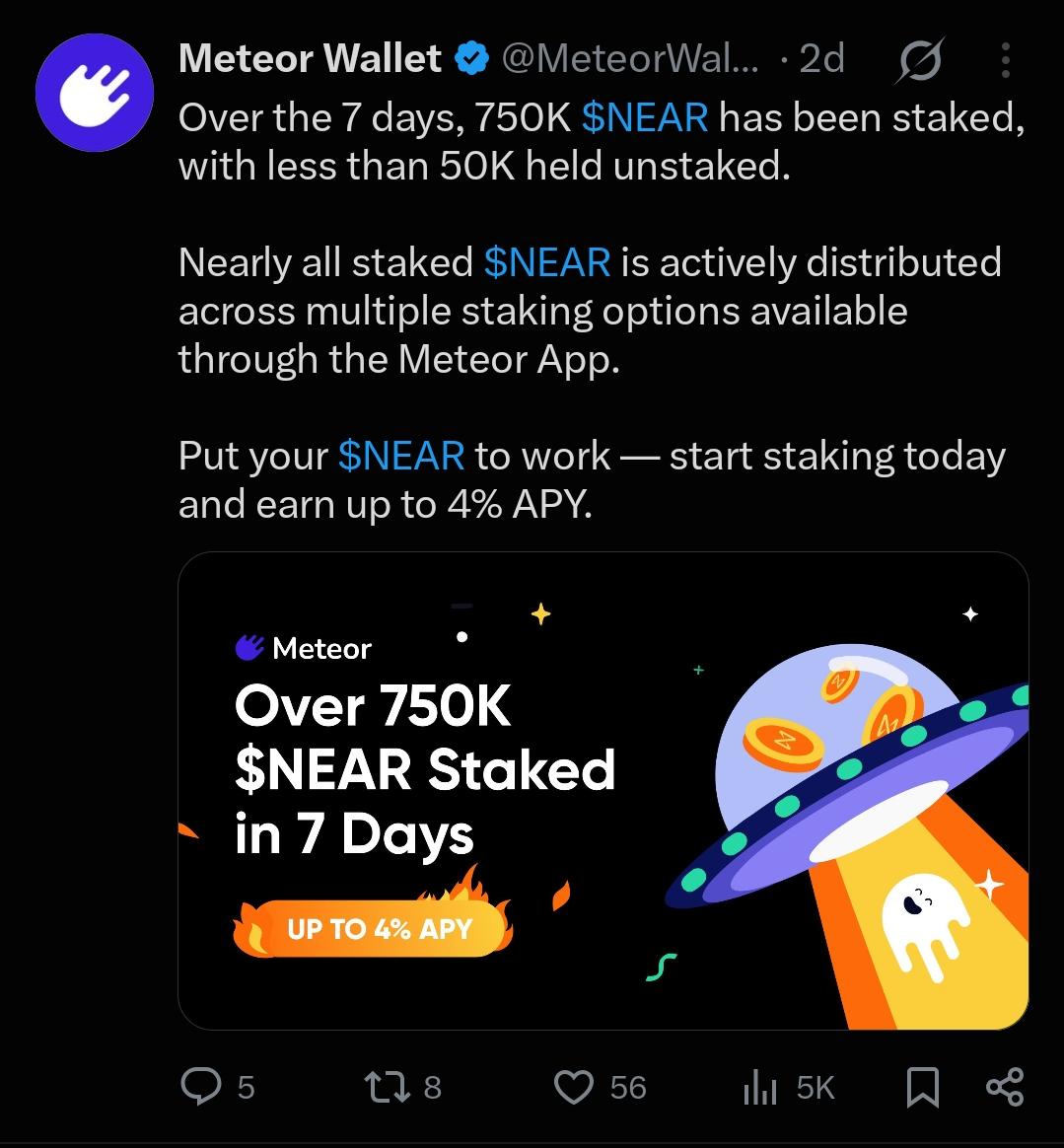
The scale of user activity in staking through Meteor Wallet unequivocally underscores the feature’s significance and user trust. Over a recent seven-day period, a substantial volume of approximately 750,000 NEAR tokens was staked via the application. This figure stands in stark contrast to less than 50,000 NEAR tokens reported as unstaked during the same timeframe, indicating a strong preference among users to put their assets to work. Furthermore, the distribution of this staked NEAR across multiple staking options, rather than concentration in a single pool, suggests that users are actively engaging in due diligence, comparing validators, and making informed decisions based on factors like fee percentages and estimated returns, rather than simply defaulting to the first available option. This active participation highlights not just the utility of Meteor’s staking features but also the engagement level of the NEAR community.
Addressing a Long-Standing NEAR Challenge: Lockup Contract Support
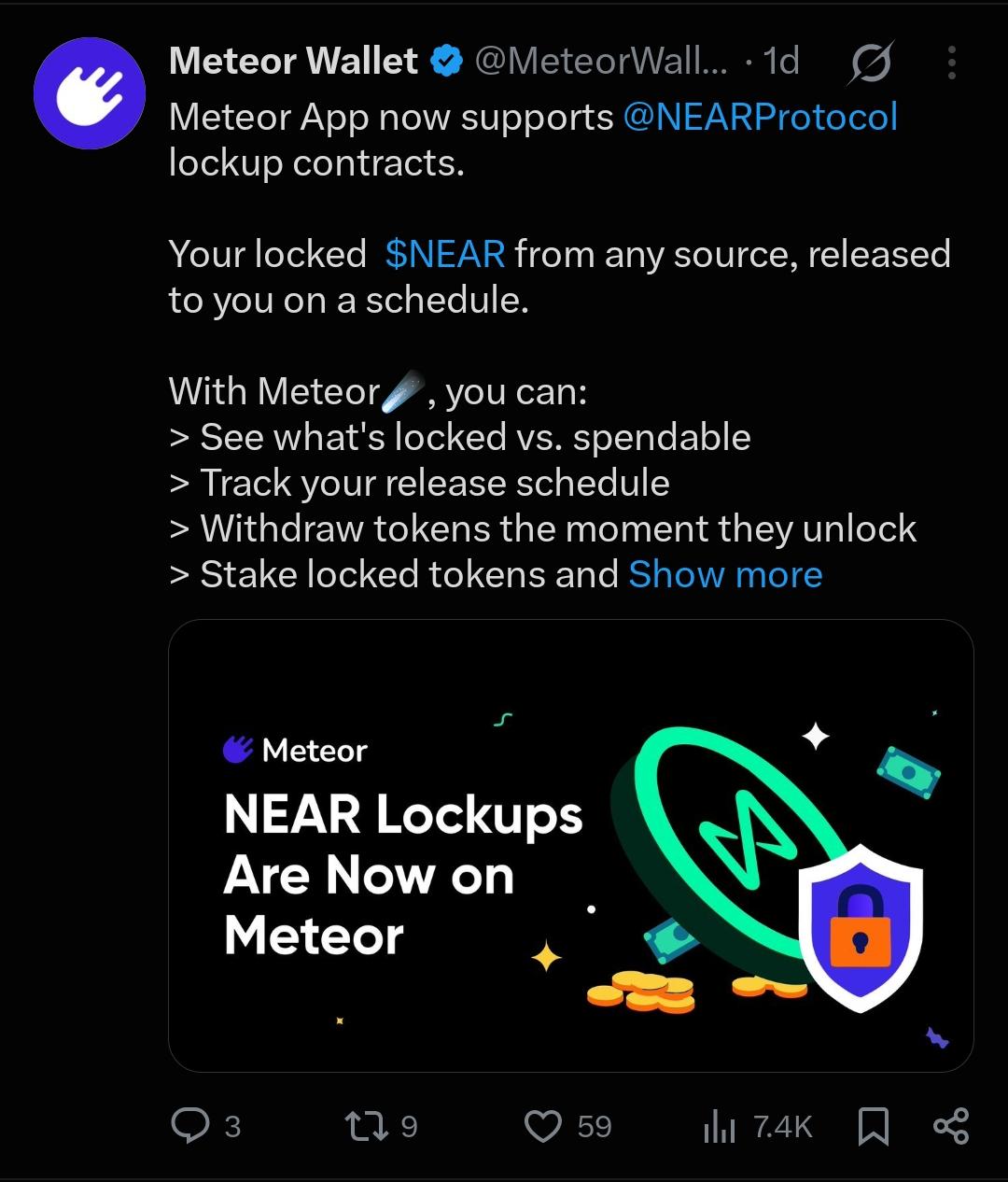
One of Meteor Wallet’s most impactful recent innovations directly addresses a persistent source of frustration for long-term NEAR token holders: the management of lockup contracts. For years, NEAR tokens distributed through investor allocations, team vesting schedules, or ecosystem grants have been subject to lockup periods, with tokens released gradually over time. Historically, tracking precisely what tokens were vested, what remained locked, and the exact timing of upcoming unlocks required laborious navigation through blockchain explorers or reliance on often cumbersome third-party dashboards. This process was opaque and inefficient, particularly for individuals managing multi-year vesting schedules.
Meteor Wallet has comprehensively resolved this issue by introducing native support for NEAR Protocol lockup contracts directly within its application, irrespective of the origin of these locked tokens. Within the wallet interface, users are now presented with a clear, intuitive breakdown distinguishing between spendable tokens and those still under lockup. The system accurately tracks the precise release schedule associated with each contract, enabling users to withdraw tokens the instant they become unlocked, eliminating the need for manual checks or external tools. Perhaps the most revolutionary aspect of this update is the ability to stake locked NEAR tokens. This functionality transforms a previously idle asset into a productive one, allowing users to collect staking rewards as immediately spendable tokens, even while the underlying principal remains subject to its vesting schedule. For anyone navigating a multi-year vesting timeline, this represents a profound upgrade, converting a passive, illiquid asset into a generator of usable yield, significantly enhancing capital efficiency and user experience. This feature not only streamlines management but actively monetizes previously inaccessible value, a testament to Meteor Wallet’s commitment to solving real user pain points within the NEAR ecosystem.
The Vision for the Future: The Meteor Mastercard
Looking ahead, Meteor Wallet has publicly announced its ambitious plans to launch its own crypto-linked Mastercard. This strategic move aligns with a broader trend observed across the cryptocurrency industry, where leading self-custodial wallets, such as MetaMask, have already rolled out similar Mastercard-backed cards across major markets like the US, UK, EU, and parts of Latin America, offering features like cashback and physical metal card options. The overarching appeal of these crypto-linked cards is consistent: they allow users to retain their funds in self-custody within their wallet until the precise moment of a purchase. At that point, the cryptocurrency is instantly converted to fiat currency, which then settles through Mastercard’s extensive global merchant network. This seamless integration empowers holders to spend their cryptocurrency virtually anywhere a traditional debit card is accepted, effectively bridging the gap between the digital asset economy and conventional commerce.
However, as of the current reporting, applications for the Meteor Mastercard are closed, indicating that this promising feature is still under development and not yet available to the public. This places Meteor Wallet a step behind some of its competitors in this specific domain. While the Meteor Mastercard represents a compelling roadmap item and a strong indicator of the wallet’s future ambitions to expand its utility into everyday spending, it is not yet a live feature that users can leverage. The absence of a publicly communicated timeline for when applications might reopen is a crucial factor for individuals whose primary motivation for adopting a new wallet might be a crypto-linked spending card. Despite its current unavailability, the Meteor Mastercard initiative signals a clear strategic direction for the wallet, aiming to enhance the practical utility of NEAR tokens beyond just investment and DeFi, and to facilitate broader mainstream adoption by making crypto spending as effortless as traditional fiat.
Acknowledging Areas for Refinement and Strategic Scope
A balanced assessment of Meteor Wallet necessitates acknowledging certain friction points and its strategic scope. User feedback, particularly on platforms like the Google Play Store, frequently praises the wallet’s intuitive interface and its gamified onboarding process, which significantly lowers the barrier to entry for new Web3 users. However, some users have flagged issues such as unwanted NFT airdrops, which, while generally more of a nuisance than a direct security risk, can clutter the wallet interface without an easy mechanism for removal or burning. This is a common challenge across various blockchain ecosystems but remains an area for potential improvement in user experience. Furthermore, some long-term users have expressed concerns regarding fee changes introduced without extensive prior warning. This particular complaint is not unique to Meteor Wallet but has been observed across NEAR wallets and the broader ecosystem as platforms mature and free-to-use models must adapt to ensure sustainable development and continued innovation.
It is also important to consider Meteor Wallet’s platform maturity and strategic focus relative to wallets tied to larger, more expansive blockchain ecosystems. While Meteor Wallet excels remarkably within its chosen niche—the NEAR Protocol—it does not offer the multi-chain breadth characteristic of widely adopted wallets such as MetaMask or Trust Wallet. Consequently, users who manage digital assets across a diverse portfolio of several different blockchains will likely find it necessary to utilize a secondary wallet alongside Meteor. This is not inherently a flaw but rather a deliberate scope decision. Meteor Wallet has clearly opted to pursue a strategy of deep specialization within the NEAR ecosystem, rather than wide, superficial coverage across multiple chains. Understanding this focus from the outset is crucial for potential users, as it informs expectations regarding multi-chain asset management capabilities. This strategic choice allows Meteor Wallet to dedicate its resources to optimizing the NEAR-specific user experience, developing advanced features tailored to the protocol, and fostering a robust, integrated environment for NEAR enthusiasts.
Broader Implications and Future Outlook
Meteor Wallet’s development and increasing adoption have significant implications for the NEAR Protocol ecosystem. By prioritizing accessibility without compromising on advanced functionalities, Meteor Wallet plays a crucial role in democratizing access to Web3, particularly for new users entering the NEAR space. Its intuitive design and gamified onboarding contribute directly to lowering the barrier to entry, which is vital for attracting and retaining a broader user base. The robust staking options, particularly the innovative liquid staking through Meta Pool, enhance capital efficiency for NEAR holders, making the ecosystem more attractive for long-term engagement and participation in DeFi. Furthermore, the resolution of the lockup contract management headache is a powerful testament to Meteor Wallet’s commitment to solving real, complex problems for its core users, especially long-term investors and contributors to the NEAR ecosystem. This feature not only streamlines asset management but also unlocks previously idle capital, allowing it to generate yield and contribute to the network’s economic activity.
The substantial volume of 750,000 NEAR staked through the app in a single week underscores the high level of user trust and active engagement. This data point signifies that users are not merely storing their NEAR tokens in the wallet but are actively leveraging its features to put their assets to work, contributing to the network’s security and earning rewards. This active participation is a key indicator of a healthy and thriving wallet ecosystem. The ambition to launch a Meteor Mastercard, even if currently in a developmental phase, signals a forward-thinking approach aimed at further integrating cryptocurrency into everyday life, potentially attracting a new demographic of users who seek practical utility from their digital assets.
In the competitive landscape of cryptocurrency wallets, Meteor Wallet carves out a distinct and strong position by focusing on depth within the NEAR ecosystem. While it may not offer the multi-chain versatility of some competitors, its specialized features and seamless integration with NEAR’s unique functionalities provide a superior experience for dedicated NEAR users. The ongoing development, user feedback integration, and strategic partnerships suggest a continuous evolution aimed at maintaining its competitive edge.
The Bottom Line: A Cornerstone for the NEAR Ecosystem
For any individual deeply invested in or actively participating within the NEAR Protocol ecosystem, Meteor Wallet presents an exceptionally compelling proposition. Its array of staking options offers genuine flexibility, catering to both traditional stakers and those seeking liquid staking solutions. The introduction of native lockup contract support addresses a real and historically frustrating pain point, transforming a complex administrative task into a streamlined, yield-generating opportunity. Furthermore, the integrated swap aggregator adds a layer of convenience and efficiency that many competing NEAR wallets have yet to match, ensuring users get optimal rates with minimal effort. The impressive figure of 750,000 NEAR staked through the application over a recent seven-day period is a powerful testament to the user base’s confidence, indicating that individuals are entrusting meaningful sums to the platform for active participation rather than merely using it as a passive storage tool.
The Meteor Mastercard remains the singular element that warrants continued observation rather than immediate reliance. While it represents a robust and promising roadmap item, it is not yet a live, functional feature, and the current closure of applications means there is no clear entry point for users hoping to directly spend their NEAR tokens at point-of-sale. Until this situation changes, Meteor Wallet’s core strength and undeniable value lie in what it already executes with exceptional proficiency: simplifying staking, optimizing token swaps, and demystifying vesting management within the NEAR Protocol. These functionalities collectively transform what was once a labyrinth of raw contract data and disparate tools into an accessible, user-friendly, and powerful experience, solidifying Meteor Wallet’s position as an indispensable tool for the NEAR community.
Disclosure: This is not trading or investment advice. Always do your research before buying any cryptocurrency or investing in any services.
Follow us on Twitter @themerklehash to stay updated with the latest Crypto, NFT, AI, Cybersecurity, and Metaverse news!