


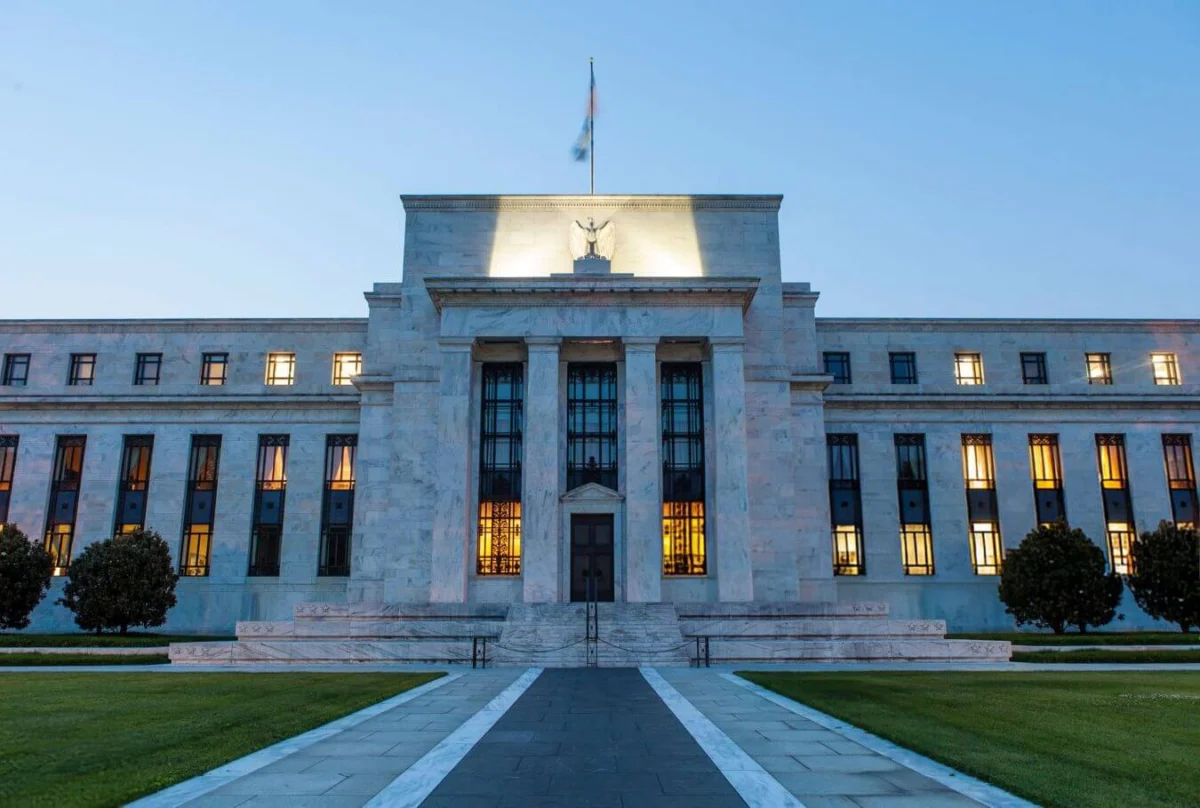
Federal Reserve Chair Kevin Warsh delivered a stern and unequivocally hawkish message during his closely-watched address at the annual Jackson Hole Economic Symposium on Friday, August 28, 2026. Warsh cautioned that the battle against persistent inflation is far from over and significant challenges remain for monetary policymakers, sending ripples of uncertainty through global financial markets and recalibrating expectations for future interest rate decisions. His remarks underscored the central bank’s unwavering commitment to its 2% inflation target, even at the risk of further economic tightening.
Warsh Takes Responsibility, Prioritizes Inflation Fight
Speaking from the picturesque setting of the Kansas City Federal Reserve’s annual economic symposium in Jackson Hole, Wyoming, Chair Warsh did not mince words regarding the current inflationary environment. He explicitly stated, "The responsibility for 65 months of sustained, elevated inflation sits squarely with the central bank." This candid admission, a rare move for a central bank head, positioned the Federal Reserve as fully accountable for the protracted period of high prices, which by this timeline would have begun in early 2021 and continued relentlessly, frustrating both consumers and businesses. This historical context suggests an inflation surge that proved far more enduring than initial "transitory" assessments, forcing the Fed into an extended period of vigilance.
Warsh emphasized that controlling price pressures must be the Fed’s "predominant focus" in the current environment. This declaration signals a firm resolve to prioritize price stability above other considerations, such as maximizing employment, if these objectives come into conflict. The 2% inflation target, he reiterated, remains the cornerstone of the Fed’s mandate, and any deviation from this objective would warrant continued, aggressive policy action.
No Respite in Sight: The Case for Continued Tightening
Throughout his address, Warsh painted a picture of an economy that, while showing signs of resilience, had not yet fully succumbed to the restrictive effects of monetary policy. He noted that key inflation metrics, including the Personal Consumption Expenditures (PCE) price index and the Consumer Price Index (CPI), continued to "exceed the Federal Reserve’s 2% benchmark significantly." While specific figures were not cited, market analysts inferred from his tone that annual inflation rates likely remained in the 3-4% range, stubbornly above target despite several rounds of rate hikes.
Warsh acknowledged that "this summer’s PCE and CPI readings were better than expected," a nod to recent data releases that had offered a glimmer of hope to some market participants. However, he swiftly tempered these observations, stating, "they do not tell me that underlying trends have meaningfully improved." This suggests that despite a few positive data points, the underlying inflationary pressures—perhaps driven by a tight labor market, robust consumer demand, or persistent supply-side issues—remained entrenched in the economy.
His assessment left little doubt about the Fed’s future intentions. Warsh kept the door wide open for further policy tightening, emphasizing the central bank’s readiness to take action should inflation fail to decline toward target levels at an adequate pace. This proactive stance suggests that the Fed would rather err on the side of overtightening than risk inflation becoming deeply embedded in economic expectations, a scenario that historically has proven far more difficult and painful to reverse. He explicitly stated that current interest rates "may not be restrictive enough" to bring inflation under control, implying that the neutral rate, the theoretical interest rate that neither stimulates nor constrains economic growth, might be higher than previously estimated. This sentiment directly countered any lingering hopes for a quick pivot towards rate cuts, with Warsh adding that "rate cuts could be harder to come by" than many had anticipated.
July Policy Meeting and Dissenting Voices
Providing context for the Fed’s recent actions, Warsh addressed the outcome of the July Federal Open Market Committee (FOMC) meeting. He explained that officials had opted to pause and await additional economic data before adjusting monetary policy further. This pause, however, was not unanimous, highlighting internal debates within the central bank regarding the appropriate path forward.
Fed President Beth Hammack, a known advocate for tighter policy, was explicitly mentioned as being among the dissenting voices who supported a rate increase during the July gathering. While the consensus favored maintaining current rates at that time, Hammack’s stance, coupled with Warsh’s hawkish Jackson Hole speech, indicates a strong contingent within the FOMC that believes more aggressive action is warranted to decisively tackle inflation. This internal dynamic adds another layer of complexity to the Fed’s decision-making process, suggesting that future policy moves could be subject to more vigorous debate.
Market Repercussions: A Swift and Broad Reaction
Financial markets responded swiftly and broadly to Warsh’s unexpectedly hawkish tone, signaling a significant recalibration of investor expectations regarding the trajectory of interest rates. The immediate reaction underscored the profound influence of the Federal Reserve Chair’s pronouncements, especially at a forum like Jackson Hole, which has historically served as a critical platform for telegraphing major policy shifts.
-
Cryptocurrency Markets: The digital asset space, particularly sensitive to changes in liquidity and risk appetite, saw an immediate downturn. Bitcoin, often viewed as a bellwether for the broader crypto market, retreated sharply from levels above $80,000, falling to approximately $79,200. This represented a decline of roughly 2% within the trading session, reflecting a rapid shift towards a risk-off sentiment as prospects for sustained higher interest rates dampened speculative enthusiasm. Other major cryptocurrencies, such as Ethereum and Solana, mirrored Bitcoin’s decline, experiencing similar percentage losses as investors braced for a tighter monetary environment.
-
U.S. Equity Markets: Major U.S. equity indices experienced modest but noticeable losses. The S&P 500, Dow Jones Industrial Average, and Nasdaq Composite all registered declines as investors digested the implications of potentially higher borrowing costs for corporate earnings and economic growth. Technology and growth stocks, which are particularly sensitive to interest rate expectations due to their reliance on future earnings projections, were among the hardest hit. The prospect of "rate cuts being harder to come by" implied a longer period of elevated financing costs, which could compress profit margins and dampen investment.
-
Treasury Yields: The U.S. Treasury market, a direct barometer of interest rate expectations, saw yields edge upward across the curve. The yield on the benchmark 10-year Treasury note, a key indicator for mortgage rates and other long-term borrowing costs, rose by several basis points, signaling increased investor demand for compensation amidst higher interest rate forecasts. Similarly, shorter-dated yields, such as the 2-year Treasury, which are more sensitive to immediate Fed policy expectations, saw even more pronounced increases. This upward movement in yields reflected market participants pricing in a higher probability of future rate hikes and a longer duration of elevated rates.
-
Shifting Rate Hike Probabilities: Market participants rapidly updated their assessment of a September rate hike probability. According to readings from the CME FedWatch tool, the likelihood of a rate hike at the upcoming September FOMC meeting surged to 42%, a notable increase from 35% just one day prior. This seven-percentage-point jump in probabilities within 24 hours underscored the profound impact of Warsh’s speech on market sentiment. Furthermore, betting markets on Polymarket, which often provide real-time insights into collective investor expectations, reflected an even stronger conviction, showing a 68% likelihood that the Federal Reserve would implement at least one rate increase before year-end. This figure climbed significantly from below 50% during the preceding week, indicating a dramatic shift in outlook. Current market pricing suggested approximately even odds—around 50%—for a 25 basis point increase at the September policy meeting versus maintaining the status quo, setting the stage for a highly anticipated FOMC decision.
The Jackson Hole Legacy and Divergent Economic Philosophies
The annual Jackson Hole symposium has long served as a critical platform for Federal Reserve chairs to telegraph major policy direction changes, amplifying the attention on Warsh’s commentary. From Paul Volcker’s resolute stance against inflation in the early 1980s to Alan Greenspan’s pronouncements on the "irrational exuberance" of markets, the symposium has been a stage for pivotal moments in monetary policy. Warsh’s speech continued this tradition, providing an unmistakable signal of the Fed’s current priorities and concerns.
Adding another layer of complexity to the economic landscape, Treasury Secretary Scott Bessent introduced additional uncertainty last week by pledging to intervene in Treasury markets in an attempt to constrain long-dated interest rates. Bessent’s rationale stemmed from a belief that market distortions were driving long-term borrowing costs unnecessarily higher, potentially hindering economic growth and increasing the national debt burden.
This stance creates a potential philosophical divergence with Federal Reserve Chair Warsh, who has typically advocated for market-determined interest rates, believing that free markets are the most efficient allocators of capital and price discovery mechanisms. While the Fed primarily controls short-term rates, and the Treasury manages debt issuance, a direct intervention by the Treasury in long-term markets could be seen as conflicting with the Fed’s broader objective of maintaining market stability and allowing policy to transmit through natural market mechanisms. This potential friction between the two most powerful economic policymakers in the U.S. adds an element of unpredictability to the financial outlook, as investors watch to see if and how these differing approaches might manifest in policy actions.
Looking Ahead: August Inflation Data and the September FOMC Meeting
With Warsh’s hawkish message firmly etched in market consciousness, all eyes will now turn intensely to upcoming economic data releases. The August CPI and Producer Price Index (PPI) reports, scheduled for release prior to the September Federal Open Market Committee gathering, are anticipated to significantly influence the committee’s ultimate decision. These inflation gauges will provide crucial insights into whether the "better than expected" readings Warsh mentioned were a genuine turning point or merely a temporary reprieve.
Beyond inflation, the Fed will also be scrutinizing labor market data, retail sales figures, and manufacturing surveys to gauge the overall health and momentum of the U.S. economy. The challenge for the FOMC remains delicate: to bring inflation back to its 2% target without triggering an undue slowdown or recession. Warsh’s Jackson Hole speech unequivocally signaled that, for now, the fight against inflation takes precedence, and the path to achieving price stability may yet require further difficult decisions. The September FOMC meeting, now more than ever, promises to be a pivotal moment for the U.S. economy and global financial markets.














