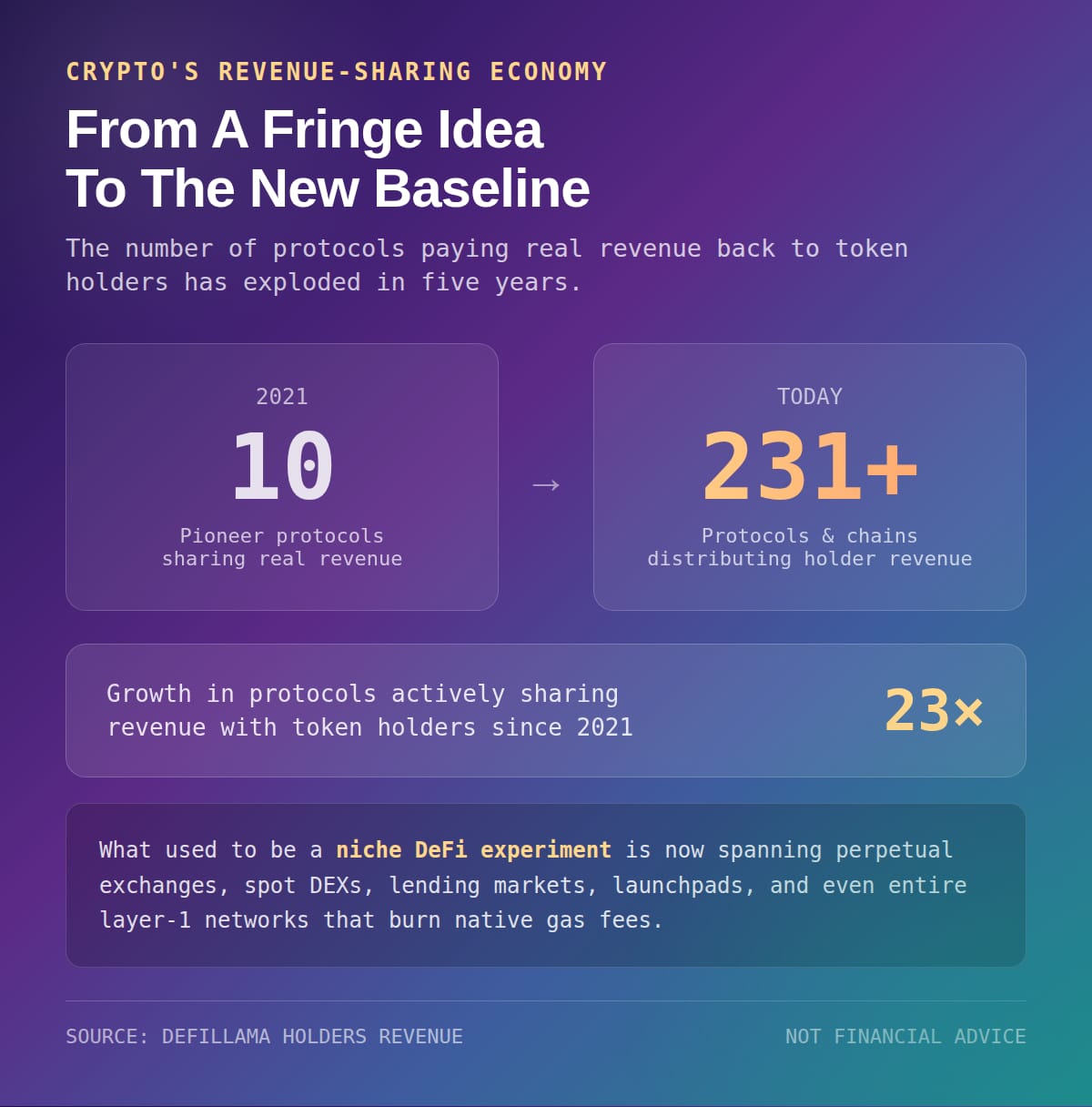
For years, the phrase "record highs" in the cryptocurrency industry was almost exclusively tied to price action – the soaring valuation of Bitcoin, Ethereum, or the latest altcoin sensation. This narrow definition of success, however, is undergoing a profound and largely underreported transformation. A silent revolution has been unfolding, fundamentally altering how value is generated and distributed within the digital asset ecosystem. Over the last five years, crypto has quietly constructed a sophisticated financial architecture that increasingly mirrors traditional Wall Street models, characterized by a growing class of tokens that actively pay their holders. What was once a rare, experimental feature, confined to a handful of nascent protocols, has now blossomed into a widespread phenomenon, with over 231 projects actively distributing revenue to their token holders, and that number continues its steady ascent. This is not a fleeting speculative trend but a deep-seated structural shift, occurring beneath the radar while mainstream headlines chase the volatile whims of memecoins or the latest inflows into exchange-traded funds.
The Historical Conundrum: Bridging the Gap Between Protocol Success and Token Holder Benefit
For the better part of its nascent history, holding a cryptocurrency token primarily conferred two things: governance rights, allowing participation in the protocol’s future direction, and the speculative hope of future price appreciation. The economic realities of successful protocols, which often generated substantial fees from their operations, rarely translated directly into tangible benefits for token holders. Fees typically flowed into central treasuries, funded development teams, or incentivized liquidity providers, leaving the token itself as little more than a speculative bet on adoption and future growth. This fundamental disconnect – the significant gap between a protocol’s operational profitability and the direct financial return for its token holders – represented one of the industry’s most significant unresolved problems. It fueled narratives of "value capture" being inadequate and often led to token valuations being detached from underlying economic activity, making the entire market susceptible to irrational exuberance and subsequent crashes.
This historical model often left investors reliant on the "greater fool theory," where the primary path to profit was selling tokens to someone else at a higher price, rather than benefiting from the underlying utility or cash flow generated by the protocol itself. The absence of direct economic participation for holders fostered a short-term trading mentality, hindering the development of long-term, committed communities and stable ecosystems. It made valuation difficult, often resorting to metrics like Total Value Locked (TVL) or transaction volume, which, while indicative of activity, did not directly translate to holder value.
The Genesis of a New Paradigm: 2021’s Pioneering Protocols
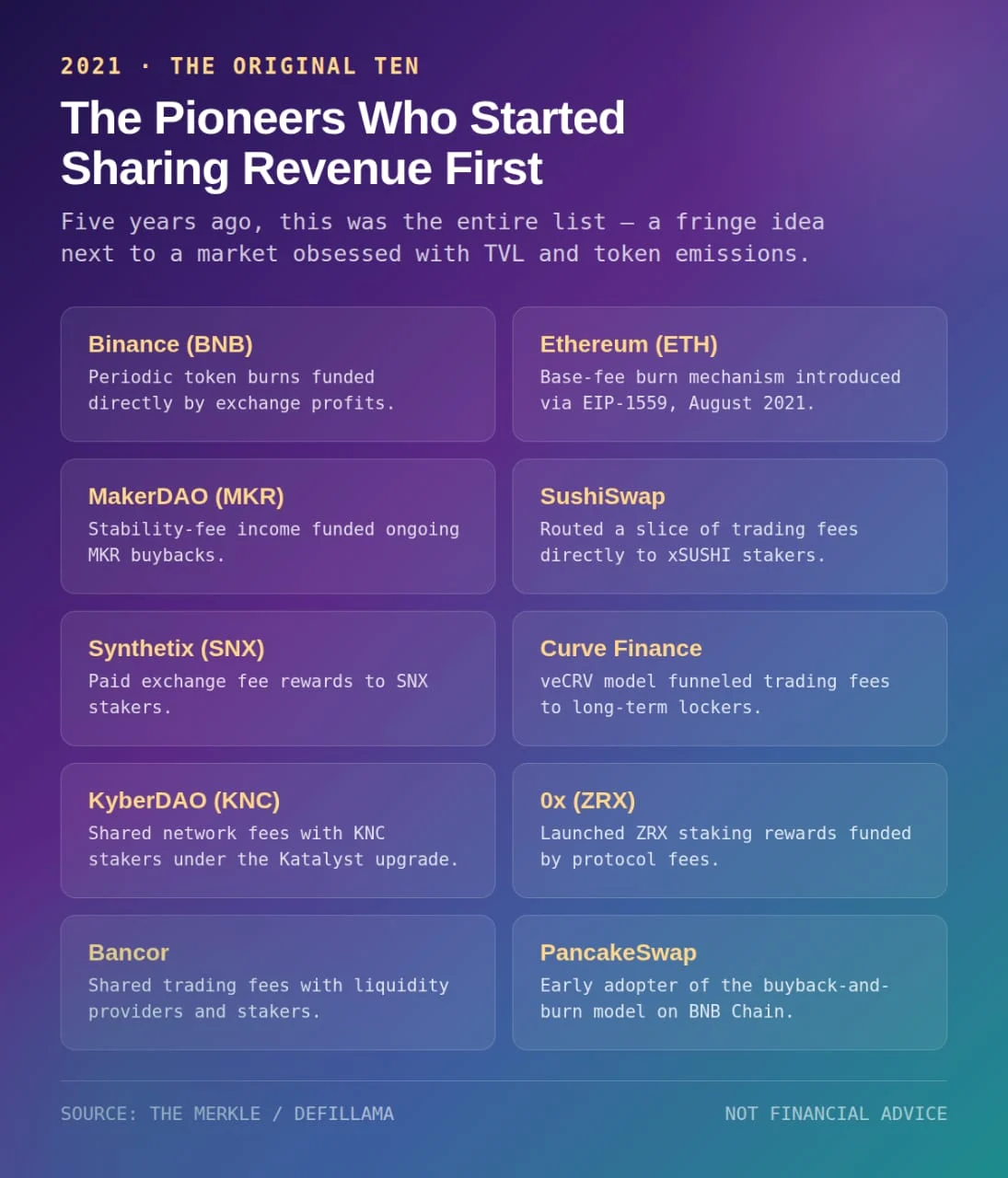
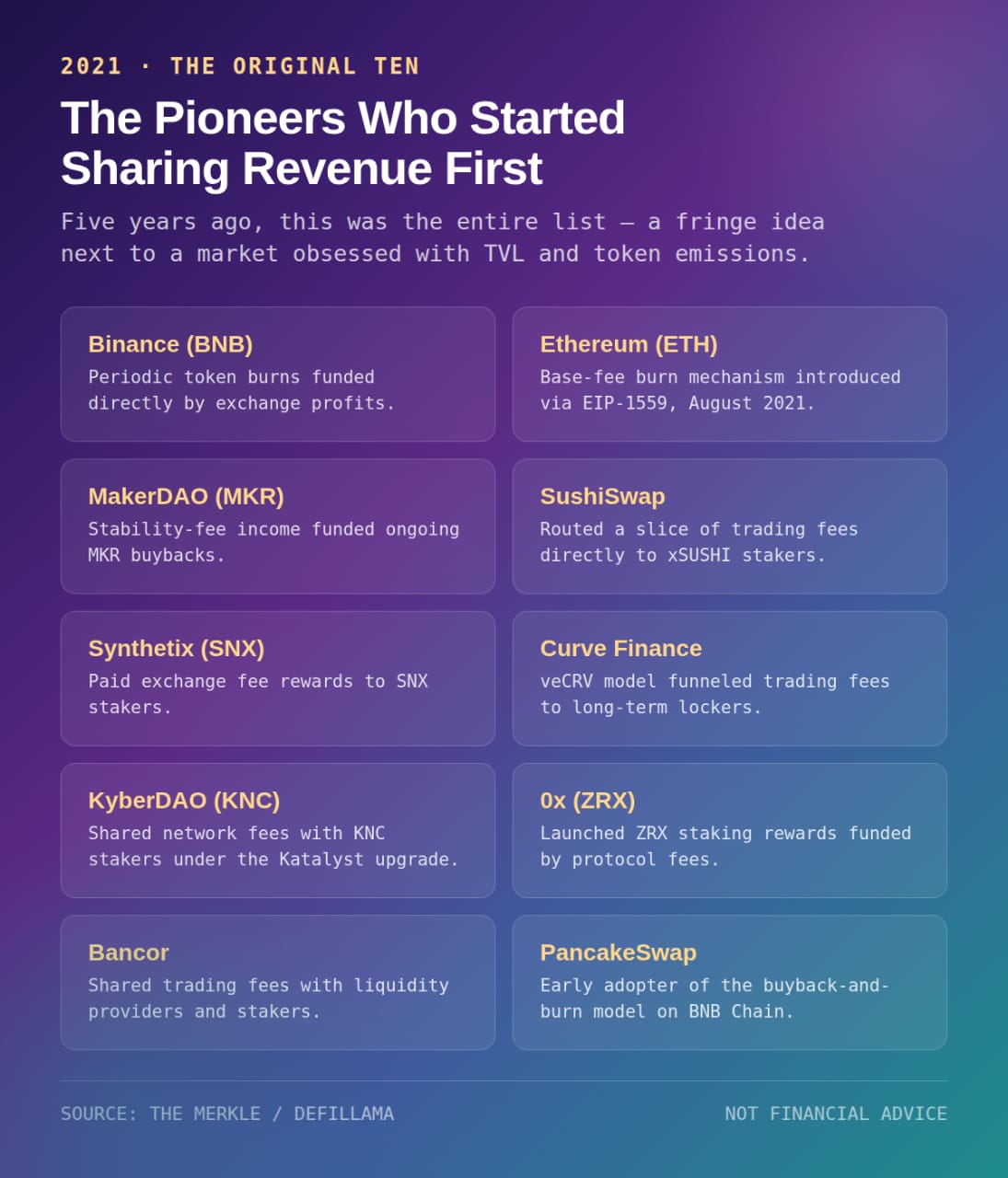
The seeds of this revenue-sharing economy were sown around 2021. At this juncture, the concept of protocols sharing real economic value with their token holders was largely an experimental, fringe idea. A core group of about ten protocols, give or take, bravely set the template for what would become a defining characteristic of the industry.
Among the earliest and most prominent pioneers was Binance, whose native BNB token had long been subject to periodic "burns" funded by a portion of the exchange’s substantial profits. While not a direct dividend, these burns reduced the circulating supply of BNB, creating deflationary pressure and implicitly benefiting holders by making each remaining token scarcer and potentially more valuable. This mechanism, established years prior, served as an early blueprint for value accrual through supply reduction.
Ethereum, the undisputed king of smart contract platforms, introduced a monumental shift with its EIP-1559 upgrade in August 2021. This upgrade fundamentally altered Ethereum’s fee market, introducing a base fee for transactions that would be burned rather than going entirely to miners. While its primary goal was to make gas fees more predictable, a crucial side effect was making ETH a deflationary asset under certain network conditions. By continuously reducing the supply of ETH, EIP-1559 effectively turned the network’s native asset into a value-accruing instrument, indirectly benefiting all ETH holders through increased scarcity. This was a profound structural change, demonstrating how even a foundational blockchain could implement value-sharing mechanics.
MakerDAO, the decentralized autonomous organization behind the DAI stablecoin, also played a pivotal role that same year. MakerDAO utilized income generated from stability fees – the interest paid by users to borrow DAI against collateral – to fund regular buybacks of its governance token, MKR. These buybacks reduced the circulating supply of MKR, aligning the financial success of the protocol with the long-term interests of its token holders.
Alongside these giants, a handful of innovative DeFi-native projects began to experiment with similar models:
- SushiSwap, an early decentralized exchange, routed a slice of its trading fees to xSUSHI stakers, directly rewarding those who locked up their tokens to support the platform.
- Synthetix, a decentralized synthetic asset protocol, paid exchange fee rewards to its SNX stakers, incentivizing collateral provision and participation in its ecosystem.
- Curve Finance, known for its efficient stablecoin swaps, implemented the "veCRV" (vote-escrowed CRV) model, funneling trading fees to long-term lockers who committed their CRV tokens for extended periods, providing both governance power and direct yield.
- KyberDAO, under its Katalyst upgrade, shared a portion of network fees with KNC stakers, enhancing the token’s utility beyond mere governance.
- 0x, a protocol for decentralized exchange, launched ZRX staking rewards funded by protocol fees, creating an economic incentive for holding and staking its native token.
- Bancor, another early DEX, shared trading fees with liquidity providers and stakers, embedding value distribution into its core design.
- PancakeSwap, a leading DEX on BNB Chain, was an early adopter of the buyback-and-burn model, using its platform revenues to reduce the supply of its CAKE token.
These ten protocols, each with its unique approach to value accrual, formed the bedrock of what was then a fringe idea. Their efforts were often overshadowed by the prevailing market obsession with metrics like Total Value Locked (TVL) and the inflationary impact of token emissions, which characterized much of the early DeFi boom. Yet, these pioneers laid the groundwork for a future where token ownership implied more than just speculative hope.
The Exponential Surge: From Fringe Idea to Industry Standard
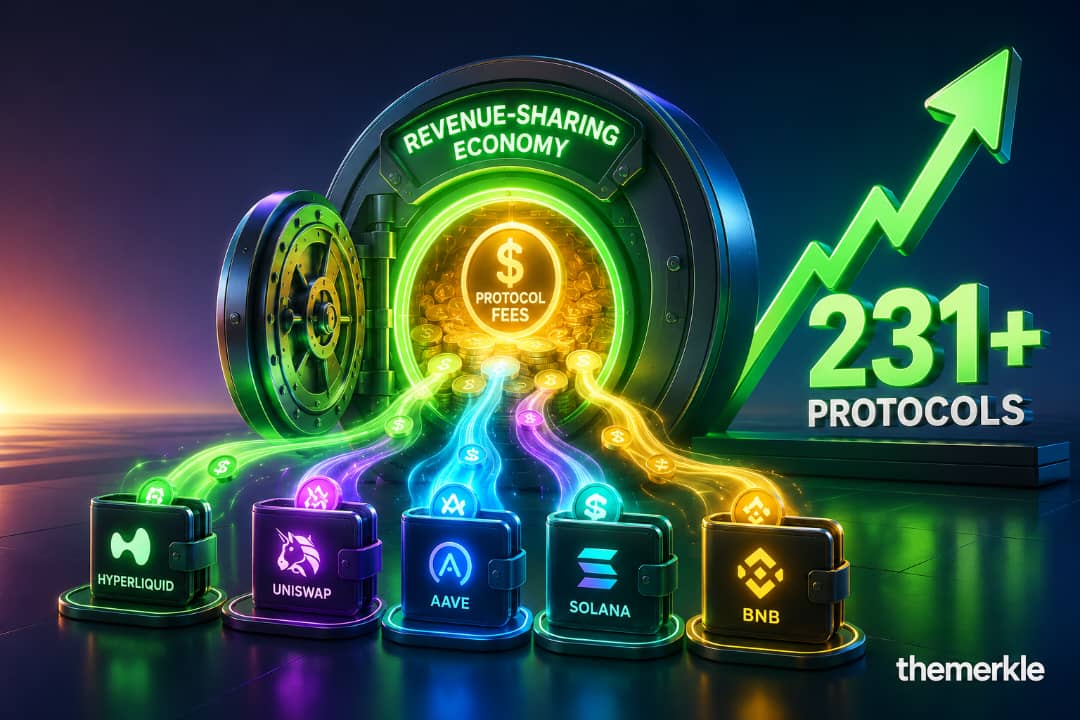
Fast forward to today, and that once-fringe idea has become the new baseline expectation. The landscape has been utterly transformed, with the count of protocols and even entire blockchain networks actively distributing holder revenue soaring past 231. This expansion spans the entire spectrum of decentralized finance and beyond, encompassing perpetual exchanges, spot decentralized exchanges (DEXs), lending markets, launchpads, and even foundational layer-1 networks that now burn native gas fees outright. What was once a distinguishing feature, a unique selling proposition, is rapidly evolving into table stakes for any token aspiring to be taken seriously by a new generation of investors who prioritize fundamental economic value over speculative narratives.
The rapid growth is multifaceted. A significant driver is undoubtedly the "imitation game." Once a handful of protocols successfully demonstrated that fee-funded buybacks, burns, or direct staking payouts could not only support token price but also attract and retain "sticky" holders – those committed for the long term – competitors across every DeFi vertical raced to replicate the model. This competitive pressure created a positive feedback loop, pushing more projects to integrate value-sharing mechanisms from day one. The visibility offered by on-chain trackers like DeFiLlama’s Holders Revenue dashboard has further accelerated this trend, allowing investors to easily identify and compare protocols based on their actual revenue distribution to holders, rather than relying solely on speculative promises. This transparency has fostered a demand-side pull from investors, compelling projects to adopt more robust value accrual strategies.
Mechanisms of Value Accrual: Buybacks, Burns, and Direct Payouts
The methods by which protocols distribute value to their holders typically fall into three primary categories, each with distinct economic implications:
-
Token Buybacks: In this model, protocols use a portion of their generated revenue (e.g., trading fees, lending interest) to repurchase their native tokens from the open market. These purchased tokens can then be held in a treasury, redistributed, or often, immediately burned. The immediate effect of a buyback is often upward price pressure due to increased demand and reduced circulating supply. It signals confidence from the protocol in its own token and provides a clear mechanism for transferring economic value from protocol operations to token holders.
-
Token Burns: A token burn involves permanently removing a certain number of tokens from circulation, typically by sending them to an inaccessible "burn address." This is often done using a portion of protocol revenue (as seen with Ethereum’s EIP-1559 or Binance’s BNB burns) or as part of a buyback program. The primary impact of a token burn is deflationary. By reducing the total supply of a token, each remaining token theoretically represents a larger share of the protocol’s future value, increasing its scarcity and potentially its long-term price. Burns are a powerful, transparent, and irreversible mechanism for value accrual.
-
Direct Staking Payouts: This mechanism involves distributing a portion of protocol revenue directly to users who "stake" or lock up their tokens. These payouts can be in the form of the native token, a different token (e.g., stablecoins), or even a share of the protocol’s underlying assets. Direct staking payouts provide a clear, quantifiable yield for token holders, incentivizing long-term commitment and active participation in the protocol’s security or governance. Examples include the fee distribution to xSUSHI stakers or veCRV holders. This method provides immediate, recurring income, making the token akin to a dividend-paying stock.
Each mechanism offers different benefits and trade-offs in terms of transparency, immediate price impact, long-term scarcity, and direct yield generation. The choice of mechanism often reflects a protocol’s specific economic model, governance structure, and strategic objectives.
The New Leaders: Protocols Redefining Holder Revenue in 2024
The protocols leading today’s holder-revenue rankings present a stark contrast to the experimental list of 2021. The market has matured, and the scale of value distribution has grown exponentially.
Hyperliquid, a decentralized perpetual exchange, currently stands out as a leader in this new paradigm. It funnels an astonishing roughly 99% of its trading fees into an "Assistance Fund" that continuously buys back its native HYPE token from the market. This aggressive buyback mechanism directly aligns the protocol’s trading success with the value of its token, creating a powerful incentive for users and investors.
Perhaps one of the most significant recent developments involves Uniswap, the largest decentralized exchange by trading volume. After years of intense governance debates and gridlock, Uniswap activated its long-debated fee switch in December 2025 (as per article’s timeline, implying a future or hypothetical activation), finally allowing a share of swap fees to fund UNI buybacks and burns. This move, long resisted by some factions concerned about regulatory scrutiny or centralizing power, marks a pivotal moment for DeFi. It signals a growing consensus that even major, foundational protocols must find ways to accrue value to their token holders to maintain relevance and attract long-term capital.
Beyond these titans, a broader field of innovative protocols is actively distributing revenue:
- Chainlink, the leading decentralized oracle network, now funds LINK buybacks from both its on-chain and off-chain revenue streams, further integrating its economic success with token holder value.
- Aerodrome, a prominent DEX on Base, distributes the entirety of its trading fees to veAERO voters, heavily rewarding those who commit to its ecosystem.
- Jupiter, a key aggregator on Solana, routes half of its platform revenue into JUP buybacks, demonstrating the rapid adoption of these models on newer blockchain ecosystems.
- PancakeSwap, an early adopter, continues to evolve, now running several parallel CAKE burn mechanisms across its diverse product suite, showcasing a multi-pronged approach to value accrual.
Crucially, this trend is not confined to application-layer protocols. Entire Layer-1 blockchains have joined the movement. Solana, Tron, and BNB Chain now burn a portion of their network fees, effectively transforming their native assets (SOL, TRX, BNB) into holder-revenue instruments alongside application-layer tokens. This signifies a maturation where even the foundational infrastructure of the crypto world is embracing sustainable value capture for its underlying assets.
Underlying Drivers: Regulatory Clarity and Market Maturation
Several factors have converged to accelerate this profound shift. One of the most significant, though often subtle, is the evolving regulatory environment, particularly in the United States. A perceived "friendlier stance" or at least a growing clarity regarding digital assets has assuaged some of the long-standing fears among project teams. Historically, protocols were hesitant to implement structures that too closely resembled traditional dividends, fearing that such mechanisms could lead their tokens to be classified as unregistered securities by regulatory bodies like the SEC. Recent legal developments, increased engagement from policymakers, and the gradual acceptance of crypto into mainstream finance (e.g., Bitcoin spot ETFs) have contributed to a more confident environment for designing robust value accrual models. This reduced regulatory apprehension has unlocked innovation that was previously stifled by legal uncertainty.
Bitwise Chief Investment Officer Matt Hougan succinctly captured this mood shift, arguing that crypto valuations outside Bitcoin could "double or more" as protocols increasingly link revenue to token value. He specifically pointed to Hyperliquid, Uniswap, Aave, and Pump.fun as early movers demonstrating this potential. This sentiment from institutional players underscores the growing acceptance of these models as legitimate drivers of fundamental value.
The market itself has also matured. The investor base is becoming more sophisticated, moving beyond purely speculative bets to demand tokens with tangible economic utility and sustainable value propositions. Projects that fail to offer such mechanisms risk being overlooked in favor of those that transparently share their success with holders. This has created a competitive imperative: protocols must integrate these models to attract and retain capital. Even protocols that historically resisted this trend are now coming around. Aave Labs, for instance, a project that for years maintained a governance-only stance for its AAVE token, proposed sharing revenue generated outside its core lending protocol with AAVE holders earlier this year. This notable concession highlights the undeniable pressure and evolving understanding within the industry that sustainable tokenomics are crucial for long-term success.
Implications for Investors: A Paradigm Shift in Valuation and Due Diligence
The emergence of a robust revenue-sharing economy carries profound implications for investors and the broader digital asset landscape. It marks a significant step away from purely speculative investing towards a more fundamentally driven approach, where crypto assets are increasingly evaluated based on their underlying economic performance.
For investors, this necessitates a more rigorous and traditional approach to due diligence. The days of simply chasing hype or focusing solely on Total Value Locked are fading. Instead, investors must now scrutinize balance sheets, understand fee structures, analyze distribution mechanics (e.g., how often buybacks occur, the percentage of revenue allocated), and carefully assess potential token dilution. Metrics such as Price-to-Earnings (P/E) ratios, cash flow yields, and effective "dividend" payouts are becoming increasingly relevant in the crypto space, bridging the analytical gap between traditional finance and decentralized markets. As Castle Labs research has prudently pointed out, it is crucial to differentiate between headline revenue generated by a protocol and the actual cash flow that reaches token holders. Not all revenue-sharing mechanisms are created equal, and some may distribute modest sums or be subject to various deductions, warranting careful investigation.
This shift also fosters the creation of more sustainable and resilient ecosystems. By directly aligning the financial incentives of token holders with the success of the underlying protocol, it encourages long-term holding, active participation, and a greater vested interest in the protocol’s growth and governance. This stability can help mitigate the extreme volatility often associated with purely speculative assets. It signals a significant move towards an industry that generates intrinsic value, rather than merely "manufacturing value out of nothing," a criticism often leveled against it.
The Road Ahead: Towards a More Mature Digital Asset Class
The direction of travel is unmistakable. What began as a bold experiment among a handful of protocols in 2021 has swiftly become one of the defining and most impactful trends of the current market cycle. It is fundamentally reshaping how serious investors evaluate a digital asset, pushing the industry towards a more mature and economically grounded conversation.
Looking ahead, this trend is likely to intensify. We can anticipate increased transparency in revenue reporting, more standardized metrics for evaluating holder value, and the development of more sophisticated financial products built upon these revenue-sharing tokens. As crypto assets increasingly demonstrate their capacity to generate and distribute real economic value, they will attract a broader spectrum of institutional investors and traditional financial players, further legitimizing the asset class. This transformation signals that the cryptocurrency industry is growing up, embracing sustainable economic models that promise a future built on tangible value, rather than just speculative narratives. The silent revolution of revenue sharing is not just changing how tokens are valued; it’s fundamentally redefining the very nature of digital asset ownership.
Disclosure: This is not trading or investment advice. Always do your research before buying any cryptocurrency or investing in any services.