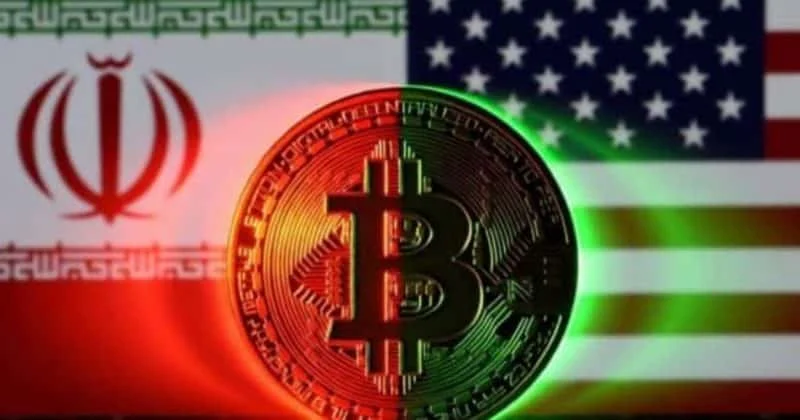
The United States Department of the Treasury’s Office of Foreign Assets Control (OFAC) has executed a comprehensive expansion of its sanctions regime against the Islamic Republic of Iran, specifically targeting a sophisticated maritime revenue network designed to bypass international financial oversight. The latest measures focus on two prominent entities accused of operating a mandatory insurance scheme for vessels navigating the strategic Strait of Hormuz, an initiative backed by the Islamic Revolutionary Guard Corps (IRGC). These firms, Persian Gulf Marine Insurance Company and HormuzSafe Marine Services Authority, are alleged to have mandated the use of Bitcoin and other digital assets for policy settlements, effectively weaponizing the maritime insurance industry to facilitate the flow of illicit capital and strengthen Tehran’s grip on global energy corridors.
According to official statements from the Treasury, this enforcement action is a direct response to Iran’s evolving tactics in circumventing the global financial system. By requiring ship operators to obtain liability certificates and insurance coverage through these state-aligned platforms, the IRGC has sought to create a parallel financial infrastructure that operates outside the reach of the U.S. dollar and the SWIFT banking network. This move not only serves as a revenue generator—estimated to be worth billions of dollars—but also provides the Iranian government with heightened leverage over commercial shipping through one of the world’s most critical maritime chokepoints.
The Mechanics of the IRGC-Backed Insurance Scheme
The designation of the Persian Gulf Marine Insurance Company and HormuzSafe Marine Services Authority marks a significant shift in U.S. efforts to counter Iranian maritime influence. For decades, international shipping has relied on the "Protection and Indemnity" (P&I) clubs, primarily based in Europe and North America, to provide the necessary coverage for environmental disasters, vessel seizures, and third-party liabilities. By introducing HormuzSafe, Tehran has attempted to displace these traditional providers for any vessel transiting the Strait of Hormuz.
The Treasury’s investigation revealed that the scheme was not merely an alternative service but a mandatory requirement for many operators. Ships transiting the region were reportedly coerced into purchasing these policies to mitigate the risk of seizure by the IRGC Navy (IRGCN). Crucially, the payment for these policies was demanded in Bitcoin and other cryptocurrencies. This digital asset integration was designed to provide a layer of anonymity and speed, allowing the Iranian state to convert maritime "protection fees" into liquid assets that can fund regional proxies and military development without triggering the compliance mechanisms of traditional banks.
Treasury officials emphasized that this insurance network serves a dual purpose: it generates direct revenue for the IRGC and provides a mechanism for Tehran to monitor and control the flow of goods. By controlling the insurance and liability certificates, the Iranian government gains access to detailed manifests, crew lists, and destination data for every ship that complies with the mandate, effectively turning a commercial service into a regional intelligence-gathering tool.
Targeting the Shadow Fleet: Tankers and Shipping Companies
In addition to the insurance-focused sanctions, OFAC has taken aggressive action against the so-called "shadow fleet"—a decentralized network of aging tankers used to transport Iranian crude oil to international markets in defiance of existing embargos. The latest round of sanctions blocked eight specific oil tankers and designated eight shipping companies involved in the management and operation of these vessels.
These tankers are accused of transporting millions of barrels of Iranian crude and petroleum products to destinations including the People’s Republic of China and the United Arab Emirates. The Treasury noted that the shadow fleet often employs deceptive practices, such as "spoofing" Automatic Identification System (AIS) signals to hide their true locations, conducting ship-to-ship (STS) transfers in deep water to obscure the origin of the cargo, and frequently changing vessel names and flags of convenience.
With these latest designations, the U.S. has now sanctioned more than 100 vessels associated with the Iranian shadow fleet in the 2026 calendar year alone. This accelerated pace of sanctions reflects a broader "maximum pressure" strategy intended to dry up the foreign currency reserves of the Iranian state. The Treasury identified that the revenue from these oil sales is a primary funding source for the IRGC’s Quds Force, which the U.S. has designated as a Foreign Terrorist Organization (FTO).
Chronology of Maritime Tensions and Sanctions Escalation
The current sanctions landscape is the result of a multi-year escalation in tensions between Washington and Tehran, particularly concerning maritime security in the Persian Gulf.
- 2018–2020: Following the U.S. withdrawal from the Joint Comprehensive Plan of Action (JCPOA), the Treasury Department began reimposing secondary sanctions on Iran’s energy and shipping sectors. This period saw the first major wave of "ghost fleet" identifications.
- 2021–2023: Iran began experimenting with digital assets to settle international trade contracts. Reports surfaced that the Iranian Central Bank was exploring a state-backed digital currency (CBDC) to facilitate trade with other sanctioned nations.
- May 2026: Fars News, an agency with ties to the Iranian government, reported the official launch of HormuzSafe. The report confirmed that the platform would accept Bitcoin for maritime insurance policies, framing it as a sovereign defense against "economic terrorism."
- Mid-2026: U.S. intelligence and maritime monitoring groups observed a sharp increase in the number of vessels utilizing non-traditional insurance certificates while transiting the Strait of Hormuz.
- Current Action: The Treasury’s latest announcement serves as the formal regulatory response to the HormuzSafe initiative, effectively blacklisting the entities and warning the global shipping industry of the risks associated with these IRGC-backed platforms.
Economic Data and Strategic Implications
The strategic importance of the Strait of Hormuz cannot be overstated. Approximately 21 million barrels of oil per day pass through the strait, representing roughly 21% of global petroleum liquids consumption. Any disruption or shift in the regulatory environment of this waterway has immediate implications for global energy prices.
Tehran’s internal projections, as cited in various regional reports, suggest that the HormuzSafe initiative and associated transit fees could generate upwards of $10 billion in annual revenue. For a nation whose economy has been significantly hampered by inflation and restricted access to global markets, this represents a vital lifeline. By mandating insurance and transit fees in Bitcoin, Iran is attempting to capitalize on the $2.5 trillion global cryptocurrency market, which offers high liquidity and a lack of centralized oversight.
However, the U.S. Treasury’s move aims to disrupt this revenue stream by making it legally and financially toxic for any international firm to interact with these entities. Under Executive Order 13902, which targets key sectors of the Iranian economy, any non-U.S. person or entity found to be facilitating transactions for the Persian Gulf Marine Insurance Company or HormuzSafe could themselves be subject to secondary sanctions. This "contagion effect" is designed to isolate the Iranian maritime network from the broader global economy.
Official Responses and International Reaction
Acting Under Secretary of the Treasury for Terrorism and Financial Intelligence, Bradley T. Smith, stated that the U.S. remains committed to dismantling the IRGC’s financial networks wherever they emerge. "Iran’s attempt to use digital assets to facilitate maritime insurance is a transparent effort to evade the global financial system and fund its destabilizing activities," Smith said. "The United States will continue to use all available tools to expose and disrupt these schemes, ensuring that the IRGC cannot profit from the vital trade routes of the Middle East."
In Tehran, officials have historically dismissed U.S. sanctions as illegal and ineffective. While there has been no immediate formal response to this specific round of sanctions, previous statements from the Iranian Ministry of Foreign Affairs have characterized such moves as "acts of economic piracy." Proponents of the HormuzSafe system in Iran argue that as the coastal state with the longest shoreline along the Persian Gulf, Iran has a sovereign right to regulate the safety and insurance standards of ships passing through its territorial waters.
The international shipping community, represented by bodies such as the International Chamber of Shipping (ICS), has expressed concern over the increasing complexity of sanctions compliance. Operators are now faced with a "catch-22": comply with Iranian mandates to ensure safe passage through the Strait of Hormuz and risk U.S. sanctions, or ignore Iranian mandates and risk vessel seizure or harassment by the IRGC Navy.
Analysis: The Future of Crypto-Sanctions and Maritime Security
The targeting of a crypto-based insurance scheme represents a new frontier in financial warfare. It highlights the growing intersection between decentralized finance (DeFi) and geopolitical maneuvering. As sanctioned nations like Iran, Russia, and North Korea become more adept at using blockchain technology to move capital, the U.S. Treasury is forced to expand its technical capabilities to track on-chain movements and link digital wallets to physical entities.
The implications of these sanctions are three-fold:
First, they signal to the global maritime industry that "alternative" insurance certificates will not be recognized by international regulators. This could lead to a situation where ships are effectively "uninsurable" in the eyes of Western ports if they have utilized Iranian services, leading to significant bottlenecks in global logistics.
Second, the move puts pressure on cryptocurrency exchanges. While Bitcoin is decentralized, the "off-ramps" where crypto is converted into fiat currency are often regulated. By blacklisting the entities associated with HormuzSafe, the Treasury is providing a "no-go" list for compliance officers at global crypto exchanges, making it harder for the IRGC to liquidate its holdings.
Finally, the sanctions underscore the fragility of the current maritime security architecture. If Iran continues to enforce its own insurance mandates through physical presence in the Strait of Hormuz, the potential for military friction increases. The U.S. and its allies may be forced to provide more robust naval escorts for commercial shipping, further militarizing one of the world’s most sensitive trade routes.
As the U.S. continues to refine its "shadow fleet" designations, the cat-and-mouse game between international regulators and Iranian oil exporters is expected to intensify. The success of these sanctions will depend not only on the Treasury’s ability to identify and block assets but also on the willingness of major oil importers like China to comply with U.S.-led economic restrictions in an increasingly fragmented geopolitical landscape.