


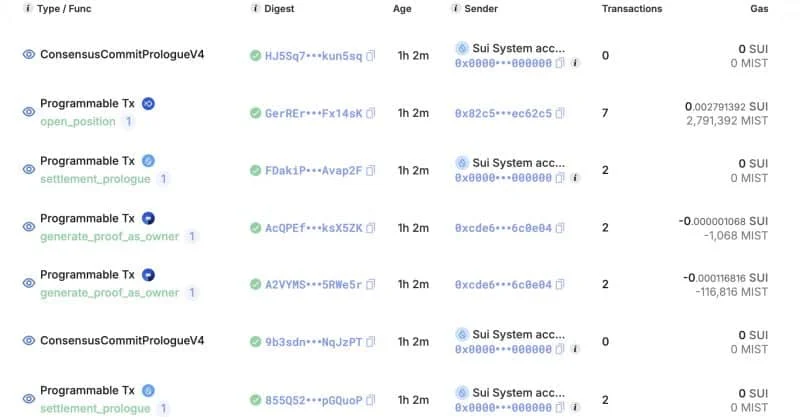
The Sui blockchain’s mainnet has successfully returned to full operational status following an extended outage that lasted approximately five hours and 55 minutes. The disruption, which commenced on May 28th, was attributed to a critical bug within the gas charging logic of the network’s latest software release, version 1.72. This flaw rendered the system incapable of processing new blocks, effectively freezing all transaction finalization. Validators, the decentralized network of nodes responsible for maintaining the blockchain, collaborated swiftly to implement a fix and upgrade to a patched version, enabling the restoration of normal checkpoint production on May 29th.
The incident underscores the inherent complexities and potential vulnerabilities in the development and deployment of cutting-edge blockchain infrastructure. Sui, a Layer 1 blockchain designed for high throughput and low latency, aims to support sophisticated decentralized finance (DeFi) applications and attract significant institutional capital. However, the recent outage raises pertinent questions about the network’s stability and the robustness of its upgrade processes, particularly in light of a similar extended downtime experienced earlier in the year.
The Genesis of the Stoppage: A Flaw in Gas Fee Calculation
At the heart of the five-hour, 55-minute standstill was a fundamental error in the code responsible for calculating transaction fees, commonly known as gas. In the context of blockchain technology, gas fees are essential for incentivizing validators to process transactions and secure the network. When this calculation mechanism malfunctions, as it did in Sui’s 1.72 release, it can lead to a cascade of failures. The bug essentially prevented the network from accurately determining the cost of operations, which in turn halted the creation and finalization of new blocks. This critical failure meant that no new transactions could be confirmed or added to the blockchain, effectively bringing the entire ecosystem to a grinding halt.
Chronology of the Outage and Recovery Efforts
The disruption began on May 28th, when validators who had adopted the 1.72 software update encountered the critical bug. This led to an immediate cessation of new checkpoint production, the process by which the network confirms and records batches of transactions. Without the ability to produce checkpoints, the network’s consensus mechanism, which relies on a distributed agreement among validators, could not proceed.
The recovery process was far from instantaneous. Sui’s consensus protocol mandates a supermajority of validators—specifically, those holding more than two-thirds of all staked tokens—to upgrade to the patched software before the network can resume normal operations. This requirement ensures a high degree of decentralization and security, but it also means that achieving consensus on a fix can be a time-consuming process, especially in a distributed and globally operated network. The coordinated effort to disseminate the patched software, allow validators to download and install it, and then reach the necessary consensus threshold took several hours.
Resilience Amidst Disruption: Safety Guarantees Upheld
Despite the significant downtime, a crucial aspect of the incident is that Sui’s fundamental safety guarantees remained intact. The network’s architecture successfully prevented any loss of user funds during the approximately six-hour disruption. Furthermore, the design of the blockchain prevented data inconsistencies from accumulating while the chain was stalled. This means that once normal operations resumed, the integrity of the blockchain’s history was preserved, and no transactions were lost or corrupted.
The impact on decentralized applications (dApps) and DeFi protocols built on Sui was, however, immediate and significant. During the outage, these platforms were effectively frozen. Users were unable to adjust their existing positions in decentralized exchanges, execute new trades, or participate in any on-chain activities that required transaction finalization. This includes critical functions such as liquidations, which are designed to protect the solvency of lending protocols by automatically closing out undercollateralized positions. The inability of these automated processes to function exacerbated the impact of the downtime for users and developers alike.
A Recurring Pattern: Examining Sui’s Downtime Incidents
This most recent outage is not an isolated event for the Sui network. Approximately five months prior, on January 14th, Sui experienced a similarly prolonged period of downtime. That incident, which lasted for roughly six hours, was attributed to a different issue: a bug in the consensus commit logic. The parallels between the two events are striking: both involved critical bugs introduced via software updates, leading to multi-hour network freezes that necessitated a coordinated upgrade across the validator set.
The occurrence of two such significant outages within a relatively short timeframe (less than six months) is a trend that cannot be easily dismissed. It suggests a potential pattern of instability associated with software upgrades on the Sui network. Both incidents highlight the challenges of deploying complex software updates in a decentralized environment and the critical reliance on the timely and coordinated action of a distributed network of validators.
Market Reaction: The SUI Token’s Performance
The cryptocurrency market often reacts swiftly to news of network disruptions. In the case of the Sui outage, the native SUI token experienced a noticeable price decline. During the period of network instability, the SUI token’s price reportedly dropped to approximately $0.89, representing a decline in the range of 6-8%. Following the successful restoration of normal network operations, the token saw a partial recovery, indicating that investor sentiment is closely tied to the perceived stability and reliability of the underlying blockchain infrastructure. This price action provides a real-time snapshot of how investors interpret such events and their potential implications for the long-term viability of the network.
Implications for Investors and the Sui Ecosystem
Sui has ambitiously positioned itself as a high-throughput Layer 1 blockchain, aiming to provide the robust infrastructure necessary to support demanding DeFi applications and, ultimately, to attract substantial institutional investment. Since its launch, the total value locked (TVL) across the Sui ecosystem has grown to hundreds of millions of dollars, a testament to the growing developer activity and user adoption on the platform.
However, the recurring nature of these extended downtimes presents a significant challenge to this narrative. For investors, particularly those considering the integration of institutional capital, network stability and reliability are paramount. Frequent or prolonged outages can erode confidence and deter investment, as they signal potential risks to the security and availability of assets and services operating on the blockchain.
The market’s reaction to the recent outage, with its 6-8% price drop followed by a partial recovery, offers a potential playbook for future events. If a third incident of similar magnitude were to occur, it is plausible that the market would follow a similar pattern, with an initial sharp decline in the SUI token price followed by a cautious recovery if the issue is resolved efficiently.
Looking Ahead: Strengthening Network Resilience
The Sui Foundation and the development team behind Sui now face the critical task of addressing the underlying causes of these recurring stability issues. While the network’s safety guarantees held during the recent outage, the frequency of such events raises concerns about the maturity and robustness of its software development and deployment processes.
Key areas for focus moving forward will likely include:
- Enhanced Testing and Quality Assurance: Implementing more rigorous pre-release testing protocols, including extensive simulation environments and bug bounty programs, could help identify and mitigate critical flaws before they impact the mainnet.
- Improved Upgrade Mechanisms: Exploring more streamlined and secure methods for deploying software updates across the validator network, potentially with staged rollouts or automated verification processes, could reduce the coordination challenges and time required for recovery.
- Root Cause Analysis and Prevention: A thorough post-mortem analysis of both recent incidents is essential to identify any systemic issues within the development lifecycle and to implement measures to prevent similar bugs from being introduced in future releases.
- Communication and Transparency: Maintaining clear and timely communication with the community, developers, and investors during incidents is crucial for managing expectations and fostering trust.
The Sui blockchain has demonstrated significant potential in a competitive Layer 1 landscape. Its ability to overcome these stability challenges and prove its long-term resilience will be a critical determinant of its success in achieving its ambitious goals and attracting the sustained confidence of the global blockchain community. The recent outage serves as a stark reminder that even the most innovative technologies require meticulous attention to operational stability and a robust framework for managing inevitable software complexities.














