The cryptocurrency market is currently navigating a complex transition characterized by a stark divergence between retail expectations and institutional strategy. While a segment of the retail investment community has long anticipated a "bailout" of the altcoin market by institutional giants such as BlackRock and Fidelity, seasoned industry analysts are increasingly dismissing these hopes as a fundamental misunderstanding of how traditional finance (TradFi) operates. The prevailing sentiment among Wall Street powerhouses suggests that the vast majority of altcoins are viewed not as viable long-term assets, but as speculative fundraising vehicles with limited intrinsic value. This perspective is reshaping the trajectory of the digital asset industry, steering it away from speculative meme-based cycles and toward a future anchored in tokenized real-world assets (RWA) and high-performance blockchain infrastructure.
The Institutional Pivot: Beyond Retail Speculation
The narrative that institutional capital will eventually flow into a broad array of altcoins to "rescue" underwater retail positions is being met with significant skepticism. Analysts at firms like Weiss Crypto have pointed out that institutional giants like BlackRock have little incentive to accumulate "bags" of assets that lack clear utility or regulatory clarity. For firms managing trillions of dollars in assets, the primary interest lies in the underlying technology’s ability to revolutionize financial plumbing—specifically through the tokenization of assets like bonds, real estate, and private equity.
This institutional strategy prioritizes "blue-chip" networks that can support the high throughput and security required for global finance. Consequently, while Bitcoin and Ethereum have successfully crossed the threshold into institutional acceptance via Spot ETFs, the path for other altcoins remains fraught with hurdles. The disconnect between a project’s stated utility and the actual demand for its native token remains a primary concern for institutional risk committees. In many cases, Wall Street sees the token as a decoupled speculative instrument rather than a direct claim on the project’s success, leading to a preference for direct investment in infrastructure or tokenized representations of traditional value.
The Solana Vanguard and the Push for New ETFs
As the market matures, Solana has emerged as a primary contender for the next wave of institutional adoption. Following the successful launch of Bitcoin and Ethereum Spot ETFs, firms like VanEck and 21Shares have officially filed for Solana-based exchange-traded products. This move signals that Wall Street is beginning to differentiate between "altcoins" and "high-performance infrastructure." Solana’s ability to process thousands of transactions per second at a fraction of the cost of legacy systems has positioned it as a potential "World Computer" capable of hosting the next generation of financial exchanges.
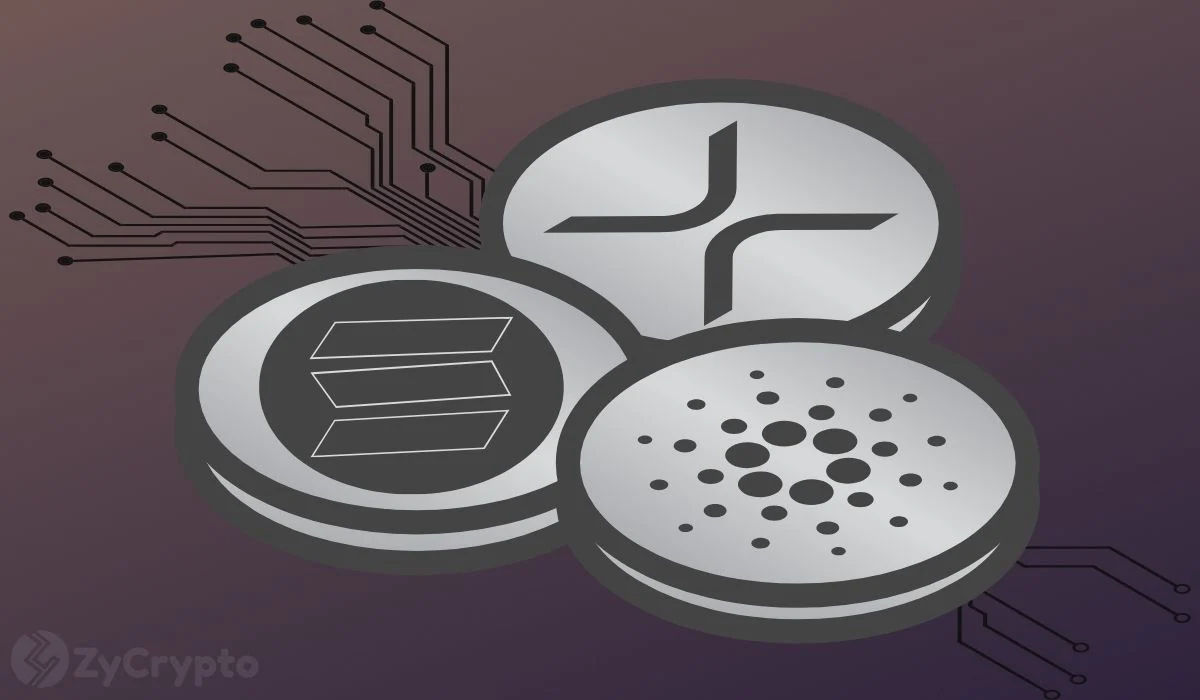
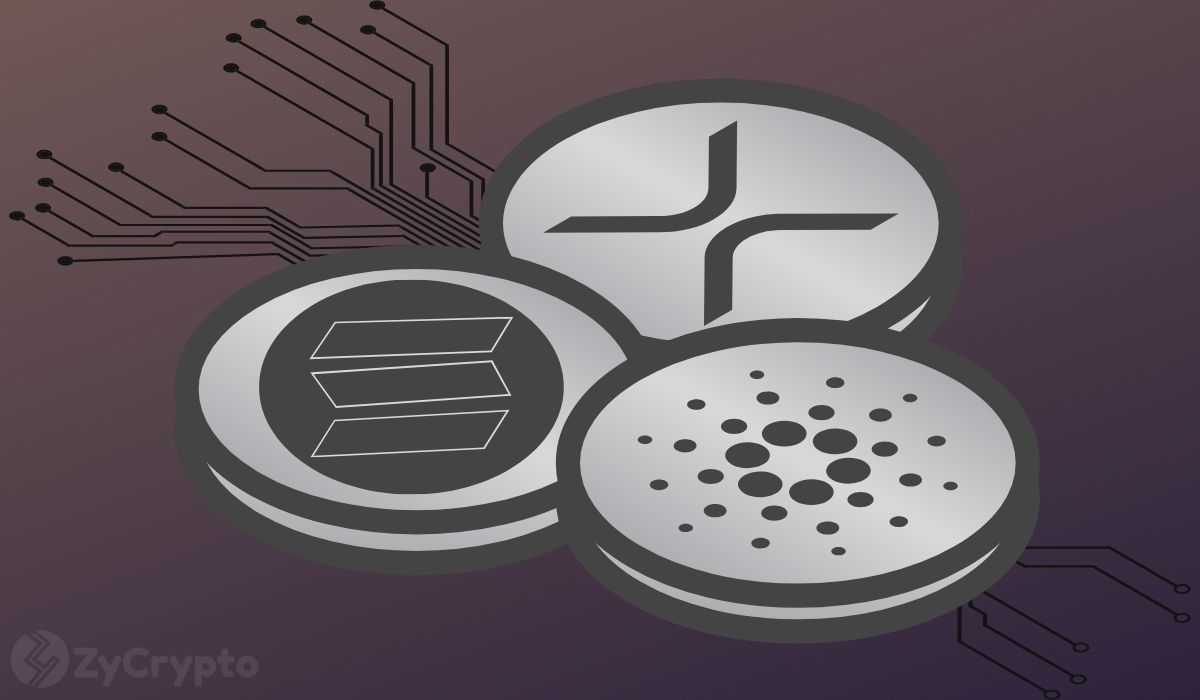
The speculation regarding XRP, Shiba Inu, and Cardano ETFs is gaining momentum as issuers look for the next lucrative product to offer to retail and institutional clients. For XRP, the push for an ETF is bolstered by the partial legal clarity provided by the Ripple vs. SEC court ruling, which suggested that secondary market sales of XRP do not constitute securities contracts. However, the path for Cardano and Shiba Inu remains more speculative. Cardano, often cited in SEC enforcement actions against exchanges as an unregistered security, faces a steep regulatory climb. Meanwhile, Shiba Inu, despite its massive community and transition toward a Layer-2 ecosystem (Shibarium), must overcome the stigma of being a "meme coin" before it can be considered for a regulated financial product on Wall Street.
Market Stagnation and the Technical Reality of Altcoins
The current technical state of the altcoin market reflects the caution exhibited by large-scale investors. Data indicates that approximately 84% of altcoins listed on major exchanges like Binance are currently trading below their 200-day moving average. This metric is a critical indicator of long-term bearish sentiment; when an asset stays below this line for an extended period, it suggests a lack of buying pressure and a loss of investor confidence.
This underperformance has persisted for nearly eight months, marking the second-longest period of altcoin stagnation since 2020. The only period that surpassed this duration was the grueling ten-month bearish cycle observed during the depths of the previous crypto winter. This trend is further corroborated by the CoinMarketCap Altcoin Season Index, which currently sits at 48/100. A reading below 50 indicates that the market is firmly in "Bitcoin Season," where the primary cryptocurrency outperforms the broader market, sucking liquidity away from smaller-cap assets.
Furthermore, the Total 3 Index—which tracks the total market capitalization of all cryptocurrencies excluding Bitcoin and Ethereum—continues to slide. This decline highlights a significant capital flight from the "long tail" of the crypto market. Even top-tier assets are not immune to this pressure. Ethereum, the leading smart-contract platform, has recently experienced a dip toward the $1,500 range, pressured by hawkish signals from central banks and a growing negative correlation with the S&P 500. When traditional equities face volatility, crypto assets, often classified as "risk-on," are the first to be liquidated.
Regulatory Hurdles and the SEC’s Looming Presence
The Securities and Exchange Commission (SEC) remains the most significant gatekeeper for the expansion of crypto ETFs. Under the leadership of Chair Gary Gensler, the agency has maintained a "regulation by enforcement" stance, consistently arguing that most digital assets outside of Bitcoin are securities. The recent approval of Ethereum ETFs was seen as a pivot, yet it came only after significant political and legal pressure.
For assets like XRP, the SEC’s ongoing appeal of certain aspects of the Ripple ruling creates a cloud of uncertainty. While Ripple Labs has celebrated its victories, the agency’s refusal to concede the security status of XRP in all contexts remains a barrier for ETF issuers who require absolute legal certainty before launching products. Similarly, Cardano’s inclusion in various SEC lawsuits against platforms like Coinbase and Binance as a security makes it a difficult sell for institutional compliance departments.
The case for a Shiba Inu ETF is even more complex. While the SEC has approved ETFs for Bitcoin (a commodity) and Ethereum (a decentralized utility), it has yet to provide a framework for meme-based assets. The agency’s primary mandate is investor protection, and the extreme volatility and speculative nature of Shiba Inu may prevent it from reaching the "SEC’s table" in a meaningful way in the near term, despite the enthusiasm of its community.
The Future: Tokenized Real-World Assets (RWA)
Looking ahead, industry experts like those at Weiss Crypto suggest that the ultimate goal of Wall Street’s integration with blockchain is not the trading of speculative tokens, but the migration of the global financial system onto the chain. This involves the tokenization of Real-World Assets (RWA). In this envisioned future, traditional stock exchanges could be bypassed entirely. Companies might choose to list their shares directly on high-performance Layer-1 networks like Solana or Ethereum.
In such a scenario, investors would hold direct ownership of assets on a blockchain, enjoying 24/7 liquidity and instant settlement, rather than relying on the T+2 settlement cycles of traditional markets. This shift would render many current "utility tokens" obsolete, as the value would reside in the tokenized asset itself rather than the speculative coin used to access the network. This "institutionalization of the infrastructure" is why firms like BlackRock are more interested in the plumbing of the crypto world than in the price action of individual altcoins.
Conclusion and Market Outlook
The cryptocurrency market is currently at a crossroads. The "easy gains" of previous cycles, driven by retail hype and the promise of institutional bailouts, have been replaced by a more sober reality. While the prospect of XRP, Shiba Inu, and Cardano ETFs remains a topic of intense discussion, the actual implementation of these products depends on a shifting regulatory landscape and a demonstrable demand from institutional clients.
Traders are currently focused on key psychological and technical levels. For XRP, defending the $1.00 mark is seen as essential for maintaining long-term bullish structure. For the broader altcoin market, a break above the 200-day moving average for a majority of assets will be required to signal the end of the current stagnation. Without meaningful catalysts—such as a shift in Federal Reserve policy or a definitive regulatory breakthrough in the United States—this period of consolidation is likely to continue testing the conviction of investors.
As Solana makes its headway into Wall Street, it serves as a blueprint for what a successful altcoin must provide: high-speed, low-cost infrastructure that solves real-world financial problems. The era of pure speculation is giving way to an era of utility and institutional integration, where the "winners" will be those networks that can bridge the gap between the decentralized world and the trillions of dollars sitting in traditional financial markets. For now, the "Bitcoin Season" persists, and the altcoin market remains in a state of watchful waiting, looking for the next spark to ignite a recovery.