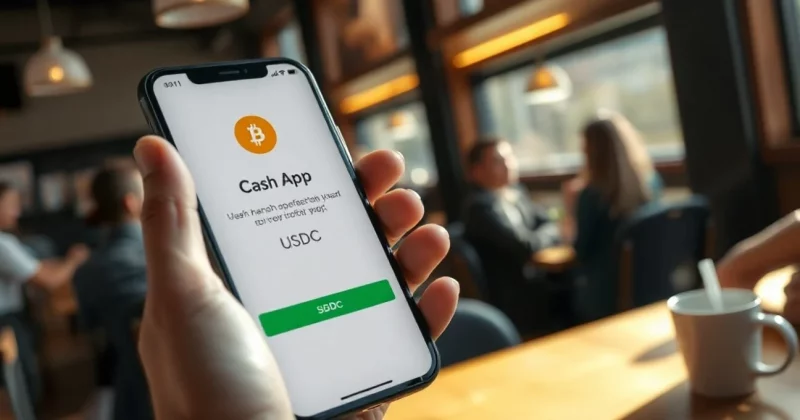
Cash App, a leading consumer finance platform operated by Block, Inc., has significantly expanded its digital asset capabilities by integrating stablecoin payments, marking a pivotal moment for mainstream cryptocurrency adoption. Starting May 27, the company began a phased rollout of USDC (USD Coin) send-and-receive functionality to approximately 15 million of its nearly 60 million monthly active users, representing a substantial quarter of its user base. This strategic move not only diversifies Cash App’s digital asset offerings beyond Bitcoin but also leverages the high-speed, low-cost infrastructure of the Solana blockchain to facilitate seamless, dollar-pegged transactions for its vast user network.
The integration allows users to send and receive USDC, with transactions settling directly on the Solana blockchain. Crucially, the feature offers instant conversion of USDC back into users’ existing USD Cash balances within the app, effectively eliminating the need for external cryptocurrency wallets or complex bridging mechanisms. This "no-fuss" approach is designed to abstract away the technical complexities typically associated with cryptocurrency, aiming to make stablecoin payments as accessible as traditional digital transfers.
The Mechanics of Seamless Stablecoin Integration
At the core of Cash App’s innovative stablecoin integration is a user-friendly design that prioritizes simplicity and accessibility. Each Cash App user is assigned a unique blockchain deposit address specifically for USDC transactions. This address functions like a traditional cryptocurrency wallet address, enabling anyone, not just other Cash App users, to send USDC to a Cash App account using any standard Solana-compatible wallet. This interoperability is a key factor in broadening the utility of the feature.
The magic of the integration lies in its internal, automated conversion process. Once USDC is received into a Cash App account, it is instantly and automatically converted into the user’s USD Cash balance. This process is designed to be entirely seamless for the end-user, requiring no manual intervention. There is no requirement for users to manage separate crypto wallets, navigate complex bridging protocols between different blockchain networks, or worry about the unpredictable and often prohibitive gas fees that plague certain blockchains, particularly during periods of high network congestion.
Block’s decision to utilize the Solana blockchain as the settlement layer is a calculated one, driven by the network’s inherent strengths in speed and transaction cost efficiency. The company has explicitly cited the sub-cent transaction costs on Solana as a critical enabler for micropayments, making it economically viable to send small amounts of money. This stands in stark contrast to the Ethereum mainnet, where transaction fees can surge to prohibitive levels during peak congestion, rendering small transactions financially impractical. By choosing Solana, Cash App is positioning itself to handle a high volume of transactions at a minimal cost, a crucial factor for a platform serving tens of millions of users.
The initial rollout, which commenced this week, is projected to achieve full availability for all Cash App users by the end of the current week. This rapid expansion from an initial 25% cohort to the broader user base underscores the company’s commitment to swiftly integrating this new functionality across its entire ecosystem.
From Bitcoin Pioneer to Digital Asset Ecosystem
Cash App’s journey into the digital asset space began years ago with its robust support for Bitcoin. Users have long been able to buy, sell, and make payments using Bitcoin, including leveraging the Lightning Network for faster and cheaper transactions. The addition of USDC represents a significant strategic evolution, moving beyond the volatility inherent in Bitcoin as a transactional currency.
While Bitcoin excels as a store of value and a speculative asset, its price volatility can be a significant impediment for everyday payments. The price of Bitcoin can fluctuate considerably between the moment a payment is initiated and when it is received or accessed by the recipient. This price uncertainty makes it challenging to send a precise amount, such as exactly $50, without the risk of the value changing significantly in transit.
USDC, on the other hand, is designed to maintain a stable value, pegged 1:1 to the U.S. dollar. Its stability is underpinned by reserves of cash and short-dated U.S. Treasury bonds, meticulously managed by its issuer, Circle. This inherent stability makes USDC an ideal candidate for everyday transactions, remittances, and as a bridge between traditional finance and the digital asset world.
Block first signaled its intentions to integrate stablecoin support in November 2025. At that time, the company outlined plans to introduce USDC functionality on the Solana blockchain, alongside ongoing enhancements to its existing Bitcoin payment features. The current May rollout effectively fulfills that roadmap, arriving approximately within the timeframe originally projected by Block for an early 2026 launch. This demonstrates a commitment to executing on strategic digital asset initiatives and keeping pace with evolving market demands.
Implications for Investors and the Broader Ecosystem
The integration of stablecoin payments by a platform with nearly 60 million monthly active users carries significant implications across the digital asset landscape. For the Solana blockchain, this partnership represents a potential surge in transaction volume as Cash App scales USDC payments to its entire user base. Increased transaction activity can lead to greater network security, enhanced liquidity, and further validation of Solana’s capabilities as a high-throughput settlement layer.
For Circle, the issuer of USDC, this deal is equally consequential. Cash App’s adoption could lead to a substantial increase in USDC’s circulation and daily transaction volume. This growth would further solidify USDC’s competitive position against Tether’s USDT, the dominant stablecoin in the market, potentially leading to a more diversified and resilient stablecoin ecosystem. A larger user base for USDC also strengthens its appeal for developers and institutions looking for stable, dollar-denominated digital assets.
From Block’s perspective, the introduction of stablecoin payments opens up new avenues for revenue generation. The company could potentially earn revenue through conversion spreads when users exchange fiat for USDC or vice versa, transaction fees, or by generating yield on USDC reserves held on behalf of users. This diversification of revenue streams is crucial for a fintech company looking to expand its offerings and capitalize on the growing digital asset economy. Cash App’s existing Bitcoin trading services already contribute significantly to Block’s revenue, and stablecoin integration represents a logical extension of this success.
This move by Cash App places it in league with other major financial technology players making significant inroads into the stablecoin space. PayPal has launched its own stablecoin, PayPal USD (PYUSD), and Stripe, a competitor to Block, acquired a company specializing in stablecoin payments, further indicating a broader industry trend towards embracing these digital currencies. The fact that Cash App is now routing consumer transactions through Solana underscores the growing importance of blockchain infrastructure in facilitating these new payment rails.
Navigating the Regulatory Landscape
Despite the technological advancements and market opportunities, the stablecoin ecosystem, and by extension Cash App’s new functionality, operates within a dynamic and evolving regulatory environment. In the United States, stablecoin legislation remains in a state of flux. Any future regulatory framework could impose new requirements or alter the economic calculus of offering these services. For instance, stricter capital requirements or compliance obligations could impact the profitability or feasibility of certain stablecoin operations.
The potential for stablecoins to disrupt traditional financial services, particularly in areas like remittances, is significant. Legacy remittance services often charge fees in the range of 5% to 10% for international money transfers. Stablecoins, with their low transaction costs and rapid settlement times, possess the potential to offer a highly competitive alternative, potentially challenging incumbents like Western Union and MoneyGram. This disruptive potential is a key driver for both innovation and regulatory scrutiny in the sector.
The successful integration of USDC by Cash App on Solana is a testament to the growing maturity of both stablecoins and the underlying blockchain technology. It signifies a critical step towards bridging the gap between traditional financial systems and the burgeoning world of digital assets, promising to make digital currency payments more accessible, efficient, and cost-effective for millions of consumers worldwide. The coming months will likely reveal the full impact of this integration on user behavior, transaction volumes, and the broader competitive landscape of digital payments.
Disclosure: This article was edited by the Editorial Team. For more information on how we create and review content, please refer to our Editorial Policy.