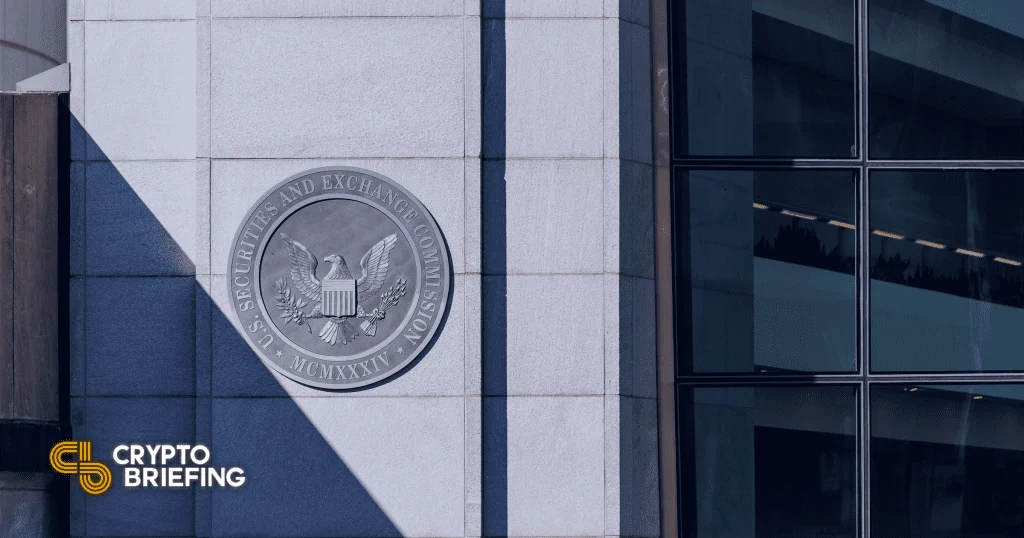
The United States Securities and Exchange Commission (SEC) has officially announced an open meeting scheduled for Friday, August 14, 2026, to deliberate on a landmark proposal that could redefine the regulatory landscape for digital assets. The primary focus of the 10 a.m. ET session is the consideration of a new, tailored offering regime specifically designed for investment contracts involving crypto assets. This regulatory pivot comes at a critical juncture for the industry, as the legislative path toward comprehensive federal oversight remains mired in partisan gridlock. The proposed rules represent a significant shift in the SEC’s administrative strategy, moving toward a framework that recognizes the unique technical and economic characteristics of blockchain-based assets while maintaining the core investor protections of the federal securities laws.
The impetus for this administrative action is the recent legislative stagnation in the United States Senate. The "Creating Legal Accountability and Reform In Tech and Yield" (CLARITY) Act, which was hailed as a potential breakthrough for the digital asset sector, failed to advance before the Senate’s scheduled August recess. This delay has cast significant doubt on the prospects of the bill becoming law within the current calendar year. The CLARITY Act was intended to provide a definitive legal structure for digital assets, distinguishing between securities and commodities and establishing clear jurisdictions for both the SEC and the Commodity Futures Trading Commission (CFTC). With the legislative clock ticking toward the end of the session, the SEC appears ready to fill the vacuum through its own rulemaking authorities.
The Legislative Impasse and the Sept. 15 Cloture Vote
The failure of the Senate to move the CLARITY Act forward is not merely a matter of scheduling but a reflection of deep-seated disagreements over the fundamental pillars of the bill. Senate Republicans have expressed their intention to force a resolution by scheduling a cloture vote for Sept. 15, immediately following the return from recess. A cloture vote is a procedural move used to end a filibuster and requires a three-fifths majority (usually 60 votes) to succeed. However, current internal polling and congressional analysis suggest that the bill faces a steep climb.
Three primary areas of contention have prevented a bipartisan consensus. First, disagreements over ethics restrictions for regulatory officials have emerged as a significant hurdle. Some lawmakers are pushing for strict "revolving door" prohibitions that would prevent SEC and CFTC officials from taking lucrative roles at crypto firms for several years after leaving public service. Second, the treatment of stablecoin rewards has become a flashpoint. The CLARITY Act currently contains provisions that would allow certain yield-bearing stablecoins to operate under a streamlined regulatory framework, a move that critics argue could undermine traditional banking stability and monetary policy. Finally, the scope of enforcement powers remains a subject of intense debate. While the bill seeks to limit the SEC’s "regulation by enforcement" approach, some Democratic members of the Senate Banking Committee argue that stripping the agency of these powers would leave investors vulnerable to the types of systemic collapses seen in previous market cycles.
SEC Chair Paul Atkins and the Fallback Strategy
In the absence of a clear mandate from Congress, SEC Chair Paul Atkins has positioned the agency to take a proactive role. Atkins, who has long advocated for a more nuanced approach to digital asset regulation, has framed the upcoming rulemaking as a necessary "fallback" measure. In a July interview, Atkins emphasized that while the SEC possesses the administrative tools to address market structure issues—such as custody, clearing, and disclosure—a comprehensive legislative framework would still be the preferred route for long-term stability.
"The SEC cannot remain in a state of perpetual litigation while the market evolves," Atkins stated during his July remarks. "If Congress is unable to provide the statutory clarity the industry requires, the Commission must use its existing authority under the Securities Act of 1933 and the Securities Exchange Act of 1934 to provide a workable path for compliance. Our goal is to create a regime that is tailored to the realities of decentralized protocols, rather than forcing them into a disclosure model designed for 20th-century industrial corporations."
The proposed "tailored offering regime" is expected to introduce a new category of exemptions or specialized registration forms for crypto assets. This could include modified disclosure requirements that focus on code audits, network decentralization metrics, and tokenomics, rather than traditional corporate governance and financial statements. By doing so, the SEC hopes to bring more projects into the regulatory perimeter without imposing the prohibitive costs associated with a full-scale initial public order (IPO).
A Chronology of Regulatory Uncertainty
The journey to this Friday’s meeting has been marked by years of legal battles and shifting regulatory interpretations. To understand the significance of the proposed rules, one must look at the timeline of events that led to the current standoff:
- 2022–2023: The Era of Enforcement. Following the collapse of major platforms like FTX and Celsius, the SEC under previous leadership launched a series of high-profile lawsuits against major exchanges. These actions were centered on the premise that nearly all digital assets—excluding Bitcoin—constituted investment contracts under the Howey Test.
- January 2025: Leadership Transition. Following a change in administration and the appointment of Paul Atkins as SEC Chair, the agency began to signal a shift toward a "notice-and-comment" rulemaking approach rather than relying solely on litigation.
- March 2026: Introduction of the CLARITY Act. A bipartisan group of senators introduced the CLARITY Act to provide a statutory definition for "digital asset investment contracts" and to create a "bridge" period for firms to come into compliance.
- July 2026: The Senate Standoff. Despite passing through the House of Representatives with a significant majority, the CLARITY Act hit a wall in the Senate Banking Committee due to disputes over stablecoin provisions and enforcement jurisdiction.
- August 2026: The SEC Meeting. Chair Atkins schedules an open meeting for August 14 to propose administrative rules, effectively signaling that the SEC will move forward with or without the CLARITY Act.
Supporting Data and Economic Implications
The stakes for the SEC’s proposed rulemaking are enormous, both for the U.S. economy and the global digital asset market. According to data from the 2026 Digital Asset Market Report, the total market capitalization of the crypto industry has stabilized at approximately $3.2 trillion, with over 15% of American households reporting some form of digital asset ownership. However, the report also notes that capital flight to offshore jurisdictions has increased by 22% over the last eighteen months, cited primarily as a response to domestic regulatory ambiguity.
Industry analysts suggest that a tailored offering regime could unlock billions of dollars in institutional capital currently sitting on the sidelines. A survey of 500 institutional investors conducted by the Global Blockchain Council in June found that 78% of respondents would "significantly increase" their exposure to crypto assets if a clear SEC-approved disclosure framework were in place. Conversely, 62% of respondents stated that the current "regulation by enforcement" model is the single greatest barrier to entry.
Furthermore, the data regarding the "compliance gap" is telling. Under the current regime, the cost for a small-to-medium-sized crypto project to complete a full SEC registration is estimated at $4 million to $6 million, not including ongoing reporting costs. The SEC’s proposed tailored regime is rumored to aim for a 60% reduction in these initial compliance costs by streamlining the requirements for decentralized networks.
Reactions from Industry and Legal Experts
The announcement of Friday’s meeting has elicited a mixed response from the industry and legal community. Supporters of Chair Atkins’ approach argue that administrative rulemaking is the only pragmatic way forward given the dysfunction in Congress.
"We have been waiting for over a decade for a framework that acknowledges that a software protocol is not a mid-sized manufacturing company," said Sarah Brennan, a senior fellow at the Institute for Financial Technology. "If the SEC can successfully implement a regime that focuses on technical transparency and consumer protection without the baggage of legacy securities filings, it will be a major win for innovation in the United States."
However, some legal scholars warn that an SEC-led regime might face its own legal challenges. Without the backing of the CLARITY Act, any new rules proposed by the SEC could be vulnerable to challenges under the "Major Questions Doctrine." This legal principle suggests that agencies cannot decide issues of major economic and political significance without clear congressional authorization. Critics argue that redefining "investment contracts" for the digital age is exactly the kind of "major question" that requires a vote from Congress.
Broader Impact and Global Context
The SEC’s move is also being watched closely by international regulators. The European Union’s Markets in Crypto-Assets (MiCA) regulation has already begun its full implementation phase, providing a comprehensive framework for the 27-nation bloc. Similarly, jurisdictions like Hong Kong and Singapore have established clear licensing regimes for digital asset service providers. If the U.S. SEC fails to establish a competitive and clear framework, the "regulatory arbitrage" that has seen firms move to Europe and Asia is likely to accelerate.
The Friday meeting will likely address the concept of "sufficient decentralization," a term that has haunted the industry since it was first mentioned by SEC officials in 2018. If the new rules provide a clear, data-driven metric for when a project transitions from a security to a commodity, it would represent the most significant regulatory development in the history of the asset class.
As the 10 a.m. ET meeting approaches, the focus remains on whether the SEC can strike the delicate balance between fostering innovation and ensuring market integrity. With the CLARITY Act on life support and the Sept. 15 cloture vote looming as a high-stakes gamble, the administrative path chosen by Chair Atkins may be the only viable route left for the American crypto industry in 2026. The outcome of Friday’s session will not only dictate the future of crypto offerings but will also signal the SEC’s broader philosophy on the intersection of traditional finance and emerging technology for years to come.