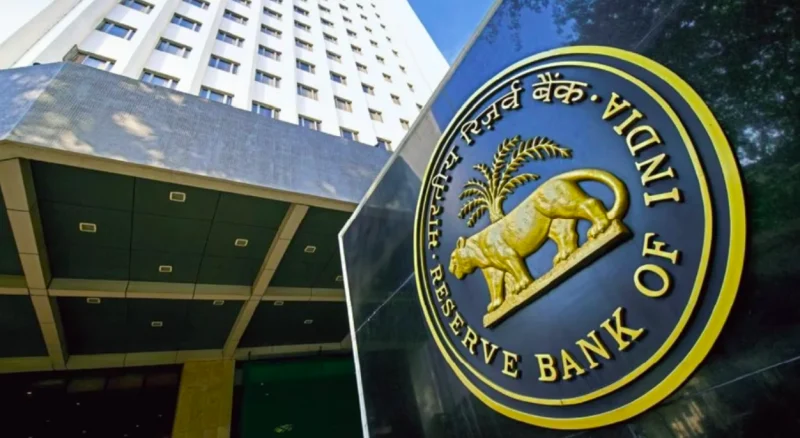
The Reserve Bank of India (RBI) and the Securities and Exchange Board of India (SEBI) have officially initiated a groundbreaking pilot program titled "Demat 2.0," representing a significant leap forward in the evolution of India’s capital markets. Unveiled on September 10 at the Global Fintech Fest in Mumbai, this initiative is designed to test the efficacy of tokenized corporate bonds and accelerated settlement processes using distributed ledger technology (DLT) and Central Bank Digital Currency (CBDC). This project marks a collaborative effort between the nation’s primary banking and securities regulators to modernize market infrastructure, enhance transparency, and democratize access to financial instruments that were previously the domain of institutional players.
The pilot program commenced with three distinct issuances, the most prominent of which is a Rs 500 crore corporate bond issue by Larsen & Toubro (L&T). This issuance saw participation from a consortium of major financial entities, including the State Bank of India (SBI), Axis Bank, SBI Mutual Fund, and the National Securities Depository Limited (NSDL). By integrating blockchain technology into the very fabric of the bond issuance and settlement lifecycle, Demat 2.0 aims to address long-standing inefficiencies in the corporate debt market, such as fragmented liquidity, lengthy settlement cycles, and high entry barriers for retail investors.
The Evolution of the Indian Securities Market: From Paper to Blockchain
To understand the magnitude of Demat 2.0, one must look back at the original "Demat" revolution of the mid-1990s. Prior to 1996, the Indian stock market relied heavily on physical share certificates. This paper-based system was fraught with risks, including "bad delivery" due to signature mismatches, theft, loss of certificates, and significant delays in the transfer of ownership. The enactment of the Depositories Act in 1996 and the subsequent establishment of the NSDL and Central Depository Services Limited (CDSL) transformed the landscape by enabling the electronic holding and trading of securities. This transition from physical to electronic records—known as dematerialization—was instrumental in making India one of the most efficient trading environments in the world.
However, while the original Demat system digitized the record-keeping of ownership, the underlying settlement and asset servicing processes remained largely tethered to traditional banking rails and manual interventions. Settlement cycles, though reduced over the decades from T+5 to T+1 (and recently T+0 for select stocks), still involve multiple intermediaries and reconciliation steps. Demat 2.0 seeks to bridge this final gap by merging the security record and the payment asset into a single, programmable environment. By using CBDC for the cash leg of the transaction and DLT for the security leg, the pilot explores the possibility of "atomic settlement"—where the exchange of assets happens simultaneously and instantaneously, eliminating counterparty risk.
Technical Architecture and the Role of Distributed Ledger Technology
The core of Demat 2.0 lies in the application of Distributed Ledger Technology and smart contracts. Unlike a traditional centralized database managed by a single entity, DLT provides a shared, immutable ledger where all participants—issuers, investors, depositories, and regulators—can view and verify transactions in real-time. This creates a "single source of truth," drastically reducing the need for back-office reconciliations that currently plague the financial services industry.
SEBI Chairperson Tuhin Kanta Pandey, speaking at the Global Fintech Fest, emphasized that the project is not merely about changing the storage medium but about reimagining the lifecycle of a security. The use of smart contracts allows for the automation of "asset servicing." In the context of corporate bonds, this means that coupon payments (interest) and principal redemptions can be programmed to occur automatically on specified dates without requiring manual processing by the issuer or the clearinghouse. If the conditions of the bond agreement are met, the code executes the payment via CBDC directly to the token holder’s digital wallet.
The involvement of a broad spectrum of institutions—including CDSL, NSDL, the Bombay Stock Exchange (BSE), the National Stock Exchange (NSE), HDFC Bank, ICICI Bank, and the National Payments Corporation of India (NPCI)—highlights the systemic nature of this pilot. These entities are working together to ensure that the DLT framework is interoperable with existing market infrastructure while maintaining the highest standards of legal certainty and regulatory compliance.
Tokenization: Democratizing the Corporate Bond Market
One of the most transformative aspects of Demat 2.0 is the tokenization of financial assets. Tokenization involves representing a physical or digital asset as a "token" on a blockchain. These tokens can be divided into smaller fractional units, which has profound implications for market accessibility.
Currently, the corporate bond market in India is predominantly an institutional market. High minimum investment requirements—often as high as Rs 10 lakh (approximately $12,000)—effectively bar retail investors from participating in high-quality corporate debt. Through tokenization, a Rs 10 lakh bond can be subdivided into smaller units, such as Rs 100 or even less. This "retailization" of debt allows individual investors to diversify their portfolios with fixed-income assets that offer better yields than traditional savings accounts or fixed deposits, with the same level of security provided by the regulatory oversight of SEBI and the RBI.
Furthermore, tokenization simplifies the secondary market trading of these bonds. By lowering the ticket size, the pool of potential buyers and sellers increases, which in turn enhances liquidity. A more liquid market ensures that investors can exit their positions more easily and at fairer prices, further encouraging participation in the corporate bond ecosystem.
Integration with CBDC and the Unified Lending Interface (ULI)
The success of Demat 2.0 is intrinsically linked to the RBI’s broader digital currency initiatives. The use of the wholesale Central Bank Digital Currency (e-Rupee) as the settlement asset ensures that the "cash leg" of a trade is as technologically advanced as the "security leg." Using CBDC allows for 24/7 settlement capabilities, bypassing the limitations of traditional Real-Time Gross Settlement (RTGS) windows and reducing the liquidity buffer that banks must maintain.
RBI Executive Director P. Vasudevan noted that while the current focus is on corporate bonds, the central bank is already looking toward the future. The RBI is examining the tokenization of other asset classes, most notably gold. Gold tokenization could allow investors to hold fractional ownership of physical gold in a digital format that is easily tradable and can be used as collateral for loans, further integrating traditional hedges into the digital economy.
Parallel to Demat 2.0, the RBI is developing the Unified Lending Interface (ULI). Similar to how the Unified Payments Interface (UPI) revolutionized retail payments, the ULI is intended to provide a common platform for consent-based credit delivery. By creating "common rails" for data sharing between lenders and borrowers, the ULI aims to reduce the time required for credit appraisal, particularly for small businesses and rural borrowers. The synergy between tokenized assets (which can serve as collateral) and the ULI (which facilitates the loan) points toward a future where the entire credit and investment cycle is fully digitized and frictionless.
Official Responses and Strategic Vision
The leadership at both the RBI and SEBI has expressed high confidence in the potential of Demat 2.0 to position India as a global leader in financial technology. RBI Governor Shaktikanta Das (referred to in some contexts as Governor Malhotra in preliminary reports) remarked at the Global Fintech Fest that India is uniquely positioned to shape the future architecture of global finance. By building robust Digital Public Infrastructure (DPI), India is creating a template that other nations may follow in their pursuit of financial modernization.
The regulatory stance emphasizes a balance between innovation and stability. While the pilot explores cutting-edge technology, the framework is designed to maintain the "legal certainty" of ownership. Investors in tokenized bonds will enjoy the same legal protections as those holding traditional dematerialized securities. The pilot is a "sandbox" environment where the regulators can observe market behavior, identify potential systemic risks, and fine-tune the rules before a full-scale national rollout.
Market participants have also reacted positively. The involvement of Larsen & Toubro, a cornerstone of Indian industry, lends significant credibility to the pilot. Financial institutions like SBI and Axis Bank are keen to explore DLT to reduce their operational costs and improve the speed of service for their corporate and retail clients.
Broader Implications and Future Outlook
The implications of Demat 2.0 extend far beyond the corporate bond market. If the pilot proves successful, the model is expected to be applied to equities, mutual funds, and other financial instruments. The transition to a DLT-based market infrastructure could lead to a significant reduction in the cost of capital for Indian companies. By streamlining the issuance process and attracting a wider base of retail investors, companies can raise debt more efficiently.
From a systemic perspective, the move toward atomic settlement reduces "float" in the system and minimizes the risk of settlement failure. This increases the overall resilience of the financial system. Furthermore, the transparency provided by the blockchain ledger enhances the ability of regulators to monitor market activity in real-time, helping to detect and prevent market manipulation or fraudulent activities more effectively than current post-trade reporting mechanisms.
However, the journey to a fully tokenized financial system is not without challenges. Issues such as the scalability of blockchain networks, the cybersecurity of digital wallets, and the need for standardized protocols across different DLT platforms remain at the forefront of the technical agenda. Additionally, the transition will require significant investment in technology upgrades by all market participants, from small brokerage firms to large clearing banks.
Despite these hurdles, Demat 2.0 represents a clear statement of intent from India’s financial regulators. It signals a move away from incremental improvements toward a fundamental redesign of market operations. As the pilot progresses, the data gathered will provide invaluable insights into how digital assets and central bank money can coexist to create a more inclusive, efficient, and secure financial future for one of the world’s fastest-growing economies. The success of this initiative could well define the next thirty years of Indian capital markets, just as the original Demat initiative defined the previous three decades.