This evolution signifies a departure from the early days of crypto, where holding a token often conferred little more than governance rights or a purely speculative bet on future adoption. The prevailing model frequently saw significant fees and economic activity generated by protocols flow into treasuries, operational teams, or liquidity providers, with a considerable disconnect between the protocol’s financial success and any direct economic benefit for its token holders. This "gap" between protocol revenue and token holder value accrual represented one of the industry’s most significant unresolved challenges, fueling skepticism about the intrinsic worth of many digital assets beyond their immediate utility. Today, this gap is rapidly closing, driven by a growing recognition that sustainable value requires a more direct link between economic activity and token ownership.
The Genesis of a New Economic Model
The concept of revenue sharing in crypto, while seemingly novel, draws parallels from traditional finance, where dividends, share buybacks, and profit distributions are standard mechanisms for rewarding shareholders. In the nascent crypto market, however, regulatory ambiguities and a prevailing ethos of decentralized experimentation often led projects to prioritize technological innovation and network growth over explicit financial distributions to token holders. Early tokens primarily functioned as utility tokens (granting access to services) or governance tokens (conferring voting rights), with their value primarily derived from network effect and future potential.
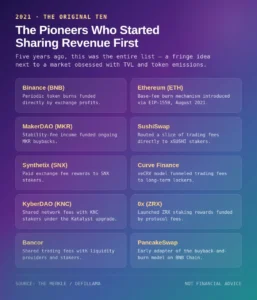
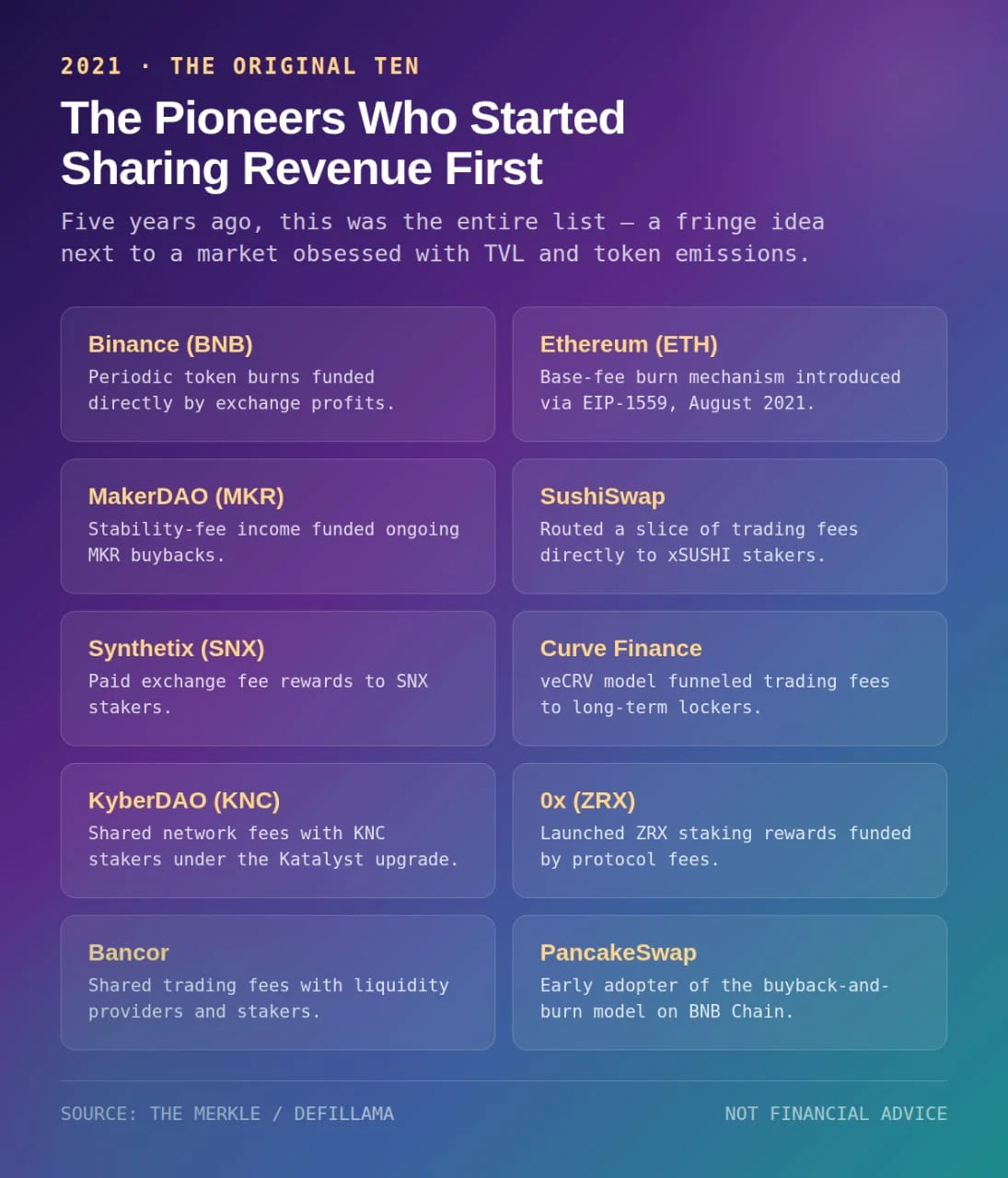
Around 2021, a pioneering group of protocols began to experiment with mechanisms to route a share of their earnings back to token holders. These early innovators laid the groundwork for what would become a widespread movement. Binance, for instance, had already established a precedent with its BNB token, implementing periodic token burns funded by exchange profits, effectively reducing supply and benefiting existing holders. Ethereum, a foundational blockchain, introduced its base-fee burn mechanism through the EIP-1559 upgrade in August 2021. This significant change ensured that a portion of every transaction fee on the network was permanently removed from circulation, creating a deflationary pressure on ETH supply and directly linking network activity to token value accrual. MakerDAO, a decentralized autonomous organization behind the DAI stablecoin, also adopted a similar approach by using stability fee income generated from its lending protocol to fund MKR token buybacks. These buybacks aimed to enhance the scarcity and value of the governance token.
Alongside these larger entities, a handful of DeFi-native projects further pushed the envelope:
- SushiSwap: A decentralized exchange (DEX) that routed a slice of its trading fees to xSUSHI stakers, effectively offering a yield based on platform activity.
- Synthetix: A synthetic asset protocol that paid exchange fee rewards to SNX stakers, incentivizing participation in its collateralization and oracle network.
- Curve Finance: Known for its stablecoin swaps, Curve introduced the veCRV (vote-escrowed CRV) model, funneling trading fees to long-term lockers of its CRV token, tying economic benefits directly to committed governance participation.
- KyberDAO: Under its Katalyst upgrade, Kyber Network shared network fees with KNC stakers, rewarding those who helped secure and govern the protocol.
- 0x: A protocol for peer-to-peer exchange of ERC-20 tokens, which launched ZRX staking rewards funded by protocol fees.
- Bancor: A liquidity protocol that shared trading fees with liquidity providers and stakers.
- PancakeSwap: An early adopter of the buyback-and-burn model on BNB Chain, showcasing how even newer, high-volume DEXs could implement such mechanisms.
These approximately ten protocols, depending on the strictness of the "revenue sharing" definition, operated at the fringes of a market largely preoccupied with Total Value Locked (TVL) and token emissions. Their experiments, however, proved the viability and attractiveness of directly linking a token’s economic value to the protocol’s performance.
From Niche Feature to Industry Standard
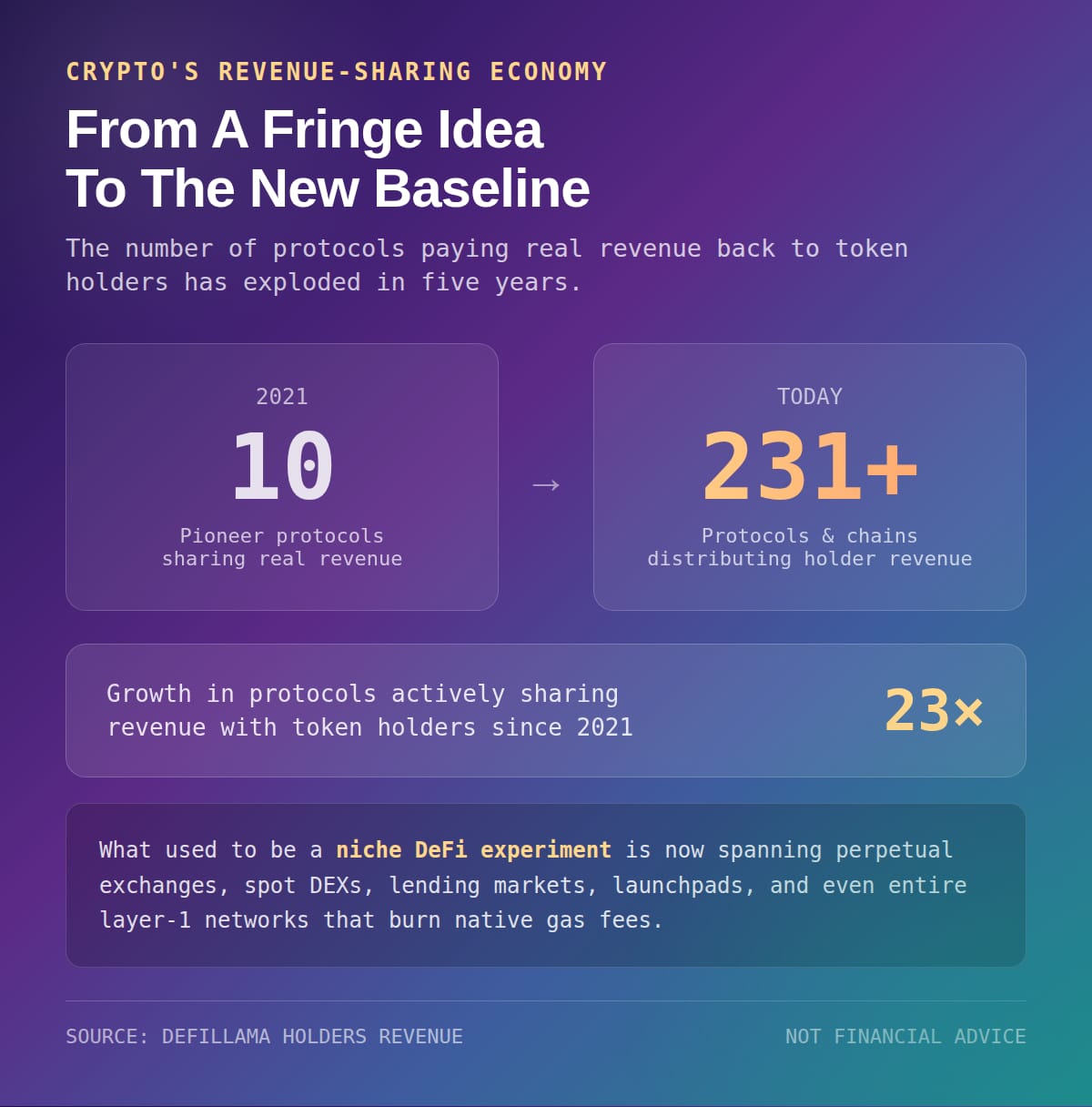
Fast forward to today, and what was once a fringe idea has rapidly become a new baseline expectation for serious crypto projects. On-chain trackers, such as DeFiLlama’s Holders Revenue dashboard, now monitor dozens of protocols and even entire blockchains that actively route a share of their earnings back to token holders. The count has surged past 231 protocols and chains, and the number continues to climb. This dramatic increase reflects a broad acceptance of revenue-sharing mechanisms across diverse segments of the crypto economy, including perpetual exchanges, spot decentralized exchanges (DEXs), lending markets, launchpads, and even fundamental layer-1 networks that burn native gas fees.
This shift underscores a profound maturation in how investors and project developers perceive token utility. What was once a differentiator, allowing projects to stand out, is quickly becoming "table stakes." For any token hoping to be taken seriously by investors who increasingly scrutinize balance sheets and fundamental value propositions, a clear mechanism for value accrual to token holders is becoming essential. The competitive landscape has played a significant role in this acceleration. Once a handful of tokens demonstrated that fee-funded buybacks, burns, or direct distributions could support price stability and attract sticky, long-term holders, competitors across every DeFi vertical raced to emulate the model. The fear of being left behind in attracting capital and committed users has created a powerful incentive for widespread adoption.
The New Guard: Leaders in Value Accrual
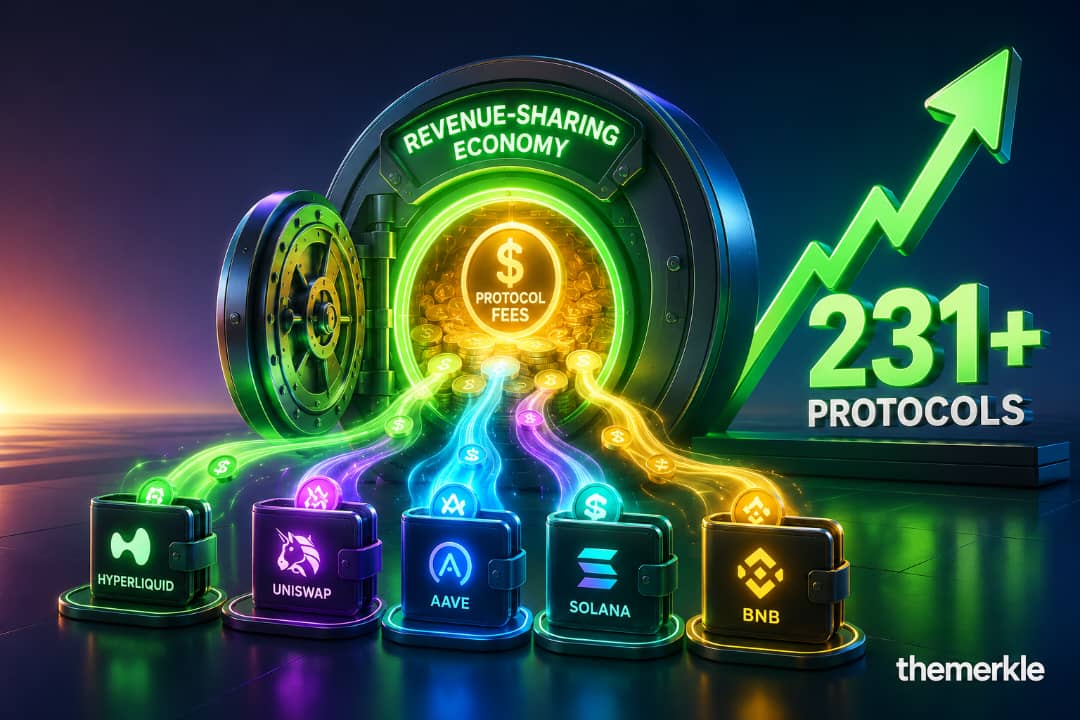
The protocols leading the holder-revenue rankings today represent a new generation, often operating at significantly higher volumes and with more sophisticated tokenomics than their 2021 predecessors. Hyperliquid, a decentralized perpetual exchange, currently stands out by funneling an astonishing 99% of its trading fees into an Assistance Fund that continuously buys back its HYPE token. This aggressive buyback mechanism directly links the protocol’s trading volume to the value accrual for HYPE holders, setting a high bar for direct economic participation.
Another monumental development was Uniswap’s activation of its long-debated fee switch in December 2025. After years of governance gridlock and extensive community discussion, this decision finally allowed a share of swap fees generated on the world’s largest DEX to fund UNI token buybacks and burns. This move by a cornerstone of the DeFi ecosystem signals a powerful endorsement of the revenue-sharing model and is expected to significantly influence other major protocols.
Beyond these leaders, a broader field of innovative protocols is making strides:
- Chainlink: The decentralized oracle network, which historically focused on providing secure data feeds, now funds LINK token buybacks from both its on-chain and off-chain revenue streams, further integrating its economic success with its token’s value.
- Aerodrome: A decentralized exchange on Base, which distributes the entirety of its trading fees to veAERO voters, reinforcing the link between active governance and economic reward.
- Jupiter: A prominent Solana-based aggregator, routes half of its platform revenue into JUP token buybacks, demonstrating the cross-chain adoption of these models.
- PancakeSwap: Continuing its pioneering efforts, PancakeSwap now runs several parallel CAKE burn mechanisms across its diverse product suite, reflecting a comprehensive strategy for value accrual.
Crucially, the trend has extended beyond application-layer tokens to foundational layer-1 blockchains. Networks like Solana, Tron, and BNB Chain have integrated mechanisms to burn a portion of their native network fees. This effectively transforms their native assets (SOL, TRX, BNB) into holder-revenue instruments, similar to how EIP-1559 impacted Ethereum. By burning transaction fees, these blockchains create a deflationary pressure on their supply, benefiting all existing holders and enhancing the economic utility of their core assets.
Catalysts for Change: Regulation, Maturity, and Competition
Several factors have converged to drive this significant shift. A more nuanced and, in some respects, friendlier regulatory stance towards digital assets in jurisdictions like the United States has played a crucial role. For years, projects were wary of implementing structures that resembled traditional dividends or profit distributions, fearing that such mechanisms would lead to their tokens being classified as unregistered securities by regulatory bodies such as the SEC. This fear often stifled innovation in tokenomics that directly linked revenue to holders. Recent developments, including increased dialogue between regulators and industry participants, and some judicial outcomes, have begun to ease these concerns, providing a clearer, albeit still evolving, pathway for projects to implement value-accrual mechanisms.
Bitwise Chief Investment Officer Matt Hougan succinctly captured this evolving mood, suggesting that crypto valuations outside of Bitcoin could "double or more" as protocols increasingly link revenue to token value. He highlighted projects like Hyperliquid, Uniswap, Aave, and Pump.fun as early movers demonstrating this potential. This perspective from a prominent figure in institutional crypto investment underscores the growing confidence among traditional finance players that crypto assets can offer tangible economic returns, not just speculative gains.
The shift is so profound that even protocols initially resistant to the trend are now adopting it. Aave Labs, the team behind the leading decentralized lending protocol Aave, proposed sharing revenue generated outside its core lending protocol with AAVE token holders earlier this year. This was a notable concession from a project that, for years, primarily treated its token as governance-only. Their willingness to explore new revenue distribution models signals a broader industry consensus that direct value accrual to token holders is becoming an imperative for long-term sustainability and competitiveness.
Implications for Investors and the Future of Crypto
For token holders, this structural shift represents a significant evolution in how digital assets are evaluated. The focus is moving beyond purely speculative metrics like Total Value Locked (TVL) or simple token emissions. Instead, serious investors are increasingly scrutinizing fundamental financial metrics that are familiar in traditional markets: revenue generation, distribution mechanics, and the actual cash flow directed to token holders. Factors such as a protocol’s fee structure, the efficiency and transparency of its distribution mechanisms (e.g., buybacks, burns, staking yields), and potential token dilution are becoming as critical to crypto research as Annual Percentage Yield (APY) once was.
However, a word of caution is warranted. The mere existence of a buyback or revenue-sharing mechanism does not automatically guarantee a premium valuation. As research from Castle Labs has pointed out, there can be a significant difference between "headline revenue" generated by a protocol and the "actual tokenholder cash flow." Investors must conduct thorough due diligence to understand:
- Net Revenue: What portion of gross revenue is truly available for distribution after operational costs, team allocations, and treasury funding?
- Distribution Efficiency: How effectively are funds routed to token holders? Are there complex vesting schedules, multi-step processes, or other impediments?
- Inflationary Pressures: Do new token emissions or unlocks negate the benefits of buybacks or burns? A protocol might burn tokens but simultaneously issue more, leading to net inflation.
- Sustainability: Is the revenue stream stable and diversified, or is it reliant on volatile market conditions or specific, temporary incentives?
Despite these nuances, the direction of travel is unmistakable. What began as a bold experiment among a handful of protocols in 2021 has rapidly become one of the defining trends of the current market cycle. It is fundamentally reshaping how serious investors evaluate digital assets, pushing the industry towards a more mature and economically grounded framework. For an industry often accused of manufacturing value out of thin air, this embrace of revenue-sharing models marks a significant step forward, fostering a more sophisticated and grown-up conversation about intrinsic value, financial sustainability, and long-term investment potential in the digital asset space. This shift not only strengthens the economic models of individual protocols but also enhances the overall legitimacy and appeal of the cryptocurrency market to a broader spectrum of investors, potentially bridging the gap between innovative technology and established financial principles.