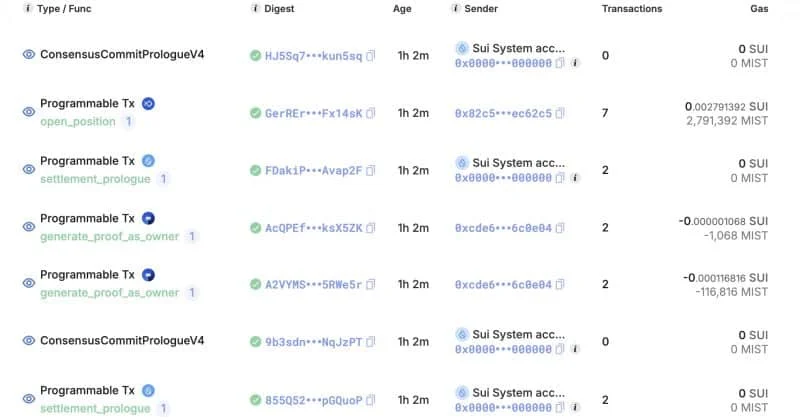
The Sui mainnet has successfully returned to full operational status following an unexpected and prolonged outage that lasted approximately 5 hours and 55 minutes. The disruption, which began on May 28, was attributed to a critical bug within the gas charging logic of the network’s latest software release, version 1.72. This flaw in the system responsible for calculating transaction fees caused the entire network to halt the production of new blocks, effectively freezing all on-chain activity. Validators, the decentralized entities responsible for maintaining the Sui network’s integrity, swiftly coordinated efforts to implement a fix, upgrading to a patched version of the software and thereby restoring normal checkpoint production on May 29.
The Genesis of the Outage: A Flaw in Transaction Fee Calculation
The root cause of the extensive downtime was identified as a specific bug introduced in Sui’s 1.72 software release. This bug directly impacted the intricate code governing how transaction fees, or "gas," are calculated and applied. When this logic malfunctioned, it prevented the network from accurately processing the necessary computations for finalizing new transactions. Consequently, the consensus mechanism, which relies on these calculations to validate and append new blocks to the blockchain, was unable to proceed. This cascaded into a complete standstill, halting the flow of new transactions and rendering the network inert for a significant period.
A Detailed Chronology of the Incident and Recovery
The incident commenced on May 28, when a substantial portion of Sui validators, having adopted the 1.72 update, encountered the aforementioned gas fee bug. This triggered a halt in their ability to produce new "checkpoints," which are essential milestones in the blockchain’s progression. Without the successful generation of these checkpoints, no new transactions could be finalized or confirmed on the Sui ledger.
The recovery process was far from instantaneous, underscoring the robust security and consensus requirements inherent in a Proof-of-Stake blockchain like Sui. To bring the network back online, a critical threshold of validator participation was necessary. Specifically, more than two-thirds of all staked tokens on the Sui network needed to upgrade to the newly developed patched software. This consensus-driven approach, while ensuring the network’s security and integrity, necessitates a coordinated effort among a distributed network of validators, which can take time.
The restoration of normal operations on May 29 marked the culmination of these coordinated efforts. Validators successfully transitioned to the patched version, allowing the network to resume its vital checkpoint production and, by extension, its ability to process transactions.
Network Resilience and Safety Guarantees Upheld
Despite the nearly six-hour operational pause, a crucial aspect of the incident is that Sui’s inherent safety guarantees remained intact. The network’s architecture effectively prevented any loss of user funds during the disruption. Furthermore, the design of the blockchain prevented any data inconsistencies from accumulating or corrupting while the chain was in a stalled state. This is a testament to the underlying cryptographic principles and consensus mechanisms that safeguard the integrity of blockchain data.
However, the practical implications for decentralized finance (DeFi) applications built upon the Sui ecosystem were significant. During the outage, all DeFi protocols operating on Sui were effectively frozen. This meant that users were unable to adjust their existing positions, execute new trades, or trigger any automated liquidation processes that are integral to the functioning of many DeFi strategies. This paralysis highlights the dependency of complex financial applications on the continuous and stable operation of the underlying blockchain infrastructure.
A Recurring Pattern: Examining Sui’s Uptime History
This latest incident is not an isolated event for the Sui network. The nearly six-hour downtime echoes a previous, significant outage experienced on January 14, 2026. On that occasion, the network also faced a multi-hour stall, lasting approximately six hours, due to a different but equally critical bug related to its consensus commit mechanism.
The recurrence of such substantial outages within a relatively short timeframe—approximately five months—presents a pattern that warrants closer examination. Both incidents share a striking similarity: a bug introduced through a software update, followed by a complex and time-consuming process of coordinating validator upgrades across the network to implement a fix. This recurring issue raises questions about the robustness of the software development and deployment lifecycle within the Sui ecosystem.
Market Reaction and Investor Sentiment
The market sentiment surrounding the Sui network was demonstrably affected by the outage. The SUI token experienced a noticeable price decline during the approximately six-hour period of network unavailability. Reports indicate that the price dropped to approximately $0.89, reflecting a decline in the range of 6-8%. Following the resumption of normal operations, the SUI token showed a partial recovery, suggesting that investors reacted to the news of the disruption and its resolution. This price volatility, while not uncommon in the cryptocurrency market, underscores the sensitivity of digital asset prices to the operational stability of their underlying networks.
Implications for Investors and the Broader Ecosystem
Sui has strategically positioned itself as a high-throughput Layer 1 blockchain, aiming to provide the robust infrastructure necessary to support demanding decentralized finance applications and, eventually, attract significant institutional capital. Since its launch, the total value locked (TVL) across the Sui ecosystem has grown to hundreds of millions of dollars, indicating substantial developer and user adoption.
The recent outages, however, introduce a layer of risk perception for potential investors and developers. While the network’s safety features held firm and user funds remained secure, the repeated instances of extended downtime can erode confidence in its reliability. For traders, the observed playbook—a price decline during the outage followed by a partial recovery—suggests a market reaction that could be anticipated in the event of future disruptions. This pattern implies that while the long-term potential of Sui may be recognized, short-term operational issues can create significant trading opportunities and risks.
The challenge for Sui moving forward will be to demonstrate a consistent improvement in network stability and to implement more rigorous testing and quality assurance protocols to prevent future bugs from impacting its operational uptime. The success of its high-throughput ambitions hinges not only on its technological capabilities but also on its ability to provide a consistently reliable and secure platform for the burgeoning decentralized economy. The coming months will be critical in observing how the Sui development team addresses these recurring challenges and rebuilds market confidence in its long-term viability.
The fact that two significant outages, each lasting several hours, have occurred within a five-month span raises important questions for the Sui Foundation and the broader development team. While the underlying safety mechanisms of the blockchain have proven effective in preventing fund loss and data corruption, the frequency of these disruptions could deter new users and developers who prioritize stability and predictability in their blockchain infrastructure choices.
For investors, the recent price action provides a tangible example of how market participants react to such events. The 6-8% drop and subsequent partial recovery illustrate a dynamic where the market discounts the perceived risk during an outage but also rewards the successful resolution. However, a third major incident could lead to a more prolonged and less complete recovery, as confidence may be more significantly eroded.
The narrative of Sui as a leading high-throughput Layer 1 is built on the promise of scalability and efficiency. However, scalability without consistent availability can be a double-edged sword. The ability to handle a large volume of transactions is meaningless if the network is frequently inaccessible. Therefore, the focus for the Sui development team must now undeniably shift towards enhancing the robustness and reliability of its software releases. This might involve more extensive beta testing phases, enhanced automated testing suites, and potentially a more conservative approach to deploying major updates until their stability is beyond question.
The long-term success of Sui, particularly in its ambition to attract institutional capital, will depend heavily on its ability to consistently deliver on its promises of performance and reliability. While the recent incidents highlight areas for improvement, they also serve as valuable learning opportunities. The swift coordination of validators and the successful deployment of a patch demonstrate the underlying strength of the Sui community and its commitment to the network’s survival. The true test will be in the execution of measures that prevent such incidents from recurring, thereby solidifying Sui’s position as a dependable foundation for the future of decentralized finance and Web3 applications.