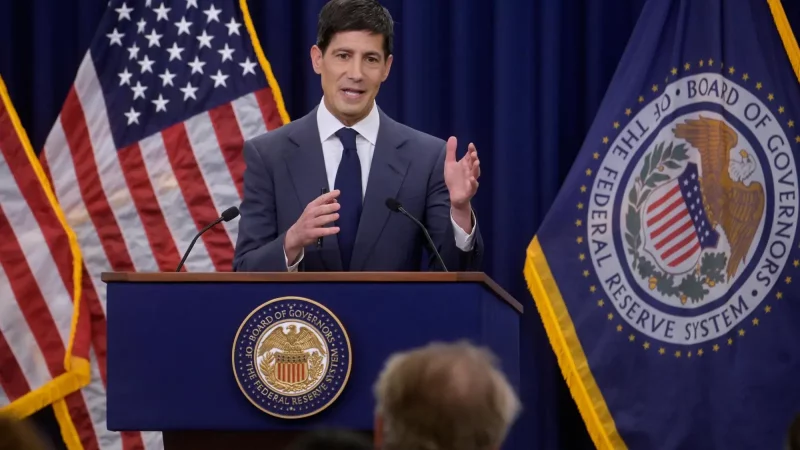
The Federal Reserve announced on Wednesday a 25 basis point increase in the federal funds rate, marking a decisive shift in its monetary policy stance as it seeks to address stubbornly high inflation. The Federal Open Market Committee (FOMC) concluded its September 2026 meeting by raising the target range for the benchmark interest rate to 3.75% to 4%, a move intended to accelerate the return of price growth to the central bank’s long-term 2% objective. This decision represents the first rate hike implemented by the Federal Reserve in over three years, effectively ending a cycle of monetary easing that had defined the previous two years.
The decision was reached through a unanimous 12 to 0 vote, signaling a strong consensus among policymakers that the current economic environment requires a more restrictive approach. In its accompanying statement, the FOMC noted that while economic activity has continued to expand at a solid pace, the persistence of inflation above the desired threshold necessitates proactive measures. The committee’s move was widely anticipated by financial markets, which had been pricing in the likelihood of a hike following a series of robust economic data releases throughout the late summer months.
Historical Context and the Shift in Monetary Policy
To understand the significance of Wednesday’s rate hike, it is essential to look back at the trajectory of U.S. monetary policy over the last several years. The Federal Reserve last raised interest rates in July 2023, during a period of aggressive tightening intended to combat the post-pandemic inflationary surge. At that time, the federal funds rate was pushed to a range of 5.25% to 5.50%, the highest level seen in two decades.
Following that peak, the central bank entered a period of stability, holding rates steady for over a year before initiating a series of cuts in September 2024. These reductions were aimed at achieving a "soft landing"—cooling inflation without triggering a significant recession. By the end of 2025, the Federal Reserve had successfully brought the target range down to 3.50% to 3.75%. However, the first half of 2026 presented new challenges. While the economy remained resilient, the downward trend of inflation stalled, hovering consistently above the 2% target. This stagnation prompted Wednesday’s reversal, as policymakers determined that the previous easing cycle may have reached its limit in the face of current domestic demand and global supply chain pressures.
Market Expectations and the CME FedWatch Data
Financial markets were well-prepared for the FOMC’s decision. In the days leading up to the announcement, the CME FedWatch Tool, a widely followed barometer of interest rate expectations based on 30-Day Fed Fund futures pricing, indicated an 88% probability of a 25 basis point increase. This high level of certainty suggested that the "shock value" of the hike was minimal, as institutional investors and retail traders had already adjusted their portfolios to reflect a higher-rate environment.
Beyond the immediate hike, market participants are now closely analyzing the probability of subsequent moves. Following the announcement, the CME FedWatch Tool showed a 54% probability that the FOMC would maintain the new 3.75% to 4% range during its October meeting. This suggests a divided sentiment among analysts regarding whether the September hike is a "one-off" adjustment or the beginning of a sustained tightening cycle. The uncertainty reflects broader concerns about the delicate balance the Fed must maintain between controlling inflation and ensuring that borrowing costs do not rise so quickly that they stifle economic growth.
Impact on Digital Assets and the Legislative Landscape
The cryptocurrency market experienced significant volatility in the lead-up to and immediate aftermath of the Fed’s decision. Prior to the announcement, Bitcoin (BTC) was trading near the $75,500 level, representing a decline of approximately 5% since the beginning of the week. This downward pressure was attributed not only to the anticipation of higher interest rates—which generally make non-yielding assets less attractive—but also to legislative setbacks in Washington D.C.
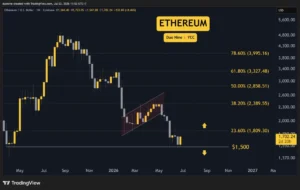
On Tuesday, the U.S. Senate failed to advance the CLARITY Act, a piece of legislation that had been viewed by many in the industry as a potential milestone for regulatory certainty in the digital asset space. The failure to move the bill forward weighed heavily on investor sentiment, leading to broader liquidations across the crypto ecosystem. Ethereum (ETH) saw a decline of more than 8% since Monday, trading near $2,380 before the Fed’s news broke. Solana (SOL) and XRP were also impacted, with Solana trading near $96 and XRP falling roughly 15% to settle around $1.26.
However, in a classic "buy the news" reaction, Bitcoin began to surge shortly after the official Federal Reserve release was published. The alpha cryptocurrency climbed above $76,000 as markets processed the fact that the rate hike was exactly in line with expectations. Other major digital assets followed suit, with Ethereum, Solana, and XRP each gaining more than 1% in the hours following the announcement. This recovery suggests that the market had already priced in the hawkish shift, and the removal of uncertainty provided a temporary relief rally for crypto investors.
Traditional Markets and Treasury Yield Performance
Traditional financial markets also showed signs of stress ahead of the FOMC’s decision. The 10-year Treasury yield, a critical benchmark for mortgage rates and corporate borrowing costs, climbed above 5% on Tuesday. This marked the highest level for the 10-year yield since 2007, reflecting investor concerns that interest rates would remain "higher for longer." Although the yield eased slightly to 4.95% on Wednesday, the psychological impact of the 5% threshold remained a focal point for Wall Street.
Equity markets felt the weight of rising yields throughout the month. The S&P 500 and the tech-heavy Nasdaq Composite were both down roughly 2% from their early September peaks. Higher interest rates typically pressure equity valuations by increasing the discount rate used to value future cash flows, particularly for growth-oriented technology companies.
Precious metals, often viewed as a hedge against inflation but sensitive to rising yields, also faced headwinds. Gold prices retreated by approximately 3.5% from their early September highs prior to the Fed’s announcement. Silver experienced a similar trend, falling around 4%. The logic behind these moves is rooted in the opportunity cost of holding metals; as Treasury yields rise, the relative appeal of non-interest-bearing assets like gold and silver diminishes.
Rationale: Economic Resilience vs. Inflationary Persistence
Despite the decision to raise rates, the Federal Reserve’s assessment of the U.S. economy was notably positive. Policymakers described economic activity as "expanding at a solid pace," highlighting several areas of strength that have allowed the economy to withstand higher borrowing costs.
- Domestic Spending: The Fed noted that consumer spending has remained resilient, supported by a stable labor market and cumulative wage gains over the past few years.
- Productivity and Investment: Productivity growth was described as strong, and capital investment by corporations was characterized as robust. These factors are critical because they suggest that the economy’s productive capacity is expanding, which can eventually help dampen inflationary pressures from the supply side.
- The Labor Market: Job gains have continued to keep pace with the growth of the workforce. The unemployment rate has remained relatively unchanged, hovering at levels that economists traditionally associate with full employment.
The central bank’s primary concern remains the "last mile" of the inflation fight. While the headline Consumer Price Index (CPI) has fallen significantly from its 2022 peaks, the path to 2% has proven non-linear. The FOMC’s statement emphasized that the policy action taken on Wednesday would "support a timelier return" to its target, suggesting that the committee is unwilling to risk a resurgence of inflation by remaining passive.
Future Outlook and Global Implications
The global financial community is now turning its attention to the Fed’s forward guidance. The central question is no longer whether the Fed will hike, but how long it will maintain these elevated levels. If inflation data for the remainder of the year shows a meaningful decline, the October meeting may see a pause. Conversely, if core inflation remains "sticky," particularly in the service sector and housing, additional increases cannot be ruled out.
The implications of a 4% federal funds rate extend far beyond the borders of the United States. As the Fed tightens, the U.S. Dollar often gains strength against other major currencies, which can increase the cost of dollar-denominated debt for emerging markets and influence the monetary policy decisions of other central banks, such as the European Central Bank (ECB) and the Bank of England.
Domestically, the 25 basis point hike will likely translate into higher costs for consumers. Credit card annual percentage rates (APRs), which are already at historic highs, are expected to tick upward, and the cooling of the housing market may accelerate as mortgage lenders adjust their rates in response to the Fed’s move.
In conclusion, Wednesday’s decision by the Federal Reserve marks a pivotal moment in the 2026 economic narrative. By prioritizing the 2% inflation target over the continuation of the previous easing cycle, the FOMC has signaled its commitment to price stability. While markets have shown resilience in the immediate aftermath, the long-term impact of this renewed tightening phase will depend on the trajectory of economic data in the coming months. For now, the era of falling rates has been put on hold, and the "higher for longer" mantra has returned to the forefront of the global financial discourse.