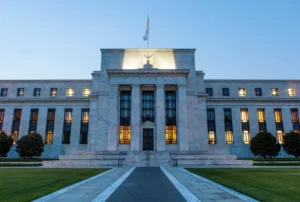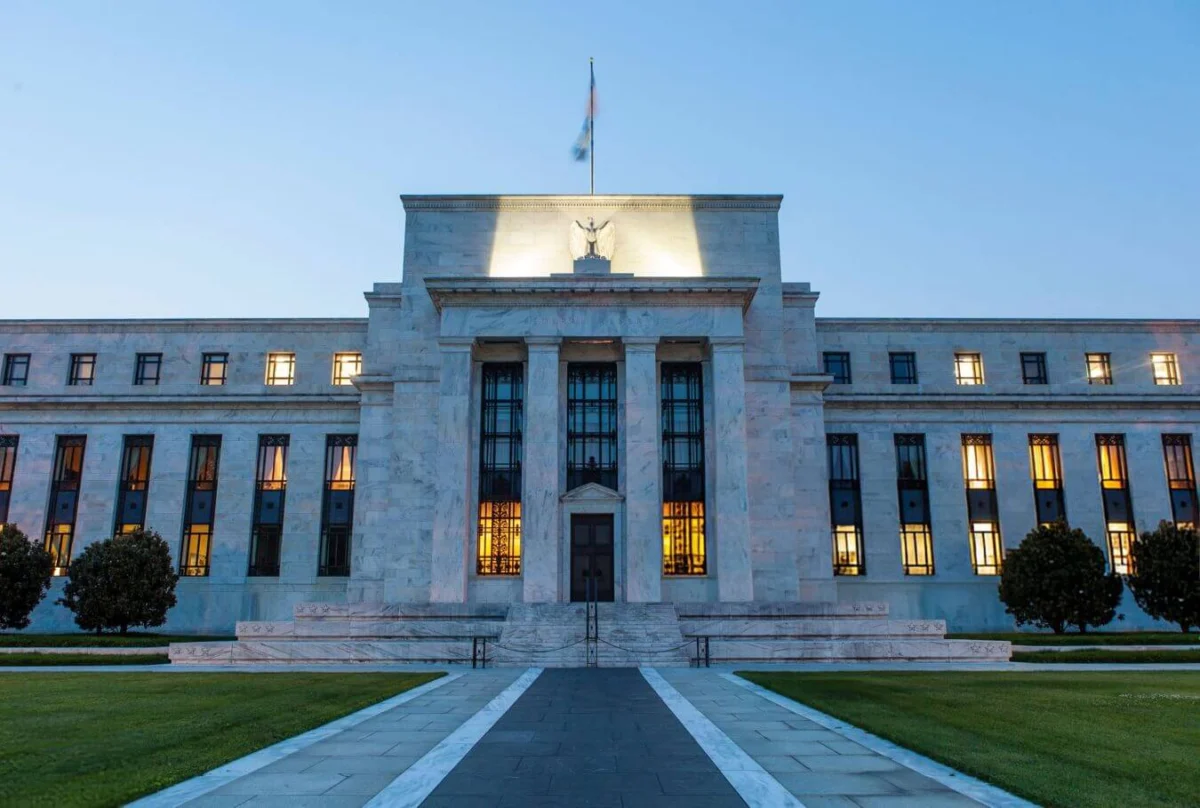
Washington D.C. – The Federal Reserve, the central bank of the United States, executed a pivotal quarter-percentage-point increase to its benchmark interest rate on Wednesday, September 16, 2026, marking its inaugural tightening action in over three years. This highly anticipated decision, which saw the federal funds rate climb to a target range of 3.75% to 4%, garnered unanimous support from all 12 voting members of the Federal Open Market Committee (FOMC). The move reflects the committee’s renewed commitment to taming stubbornly high inflation, which has remained above its 2% target for an extended period.
A Decisive Shift in Monetary Policy
Market participants had largely priced in the rate hike, with financial mechanisms indicating a greater than 90% probability of an adjustment ahead of the announcement. This widespread expectation underscored the consensus among economists and investors regarding the necessity of monetary tightening in the face of persistent price pressures. The 25-basis-point increase represents the first such action since July 2023, signaling a significant pivot in the central bank’s strategy after a prolonged period of maintaining rates unchanged throughout the earlier part of 2026. This shift gained momentum following Chair Kevin Warsh’s remarks at the influential Jackson Hole economic symposium in late August, where he hinted at the Fed’s readiness to resume its inflation-fighting mandate.
During his customary post-meeting press briefing, Chair Kevin Warsh articulated the committee’s rationale with conviction, emphasizing that "price pressures have persisted at unacceptable levels for an extended period." He underscored the FOMC’s unwavering requirement for "clear evidence that inflation was progressing toward the central bank’s 2% objective with clarity and adequate momentum." This resolute stance signals a departure from any lingering "transitory" inflation narratives that characterized early post-pandemic economic assessments, indicating a more aggressive posture against entrenched price growth.
Warsh delineated three primary considerations that collectively underpinned the unanimous decision: robust employment conditions, indicating a resilient labor market capable of absorbing tighter monetary policy; persistent inflationary pressures, necessitating intervention to prevent further embedding of high expectations; and escalating geopolitical instability in the Middle East, which has consistently contributed to elevated energy costs and broader supply chain disruptions. These elements, Warsh explained, converged to justify the decisive and unified action taken by the committee.
The Road to 3.75%-4%: A Chronology of Economic Pressures
The journey to the September 2026 rate hike is rooted in a complex interplay of post-pandemic economic recovery, supply-side shocks, and evolving geopolitical landscapes. Following the aggressive tightening cycle that commenced in 2022 and extended into 2023, which saw the federal funds rate reach its then-peak in July 2023, the Federal Reserve entered a period of observation. For much of 2024 and 2025, the committee maintained a watchful stance, allowing previous rate hikes to filter through the economy, assessing their impact on inflation and employment. During this period, while headline inflation showed some moderation, core inflation (which strips out volatile food and energy prices) often proved stickier, signaling underlying demand pressures.
By early 2026, despite a strong labor market characterized by low unemployment rates and consistent wage growth, inflation began to show renewed signs of acceleration. Several factors contributed to this resurgence. Global supply chains, still fragile from the pandemic and exacerbated by regional conflicts, struggled to keep pace with resilient consumer demand. Energy prices, particularly crude oil, experienced significant upward pressure due to heightened geopolitical tensions in the Middle East, specifically the protracted Iran conflict mentioned by Chair Warsh. This conflict not only directly impacted oil production and transit routes but also fueled uncertainty, pushing up commodity prices more broadly.
Furthermore, the robust investment in emerging technologies, particularly artificial intelligence (AI), began to exert its own inflationary pull. The burgeoning AI sector created intense demand for specialized computing hardware, advanced semiconductors, skilled labor, and significant energy consumption for data centers. This concentrated demand, in certain niche markets, contributed to upward price pressures and wage inflation, which Fed officials identified as a "possible new inflationary catalyst."
The critical turning point for the Fed’s policy stance in 2026 came in late August with the annual economic symposium in Jackson Hole, Wyoming. Chair Warsh’s address at the symposium served as a clear signal that the central bank was prepared to re-engage with tighter monetary policy if inflation did not show convincing signs of abatement. This communication effectively primed markets for the September rate hike, explaining the high probability of the move reflected in market pricing mechanisms. The unanimous vote further underscored the committee’s collective resolve to act decisively.
Anticipating Further Tightening and Long-Term Inflation Projections
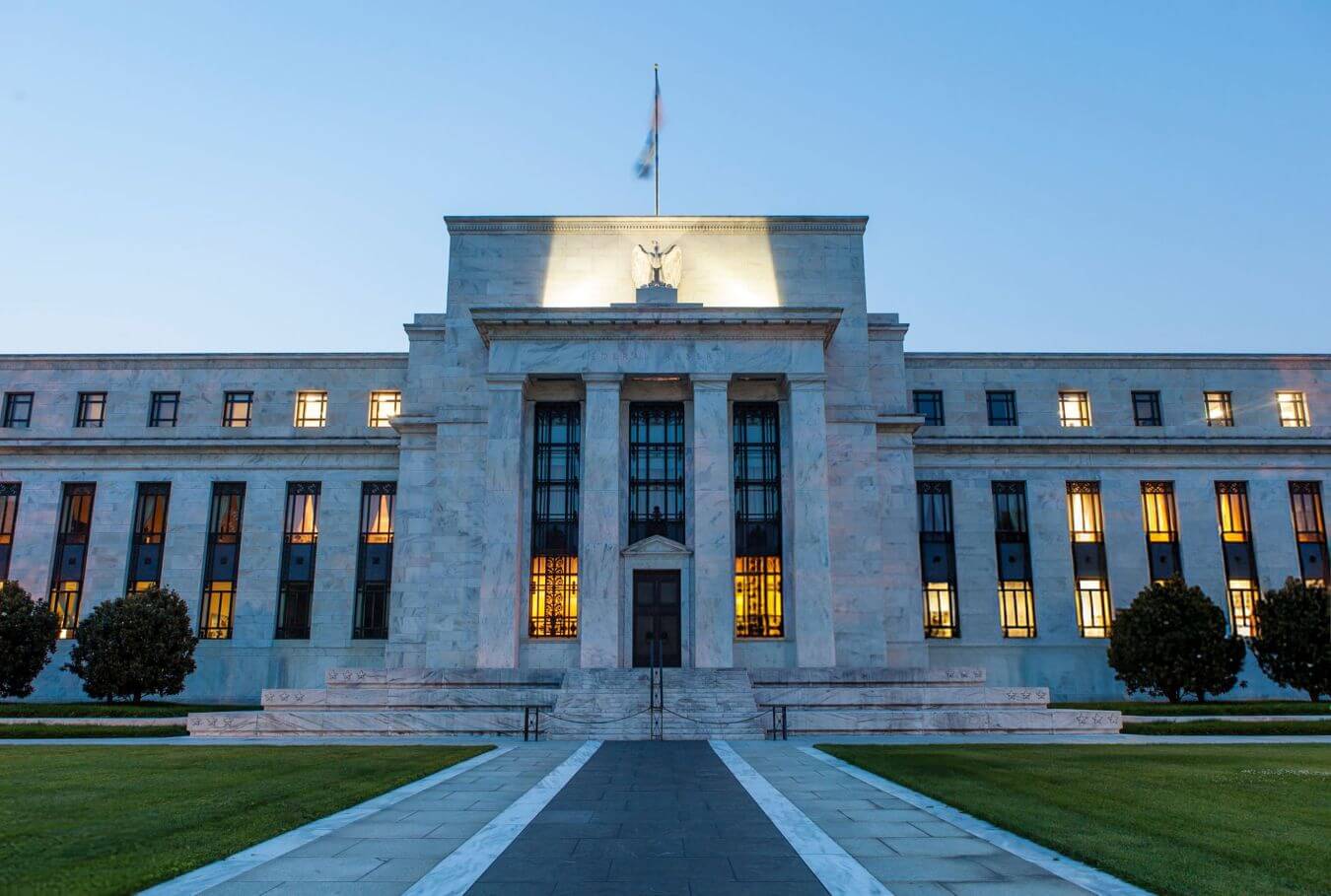
The September 2026 rate hike is unlikely to be an isolated event. Fresh economic forecasts, also released on Wednesday, painted a clear picture of the FOMC’s forward-looking strategy. A significant majority of policymakers – 16 out of 18 Fed officials – anticipate at least one additional rate increase before the year concludes. Furthermore, four officials indicated that two more hikes within the realm of possibility, suggesting a potential for the federal funds rate to reach 4.25% or even 4.5% by year-end. Only two members expressed a belief that the committee should pause after this singular adjustment, highlighting a strong consensus for continued tightening.
Looking beyond 2026, the forecasts suggest a plateauing of interest rates. No further rate increases are projected for subsequent years, indicating that the Fed believes the cumulative impact of these hikes will eventually bring inflation under control. The long-term outlook even includes projections for rate reductions, with one cut anticipated in 2028 and a minimum of one additional cut expected in 2029. This suggests a return to a more accommodative monetary policy environment once inflation is firmly anchored at the target.
However, the central bank also modestly elevated its inflation outlook for the near to medium term. Policymakers now project headline personal consumption expenditures (PCE), the Fed’s preferred inflation gauge, at 3.7% for 2026, and core PCE at 3.4%. Both figures represent a 0.1 percentage point upward revision from the June estimates, reflecting the persistent nature of price pressures. Crucially, the Fed does not anticipate achieving its 2% inflation objective until 2029, a somber acknowledgment of the protracted battle against elevated prices. This extended timeline underscores the committee’s recognition that bringing inflation back to target will require sustained effort and patience, potentially necessitating a longer period of restrictive monetary policy than initially hoped.
Financial Market Responses and Broader Economic Implications
The financial markets reacted to the Fed’s announcement with a nuanced response, reflecting a blend of anticipation and adjustment. The S&P 500, a key barometer of U.S. equity performance, posted gains following the policy announcement. This somewhat counterintuitive reaction, where equities rise despite higher borrowing costs, often indicates that markets had already fully discounted the hike and perceived the Fed’s clear communication as a reduction in uncertainty. It can also suggest investor confidence in the Fed’s ability to navigate a "soft landing" – bringing inflation down without triggering a severe recession.
Conversely, Treasury yields, which move inversely to bond prices, declined after the decision. This reaction typically signals investor approval of the Fed’s approach to combating inflation, as lower yields imply that investors believe future inflation will be contained, thus reducing the risk premium demanded for holding long-term government debt. A decrease in yields also suggests that while current policy is tighter, the market may be anticipating an eventual moderation in inflation and a subsequent easing cycle, albeit several years down the line.
The housing market, a sector highly sensitive to interest rate fluctuations, continued to experience upward pressure on borrowing costs. Mortgage borrowing rates have been advancing steadily in the lead-up to and immediately following the Fed’s decision. A 30-year fixed-rate mortgage reached 7.19%, climbing approximately 38 basis points since Chair Warsh’s Jackson Hole address in late August. This figure also represents a significant increase of more than a full percentage point compared to year-ago levels. Higher mortgage rates directly impact housing affordability, potentially cooling demand in the residential real estate market and slowing new construction. This could have broader implications for consumer spending and investment in housing-related sectors.
The cryptocurrency market, often characterized by its volatility, showed a remarkably subdued response. Bitcoin, the flagship digital asset, exhibited minimal movement after the announcement, hovering around $75,700. This lack of significant fluctuation indicated that traders and investors in the crypto space had already incorporated the anticipated rate hike into their valuations, suggesting a maturing market that is increasingly factoring in macroeconomic developments. The muted reaction might also reflect a broader investor perception that while higher rates impact speculative assets, Bitcoin’s long-term drivers and adoption trends remain intact, somewhat decoupled from immediate monetary policy shifts.
The Enduring Shadow of "Transitory" and New Inflationary Catalysts
The Fed’s current policy framework continues to be informed by the lessons learned from the "transitory" inflation narrative that emerged during the initial phases of the Covid-19 pandemic. At that time, many policymakers, including previous Fed leadership, viewed rising prices as temporary phenomena driven by supply chain disruptions and surging demand during reopening. However, price pressures proved more persistent, reaching four-decade peaks before the Fed was compelled to implement an aggressive series of tightening measures to restore stability. This historical context now underpins a more cautious and proactive approach to inflation, with Chair Warsh and the FOMC prioritizing clear evidence of inflation returning to target before considering any policy reversal.
Beyond the immediate concerns of energy costs fueled by geopolitical conflicts, officials have also identified expanding artificial intelligence investment as a potential new inflationary catalyst. The rapid growth of the AI sector, while promising for productivity and innovation, places immense demand on specific resources. This includes high-end semiconductors, specialized data centers requiring substantial energy inputs, and a limited pool of highly skilled AI professionals. The competition for these resources can drive up prices and wages in these critical areas, potentially spilling over into the broader economy and adding another layer of complexity to the Fed’s inflation-fighting efforts.
The cumulative effect of these factors – persistent demand, supply-side vulnerabilities, elevated energy costs, and new technological demand drivers – presents a formidable challenge for the central bank. Central bank officials are now closely monitoring whether this rate increase, combined with the potential for another one or two, will prove sufficient to restore inflation to target levels without unduly undermining economic expansion. The delicate balancing act of achieving price stability while preserving economic growth remains the Federal Reserve’s paramount objective, guiding its actions in this complex and evolving economic landscape. The coming months will be crucial in determining whether the Fed’s decisive pivot in September 2026 achieves its intended effect and steers the U.S. economy toward a path of sustainable price stability.