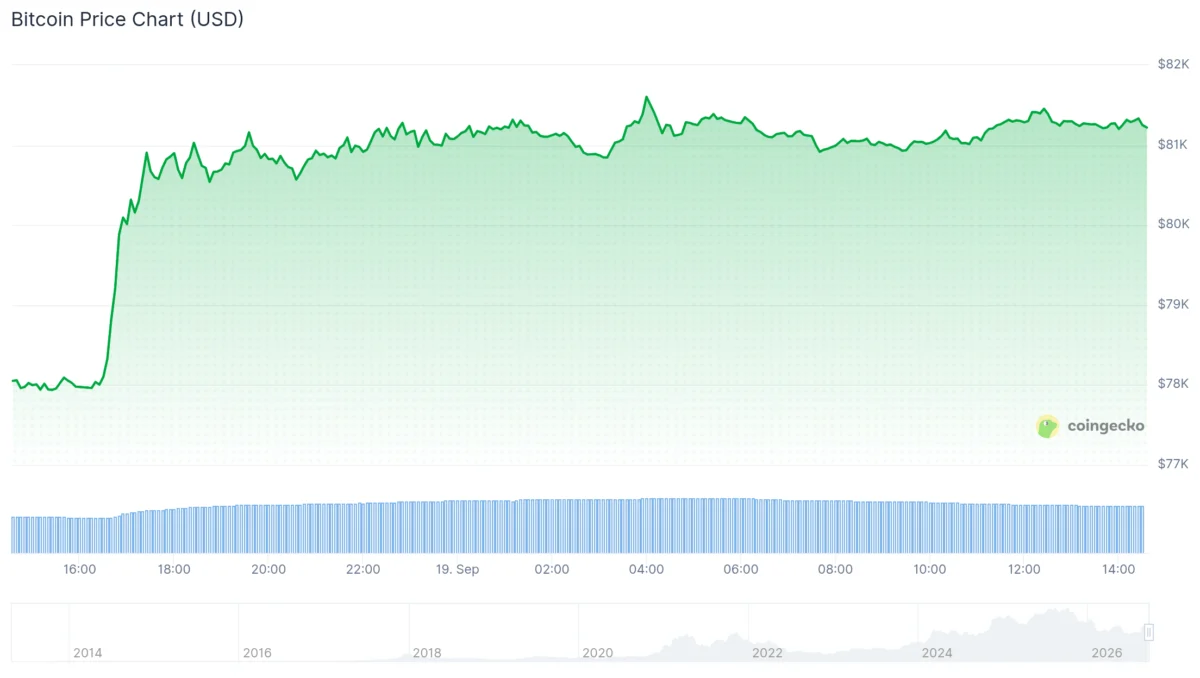
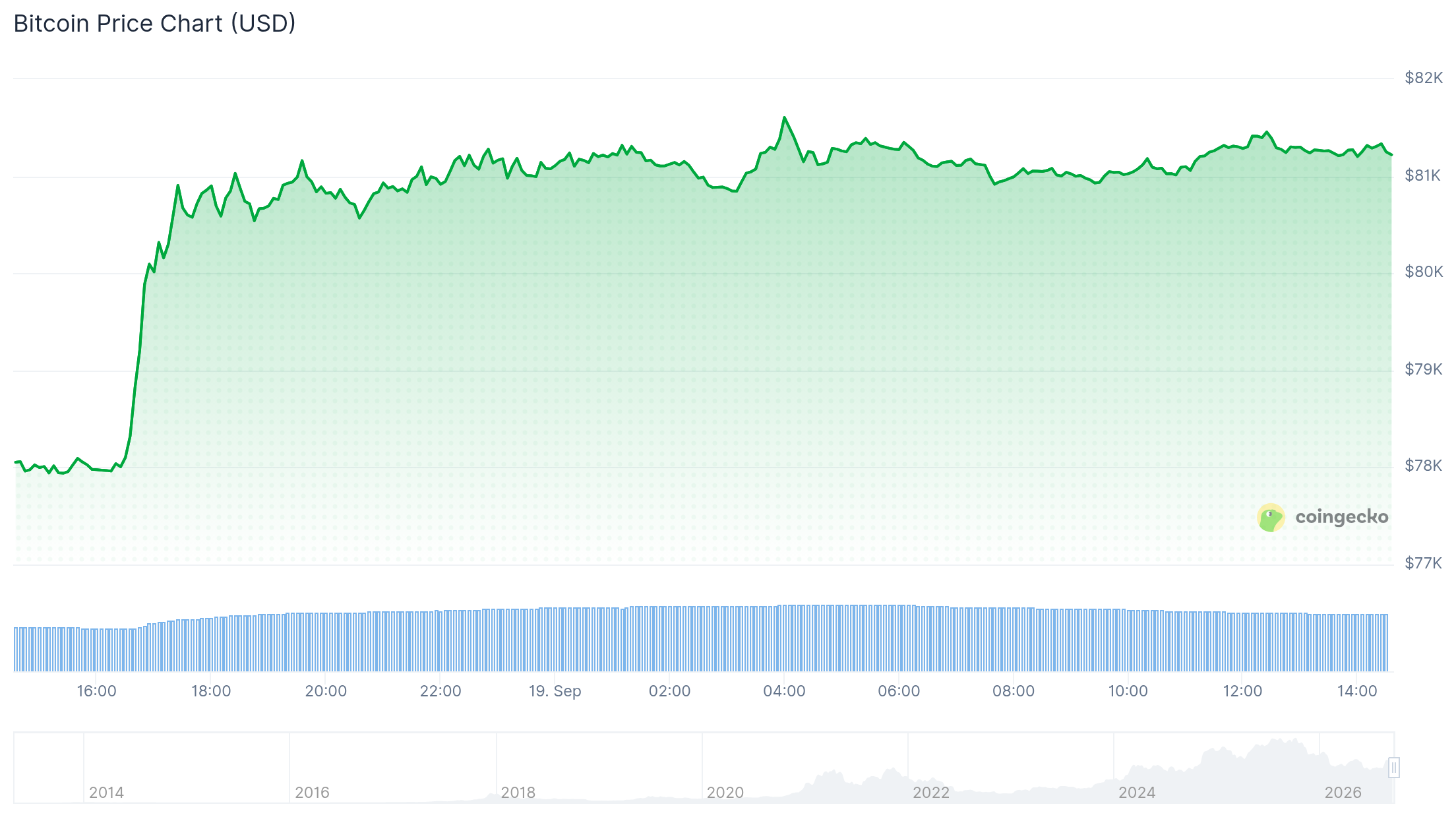
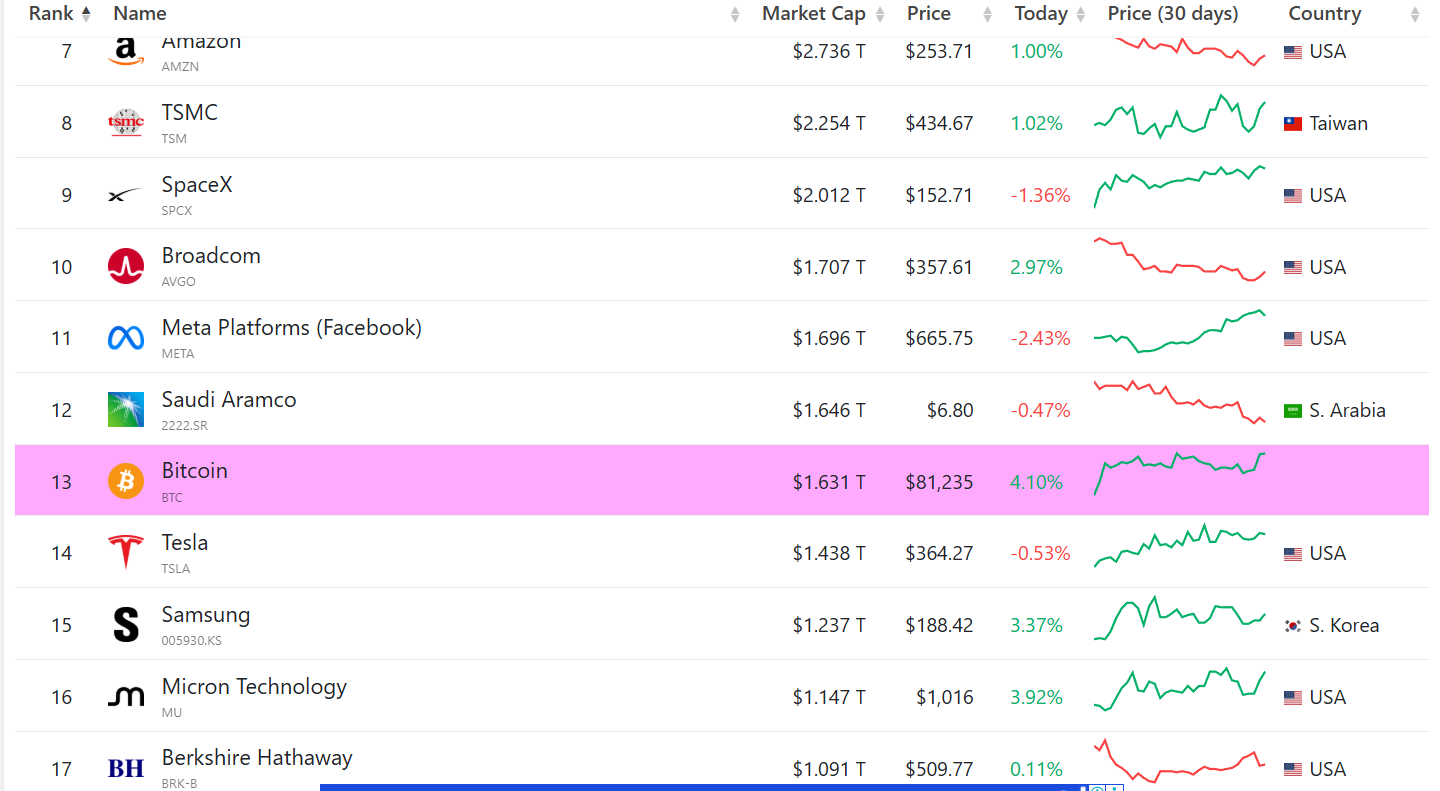
On September 19, 2026, Bitcoin achieved a significant milestone in global asset rankings, with its market capitalization reaching approximately $1.635 trillion. This valuation positioned the premier cryptocurrency above electric vehicle and energy giant Tesla, whose market capitalization stood at $1.438 trillion on the same day. The event marked a notable shift in the relative standing of a digital asset versus a prominent operating company, creating a substantial gap of $197 billion, or nearly 14%, between the two valuations. Bitcoin’s price surged approximately 4% to trade near $81,419, while Tesla shares experienced a slight decline of 0.5%, closing at $364.27.
According to data compiled by CompaniesMarketCap, Bitcoin ascended to the 13th position among the largest global assets by market capitalization, directly displacing Tesla, which fell to 14th place. This comparison, while indicative of scale, inherently measures the market value of disparate entities—a decentralized digital currency against a multinational corporation with tangible assets, revenue streams, and operational complexities. The dynamic nature of these valuations underscores the evolving landscape of global finance, where digital assets are increasingly asserting their presence alongside established corporate behemoths.
Dissecting Market Capitalization: A Tale of Two Valuations
The concept of market capitalization, while straightforward in calculation, carries nuanced implications when comparing an operating company to a digital asset. For Bitcoin, market capitalization is determined by multiplying its current price per coin by the total number of coins in circulating supply. This figure primarily reflects investor sentiment, perceived scarcity, adoption rates, and its role as a potential store of value or hedge against inflation. Factors such as macroeconomic trends, regulatory developments, technological advancements within the blockchain ecosystem, and the overall demand for digital assets heavily influence Bitcoin’s price and, consequently, its market cap. The finite supply cap of 21 million Bitcoins, combined with its programmatic halving events that reduce the rate of new coin issuance, contributes to its scarcity narrative, which is a key driver of its valuation.
In contrast, Tesla’s market capitalization is calculated by multiplying its current stock price by the total number of its outstanding shares. This valuation is a complex amalgamation of investor expectations regarding the company’s future profitability, revenue growth, technological innovation in electric vehicles, battery storage, and artificial intelligence, as well as its competitive landscape and operational efficiency. Tesla, as an operating entity, reports quarterly earnings, manages extensive manufacturing facilities, incurs debt, and generates cash flows from its diverse business segments, including automotive, energy generation and storage, and services. Its valuation is therefore tied to traditional financial metrics such such as earnings per share (EPS), price-to-earnings (P/E) ratios, and discounted cash flow (DCF) models, which are fundamentally different from the valuation drivers of a non-revenue-generating digital asset like Bitcoin. The comparison, therefore, serves more as a snapshot of capital allocation across different asset classes rather than a direct assessment of operational equivalence.

Volatility and Velocity: The Shifting Sands of Global Asset Rankings
The rapid ascent of Bitcoin’s market cap above Tesla on September 19, 2026, highlights the inherent volatility and swift movements characteristic of both cryptocurrency and equity markets. While Bitcoin’s 4% gain was a significant catalyst, Tesla’s modest 0.5% dip also contributed to widening the valuation gap. These contrasting daily movements underscore how quickly market rankings can fluctuate, especially in an environment where capital flows can shift rapidly between asset classes based on news, sentiment, and broader economic indicators. Bitcoin, trading continuously 24/7 across global exchanges, is susceptible to price discovery at all hours, whereas Tesla’s stock price is primarily determined during traditional stock market operating hours. This difference in trading dynamics can lead to more pronounced and immediate reactions in Bitcoin’s valuation.
Historically, Bitcoin has demonstrated periods of explosive growth, punctuated by significant corrections. Its journey from a niche digital experiment to a trillion-dollar asset has been marked by several instances where it has challenged or surpassed the market caps of major corporations, including Visa, Mastercard, and even Facebook (now Meta Platforms) during previous bull runs. These events typically ignite public and institutional debate about Bitcoin’s long-term viability and its role in the global financial system. The sensitivity of Bitcoin’s valuation is also profound; based on its circulating supply implied by this comparison, a mere $1,000 movement in Bitcoin’s price can alter its implied market value by approximately $20 billion. This level of responsiveness makes its position in global rankings highly dynamic and subject to continuous re-evaluation. Conversely, while Tesla’s valuation is also sensitive to share price movements, it is underpinned by tangible corporate performance and future growth projections, offering a different dimension of market stability and investor analysis.
Tesla’s Bitcoin Bet: A Corporate Treasury Strategy
Adding another layer of context to this comparison is Tesla’s own significant, albeit fluctuating, involvement with Bitcoin. Tesla made headlines in early 2021 when it announced a $1.5 billion purchase of Bitcoin for its corporate treasury, citing a desire for more flexibility to further diversify and maximize returns on its cash. This move, spearheaded by CEO Elon Musk, ignited a wave of corporate interest in Bitcoin as a treasury asset. However, Tesla later sold approximately 75% of its Bitcoin holdings by the end of 2022, converting them into fiat currency, a decision attributed to concerns over liquidity and overall market volatility.
Despite the partial divestment, Tesla has maintained a core position in Bitcoin. According to its second-quarter filing with the U.S. Securities and Exchange Commission (SEC) for the period ending June 30, 2026, Tesla reported holding 11,509 BTC. The filing listed a cost basis of $386 million for these holdings and a fair value of $674 million at the quarter’s end. As of September 19, 2026, with Bitcoin trading at $81,419, the value of Tesla’s 11,509 BTC holdings had appreciated to approximately $937 million. This estimate represents a substantial unrealized gain of roughly $551 million above the company’s disclosed acquisition cost, though specific accounting treatments for such gains can vary based on prevailing accounting standards.
It is crucial to note that while Tesla holds Bitcoin, its crypto assets represent a relatively small fraction of its overall market capitalization—approximately 0.07% at the time of the comparison. This means that while Tesla’s foray into Bitcoin provided significant symbolic support for the cryptocurrency, its own valuation is overwhelmingly driven by its core automotive, energy, and software businesses, rather than its digital asset portfolio. Furthermore, another entity linked to Elon Musk, SpaceX, also holds a notable amount of Bitcoin. BitcoinTreasuries.net reported that SpaceX held 18,712 BTC on September 19, 2026. Combined, the holdings attributed to Tesla and SpaceX totaled 30,221 BTC, valued at approximately $2.46 billion at Bitcoin’s price of $81,419. While these holdings demonstrate a shared belief in Bitcoin’s potential across Musk’s enterprises, the assets are held separately by each company and do not constitute personal ownership by Musk.
Broader Market Implications and the Evolving Digital Landscape
Bitcoin’s surpassing of Tesla in market capitalization carries significant broader implications for both the cryptocurrency ecosystem and traditional finance. For Bitcoin, this achievement further solidifies its position as a major global asset, reinforcing narratives that position it as "digital gold" and a legitimate store of value. Such milestones tend to attract increased attention from institutional investors, who often seek validated assets with substantial market liquidity. The growing maturity of the cryptocurrency market, evidenced by the development of regulated investment products like spot Bitcoin Exchange-Traded Funds (ETFs) in various jurisdictions, contributes to its perceived legitimacy and accessibility for a wider range of investors. This event serves as a powerful symbol of the ongoing mainstreaming of cryptocurrencies, challenging conventional views on asset valuation and wealth accumulation.
For Tesla, while its market capitalization dip was minor, the event underscores the increasing competitive pressures within the electric vehicle and technology sectors. While still a dominant player, Tesla faces intensifying competition from legacy automakers accelerating their EV strategies and emerging tech companies. Investor sentiment towards growth stocks can be fickle, and any perceived slowdown in innovation or market dominance can lead to shifts in valuation. However, Tesla’s long-term value remains intrinsically linked to its ability to execute on its ambitious plans in autonomous driving, battery technology, and sustainable energy solutions.
More broadly, this comparison highlights the ongoing convergence of traditional finance and the nascent digital asset space. Market analysts frequently point to such crossovers as symbolic milestones, indicating a growing acceptance and integration of cryptocurrencies into the global financial fabric. It prompts a re-evaluation of what constitutes a "valuable asset" in the 21st century, moving beyond tangible factories and quarterly reports to encompass decentralized networks and cryptographic scarcity. The event suggests a future where digital assets are increasingly considered alongside traditional equities, commodities, and currencies in comprehensive portfolio allocations and global economic assessments. Regulatory bodies are also paying closer attention, with such events potentially catalyzing further discussions on appropriate frameworks for digital asset classification, taxation, and oversight.
The Future Trajectory: A Continuous Dance of Innovation and Valuation
The September 19, 2026, market data, which saw Bitcoin’s market capitalization exceed that of Tesla, represents more than just a momentary fluctuation in asset prices. It is a testament to the persistent growth and increasing influence of digital assets in the global financial arena. While the comparison between a decentralized digital currency and an operating multinational corporation requires careful contextualization, it undeniably places both on a shared stage of global economic significance.
Market rankings, by their very nature, are fluid and subject to continuous shifts driven by a myriad of factors—technological advancements, economic policies, geopolitical events, and evolving investor sentiment. Both Bitcoin and Tesla operate in highly dynamic environments characterized by innovation and disruption. Bitcoin’s trajectory will continue to be shaped by its adoption as a transactional currency and store of value, its technological resilience, and the evolving regulatory landscape. Tesla’s future, conversely, hinges on its ability to maintain its competitive edge in electric vehicles, expand its energy solutions, and innovate in artificial intelligence and robotics.
Ultimately, this milestone serves as a powerful reminder of the transformative forces at play in finance and technology. As the global economy continues to evolve, the interplay between groundbreaking digital assets and innovative corporate entities will undoubtedly shape the future of wealth creation and capital allocation, prompting ongoing dialogue about how value is perceived, measured, and exchanged in an increasingly interconnected world.