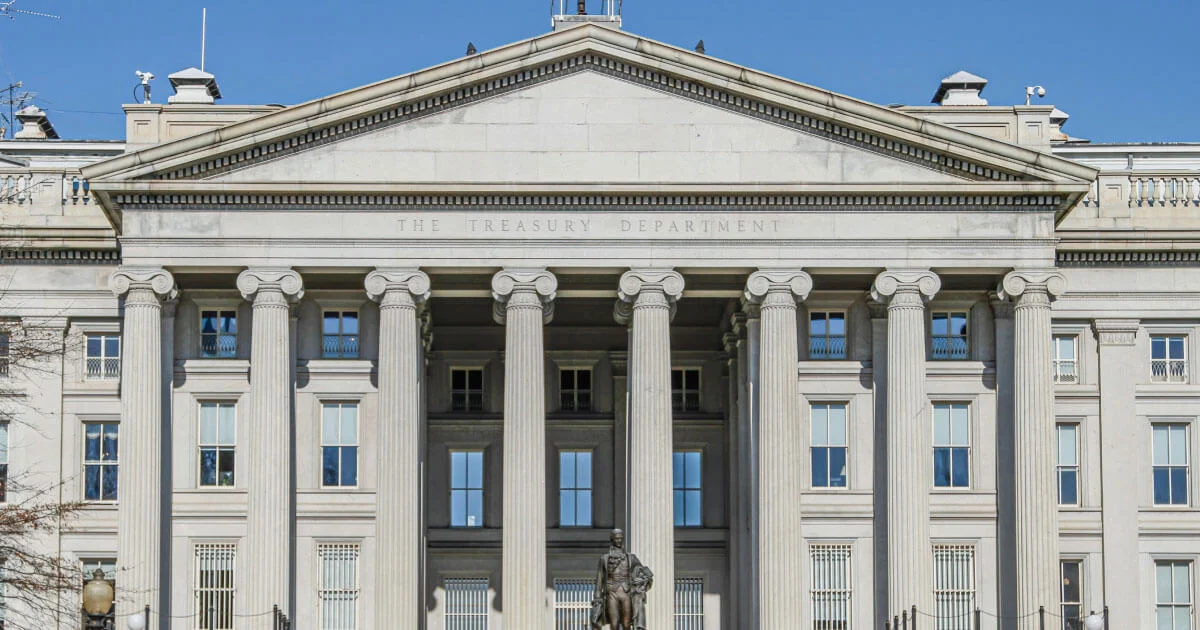
On August 24, 2026, the United States Department of the Treasury officially initiated a comprehensive and aggressive economic campaign titled Operation Economic Outcast, aimed at dismantling the financial infrastructure supporting the Islamic Republic of Iran. Treasury Secretary Scott Bessent, characterizing the initiative as an “economic D-Day,” signaled a definitive shift in U.S. strategy, focusing specifically on the digital asset corridors that have increasingly become the lifeblood of the Iranian regime and the Islamic Revolutionary Guard Corps (IRGC). This multi-faceted operation involves the Department of Justice (DOJ), the Federal Bureau of Investigation (FBI), and the Office of Foreign Assets Control (OFAC), representing a whole-of-government effort to isolate Tehran from the global financial system.
The centerpiece of this operation is a groundbreaking sectoral determination under Executive Order 13902, which for the first time designates Iran’s digital assets sector as a sanctioned industry. This legal maneuver grants the U.S. government the authority to impose secondary sanctions on any foreign individual or entity determined to be operating within, or providing material support to, Iran’s cryptocurrency ecosystem. The implications are profound, as the authority no longer requires a direct link to terrorism or weapons proliferation to trigger sanctions; the mere participation in Iran’s digital economy is now sufficient for blacklisting.
The Strategic Shift: Digital Assets as a Primary Sanctions Target
For over a decade, Iran has utilized cryptocurrency to bypass traditional banking restrictions, using decentralized ledgers to settle international oil contracts, fund regional proxies, and procure sensitive technologies. While OFAC has previously targeted specific Iranian crypto exchanges and individual wallet addresses, Operation Economic Outcast represents a systemic escalation. By designating the entire digital assets sector, the U.S. Treasury has created a legal "tripwire" for global financial institutions, cryptocurrency exchanges, over-the-counter (OTC) desks, and blockchain infrastructure providers.
The sectoral determination under E.O. 13902 allows the U.S. to target the "enablers"—foreign businesses that might not be Iranian but facilitate Iranian crypto traffic. This creates a high-stakes environment for Virtual Asset Service Providers (VASPs) in jurisdictions like the United Arab Emirates, Turkey, and Southeast Asia. Any exchange that knowingly processes transactions originating from Iranian digital asset actors now risks losing access to the U.S. financial system, a penalty that effectively serves as a corporate death sentence for international firms.
According to data released alongside the Treasury’s announcement, the IRGC’s influence over the Iranian crypto economy has grown exponentially. Analysis from blockchain intelligence firms indicates that IRGC-associated addresses accounted for more than 50% of the total value received by the Iranian crypto economy in the final quarter of 2025. Total crypto volumes tied to the regime surpassed $3 billion in 2025 alone, illustrating the scale of the challenge facing U.S. regulators.
Targeting the Cyber-Espionage Apparatus: MOIS and the Mabna Institute
Operation Economic Outcast also focuses heavily on the intersection of state-sponsored cybercrime and illicit finance. OFAC has sanctioned a high-profile group within the Ministry of Intelligence and Security (MOIS), Iran’s primary intelligence agency. This group has been implicated in a series of aggressive cyberattacks against U.S. critical infrastructure, government offices, and private corporations.

The Treasury identified several key individuals leading these efforts: Behzad Mesri, Keyvan Fayyaz Ghareh Blagh, and Arman Kahzadian. These actors are allegedly part of a larger contingent linked to the Mabna Institute, a notorious Iranian hacking-for-hire organization. A DOJ superseding indictment unsealed on August 18, 2026, charged 17 individuals connected to this network with a variety of cybercrimes.
The intelligence revealed a complex picture of state-directed activity blended with personal profit-seeking. For instance, Behzad Mesri, a co-leader of the group, was previously indicted for his role in the 2017 hack of HBO, where he attempted to extort the media giant for $6 million in Bitcoin. The new designations highlight that these actors continue to operate with impunity within Iran. Keyvan Fayyaz Ghareh Blagh was found to be receiving payments from Russian-speaking Initial Access Brokers (IABs), suggesting a collaborative relationship between Iranian state actors and the broader cybercriminal underground. Blagh allegedly resold access gained through MOIS-directed intrusions to other criminals, pocketing the profits in Bitcoin.
Furthermore, blockchain forensics identified Blagh making deposits to "bulletproof" hosting providers—services that ignore take-down requests and law enforcement inquiries—thereby facilitating ongoing malicious cyber activity. One of the sanctioned addresses was directly linked to a ransom payment received by Blagh, confirming his active participation in ransomware campaigns.
Disrupting the Shadow Fleet: The Case of Ivan Obukhov
Beyond cyber-espionage, the Treasury is moving to close the loop on Iran’s oil-for-crypto pipeline. A major target in this wave of sanctions is Ivan Obukhov, a UAE-based Ukrainian national. Obukhov has been identified as a critical broker for the "shadow fleet"—the aging, under-insured tankers used by Iran to transport oil to international markets in defiance of sanctions.
Since 2023, Obukhov has reportedly processed more than $100 million in cryptocurrency payments to facilitate oil sales on behalf of the IRGC-Qods Force (IRGC-QF). Obukhov’s operations were highly sophisticated, involving coordination with other shadow fleet brokers such as Mohammad Ahmed Suhil Fattouh, a Syrian national known as “Captain Hamzah.” Together, they managed the purchase of vessels and the laundering of proceeds through various crypto-enabled payment rails.
The use of cryptocurrency in oil sales allows the IRGC to bypass the SWIFT banking network and avoid the scrutiny of traditional financial compliance departments. By targeting brokers like Obukhov, the U.S. aims to make the "shadow fleet" operation prohibitively expensive and logistically difficult.
Chronology of Escalation: The Path to Operation Economic Outcast
The launch of Operation Economic Outcast is the culmination of several years of heightening tensions and evolving tactics:

- 2017: Behzad Mesri orchestrates the HBO hack, signaling Iran’s intent to use crypto-extortion against U.S. interests.
- 2018-2022: Following the U.S. withdrawal from the JCPOA, Iran ramps up its use of digital assets for sanctions evasion, establishing state-authorized mining farms.
- 2024: U.S. intelligence notes a surge in IRGC-linked crypto transactions, moving from simple peer-to-peer transfers to complex decentralized finance (DeFi) protocols.
- August 18, 2026: The DOJ unseals a massive indictment against 17 Iranian cyber actors, setting the stage for Treasury action.
- August 24, 2026: Secretary Scott Bessent announces Operation Economic Outcast, introducing the sectoral determination for digital assets.
Official Reactions and Global Implications
Treasury Secretary Scott Bessent emphasized the necessity of these measures during a press briefing at the Treasury Building. "We are no longer playing a game of whack-a-mole with individual wallets," Bessent stated. "Operation Economic Outcast is a structural assault on the financial architecture of the Iranian regime. If you choose to provide the digital plumbing for the IRGC, you will find yourself disconnected from the American economy."
The FBI also issued a statement through Director Christopher Wray, noting that the coordination between the FBI’s cyber investigations and the Treasury’s financial sanctions has never been tighter. "Our message to the hackers in Tehran is clear: we see your wallets, we see your infrastructure, and we will use every tool at our disposal to stop you," Wray said.
In Tehran, the Ministry of Foreign Affairs condemned the move, calling it "economic terrorism" and a violation of international law. However, market analysts suggest that the new sectoral determination will have a significant "chilling effect" on the global crypto industry. Major exchanges are expected to implement more rigorous geographic blocking and enhanced "Know Your Transaction" (KYT) protocols to ensure they do not inadvertently process "Iran-nexus" funds.
Impact on Global Compliance and the Crypto Industry
The introduction of secondary sanctions risk for the digital asset sector represents a paradigm shift for compliance teams worldwide. Previously, a crypto exchange might only be concerned if they were transacting directly with a designated person on the SDN (Specially Designated Nationals) list. Now, they must evaluate whether their services are "supporting" the Iranian digital asset sector at large.
Compliance experts recommend several immediate steps for financial institutions and VASPs:
- Enhanced Due Diligence: Reviewing all counterparties with links to jurisdictions frequently used for Iranian oil trade, such as the UAE, Turkey, and certain Southeast Asian hubs.
- Blockchain Analytics: Integrating advanced forensic tools to identify "hops" between sanctioned Iranian addresses and exchange wallets.
- Sectoral Risk Assessment: Updating internal risk models to account for the new sectoral determination under E.O. 13902.
The long-term impact of Operation Economic Outcast will likely be measured by the degree to which it forces Iranian illicit activity into even more obscure and expensive channels. By making the digital asset sector a "no-go zone" for legitimate global businesses, the U.S. Treasury is effectively attempting to turn Iran’s crypto lifeline into a financial tether, restricting the regime’s ability to fund its operations at home and abroad. As the operation unfolds, the international community will be watching closely to see if this "Economic D-Day" succeeds in finally severing the financial ties of the Islamic Republic.