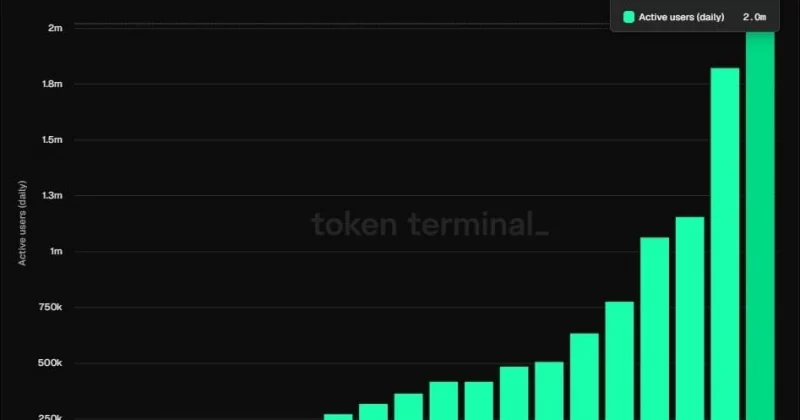
Tron has achieved a significant milestone, surpassing the 4 million daily active user (DAU) threshold and outranking major blockchain networks, including Solana, to claim the top position. This remarkable growth is not fueled by the speculative fervor of decentralized finance (DeFi) or the booming non-fungible token (NFT) market. Instead, the primary engine powering this surge is the widespread adoption and utility of stablecoins, with Tether’s USDT taking center stage on the Tron network.
The Unstoppable Momentum of Stablecoin Transactions
The trajectory of Tron’s daily active users has been nothing short of impressive. In the fourth quarter of 2025, the network consistently averaged around 2.8 million DAU, placing it in close contention with Solana’s 2.9 million users at the time. However, by February 2026, Tron had already begun to accelerate, reaching approximately 3.2 million DAU. The latest figures confirm a dramatic expansion, with the network now comfortably clearing the 4 million DAU mark. This sustained growth highlights a fundamental shift in how users are engaging with blockchain technology, prioritizing utility over speculative ventures.
The sheer volume of stablecoin activity on Tron is a testament to its robust infrastructure and user appeal. USDT transfer volumes on the Tron network frequently exceed an astounding $20 billion on a daily basis. This figure underscores the network’s role as a critical conduit for global financial transactions. As of May 2025, the circulating supply of USDT on Tron had already surpassed $75 billion, representing a substantial portion, more than half, of Tether’s entire circulating supply. This concentration of USDT liquidity on Tron positions it as a de facto hub for stablecoin-based transactions.
Beyond stablecoins, Tron’s overall transactional capacity remains exceptionally high. The network processes an average of over 8 million daily transactions, a figure that dwarfs many competitors. This high throughput is complemented by an ever-expanding user base, with over 306 million total user accounts amassed since its inception. These metrics collectively paint a picture of a network that has successfully scaled to accommodate massive transaction volumes and a burgeoning global user base.
Why Stablecoins Are Outpacing Speculation in User Acquisition
The genesis of Tron in 2017, founded by the prominent figure Justin Sun, was marked by a clear vision: to build a blockchain network capable of high throughput and extremely low transaction fees. The mainnet officially launched in 2018, and from its early stages, the architecture was optimized for efficiency and accessibility. This foundational design choice has proven to be a critical differentiator, especially in an era where transaction costs can often be a significant barrier to entry for everyday users and businesses.
The emphasis on low fees and high transaction speeds has made Tron an attractive platform for a wide array of use cases, but it is the stablecoin ecosystem that has truly unlocked its mass adoption potential. Unlike the volatile nature of cryptocurrencies like Bitcoin or Ethereum, stablecoins offer price stability, pegged to fiat currencies like the US dollar. This stability is crucial for several key financial activities:
- Remittances and Cross-Border Payments: For individuals and businesses looking to send money across international borders, stablecoins on Tron offer a fast, cheap, and reliable alternative to traditional banking systems. The ability to move large sums with minimal fees and swift settlement times makes it an ideal solution for global commerce.
- Merchant Services and Payments: Businesses can leverage Tron’s stablecoin capabilities to accept payments from a global customer base without the inherent risks associated with price volatility. This facilitates easier integration into e-commerce platforms and point-of-sale systems.
- DeFi Accessibility: While DeFi speculation might not be the primary driver, stablecoins are fundamental building blocks for many DeFi applications. Users can deposit stablecoins into lending protocols, liquidity pools, and yield farming strategies, earning passive income with reduced risk compared to volatile assets. Tron’s low fees make these DeFi interactions economically viable even for smaller amounts.
- Store of Value and Hedging: In regions experiencing high inflation or currency devaluation, stablecoins can serve as a more accessible and liquid store of value than traditional assets, especially for those with limited access to international banking.
The Tron network’s technical specifications—its Delegated Proof-of-Stake (DPoS) consensus mechanism, for instance—are engineered to facilitate this high volume of activity. DPoS allows for rapid block production and confirmation, contributing to the low latency and cost-effectiveness that users experience. This underlying infrastructure directly supports the utility-driven growth driven by stablecoins.
Implications for Investors and the Tron Ecosystem
The current success of Tron, heavily reliant on stablecoin activity, presents a compelling case for investors, but it also introduces a significant risk factor. The network’s transaction volume is intrinsically linked to global remittance flows and cross-border commerce, establishing a baseline level of activity that is less susceptible to the speculative whims of the broader crypto market. The native token, TRX, plays a crucial role in this ecosystem. It is required to pay for transaction fees and is also essential for participating in the network’s governance, allowing token holders to vote on proposals and influence the future development of Tron. This utility-driven demand for TRX can provide a stabilizing influence on its price and further cement the network’s value proposition.
However, the overwhelming dependence on a single asset, USDT, introduces a critical vulnerability. This concentration risk means that any significant disruption to Tether’s stability or market position could have existential consequences for Tron’s user growth and overall activity. Potential threats include:
- Regulatory Scrutiny: Increased regulatory action against Tether or stablecoins in general could lead to restrictions on their issuance, trading, or usability, directly impacting Tron’s primary use case.
- Competition from Other Stablecoins: While USDT dominates on Tron, other stablecoins like USD Coin (USDC) are also significant players in the broader market. If USDC or another stablecoin were to gain substantial traction on the Tron network, it could dilute USDT’s dominance and potentially shift user preferences, impacting the current growth narrative.
- Technical Vulnerabilities or Exploits: Although unlikely, any major exploit or technical issue affecting USDT’s peg or redeemability could have catastrophic repercussions for the Tron network, which has built its success on the reliability of this stablecoin.
From an investment perspective, the current situation offers a dual outlook. On one hand, the strong utility and consistent transaction volumes driven by stablecoins suggest a robust and sustainable growth model, less prone to the boom-and-bust cycles often seen in speculative crypto markets. This can translate into a more predictable demand for TRX, supporting its long-term value. On the other hand, the concentration risk cannot be ignored. Investors should carefully monitor the regulatory landscape surrounding stablecoins and the competitive dynamics within the stablecoin market. The future success of Tron will likely depend on its ability to maintain USDT’s dominance while potentially diversifying its utility-driven growth drivers and fostering a more resilient ecosystem.
A Timeline of Tron’s Ascent
The journey of Tron from its inception to its current leading position is a story of strategic development and market adaptation.
- 2017: Justin Sun founds Tron with the ambitious goal of decentralizing the internet.
- 2018: Tron’s mainnet officially launches, laying the technical foundation for its high-throughput, low-fee architecture. Early development focuses on building an efficient blockchain capable of handling significant transaction volumes.
- Late 2024 – Early 2025: Tron begins to show significant growth in daily active users, consistently hovering around the 2.8 million mark. This period sees Solana as a close competitor for the top spot among major blockchain networks.
- February 2026: Tron experiences a notable surge in DAU, climbing to approximately 3.2 million users, indicating accelerating adoption.
- Mid-2025 (Reported): USDT’s circulating supply on Tron surpasses $75 billion, signifying its overwhelming dominance as the preferred stablecoin on the network and accounting for over half of Tether’s global supply. Daily USDT transfer volumes frequently exceed $20 billion.
- Present: Tron officially crosses the 4 million daily active user threshold, solidifying its position as the leading blockchain network by this metric, largely propelled by the utility of stablecoins. The network also reports over 8 million daily transactions and a cumulative user base exceeding 306 million accounts.
This chronology illustrates a period of sustained, strategic growth, culminating in a significant leadership position driven by a clear, utility-focused adoption of stablecoins.
Broader Impact and Future Outlook
Tron’s achievement of surpassing Solana and leading in daily active users has significant implications for the broader blockchain industry. It challenges the prevailing narrative that user growth is primarily driven by speculative trading in DeFi and NFTs. Instead, Tron demonstrates the power of providing a stable, cost-effective, and highly functional platform for essential financial services.
The network’s success highlights the critical role of stablecoins as bridges between traditional finance and the decentralized world. As global economies continue to grapple with inflation and currency volatility, the demand for stable, accessible digital assets is likely to increase. Tron, with its established infrastructure and massive user base, is well-positioned to capture a significant share of this growing market.
Looking ahead, Tron’s continued success will hinge on its ability to maintain its competitive edge. This includes:
- Ensuring the stability and reliability of USDT on its network: Proactive engagement with regulatory bodies and continuous security audits will be paramount.
- Fostering innovation within its ecosystem: While stablecoins are the current driver, Tron can explore expanding its utility into other areas, such as gaming, decentralized applications (dApps), and enterprise solutions.
- Diversifying its user base: While stablecoin users are a strong foundation, attracting a wider range of developers and users with diverse use cases will contribute to long-term resilience.
- Strengthening TRX’s utility: Continuously enhancing the governance and fee-paying mechanisms for TRX will ensure its continued relevance and demand within the ecosystem.
Tron’s current dominance is a powerful testament to the effectiveness of a utility-first approach in blockchain adoption. By focusing on providing an efficient and cost-effective platform for stablecoin transactions, Tron has not only attracted millions of users but has also redefined the metrics for success in the competitive blockchain landscape. The coming years will reveal whether this stablecoin-powered growth can be sustained and expanded upon.