


The rapid advancement of artificial intelligence is fundamentally altering the landscape of digital privacy, creating unprecedented challenges for the anonymity of blockchain transactions. According to a recent report from Grayscale Research, the integration of AI tools into financial surveillance systems is significantly increasing the risk of de-anonymization on transparent public ledgers. As AI becomes more adept at linking disparate data points—combining on-chain transaction history with off-chain personal information—the need for robust privacy-preserving technologies has moved from a niche interest to a central pillar of the digital asset ecosystem. This shift has prompted analysts to revisit the utility of privacy-centric cryptocurrencies, specifically Zcash (ZEC), which utilizes advanced cryptography to shield user activity from the prying eyes of both automated surveillance and manual forensic analysis.
The Evolution of Privacy: Three Waves of Technological Disruption
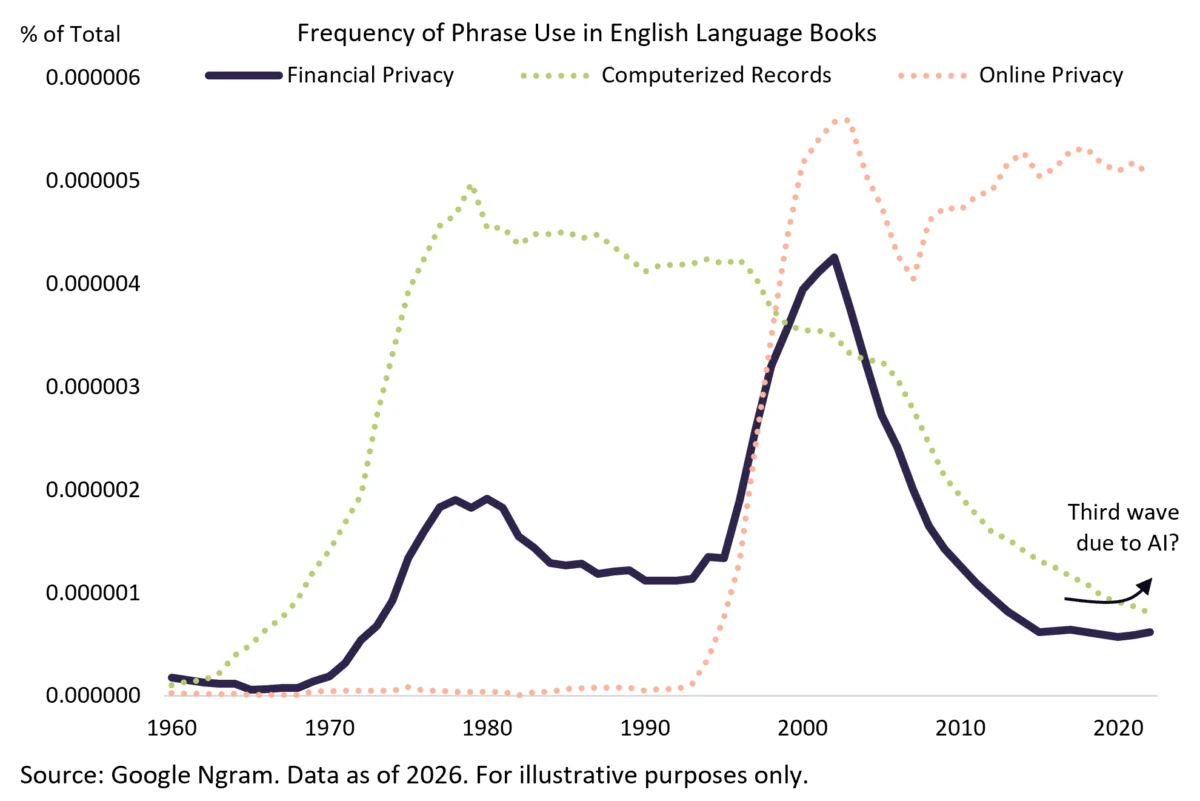
The current anxiety surrounding AI and financial surveillance is not an isolated phenomenon but rather the third major wave in a long-running historical tension between technological progress and the right to privacy. Grayscale Research identifies these waves as pivotal moments where the nature of personal information changed forever.
The first wave occurred in the 1970s, characterized by the initial digitization of financial records. Before this era, financial data was largely stored in physical ledgers, making large-scale surveillance labor-intensive and inefficient. The shift to digital databases allowed for the rapid searching and categorization of financial lives, leading to the creation of the Bank Secrecy Act and other regulatory frameworks designed to monitor movement of capital.
The second wave arrived in the 1990s with the commercialization of the internet. This era saw the birth of the "surveillance capitalism" model, where personal data became the primary currency for digital services. While the internet democratized information, it also created a permanent, searchable record of human interaction, leading to the rise of the Cypherpunk movement and early attempts at digital privacy tools, such as PGP (Pretty Good Privacy) encryption.
The third wave, currently unfolding, is driven by the convergence of blockchain transparency and artificial intelligence. While blockchains like Bitcoin provide a decentralized alternative to traditional banking, their inherent transparency is now being exploited by AI-driven analytics. Modern AI models can process billions of data points at speeds impossible for human analysts, identifying patterns, "fingerprinting" user behavior, and labeling addresses with high degrees of accuracy. This evolution has effectively turned the transparency of the blockchain into a vulnerability for users who value financial confidentiality.
The AI Threat to Blockchain Pseudonymity
A common misconception among early cryptocurrency adopters was that Bitcoin and similar assets were anonymous. In reality, they are pseudonymous; every transaction is recorded on a public ledger, linked to an alphanumeric address. While these addresses do not have names attached to them by default, they are public and permanent.
The emergence of AI has weaponized this transparency. Machine learning algorithms can now perform "clustering analysis" to determine which addresses belong to the same entity. By scraping data from social media, public records, and leaked databases, AI can link a real-world identity to a specific wallet. Once one link is established, the entire transaction history of that individual—past, present, and future—becomes visible.
Grayscale Research warns that as AI tools become more accessible to both state actors and private entities, the ability to maintain financial privacy on a transparent chain will diminish toward zero. This creates a "glass house" economy where every purchase, donation, and investment is subject to automated scrutiny, potentially leading to social credit scoring, targeted hacking, or political discrimination.
Zcash: The Zero-Knowledge Solution
In response to the escalating surveillance capabilities of AI, Grayscale points to Zcash (ZEC) as a sophisticated technical countermeasure. Unlike Bitcoin, which exposes transaction details by default, Zcash was built from the ground up with a focus on privacy through the use of Zero-Knowledge Succinct Non-Interactive Arguments of Knowledge, or zk-SNARKs.
Zero-knowledge cryptography allows one party to prove to another that a statement is true without revealing any information beyond the validity of the statement itself. In the context of a Zcash transaction, a user can prove they have the funds and the authorization to send them without revealing the sender’s address, the receiver’s address, or the transaction amount.
Zach Pandl, Grayscale’s Head of Research, emphasizes that this technology functions much like physical cash in a digital environment. "Shielded Zcash transactions, using the power of zero-knowledge cryptography, hide both transacting addresses and the amount being transferred," Pandl stated. "For users that prioritize privacy, this could become a ‘must-have’ feature in the new AI era."

Zcash offers two types of addresses: transparent (t-addresses) and shielded (z-addresses). While t-addresses function similarly to Bitcoin, z-addresses provide the high-level privacy that Grayscale argues is becoming necessary. The recent "Halo" upgrade to the Zcash protocol has further enhanced this by removing the need for a "trusted setup," making the system more decentralized and secure.
Comparative Analysis: Bitcoin vs. Zcash in a Surveillance State
The distinction between Bitcoin and Zcash is becoming increasingly relevant for institutional and retail investors alike. Bitcoin’s transparency was originally viewed as a feature that fostered trust and auditability. However, the growth of the blockchain forensics industry—led by firms like Chainalysis and Elliptic—has shown that this transparency can be used to blacklist "tainted" coins, potentially undermining Bitcoin’s fungibility.
Fungibility is the principle that every unit of a currency is equal and interchangeable. If an AI can trace a Bitcoin back to a controversial source, that specific Bitcoin may be rejected by exchanges or merchants, making it less valuable than a "clean" Bitcoin. Zcash avoids this pitfall through its shielded pool. Because transaction histories are hidden, every unit of ZEC remains equal to every other unit, preserving the core economic property of fungibility.
| Feature | Bitcoin (BTC) | Zcash (ZEC) |
|---|---|---|
| Ledger Visibility | Fully Transparent | Optional (Shielded or Transparent) |
| Anonymity Level | Pseudonymous | Anonymous (when shielded) |
| Core Technology | SHA-256 Proof of Work | zk-SNARKs (Zero-Knowledge) |
| Surveillance Risk | High (AI-vulnerable) | Low (Cryptographically resistant) |
| Fungibility | At risk due to tracking | High (Hidden history) |
Market Context and Performance
As of the current reporting period, Zcash (ZEC) is trading at $826.25. While the privacy coin sector has faced headwinds due to regulatory scrutiny and delistings from certain centralized exchanges, the fundamental demand for privacy remains a potent market driver. Analysts suggest that as the public becomes more aware of the surveillance capabilities of AI, the "privacy premium" for assets like ZEC could increase.
The valuation of Zcash is often debated in the context of its utility as a medium of exchange versus a store of value. While Bitcoin has solidified its role as "digital gold," Zcash is positioning itself as "private digital cash." The Grayscale report suggests that if AI-driven surveillance continues to expand, the market may begin to value privacy features more aggressively, potentially decoupling ZEC from broader market trends.
Regulatory Implications and Official Responses
The push for privacy is not without its detractors. Regulatory bodies, particularly in the United States and the European Union, have expressed concerns that privacy-enhancing technologies could be used for illicit activities, such as money laundering or terrorism financing. This has led to a complex regulatory landscape where exchanges are often pressured to delist privacy coins to maintain compliance with Anti-Money Laundering (AML) and Know Your Customer (KYC) standards.
However, proponents of Zcash argue that privacy is a fundamental human right and a necessity for corporate security. Businesses often require privacy to protect trade secrets, payroll information, and supply chain details from competitors. The Zcash team has also implemented "viewing keys," which allow users to voluntarily share their transaction details with auditors or regulators, providing a middle ground between total opacity and total transparency.
While there has been no official statement from the SEC or the Treasury specifically regarding Grayscale’s latest research, the broader sentiment from privacy advocates is one of cautious optimism. They argue that as the technology matures, regulators will eventually distinguish between "anonymity for crime" and "privacy for security."
Broader Impact and the Future of Financial Sovereignty
The implications of Grayscale’s research extend beyond the price of a single asset. It touches on the future of financial sovereignty in an automated world. If AI can predict and monitor financial behavior, the autonomy of the individual is at risk. Financial privacy is often the gateway to other forms of freedom; without it, freedom of speech and freedom of association are difficult to maintain.
The "third wave" of privacy concerns highlights a critical crossroads for the digital economy. On one path lies a transparent, AI-monitored financial system that offers efficiency at the cost of personal liberty. On the other lies a system augmented by zero-knowledge proofs, where users can enjoy the benefits of blockchain technology without sacrificing their right to confidentiality.
As AI continues to evolve, the tools used to defend against its surveillance must also advance. Grayscale’s focus on Zcash underscores a growing belief among digital asset experts that the next decade of crypto adoption will not just be about scalability or speed, but about the preservation of the individual’s right to remain private in an increasingly public world. The "must-have" nature of shielded transactions, as described by Pandl, suggests that the market for privacy is no longer an optional luxury, but a strategic necessity for the digital age.














