



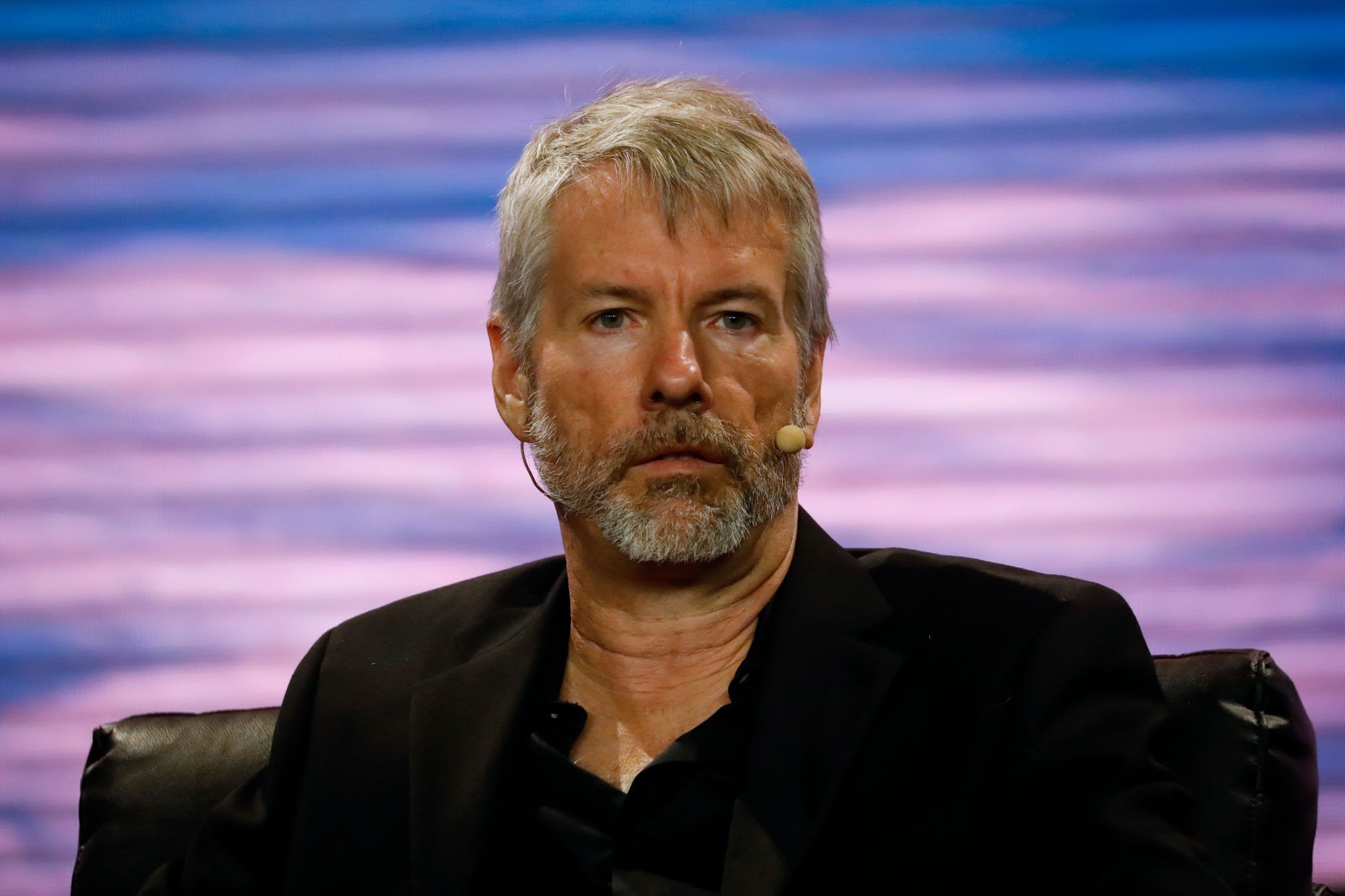
Michael Saylor, the prominent Bitcoin advocate and executive chairman of MicroStrategy, recently delivered a seminal policy address at the Bitcoin Policy Institute’s Freedom Tech DC summit, centering his remarks on the imperative for a robust "Digital Asset Bill of Rights." His presentation, a dialogue with Conner Brown, outlined a comprehensive policy framework anchored by five fundamental freedoms: the right to create, issue, custody, transfer, and use digital assets. Saylor posited that unlocking a more productive and innovation-driven economy, particularly one increasingly shaped by artificial intelligence (AI), necessitates a parallel evolution in monetary systems and capital markets. He emphasized that the burgeoning output from AI technologies must be matched by a corresponding expansion of financial access and flexibility, facilitated by a clear and supportive regulatory environment for digital assets.
The Proponent: Michael Saylor and MicroStrategy’s Vision
Michael Saylor has emerged as one of the most vocal and influential proponents of Bitcoin and digital assets globally. As the co-founder and former CEO of MicroStrategy, a business intelligence firm, he spearheaded the company’s groundbreaking strategy to adopt Bitcoin as its primary treasury reserve asset starting in August 2020. This move, initially met with skepticism, has since inspired numerous corporations and institutions to explore similar strategies, cementing Saylor’s reputation as a pioneer in corporate Bitcoin adoption. Beyond his corporate endeavors, Saylor has become a prolific educator and advocate, consistently articulating a long-term vision for Bitcoin as a foundational layer of global economic infrastructure. His appearances at forums like the Freedom Tech DC summit underscore his commitment to shaping public policy and regulatory discourse around digital assets, aiming to foster an environment conducive to their widespread integration and innovation.
The Forum: Freedom Tech DC Summit and the Bitcoin Policy Institute
The Freedom Tech DC summit, hosted by the Bitcoin Policy Institute (BPI), serves as a crucial platform for engaging policymakers, industry leaders, and academic experts on the complex intersection of technology, finance, and individual liberty. The BPI is a non-profit, non-partisan organization dedicated to educating and advocating for sound public policy concerning Bitcoin and related technologies. Its mission revolves around promoting a deeper understanding of Bitcoin’s potential to enhance economic freedom, national security, and individual privacy. The summit typically brings together diverse voices to discuss regulatory frameworks, technological advancements, and the broader societal implications of decentralized digital networks. Saylor’s participation at such an event is particularly significant, as it provides a direct channel to convey his policy recommendations to a receptive audience actively involved in shaping the future of digital asset governance in the United States.
Anchoring the Policy Framework: The Five Freedoms
Saylor’s policy framework is fundamentally rooted in the principle that digital asset rights should be recognized and protected for both individuals and corporations, mirroring traditional property rights. "Freedom starts with the ability to act," Saylor asserted, laying the groundwork for his proposed "Digital Asset Bill of Rights." Each of the five enumerated freedoms is designed to address specific friction points within the current regulatory landscape and unlock new avenues for economic participation and innovation.
-
The Right to Create Digital Assets: This freedom champions the ability of entrepreneurs and innovators to develop new financial instruments, tokens, and digital assets without undue regulatory burden. Saylor highlighted that current issuance rules are often prohibitively costly and complex, particularly for startups and smaller enterprises lacking extensive legal and compliance resources. He argued that simplifying these processes would empower millions of new companies to raise capital directly from investors through digital tokens, fostering a vibrant ecosystem of new business formation. The existing system, often requiring sophisticated legal counsel to navigate securities laws (e.g., Reg D, Reg A, Reg CF offerings), can cost hundreds of thousands to millions of dollars, effectively stifling grassroots innovation. Saylor envisions a future where the cost to launch a digital asset could be drastically reduced, potentially by orders of magnitude, allowing more founders to bypass traditional venture capital gatekeepers and directly access a global pool of investors.
-
The Right to Issue Digital Assets: Complementary to creation, this right focuses on the legal and operational clarity for bringing new digital assets to market. It addresses the ambiguities surrounding whether a digital asset constitutes a security, a commodity, or another category, which currently leads to regulatory uncertainty and fragmentation across agencies like the Securities and Exchange Commission (SEC) and the Commodity Futures Trading Commission (CFTC). A clear framework would delineate paths for issuance, potentially through standardized disclosure requirements tailored to digital assets rather than retrofitting existing regulations designed for traditional financial products. This clarity is crucial for fostering an environment where innovation can flourish without the constant threat of regulatory enforcement actions based on evolving interpretations.
-
The Right to Custody Digital Assets: This freedom pertains to the ability of individuals and institutions to securely hold their digital assets, whether through self-custody (where users control their private keys) or via regulated third-party custodians. Saylor implicitly advocated for robust legal protections for both approaches. For self-custody, this would involve recognizing the legal validity of individual ownership and control over digital property. For institutional custody, it would necessitate clear licensing and operational standards that ensure asset security, segregation, and resilience against cyber threats. The current regulatory environment often lacks explicit guidelines for digital asset custodians, leading to hesitations from traditional financial institutions to offer such services despite growing client demand. Establishing clear rules would not only protect consumers but also encourage the entry of established players, bringing greater stability and institutional capital to the digital asset ecosystem.
-
The Right to Transfer Digital Assets: This freedom underscores the fundamental ability to move digital assets freely and efficiently across networks, between individuals, and among various platforms. It addresses concerns about restrictions on transaction size, speed, and cross-border transfers. Saylor’s vision suggests minimizing unnecessary friction in the movement of digital capital, recognizing that the inherent global and instantaneous nature of digital assets is a key advantage. This right also touches upon the interoperability between different digital asset networks and traditional financial rails, advocating for seamless integration rather than siloed operations. Current anti-money laundering (AML) and know-your-customer (KYC) regulations, while necessary, can sometimes impede legitimate transfers, particularly for smaller transactions or across diverse jurisdictions, requiring a balanced approach that supports both security and fluidity.
-
The Right to Use Digital Assets: This final freedom encompasses the broad utility of digital assets, including spending them for goods and services, borrowing against them, and integrating them into various financial applications. It calls for regulatory clarity that enables digital assets to function as viable forms of payment and collateral within the broader economy. This freedom is particularly relevant in the context of Saylor’s discussion on tax treatment and transaction reporting, advocating for thresholds that do not penalize routine use. Currently, the tax implications of using digital assets for everyday purchases can be burdensome, requiring individuals to track capital gains or losses on each transaction, a significant disincentive for adoption as a medium of exchange.
Catalyzing Economic Growth: AI, Better Money, and Capital Markets
Saylor drew a compelling parallel between the explosive growth of artificial intelligence and the need for a modernized financial infrastructure. He argued that the exponential increase in output and innovation driven by AI requires "better money and better capital markets" to effectively absorb, distribute, and incentivize this growth. The current financial system, designed for an analog era, struggles to keep pace with the digital velocity and complexity that AI brings. By enabling easier creation, issuance, custody, transfer, and use of digital assets, Saylor believes the economy can become significantly more productive and inclusive. He envisions a future where digital assets act as the native currency of an AI-driven economy, facilitating micro-transactions, automated financial services, and novel forms of capital allocation that are currently unimaginable or prohibitively expensive within traditional frameworks. This integration is crucial for ensuring that the benefits of AI are broadly accessible and can be leveraged to create new economic opportunities rather than exacerbating existing disparities.
Specific Policy Directives and Regulatory Priorities
Beyond the foundational five freedoms, Saylor articulated several specific policy recommendations aimed at practical implementation:
-
Reforming Digital Dollar Competition: Saylor called for a clear regulatory pathway for a diverse range of entities—including banks, fintech companies, and technology platforms—to offer dollar-backed digital products. He stressed the importance of fostering competition among these providers, particularly on yield. Current restrictions that often favor institutions paying minimal interest, or none at all, ultimately work against the interests of consumers. Enabling competition in digital dollar offerings could lead to more efficient payment systems, lower transaction costs, and potentially more attractive savings opportunities for users. This competition is crucial for developing a robust and resilient digital dollar ecosystem that can serve various use cases, from retail payments to wholesale interbank settlements.
-
Integrating Bitcoin into Traditional Finance: A significant portion of Saylor’s remarks focused on Bitcoin’s integration into banking and insurance sectors. He advocated for banks to be permitted to custody Bitcoin and extend credit against it, treating it as a legitimate asset class. This would require a re-evaluation of the Basel framework’s capital treatment of cryptoasset exposures. Currently, the Basel Committee on Banking Supervision (BCBS) proposes a punitive 1,250% risk weighting for "Group 2" cryptoassets (which includes Bitcoin in some interpretations), effectively making it capital-prohibitive for banks to hold or lend against them. Saylor argued that these rules should reflect the actual risk profiles of digital assets, differentiating between highly volatile or unproven assets and more mature, liquid assets like Bitcoin. A more rational capital treatment would unlock vast amounts of institutional capital, enabling traditional financial institutions to offer Bitcoin-backed loans, asset management services, and other financial products, thus bridging the gap between traditional and decentralized finance.
-
Privacy in Transactions and Regulatory Reporting: Saylor highlighted the need for financial privacy in ordinary digital asset transactions. He proposed that lawful transactions below a "meaningful threshold" should not trigger routine reporting requirements. He cited the outdated $10,000 currency-transaction report (CTR) threshold, set in 1972, as a prime example needing inflation adjustment. According to the U.S. Bureau of Labor Statistics’ CPI inflation calculator, $10,000 in 1972 is equivalent to approximately $74,000 in 2024. This discrepancy means that a far greater proportion of legitimate transactions are subject to reporting than originally intended, creating an unnecessary burden for individuals and financial institutions alike. Adjusting this threshold to reflect modern economic realities would allow for greater privacy for everyday transactions while still enabling authorities to monitor larger, potentially illicit activities.
-
Streamlining Compliance and Identity Verification: The current system of repeated identity verification across multiple financial counterparties was described by Saylor as costly and inefficient for investors. He recommended the adoption of portable compliance credentials—reusable, interoperable digital identities that could reduce onboarding costs for new firms and customers. Such a system would streamline the KYC/AML process, allowing investors to verify their identity once and then use that credential across various platforms, while still preserving the responsibility of each provider for monitoring risk. This innovation would lower barriers to entry for new firms, fostering competition and reducing administrative overhead, which currently acts as a significant drag on innovation in the fintech sector.
-
Rationalizing Digital Asset Tax Treatment: Saylor addressed the cumbersome tax implications of using digital assets for routine purchases. He advocated for a meaningful de minimis exemption that would remove the burden of calculating capital gains or losses on small, everyday transactions. Currently, every time a digital asset is spent, even for a coffee, it can trigger a taxable event, requiring meticulous record-keeping. This significantly hinders the adoption of digital assets as a practical medium of exchange. Saylor argued that these de minimis thresholds should also scale with inflation, eliminating the need for needless transaction-by-transaction record-keeping for low-value purchases. This would align digital asset taxation with common practices for foreign currency exchanges or gift taxes, where small amounts are exempt from immediate reporting or taxation.
The Regulatory Landscape and Path Forward
Saylor identified the Securities and Exchange Commission (SEC), the Commodity Futures Trading Commission (CFTC), the Treasury Department, and the White House as key actors in the near-term regulatory path for digital assets. He voiced criticism of the prevailing "CLARITY" approach, which he argued often emphasizes restrictions and enforcement over promoting the usefulness and innovation of digital assets. While the intent of proposals like the "CLARITY Act" (or similar legislative efforts) is often to provide regulatory certainty, Saylor suggested they sometimes lead to overly prescriptive rules that stifle growth.
The current regulatory environment in the U.S. is characterized by a patchwork approach, with different agencies asserting jurisdiction over various aspects of digital assets, leading to confusion and regulatory arbitrage. The SEC, for instance, has taken an aggressive stance, classifying many tokens as unregistered securities, while the CFTC views Bitcoin and Ethereum as commodities. The Treasury Department, through FinCEN, focuses on AML/KYC compliance. This fragmented landscape makes it challenging for innovators to build and operate within clear legal boundaries. Saylor’s call for a unified "Digital Asset Bill of Rights" seeks to provide a coherent framework that transcends individual agency mandates, offering a consistent and enabling policy direction.
Broader Implications: Innovation, Financial Inclusion, and Global Competitiveness
Saylor concluded his address with an ambitious projection: that the digital asset industry could reach a staggering $100 trillion in value if policy expands rather than limits ownership rights. This vision underscores the profound economic and social implications of his proposed framework.
- Innovation: A clear and supportive regulatory environment would unleash a torrent of innovation in fintech, AI, and decentralized technologies. By reducing legal ambiguity and compliance costs, entrepreneurs would be free to focus on developing novel products and services, attracting talent and capital to the U.S.
- Financial Inclusion: Lowering the barriers to creating and using digital assets could significantly enhance financial inclusion, particularly for underserved populations globally. The ability to access capital, make payments, and save without reliance on traditional, often costly, banking infrastructure could empower millions.
- Economic Sovereignty: For individuals, the right to custody and control their digital assets offers a new dimension of economic sovereignty, reducing reliance on intermediaries and mitigating risks associated with centralized control.
- Global Competitiveness: The U.S. is currently in a race with other jurisdictions (e.g., EU with MiCA, Dubai, Singapore) to establish itself as a leader in digital asset innovation. Saylor’s proposed framework, if adopted, could position the U.S. at the forefront, attracting talent and investment and ensuring its continued leadership in the global digital economy. Conversely, overly restrictive policies risk driving innovation and capital overseas.
Michael Saylor’s remarks at the Freedom Tech DC summit represent a powerful articulation of a pro-innovation, pro-freedom vision for the digital asset economy. His "Digital Asset Bill of Rights" offers a comprehensive policy blueprint designed to foster economic growth, empower individuals and corporations, and integrate digital assets seamlessly into the fabric of a rapidly evolving, AI-driven world. The challenge now lies in translating this vision into actionable legislation and regulatory frameworks that balance innovation with necessary safeguards, ultimately shaping the future trajectory of digital finance in the United States and beyond.














