The United States House Oversight Committee has officially broadened the scope of its ongoing investigation into potential insider trading and systemic vulnerabilities within the rapidly growing prediction market industry. In a significant escalation of congressional scrutiny, Committee Chairman James Comer issued a series of formal requests for records on Tuesday, targeting several prominent entities including Hyperliquid Labs, Crypto.com, and operations linked to the political prediction market platform PredictIt and its associate, Aristotle. This move signals a deepening concern among federal lawmakers that these platforms, which allow users to wager on the outcomes of real-world events, may be susceptible to exploitation by individuals possessing nonpublic, sensitive, or even classified government information.
The expansion of the probe follows months of preliminary investigation into the sector’s leading players and comes at a time when prediction markets are seeing record-breaking volume, driven largely by interest in geopolitical shifts and the upcoming electoral cycles. The committee’s inquiry is not merely focused on the legality of the trades themselves but is centered on the underlying infrastructure of these platforms—specifically their ability to verify user identities, enforce strict geographic boundaries, and detect anomalous trading patterns that could suggest the misuse of privileged information.
The Scope of the Expanded Investigation
Chairman James Comer’s latest directives seek comprehensive documentation dating back to January 2024, with a strict deadline for response set for October 13. The letters sent to Hyperliquid Labs, Crypto.com, and Aristotle-linked entities demand transparency regarding the "know-your-customer" (KYC) protocols and anti-money laundering (AML) safeguards currently in place.
For Hyperliquid, a decentralized perpetual exchange that has gained significant traction in the decentralized finance (DeFi) space, the committee’s interest is particularly acute. Lawmakers have requested detailed records describing how the platform flags suspicious or anomalous trades, especially those tied to high-stakes events such as Federal Reserve interest rate decisions, national elections, and major geopolitical developments. The committee is also seeking clarity on how Hyperliquid prevents users in prohibited jurisdictions—most notably the United States—from accessing its services through virtual private networks (VPNs) or other obfuscation tools.
Crypto.com received a parallel request covering both its international operations and its specialized arm, Crypto.com Derivatives North America. The committee is inquiring into the internal restrictions the company maintains to prevent its own employees, who may have access to confidential market-moving data, from participating in related event contracts. This focus on internal controls highlights a broader fear that the proximity of platform operators to sensitive data could create a new frontier for corporate insider trading.
The inquiry into PredictIt and Aristotle-related entities focuses on the unique intersection of politics and finance. PredictIt has long operated under a specific "no-action" framework provided by the Commodity Futures Trading Commission (CFTC), allowing it to host small-stakes political wagers for academic purposes. However, the acquisition of Aristotle’s exchange entities by the firm Underdog earlier this year has introduced new variables into the regulatory equation, prompting the committee to demand details on identity verification and the monitoring of political event contracts.
The Hyperliquid Anomaly: A $1.1 Billion Trigger
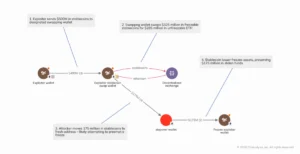
A primary catalyst for the committee’s heightened interest in Hyperliquid is a specific, massive transaction that occurred in late 2024. According to public blockchain data cited by the committee, a single trader opened a leveraged short position totaling approximately $1.1 billion in Bitcoin and Ether. This position was established roughly 30 hours before a major announcement regarding new China tariffs.
Following the announcement, which caused significant volatility in the global markets and a downturn in cryptocurrency prices, the trader closed the positions, netting a profit exceeding $150 million. While the committee has explicitly stated it has not yet established that the trader in question possessed nonpublic government information, the "fortuitous" timing and the sheer scale of the trade have raised red flags regarding market integrity.
In a decentralized environment like Hyperliquid, where trades are executed via smart contracts and often without traditional intermediaries, the committee is questioning whether the platform possesses the technical capability or the legal mandate to intervene in such instances. The incident serves as a case study for lawmakers on how large-scale "whales" might use the anonymity of the blockchain to capitalize on policy shifts before they are made public.
Chronology of Congressional Scrutiny
The Oversight Committee’s journey into the world of prediction markets did not begin with this week’s letters. The groundwork was laid in May 2024, when Chairman Comer first reached out to Polymarket and Kalshi.
- May 2024: The committee initiates its probe, requesting documents from Polymarket (the world’s largest decentralized prediction market) and Kalshi (a CFTC-regulated exchange). The focus is on KYC procedures and methods for blocking U.S. users on offshore platforms.
- Summer 2024: Polymarket and Kalshi engage in a series of five briefings with committee staff. During this period, the platforms reportedly handed over nearly 1,000 documents detailing their internal compliance and monitoring systems.
- Late September 2024: The committee reviews the provided data and determines that the risks extend beyond the initial two platforms, leading to the expansion of the probe to Hyperliquid and Crypto.com.
- October 1, 2024: Formal letters are sent to the new targets, citing specific suspicious trades and requesting records by mid-October.
This timeline illustrates a methodical approach by the House Oversight Committee, moving from the industry leaders to the more specialized or decentralized platforms that may have previously flown under the regulatory radar.
High-Profile Cases Fueling Regulatory Anxiety
The committee’s concerns are bolstered by a series of recent criminal cases that demonstrate the real-world potential for insider trading on these platforms. These cases have moved the conversation from theoretical risks to documented illegal activity.
In April 2024, federal prosecutors brought charges against U.S. Army Master Sergeant Gannon Ken Van Dyke. The allegations suggest that Van Dyke utilized classified information regarding a sensitive military operation—specifically one that led to the removal of Venezuelan leader Nicolás Maduro from power—to place bets on Polymarket. By allegedly leveraging his access to secret military intelligence, Van Dyke was able to secure approximately $400,000 in profits. While the case is still pending and no conviction has been reached, the implications for national security are profound. It suggests that government employees with "top secret" clearances could potentially monetize state secrets through anonymous betting pools.
Only a month later, another case emerged involving a Google engineer. Prosecutors alleged that the individual used confidential corporate data regarding internal company developments and product launches to make roughly $1.2 million in successful wagers on Polymarket. In this instance, Polymarket reportedly cooperated fully with federal authorities, providing the data necessary to track the engineer’s activity. These two cases—one involving national security and the other corporate espionage—provide the committee with the "smoking gun" evidence needed to justify a broader crackdown on the industry’s lack of standardized oversight.
The Regulatory Tug-of-War
The investigation is unfolding against a backdrop of intense regulatory uncertainty. Currently, the landscape for prediction markets is a patchwork of overlapping jurisdictions. The CFTC maintains authority over "event contracts" on federally registered venues like Kalshi. However, many of the most popular platforms, such as Polymarket, operate in a decentralized or offshore capacity, often sitting outside the direct reach of U.S. regulators while still being accessible to U.S. citizens via technological workarounds.
Furthermore, the Securities and Exchange Commission (SEC) has frequently asserted that certain types of prediction market contracts may qualify as securities, while state-level regulators often view the activity through the lens of gambling laws. This "regulatory gray area" is what the House Oversight Committee is seeking to illuminate. By demanding records on KYC and geographic controls, the committee is essentially testing whether these platforms are complying with the spirit of U.S. law, even if they claim to be exempt from its letter.
Analysis: Implications for the Future of Prediction Markets
The expansion of this investigation carries significant implications for the future of the "Information Finance" sector. If the committee finds that platforms are failing to prevent the use of sensitive government data, it could lead to the introduction of the "Stop Prediction Market Insider Trading Act" or similar legislation. Such laws would likely harmonize the treatment of prediction market "insiders" with traditional stock market insiders, carrying heavy criminal penalties for trading on nonpublic information.
Moreover, the focus on Hyperliquid suggests that decentralized exchanges (DEXs) are no longer invisible to Washington. For years, DeFi protocols have operated under the assumption that their lack of a central headquarters or traditional corporate structure provided a shield against subpoenas. The committee’s direct request to Hyperliquid Labs indicates that lawmakers are willing to pierce the "decentralization veil" to hold developers and associated labs accountable for the activity occurring on their protocols.
For the broader industry, the investigation may force a pivot toward "institutional-grade" compliance. We are likely to see an increase in the use of sophisticated chain-analysis tools to identify "informed" traders before they can withdraw their profits. While this may improve market integrity, it could also clash with the privacy-centric ethos that originally fueled the rise of crypto-based prediction markets.
Conclusion and Next Steps
As the October 13 deadline approaches, the industry remains on high alert. The House Oversight Committee’s move to include Crypto.com and Hyperliquid suggests that no corner of the market is off-limits. Whether these platforms can satisfy the committee’s demands for transparency—without compromising their user base or their technological advantages—remains to be seen.
The results of this probe will likely shape the 2025 legislative agenda, potentially bringing prediction markets under a unified federal regulatory framework. For now, the message from Chairman James Comer is clear: as prediction markets become more influential in forecasting public policy and geopolitical events, they must be held to the same standards of integrity as the financial markets they seek to emulate. The era of the "unregulated bet" on government secrets appears to be coming to a close.