


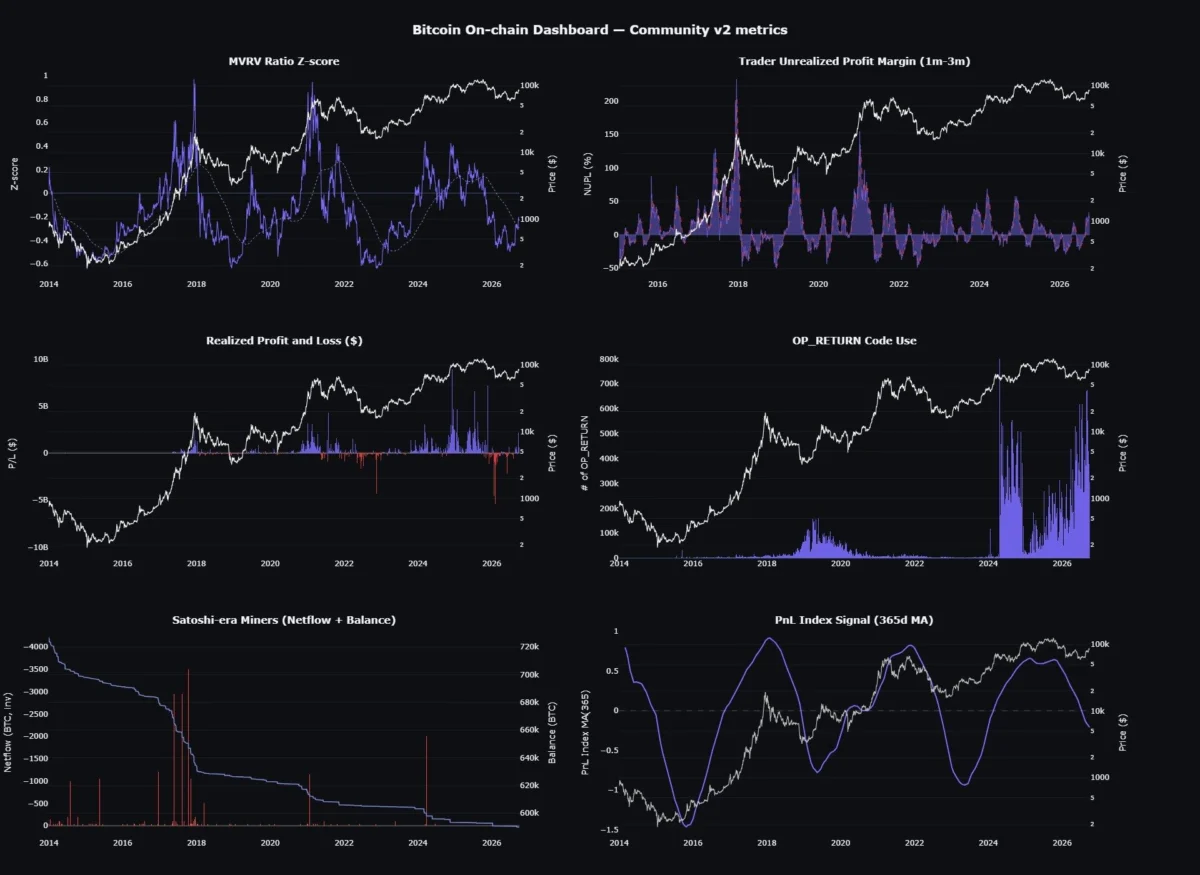
Bitcoin (BTC) has demonstrated a robust resurgence, reclaiming a critical long-term market indicator and pushing through a significant seller wall to trade above $85,000. This upward momentum marks a substantial recovery from recent lows and has ignited optimism among analysts regarding the cryptocurrency’s future trajectory. The digital asset reached a high of $87,096 on October 2, its strongest performance since September 23, before experiencing a minor pullback. This surge represents a 15.6% increase from its September 15 low of $75,170 and has successfully propelled BTC beyond a resistance zone that had previously impeded its advance for the better part of the week.
The renewed bullish sentiment is being closely monitored by market observers, with particular attention on whether this momentum can be sustained. On-chain data analytics platform CryptoQuant highlighted a significant development in Bitcoin’s fundamental metrics. In a recent tweet, the platform pointed to the MVRV Z-Score, a key on-chain indicator, moving above its 365-day average. This crossover is historically recognized as a pivotal shift in Bitcoin’s market momentum.
MVRV Z-Score Signals Shifting Market Dynamics
CryptoQuant emphasized the significance of this metric, stating, "Bitcoin’s MVRV Z-Score just broke ABOVE its 365-day average. Historically, reclaiming this moving average has been an important shift in market momentum. Now the key is whether Bitcoin can stay above it." The MVRV Z-Score is a valuation metric that compares Bitcoin’s current market value to its realized value, which represents the aggregate cost basis of all coins on the network. A sustained move of the MVRV Z-Score above its long-term average, such as the 365-day moving average, is often interpreted as an indicator of improving market conditions and a potential transition into a bull market phase. This metric helps to identify periods when Bitcoin might be undervalued or overvalued relative to its historical performance and underlying network value.
Further bolstering the bullish outlook, CryptoQuant’s analysis also revealed that Bitcoin’s 1-to-3-month holders are currently experiencing their largest unrealized profits since May 2025. This cohort of investors holds an average unrealized profit margin of 24%, indicating that recent buyers have benefited significantly from the ongoing rally. This suggests a healthy accumulation phase and strong conviction among a significant segment of Bitcoin holders.

Technical Indicators Align with Bullish Sentiment
Beyond on-chain data, technical analysts are also observing positive developments in Bitcoin’s chart structure. James Thorne, Chief Market Strategist at Wellington Altus, expressed a favorable view on Bitcoin’s technical setup. Thorne noted that Bitcoin’s weekly chart is presenting one of the most compelling configurations in the current market landscape, especially after the recent correction found support around the rising 200-week moving average.
"Bitcoin’s weekly chart is one of the best-looking setups in the market," Thorne remarked. He further elaborated on the intermediate trend shift, pointing out that Bitcoin’s 30-week and 40-week exponential moving averages (EMAs) have begun to trend upward since the June low. With price action now reclaiming both of these key EMAs, Thorne interprets this as a clear intermediate trend reversal from bearish to bullish, while importantly, the longer-term uptrend remains intact. This dual confirmation from both longer-term and intermediate-term technical indicators adds significant weight to the bullish narrative.
Thorne also highlighted improving weekly momentum and evolving market fundamentals. He posited that the increasing integration of regulated stablecoins, the tokenization of U.S. Treasuries, and the development of on-chain settlement mechanisms are collectively contributing to the maturation of Bitcoin and digital assets, moving them beyond a purely speculative asset class. This evolution suggests a broader adoption and integration of blockchain technology into traditional financial systems, which could underpin sustainable long-term growth for cryptocurrencies. Thorne even alluded to the possibility of a "Super Cycle," a term often used in crypto to describe prolonged and significant bull markets driven by fundamental adoption rather than just speculative fervor.
Breaking Through Key Resistance Levels
The recent bullish signals have been accompanied by Bitcoin successfully breaching a significant technical obstacle. On-chain analytics firm Glassnode identified a substantial concentration of sell orders on Binance’s spot market, specifically between the $85,000 and $85,500 price range. This supply zone had acted as a formidable barrier, capping Bitcoin’s upward movement for approximately a week.
The market saw buyers absorb this resistance decisively on October 2, paving the way for BTC to ascend towards the $87,000 mark. Following this breakout, the volume of sell orders situated above the prevailing market price saw a noticeable decline, with some existing orders even being canceled. This indicates a shift in market sentiment and a potential depletion of immediate selling pressure at those levels.

Looking ahead, QCP Capital has identified the next major resistance level around $87,400, which corresponds to September’s high. Beyond this point, the $90,000 level is considered a significant psychological and options-market target. On the downside, QCP views $82,500 as a key support area, below which further selling pressure might emerge.
At the time of reporting, Bitcoin was trading at approximately $85,990, reflecting a modest gain of 0.86% over the preceding 24 hours. This price action demonstrates continued strength following the significant breakout.
Broader Context: The Persistent Pursuit of Spot Bitcoin ETFs
The current bullish momentum for Bitcoin occurs against a backdrop of ongoing regulatory developments, particularly the persistent efforts to launch a spot Bitcoin Exchange Traded Fund (ETF) in the United States. The U.S. Securities and Exchange Commission (SEC) has repeatedly denied applications for spot Bitcoin ETFs, citing concerns about market manipulation and investor protection. However, recent legal victories by Grayscale Investments against the SEC have significantly shifted the landscape.
In August 2023, a U.S. Court of Appeals ruled in favor of Grayscale, finding the SEC’s denial of Grayscale’s Bitcoin ETF conversion to be "arbitrary and capricious." This landmark decision has been widely interpreted as a strong signal that the SEC may be compelled to approve spot Bitcoin ETFs. JPMorgan analysts, in the wake of Grayscale’s court victory, have predicted that the SEC will likely be forced to greenlight spot Bitcoin ETFs. This potential regulatory approval is seen as a major catalyst that could unlock significant institutional capital into the Bitcoin market, further driving demand and potentially influencing prices.
The timeline leading up to this point has been marked by numerous ETF applications from various financial institutions, including BlackRock, Fidelity, and WisdomTree. Each denial by the SEC has been met with disappointment from the crypto community and further legal challenges. Grayscale’s successful appeal represents a crucial turning point, suggesting that the SEC’s previous rationale for denial may no longer hold legal or regulatory water.
Implications of a Spot Bitcoin ETF Approval
The implications of a U.S. spot Bitcoin ETF approval are far-reaching. Firstly, it would provide a regulated and accessible avenue for a broader range of investors, including retail and institutional investors, to gain exposure to Bitcoin through traditional brokerage accounts. This would significantly reduce the barriers to entry and could lead to a substantial influx of capital into the asset class.
Secondly, the approval would signify a degree of regulatory acceptance and maturity for Bitcoin as an asset class. This could encourage more traditional financial institutions to engage with cryptocurrencies, fostering further innovation and development within the digital asset ecosystem.
Thirdly, a spot Bitcoin ETF would likely enhance Bitcoin’s price discovery mechanisms and potentially reduce volatility, as it would be traded on regulated exchanges with robust oversight. The demand generated by such a product could also contribute to sustained price appreciation over the long term, aligning with the bullish technical and on-chain indicators currently being observed.
The current price action, coupled with the favorable on-chain metrics and the evolving regulatory environment, paints a promising picture for Bitcoin. The ability of BTC to sustain its upward trajectory above key technical levels and its 365-day MVRV Z-score average will be critical in confirming the continuation of this bullish phase. The potential for a spot Bitcoin ETF approval adds another layer of anticipation, suggesting that the cryptocurrency market may be on the cusp of significant institutional adoption and growth.














