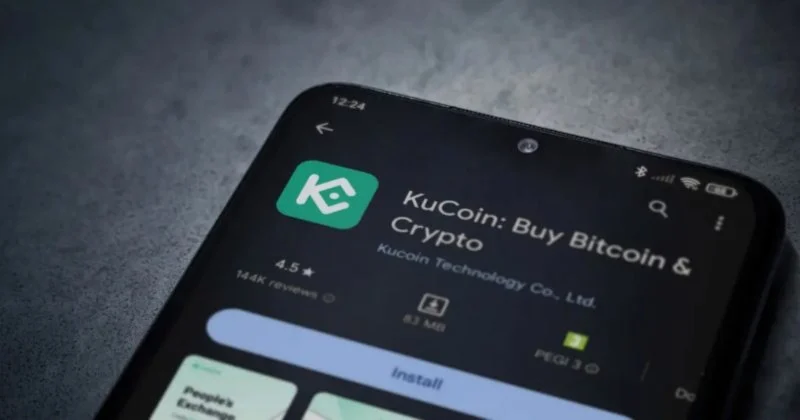
The Seychelles-based cryptocurrency exchange KuCoin officially announced on Thursday the immediate termination of its operations within the Russian Federation and the Republic of Belarus. This strategic withdrawal marks a significant shift in the platform’s operational footprint, as it moves to align with a rapidly evolving global regulatory landscape and stringent international sanctions. According to the official statement released by the exchange, the decision to cease services is a direct response to applicable legal requirements and regulatory obligations that have become increasingly complex following geopolitical shifts over the last two years.
The discontinuation is comprehensive, encompassing all products, services, and resources previously available to users in these jurisdictions. This includes spot trading, futures, margin trading, staking, and peer-to-peer (P2P) services. KuCoin emphasized that the shutdown is being managed through a phased approach, with affected customers receiving individualized notifications. These communications outline specific deadlines for the closure of open positions and the withdrawal of digital assets to external wallets. For users who have not received a direct notification, the exchange indicated that no immediate action is required at this stage, though the broader trend suggests a narrowing window for centralized crypto operations in the region.
The Geopolitical Context and the Rise of Financial Isolation
To understand the gravity of KuCoin’s exit, one must look at the broader geopolitical environment that has persisted since February 2022. Following the escalation of the conflict in Ukraine, Western nations, led by the United States, the European Union, and the United Kingdom, implemented a series of unprecedented financial sanctions aimed at isolating the Russian economy. These measures were designed to sever the Russian financial system’s ties to the global infrastructure, most notably through the exclusion of major Russian banks from the SWIFT international payment messaging system.
Initially, digital assets were viewed by some as a potential "escape valve" for sanctioned entities and individuals to move capital across borders. However, this perception triggered an immediate and aggressive response from global regulators. The European Union, through its various sanctions packages—specifically the eighth package adopted in October 2022—prohibited the provision of all crypto-asset wallet, account, or custody services to Russian persons and residents, regardless of the total value of those assets.
KuCoin’s decision arrives at a time when the "gray zone" of crypto-compliance is rapidly shrinking. While some exchanges initially resisted calls to block entire nationalities, citing the decentralized ethos of the industry, the reality of maintaining access to the global banking system has forced a pragmatic realignment. For a major exchange like KuCoin, which serves over 30 million users globally, the risk of "secondary sanctions"—where the exchange itself could be penalized by Western regulators for facilitating transactions with sanctioned regions—outweighs the revenue generated from the Russian and Belarusian markets.
A Chronology of the Great Exchange Exodus
KuCoin is far from the first major player to exit these markets. Its departure is part of a "rolling pattern" of industry leaders distancing themselves from high-risk jurisdictions to safeguard their global licensing and banking partnerships.
- Binance (September 2023): The world’s largest exchange by volume, Binance, set a major precedent by announcing a full exit from Russia. It sold its entire Russian business to a newly formed entity called CommEX. Although the transition was complex, it signaled that even the largest players could no longer ignore the regulatory heat.
- Bitget (October 16, 2024): Bitget updated its terms of service to restrict users from Russia, Belarus, and Kazakhstan. This move was seen as a preemptive measure to align with international Anti-Money Laundering (AML) standards.
- MEXC (October 20, 2024): Only days later, MEXC announced a similar discontinuation of services, explicitly citing "global compliance considerations" as the primary driver.
- HTX (October 2024): Formerly known as Huobi, the platform added Russia to its list of restricted jurisdictions, effectively limiting the ability of new users to onboard and restricting existing users’ access to certain high-risk financial products.
This timeline illustrates a domino effect. As each exchange exits, the remaining platforms face increased scrutiny from regulators who fear that traffic will simply migrate to the next available centralized hub. By exiting now, KuCoin is attempting to demonstrate a proactive stance on compliance, which is essential for its ongoing efforts to secure licenses in jurisdictions like Hong Kong, Europe, and the Middle East.
Compliance as a Survival Mechanism
The decision to leave Russia and Belarus is fundamentally an exercise in risk management. Centralized exchanges (CEXs) operate as intermediaries, which makes them subject to the same "Know Your Customer" (KYC) and AML laws as traditional banks. In the United States, the Treasury Department’s Office of Foreign Assets Control (OFAC) has been particularly vocal about the obligations of crypto platforms to prevent sanctions evasion.
For KuCoin, the pressure has been multi-faceted. Earlier in 2024, the exchange faced legal challenges in the United States, including a settlement with New York regulators and scrutiny from the Commodity Futures Trading Commission (CFTC). These events highlighted the platform’s need to tighten its internal controls. Maintaining a presence in sanctioned regions creates significant "enforcement exposure." If a sanctioned individual were found to be using KuCoin to move funds, the exchange could face massive fines, the freezing of its own corporate assets, or the revocation of its ability to process transactions in U.S. dollars.
Furthermore, banking partners—the bridges that allow users to convert fiat currency into crypto—are notoriously risk-averse. Many global banks refuse to work with crypto exchanges that have exposure to sanctioned jurisdictions. By cleaning up its jurisdictional profile, KuCoin ensures it remains an attractive partner for the traditional financial institutions it needs to facilitate global growth.
Impact on the Russian and Belarusian Crypto Landscape
The withdrawal of KuCoin and its peers creates a significant vacuum in the Russian and Belarusian markets. For years, Russia has been one of the world’s most active regions for cryptocurrency adoption, driven by a tech-savvy population and a desire for inflation hedges.
Data from Chainalysis and other blockchain analytics firms have previously indicated that Eastern Europe, led by Russia, accounts for a substantial portion of global crypto traffic. However, with the exit of centralized hubs, the nature of this traffic is changing.
- Shift to Decentralized Finance (DeFi): Without centralized gatekeepers, users are increasingly moving toward decentralized exchanges (DEXs) like Uniswap or PancakeSwap. These platforms operate via smart contracts and do not require traditional KYC, making them harder for regulators to block. However, DEXs often lack the user-friendly on-ramps (fiat-to-crypto) that platforms like KuCoin provided.
- The Rise of P2P and "Gray" Markets: Peer-to-peer trading, where individuals trade directly with one another, is expected to surge. While platforms like KuCoin had P2P desks, the activity is now moving to more opaque Telegram bots and local, unregulated OTC (Over-the-Counter) desks in cities like Moscow and Minsk.
- Self-Custody Adoption: There is a notable trend toward self-custody wallets (e.g., Ledger, Trezor, MetaMask). By removing assets from exchanges, users retain control, but they also bear the full responsibility for security.
While these alternatives provide a path for continued crypto usage, they come with heightened risks. Users in these regions are now more vulnerable to fraud, "rug pulls" on unregulated DEXs, and the lack of recourse if funds are lost or stolen. Additionally, the lack of liquidity on smaller, local platforms can lead to significant price slippage, making it more expensive for users to trade.
Official Responses and Security Advisories
In its communication to the public, KuCoin has been careful to maintain a professional and neutral tone, avoiding political commentary in favor of regulatory language. The exchange stated that its priority is a "smooth and orderly transition" for its users.
"We are committed to fulfilling our regulatory responsibilities while ensuring that our users have the necessary information and time to manage their assets," a spokesperson for the exchange noted in an internal briefing. "The safety of user funds remains our top priority during this wind-down period."
Security experts have issued a concurrent warning to users in the affected regions. Periods of platform exits are "high-season" for phishing attacks. Scammers often send fraudulent emails or messages masquerading as exchange support, claiming that users must "click here to unlock your funds" or "verify your identity to withdraw." KuCoin has urged its users to verify all instructions through its official website and mobile application, emphasizing that the exchange will never ask for private keys or passwords.
Analysis of Broader Industry Implications
KuCoin’s exit is a microcosm of a larger trend: the "bifurcation" of the global crypto market. We are seeing the emergence of two distinct crypto ecosystems. One is a highly regulated, KYC-compliant system that mirrors traditional finance and operates within the legal frameworks of the G7 nations. The other is a fragmented, decentralized, and often "underground" economy that operates in the gaps between jurisdictions.
This move also highlights the limitations of "neutrality" for centralized platforms. In the early days of Bitcoin, the ethos was one of borderless, censorship-resistant money. However, as the industry has matured and sought mass adoption, it has had to compromise with the existing legal order. For KuCoin, the choice was clear: remain a global player by following global rules, or risk total isolation by attempting to serve everyone.
The long-term impact on KuCoin’s market share remains to be seen. While Russia was a significant market, the exchange’s growth in India, Southeast Asia, and Latin America may offset the losses. More importantly, the "compliance premium"—the value investors place on an exchange that is seen as "safe" and "legal"—may ultimately lead to higher institutional inflows from Western markets.
Conclusion and Future Outlook
The immediate termination of KuCoin’s services in Russia and Belarus marks the end of an era for centralized crypto trading in those regions. As the exchange begins the process of notifying users and closing positions, the move serves as a stark reminder of the power of geopolitical forces over the digital asset space.
For the users left behind, the path forward involves a steep learning curve in decentralized tools and a heightened awareness of security risks. For the crypto industry at large, KuCoin’s exit is another step toward professionalization and integration into the global financial system—a process that necessitates the abandonment of high-risk jurisdictions in favor of long-term regulatory stability. As global tensions show no signs of abating, it is likely that other mid-tier exchanges will soon follow suit, further consolidating the market into compliant, regionally-restricted silos.