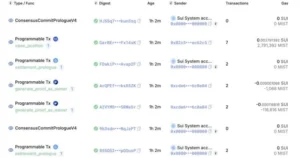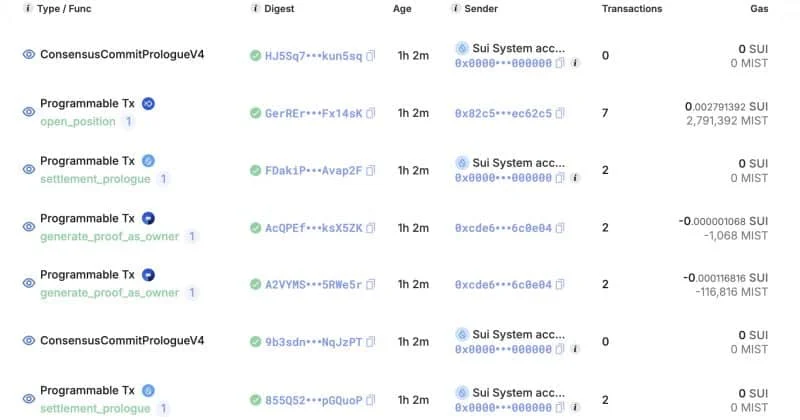
The Sui mainnet experienced a significant disruption, remaining offline for nearly six hours on May 28th due to a critical bug within its gas charging logic. This marks the second multi-hour outage for the burgeoning Layer 1 blockchain in 2024, raising concerns among developers, investors, and users about the network’s stability and reliability. The incident, which began on May 28th and concluded on May 29th, saw the network grind to a halt as validators scrambled to implement a fix and deploy a patched software version, ultimately restoring normal checkpoint production after approximately 5 hours and 55 minutes of downtime.
The root cause of the prolonged outage has been identified as a flaw in the gas charging mechanism, introduced with Sui’s 1.72 software release. In essence, the code responsible for calculating the transaction fees users must pay for network operations malfunctioned. This failure cascaded through the system, preventing the network from processing new blocks and effectively freezing all on-chain activity. The intricate nature of blockchain consensus mechanisms means that such a fundamental flaw can have far-reaching consequences, halting the entire chain until rectified.
Chronology of the Disruption
The incident began to unfold on May 28th, when validators operating under the 1.72 update encountered the critical bug. This led to a complete cessation of new checkpoint production, the fundamental building blocks of transaction finalization on Sui. Consequently, no new transactions could be processed or finalized, leaving the network in a state of stasis.
The recovery process was far from instantaneous. Unlike a simple software restart, Sui’s consensus protocol necessitates a supermajority of validators, specifically those holding more than two-thirds of all staked tokens, to upgrade to the patched software. This coordinated effort is crucial for ensuring network integrity and preventing a potential fork or data inconsistencies. The time required to communicate the issue, develop and test the patch, and then for a sufficient number of validators to apply the update proved to be the primary driver of the extended downtime.
Technical Underpinnings and Network Resilience
At its core, the bug affected the "gas charging logic." This component is vital for any blockchain network, as it dictates how computational resources are allocated and compensated. In a Proof-of-Stake (PoS) system like Sui, validators are incentivized to maintain the network by processing transactions and producing blocks. The gas fee system ensures that users pay for the resources they consume, thereby preventing network abuse and compensating the validators. When this system breaks down, the entire economic and operational model of the blockchain is jeopardized.
Despite the severity of the outage, Sui’s core safety guarantees remained intact. The network’s architecture successfully prevented any loss of user funds during the disruption. Furthermore, the design prevented data inconsistencies from accumulating while the chain was stalled. This is a critical aspect of any blockchain’s resilience, as data integrity is paramount for user trust and the long-term viability of the ecosystem.
Impact on the Sui Ecosystem
The ramifications of the network halt extended beyond the core blockchain infrastructure, directly impacting the decentralized finance (DeFi) protocols and applications built upon Sui. During the outage, all DeFi activities were effectively frozen. Users were unable to adjust their existing positions, execute new trades, or participate in any on-chain financial operations. Critical functions like liquidations, which are essential for maintaining the stability of lending protocols, could not be triggered. This paralysis highlights the interconnectedness of a blockchain ecosystem and the cascading effects of a foundational network failure.
A Recurring Pattern of Downtime
The May 28th outage is not an isolated incident for Sui. This marks the second substantial multi-hour downtime the network has experienced in 2024. On January 14th, the Sui mainnet experienced a similar prolonged stall, lasting approximately six hours, which was attributed to a bug within the consensus commit mechanism.
The recurrence of such significant outages within a relatively short timeframe is a concerning trend. Both incidents share a common thread: a critical bug introduced through a software update, followed by a complex and time-consuming process of coordinating validator upgrades across the network to resolve the issue. This pattern suggests potential underlying challenges in the software development lifecycle or the rigorous testing and deployment processes for major network updates.
Market Reaction and Investor Sentiment
The market’s response to the outage was immediate and discernible. The SUI token, the native cryptocurrency of the Sui network, experienced a notable price decline during the downtime. Reports indicate a drop to approximately $0.89, representing a decline in the range of 6-8%. This price action serves as a real-time indicator of investor sentiment, reflecting the market’s concern over the network’s stability. While the token saw a partial recovery after normal operations resumed, the volatility underscores the sensitivity of cryptocurrency markets to network disruptions.
Implications for Sui’s Strategic Vision
Sui has positioned itself as a high-throughput, scalable Layer 1 blockchain, engineered to support demanding decentralized applications and attract significant institutional capital. The network’s architecture, built with performance and efficiency in mind, aims to address some of the limitations faced by earlier blockchain generations. The growth of its ecosystem, with Total Value Locked (TVL) reaching hundreds of millions of dollars since its launch, demonstrates the potential and developer interest in the platform.
However, the recurring outages present a significant challenge to this strategic vision. For DeFi protocols, institutional investors, and even retail users, reliability and uptime are non-negotiable prerequisites. A blockchain that is prone to extended periods of unavailability risks losing developer talent, user adoption, and the confidence of capital allocators. The repeated incidents may lead potential users and investors to question the maturity and robustness of Sui’s underlying technology and its ability to consistently deliver on its performance promises.
For traders and investors who closely monitor market dynamics, the observed price behavior during the outage – a decline followed by a partial recovery – may establish a predictable pattern. Should a third incident of similar magnitude occur, it is plausible that the market will react in a comparable manner, potentially leading to further price depreciation and increased volatility.
Moving Forward: Addressing Stability Concerns
The Sui Foundation and the development team now face the critical task of rebuilding trust and demonstrating a commitment to enhanced network stability. This will likely involve a thorough post-mortem analysis of both recent outages to identify systemic issues in their development and deployment pipelines. Potential areas of focus could include:
- Enhanced Testing Protocols: Implementing more rigorous and comprehensive testing methodologies, including extensive simulation of edge cases and failure scenarios, before deploying new software versions.
- Staged Rollouts and Canary Releases: Adopting strategies where new software versions are initially deployed to a smaller subset of validators or a testnet environment to identify bugs before a full mainnet rollout.
- Improved Monitoring and Alerting: Strengthening real-time monitoring systems to detect anomalies and potential issues earlier, allowing for quicker identification and mitigation of problems.
- Validator Communication and Coordination: Streamlining communication channels and coordination mechanisms with validators to ensure rapid and unified responses to critical incidents.
- Community Transparency: Providing clear and transparent communication to the community regarding the root causes of outages, the steps being taken to prevent recurrence, and progress on network upgrades.
The ability of Sui to learn from these disruptions, implement robust solutions, and ensure consistent uptime will be crucial in determining its long-term success in the competitive Layer 1 blockchain landscape. While the network’s underlying technology holds promise, its market adoption and investor confidence will ultimately hinge on its proven reliability. The coming months will be a critical period for Sui to demonstrate its capacity to overcome these challenges and solidify its position as a dependable infrastructure for the future of decentralized applications. The eyes of the crypto world will be watching to see if Sui can move beyond these early stumbles and deliver on its ambitious vision.