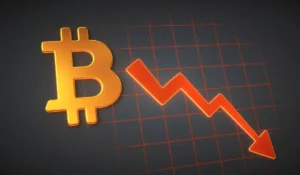
Bitcoin’s recent price trajectory, which saw the digital asset trading near $77,302 early Tuesday after a brief recovery above the $77,600 threshold, has coincided with a period of intense political scrutiny as the United States navigates its midterm election cycle. While market participants often correlate price volatility with shifts in the political landscape, Ryan Kirkley, the co-founder and CEO of Global Settlement Network (GSN), argues that the long-term valuation of cryptocurrencies is dictated by far more entrenched economic forces. In a comprehensive note released on Tuesday, Kirkley suggested that while political headlines provide temporary momentum or friction, the underlying health of the global liquidity market, the strength of the U.S. dollar, and the cost of borrowing remain the true arbiters of Bitcoin’s market performance.
The narrative surrounding "crypto-friendly" administrations often dominates social media and retail trading sentiment. However, Kirkley posits that the broader financial environment—specifically the availability of capital and the risk appetite of institutional investors—acts as the primary engine for the digital asset class. "I think people give elections far too much credit for what happens to Bitcoin," Kirkley noted, emphasizing that the asset functions as a high-beta play on global liquidity. If the cost of capital remains prohibitively high due to central bank policies, or if the U.S. dollar continues to exert dominance on the global stage, even a favorable regulatory shift resulting from an election may fail to spark a sustained bull market.
The Macroeconomic Engine: Liquidity and Borrowing Costs
To understand why macroeconomic factors outweigh political developments, one must look at the correlation between Bitcoin and the M2 money supply. Historically, Bitcoin has shown a high degree of sensitivity to global liquidity cycles. When central banks, led by the Federal Reserve, engage in quantitative easing or lower interest rates, the influx of capital into the financial system seeks out high-growth, risk-on assets. Conversely, the "higher-for-longer" interest rate environment seen throughout 2023 and early 2024 has created a headwind for digital assets.
Borrowing costs are a critical component of this equation. When it becomes more expensive for hedge funds, family offices, and institutional desks to leverage their positions, the overall volume of the crypto market tends to contract. Kirkley’s analysis suggests that if the Federal Reserve maintains a hawkish stance to combat inflation, the resulting "tightness" in the credit markets will likely suppress Bitcoin’s upside potential, regardless of which political party holds the majority in Congress. Furthermore, the strength of the U.S. dollar (DXY) remains a traditional inverse indicator for Bitcoin. As the dollar strengthens, assets priced against it, including Bitcoin and gold, often face downward pressure.
A Chronology of Political Sentiment vs. Market Reality
The relationship between U.S. elections and crypto prices has been a subject of intense study since the 2020 presidential race. In the lead-up to previous elections, volatility typically spikes as traders attempt to price in the likelihood of various regulatory outcomes.
- 2020 General Election: Bitcoin saw a significant rally following the election, but analysts later attributed this more to the massive COVID-19 stimulus packages and the subsequent expansion of global liquidity than to specific policy changes.
- 2022 Midterms: The market remained largely suppressed, not because of the election results, but due to the collapse of major industry players like FTX and the aggressive rate hike cycle initiated by the Fed.
- 2024 Spot ETF Approval: This represented a watershed moment for the industry, driven not by a change in political leadership, but by the legal system (Grayscale vs. SEC) and the persistence of traditional financial giants like BlackRock.
- Current Midterm Cycle: While candidates are increasingly vocal about digital assets, the market is currently reacting more to employment data, CPI prints, and the potential for future rate cuts.
Kirkley’s stance is that this timeline proves that while politics can create "noise," the "signal" remains rooted in the plumbing of the global financial system.
Institutional Adoption: From Speculation to Utility
Beyond the price of Bitcoin, the broader crypto ecosystem is undergoing a fundamental shift from speculative trading to practical economic utility. Global Settlement Network, under Kirkley’s leadership, focuses on developing blockchain-based financial infrastructure for regulated institutions. This sector of the market is less concerned with the "pump and dump" cycles of memecoins and more focused on the tokenization of Real-World Assets (RWA) and the efficiency of cross-border settlements.
Institutional adoption is currently being driven by three main factors:
- Reduced Settlement Times: Traditional banking systems often take days to settle international transactions (T+2 or T+3). Blockchain offers near-instant settlement finality, reducing counterparty risk.
- Cost Efficiency: By removing intermediaries, banks can significantly lower the overhead associated with moving value across borders.
- Asset Tokenization: The movement of traditional financial assets, such as U.S. Treasuries, bonds, and real estate, onto blockchain infrastructure allows for fractional ownership and 24/7 market access.
Kirkley argues that these practical considerations will continue to drive demand for blockchain technology regardless of the political climate. Large-scale financial institutions are making decade-long infrastructure bets that are not easily swayed by two-year or four-year election cycles.
The Quest for Regulatory Predictability
While Kirkley downplays the immediate price impact of elections, he acknowledges that the political landscape shapes the regulatory environment, which is vital for long-term "meaningful adoption." The primary concern for institutional players is not necessarily the strictness of the rules, but their clarity and permanence.
"If you’re a bank looking to settle transactions using stablecoins or move assets on-chain, you need to know who’s regulating the activity," Kirkley stated. The current friction between the Securities and Exchange Commission (SEC) and the Commodity Futures Trading Commission (CFTC) has created a "regulation by enforcement" atmosphere that many institutions find untenable. Changes in congressional committee leadership following the midterms could influence how aggressively lawmakers challenge these agencies, but the "bigger issue" remains the lack of a cohesive legislative framework.
Kirkley anticipates that Congress will make a renewed effort to pass market structure legislation by 2027. This timeline suggests that the industry is still several years away from the "sensible line" that divides responsibilities between regulators. Key points of contention that remain unresolved include:
- The classification of digital assets as securities or commodities.
- The scope of the CFTC’s authority over spot markets.
- The oversight requirements for platforms that handle both traditional and tokenized assets.
Strategic Recommendations for Lawmakers
In his note, Kirkley offered a pragmatic path forward for legislators. Rather than attempting to pass "sweeping" bills that often stall in the Senate or face executive vetoes, he suggests focusing on "narrower legislation" that addresses the immediate needs of the industry.
Establishing clear requirements for custody—the safe storage of digital assets—is a top priority. Without clear custody rules, major custodial banks are hesitant to enter the space, limiting the amount of institutional capital that can flow into the market. Additionally, defining "settlement finality" in a legal context is essential for banks to meet their capital reserve requirements. Kirkley believes that a "workable framework" that institutions can actually implement today is worth more than a perfect, comprehensive law that remains in perpetual deliberation.
Fact-Based Analysis of Implications
The implications of Kirkley’s analysis are twofold. For the retail investor, it suggests that watching the Federal Reserve’s "dot plot" and global M2 supply may be a more accurate way to predict Bitcoin’s price than following election polls. For the institutional observer, it highlights a maturing market that is increasingly decoupled from the "Wild West" reputation of its early years.
If the industry successfully navigates the path toward the 2027 legislative goals mentioned by GSN, the integration of blockchain into the global financial fabric will likely become irreversible. The "politicization" of crypto may actually be a sign of its growing importance; however, the actual movement of trillions of dollars in global capital will always respond first to the gravity of interest rates and the availability of liquidity.
As Bitcoin continues to trade in the high $70,000 range, the market remains in a state of watchful waiting. The midterm results will undoubtedly lead to short-term volatility and a flurry of "pro-crypto" or "anti-crypto" headlines. Yet, as the dust settles, the eyes of the major players will return to the Federal Reserve’s headquarters and the balance sheets of the world’s largest central banks. In the global liquidity market, the ballot box is often secondary to the central bank’s printing press.