The global cryptocurrency landscape has been rocked by the revelation of a massive $6.4 billion theft from Binance, the world’s largest digital asset exchange, orchestrated by state-sponsored actors from the Democratic People’s Republic of Korea (DPRK). This unprecedented breach, characterized by investigators as the largest cryptocurrency heist in history, was not the result of a direct brute-force attack on the exchange’s core infrastructure but was instead initiated through a meticulously executed social engineering campaign. According to findings released by Binance and blockchain forensics firm Chainalysis, the operation utilized a "contagious interview" tactic, leveraging the inherent trust in professional recruitment processes to bypass sophisticated technical defenses.
The magnitude of the loss—$6.4 billion—marks a watershed moment in cyber warfare, signaling a significant escalation in the capabilities and ambitions of North Korean hacking units. For years, these groups have targeted the financial sector to circumvent international sanctions and generate revenue for the regime’s weapons programs. However, the Binance breach represents a culmination of years of "perfecting and evolving" methodologies, according to intelligence analysts. The attack highlights a critical vulnerability in the human element of corporate security, demonstrating that even the most robust cryptographic safeguards can be undone by a single compromised employee.
Chronology of the Attack: From Recruitment to Systemic Breach
The seeds of the Binance heist were sown in September 2025, when a senior engineer at the exchange was targeted on a legitimate professional networking platform. The attackers, posing as recruiters for a prestigious, though fictitious, technology firm, initiated contact with an enticing job opportunity. This initial phase was characterized by a high degree of patience and psychological manipulation. Over several weeks, the DPRK actors built a rapport with the employee, conducting two rounds of rigorous technical interviews that mirrored the standard hiring practices of the Silicon Valley elite.
By October, the attackers moved to the "delivery" phase of the operation. Under the guise of a final technical assessment, the employee was asked to download and complete a coding assignment. This file contained hidden malicious code designed to establish a persistent foothold on the target’s machine. Once the assignment was executed, the malware bypassed local security protocols, granting the attackers remote access to the engineer’s workstation.

From this initial point of entry, the hackers demonstrated exceptional lateral movement capabilities. They exploited the employee’s credentials to gain access to internal administrative environments. Crucially, the attackers targeted an internal artificial intelligence tool utilized by Binance for system optimization and data management. By subverting this AI tool, the DPRK actors were able to automate the identification of high-value targets within the exchange’s hot wallets and move deeper into the infrastructure without triggering immediate security alerts. The actual siphoning of funds occurred in a multi-stage process throughout late 2025 and early 2026, culminating in the massive $6.4 billion figure reported this week.
Technical Analysis: The Rise of Blockchain Dead Drops and Etherhiding
The Binance breach has shed light on a suite of sophisticated technical maneuvers dubbed "Blockchain Dead Drops" (BDDs). This tactic involves using public blockchains to host command-and-control (C2) instructions for malware, making the infrastructure nearly impossible for law enforcement to dismantle. Because blockchain records are immutable and decentralized, the attackers do not need to rely on traditional servers that can be seized or shut down by authorities.
A primary technique identified in this campaign is "Etherhiding," which first emerged in early 2025. In this scenario, North Korean actors embed C2 instructions within the metadata of blockchain transactions. For the Binance attack, the hackers implemented a redundant communication system across three different blockchains: TRON, Aptos, and the BNB Smart Chain (BSC). If an infected device was unable to retrieve instructions from the TRON network, it would automatically query the Aptos network as a backup. Both paths eventually led the malware to a final payload stored on BSC.
Furthermore, investigators discovered the use of "null receiver" addresses. This involves crafting a transaction sent to a specially generated address that is not controlled by any entity. The alphanumeric string of the address itself is actually a decoded instruction set. To a casual observer or a standard monitoring tool, these appear to be failed or junk transactions. To the infected machine, however, they provide the necessary coordinates to execute the next phase of the theft. Chainalysis reports a fivefold surge in these types of blockchain-assisted cyberattacks over the past year, driven largely by the integration of open-weight AI models that allow hackers to generate and obfuscate code at an industrial scale.
The Illicit IT Worker Ecosystem: A $600 Million Revenue Stream
The "contagious interview" that crippled Binance is part of a broader, highly lucrative employment fraud ecosystem managed by the DPRK. This shadow economy serves two primary purposes: direct infiltration of high-value targets and the generation of steady revenue through legitimate-looking remote work. The United Nations estimates that this network of fraudulent IT workers generates upwards of $600 million annually for the North Korean regime.

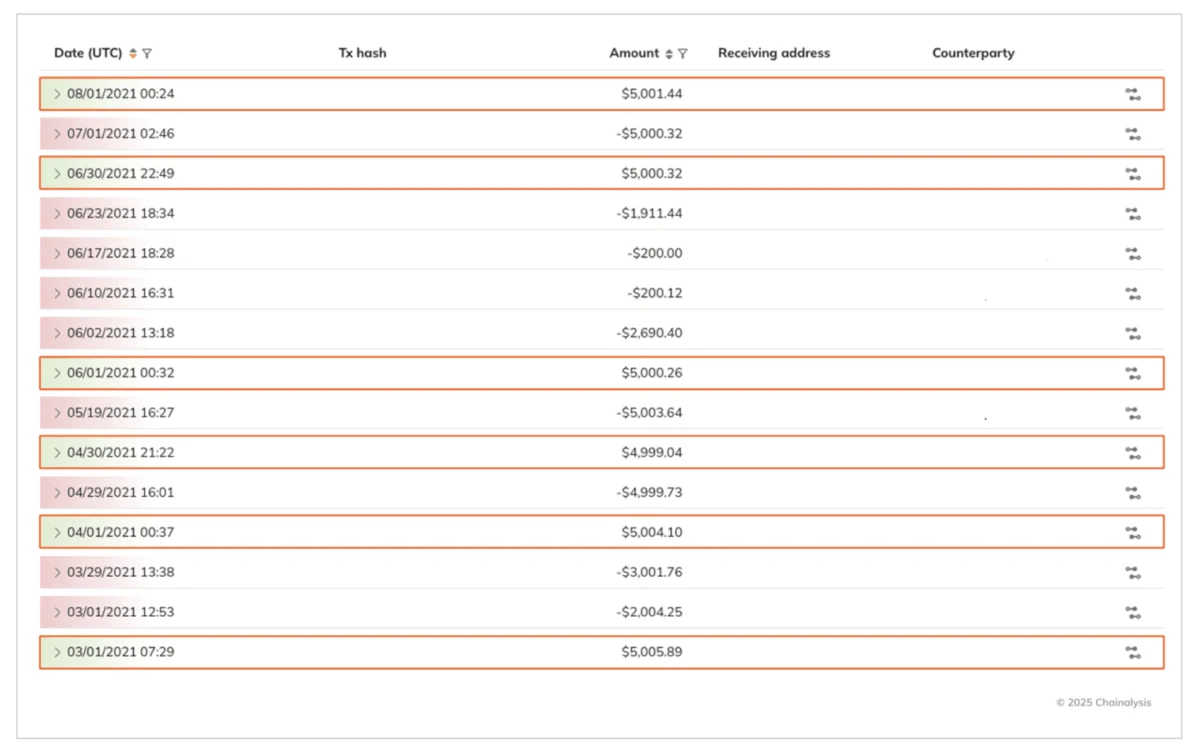
These operatives typically reside overseas, often in Russia or Southeast Asia, and use stolen identities, forged documents, and Virtual Private Networks (VPNs) to secure remote positions at global technology firms. Once hired, they perform standard IT tasks and receive salaries, often in stablecoins like USDT or USDC, which are then laundered through a complex network of intermediaries. In many cases, these workers are not just looking for a paycheck; they act as "sleeper cells," waiting for the opportune moment to introduce malware into their employer’s codebase or provide access to internal systems for their counterparts in hacking units like the Lazarus Group.
In the 18 months leading up to the Binance heist, Chainalysis tracked over $14.3 million in losses attributed to similar schemes targeting smaller protocols, Decentralized Autonomous Organizations (DAOs), and individual private wallets. Analysts suggest that these smaller attacks served as "live fire" training exercises, allowing the DPRK to refine their social engineering scripts and technical payloads before attempting a target as large and well-defended as Binance.
Official Responses and Global Implications
In a statement released Tuesday, Binance acknowledged the severity of the breach and outlined its ongoing cooperation with international law enforcement and cybersecurity firms. "We are working around the clock to trace the stolen assets and have already implemented heightened security protocols to prevent a recurrence of this specific attack vector," the exchange stated. Binance also emphasized that it is working to support the affected employee, who was a victim of an "extraordinarily sophisticated psychological operation."
The U.S. Treasury Department and the Office of Foreign Assets Control (OFAC) have responded by fast-tracking sanctions against a new list of crypto addresses and individuals linked to the Russian-DPRK laundering network. However, the decentralized nature of the assets and the use of "mixers" and cross-chain bridges make the recovery of the full $6.4 billion unlikely.
The broader implications for the fintech and cryptocurrency industries are profound. The Binance case proves that traditional perimeter-based security is insufficient against state-sponsored actors who are willing to invest months in a single social engineering target. Security experts are now calling for "Zero Trust" architectures to be extended to the recruitment and onboarding process. This includes the mandatory use of hardware security keys, the elimination of "coding assignments" that require local execution of unvetted files, and the implementation of multi-party authorization for any access to sensitive internal AI tools or financial infrastructure.

Conclusion: The Evolution of the Digital Battlefield
The $6.4 billion Binance heist will likely be studied for years as the definitive example of modern cyber-financial warfare. It demonstrates that the DPRK has successfully bridged the gap between traditional espionage and high-tech financial crime. By combining the "human touch" of social engineering with the resilience of blockchain-based command infrastructure, they have created a playbook that is difficult to detect and even harder to stop.
As the investigation continues, the industry must grapple with the reality that the "biggest heist in history" was not achieved through a flaw in the code of the blockchain, but through a flaw in the human process of hiring. The battle for the security of the digital economy has moved beyond the firewall and into the inbox of every employee with privileged access. The resilience of the global financial system now depends not only on the strength of its encryption but on the vigilance of its workforce against the "contagious" allure of a fake opportunity. Chainalysis and its partners remain committed to tracking the movement of the stolen billions, but the event serves as a stark reminder that in the age of AI and decentralized finance, the stakes of cybersecurity have never been higher.