In a coordinated strike against the foundational infrastructure of the digital underworld, the U.S. Attorney’s Office for the Eastern District of Virginia and the FBI Washington Field Office announced on October 27, 2026, the court-authorized seizure of virtualine.net. This domain served as the primary gateway for Virtualine, a notorious "bulletproof hosting" (BPH) provider that for years functioned as a safe harbor for a staggering array of international cybercriminal activities. The operation, which represents a significant blow to the "Cybercrime-as-a-Service" (CaaS) ecosystem, was the culmination of an intensive multi-jurisdictional investigation involving Germany’s Polizei Hessen, the Netherlands’ Politie Midden-Nederland, and the United Kingdom’s National Crime Agency (NCA).
The takedown of Virtualine is notable not only for the breadth of the law enforcement coalition involved but also for the critical support provided by the private sector. Intelligence support was bolstered by OverRIPE, an elite coalition of independent security researchers and industry professionals dedicated to identifying and neutralizing malicious hosting threats. Furthermore, the blockchain analysis firm Chainalysis provided pivotal on-chain intelligence, helping investigators map the financial flows that sustained Virtualine’s global operations. By targeting the hosting layer, authorities have effectively pulled the plug on thousands of illicit operations that relied on Virtualine’s refusal to comply with legal standards.
The Mechanics of Bulletproof Hosting
To understand the significance of the Virtualine seizure, it is necessary to define the role of bulletproof hosting in the modern threat landscape. Unlike legitimate web hosting companies—such as Amazon Web Services, Google Cloud, or GoDaddy—which actively monitor for terms-of-service violations and respond promptly to Digital Millennium Copyright Act (DMCA) notices or law enforcement subpoenas, BPH providers operate on a business model of deliberate non-compliance.
BPH providers typically host their servers in jurisdictions with lax cyber-regulations or high levels of corruption, allowing them to ignore international abuse complaints. They provide a "bulletproof" shield for their clients, ensuring that malicious content remains online even when flagged by security researchers or government agencies. This persistence is vital for the survival of ransomware command-and-control (C2) servers, phishing landing pages, and marketplaces selling stolen credit card data. Without BPH providers, the lifespan of a cyberattack would be measured in hours; with them, criminal infrastructure can remain operational for months or even years.
The Rise and Branding of Virtualine
Virtualine did not operate in the shadows; rather, it aggressively marketed its services to the criminal elite. Operating under various aliases, including Secury, Massgod, Spamhouse, Lanedo, and Omegatech, the provider established a formidable presence on high-tier Russian-language and international cybercrime forums such as Exploit.in and HackForums.
The provider’s marketing strategy was characterized by an audacious disregard for the law. In a post dated September 2024 on Exploit.in, a representative for Virtualine explicitly invited illicit business, stating that the platform could be used for "all illegal/black hat activities," specifically naming phishing, carding, email spam, and port scanning as acceptable uses. The only exceptions claimed at the time were terrorism and child exploitation—claims that prosecutors now assert were deceptive.
By June 2025, Virtualine’s rhetoric had become even more brazen. In a post on HackForums, the provider boasted that "Virtualine ignored more abuse than your last three therapists," a tagline that resonated with cybercriminals looking for a host that would never yield to legal pressure. This branding positioned Virtualine as a premier choice for sophisticated threat actors who required a high degree of operational security and infrastructure stability.
Evasion Tactics and the "Additional Protection Plan"
As international law enforcement increased its focus on hosting providers, Virtualine evolved its tactics. In March 2026, just months before its eventual seizure, the provider introduced what it called an "additional protection plan." This service was designed specifically to thwart law enforcement interventions.
Under this plan, Virtualine promised that if it received a legitimate law enforcement request or subpoena regarding a specific server, it would not comply. Instead, it would preemptively migrate the customer’s entire criminal infrastructure to a shell company with no documented affiliation to Virtualine. Once the data was moved and the original link severed, the server would be reactivated under a new identity, effectively resetting the clock for investigators and making the attribution of criminal activity nearly impossible. This proactive obstruction of justice became a central component of the U.S. government’s case against the domain.
A Hub for Exploitation and Illicit Content
While Virtualine publicly claimed to prohibit child sexual abuse material (CSAM), the investigation revealed a much darker reality. Federal prosecutors have accused the provider of knowingly hosting a criminal forum that served as a clearinghouse for sexually explicit images and videos of both minors and adults.
Furthermore, Virtualine allegedly facilitated "hack-for-hire" services. These services were used by individuals to illicitly gain access to private accounts—ranging from social media to cloud storage—to steal intimate content from victims for the purposes of extortion or public shaming. The hosting of such content underscores the profound human cost associated with BPH providers, which enable not only financial crimes but also deep personal victimization and exploitation.

The Cryptocurrency Connection and Financial Laundering
A key factor in Virtualine’s success was its integration with the cryptocurrency ecosystem. To maintain the anonymity of its clientele, Virtualine bypassed traditional payment processors and banking systems entirely. Instead, the provider accepted direct Bitcoin payments through unhosted (self-custodied) wallets.
By using unhosted wallets, Virtualine allowed its customers to transfer funds without undergoing the Know Your Customer (KYC) and Anti-Money Laundering (AML) checks required by regulated exchanges. This financial opacity was a primary selling point, as it prevented law enforcement from easily tracing the source of the hosting fees. Following the receipt of these payments, Virtualine engaged in sophisticated laundering techniques to obscure the origin of the funds, further insulating the operation from financial scrutiny.
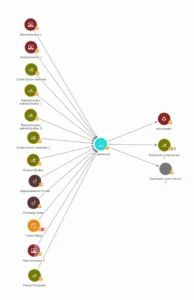
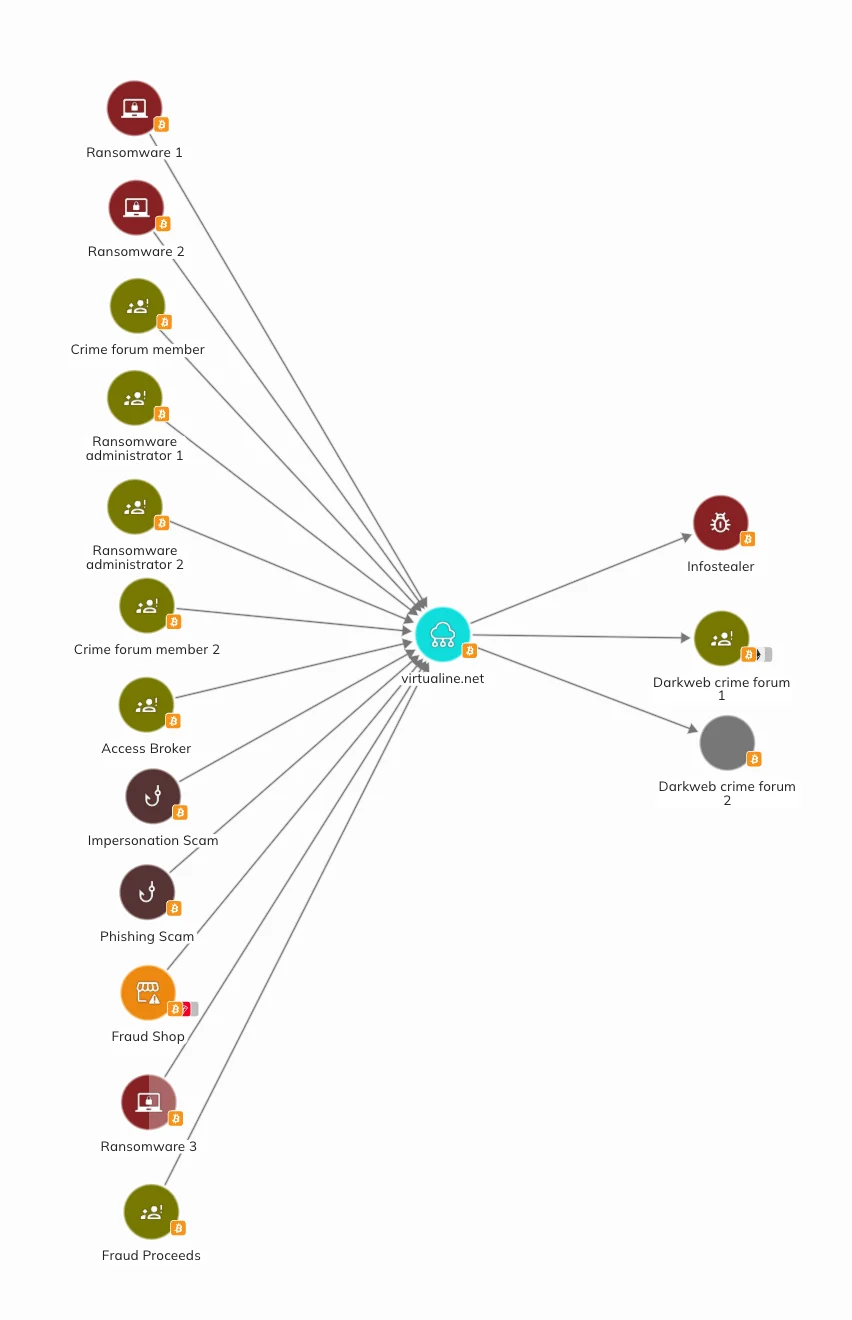
Analysis provided by Chainalysis Reactor revealed a complex web of transactions. Virtualine’s on-chain footprint showed direct exposure to a "who’s who" of the cybercrime world. Its wallets frequently interacted with:
- Ransomware Operators: Payments from victims being funneled toward infrastructure costs.
- Infostealer Networks: Data exfiltration points for malware that harvests login credentials.
- Carding Shops: Marketplaces where stolen credit card information is bought and sold.
- Russian Cybercrime Forums: The primary social and commercial hubs for the digital underground.
This on-chain data provided a "smoking gun" for investigators, proving that Virtualine was not merely a passive host but a central node in the global criminal economy.
Chronology of the Takedown
The operation against Virtualine was the result of a multi-year effort that followed a clear chronological progression:
- September 2024: Virtualine begins aggressive recruitment on Exploit.in, openly soliciting "black hat" business.
- June 2025: The provider reaches a peak in popularity on HackForums, utilizing provocative marketing to attract high-volume cybercriminals.
- Early 2026: A coalition of international law enforcement agencies, led by the FBI and the U.S. Attorney’s Office for the Eastern District of Virginia, begins synthesizing intelligence from private sector partners like OverRIPE.
- March 2026: Virtualine launches its "additional protection plan," signaling an increased effort to evade legal detection. This move inadvertently provides authorities with evidence of criminal intent to obstruct justice.
- Mid-2026: Chainalysis identifies and labels Virtualine’s cryptocurrency addresses, allowing exchanges to flag related transactions and providing investigators with a map of the provider’s customer base.
- October 27, 2026: Simultaneous actions are taken across multiple jurisdictions. The virtualine.net domain is seized, and the underlying infrastructure is disrupted, effectively deactivating thousands of criminal websites and C2 servers.
Official Responses and Statements
The seizure has been hailed as a major victory for international cooperation. While the specific names of individual defendants remain under seal in some jurisdictions, the message from the participating agencies is clear.
"The seizure of Virtualine demonstrates that no matter how many layers of ‘bulletproof’ protection a criminal service claims to offer, they are not beyond the reach of the law," said a spokesperson for the FBI’s Washington Field Office. "By targeting the hosting providers that enable ransomware and fraud, we are striking at the heart of the cybercrime business model."
The UK’s National Crime Agency emphasized the importance of the public-private partnership, noting that the technical insights provided by groups like OverRIPE were instrumental in navigating the complex server migrations Virtualine used to hide its tracks. Similarly, Dutch and German authorities highlighted that this operation serves as a warning to other BPH providers who believe that operating across borders provides them with immunity.
Broader Impact and Implications for Compliance
The disruption of Virtualine is expected to have a significant "ripple effect" across the cybercrime landscape. When a major BPH provider is taken down, its customers—ranging from lone-wolf scammers to organized ransomware gangs—suddenly find their infrastructure offline. This causes immediate operational delays, loss of data, and increased costs as they scramble to find new hosting solutions.
For cryptocurrency exchanges and financial compliance teams, the Virtualine case serves as a vital case study. The identification of BPH payment addresses provides an early warning system. If a user’s wallet interacts with a known BPH address, it is a high-probability indicator of involvement in broader criminal activity, such as ransomware or fraud.
Furthermore, the seizure reinforces the necessity of jurisdictional cooperation. As cybercriminals continue to exploit the borders between nations, the "Virtualine model" of international law enforcement collaboration is likely to become the standard for future operations. The message to the digital underworld is unequivocal: the infrastructure of crime is no longer a safe haven.
As the investigation continues, authorities are expected to analyze the seized server data to identify the thousands of individual criminals who utilized Virtualine’s services. While the domain is gone, the legal ramifications for its former clients are likely just beginning.