The cryptocurrency market is abuzz with anticipation as major financial institutions, including BlackRock and Fidelity, have taken significant steps towards launching spot Ether Exchange-Traded Funds (ETFs) in the United States. This development signals a potential paradigm shift in how institutional investors can access and invest in the second-largest cryptocurrency by market capitalization, potentially unlocking new avenues for growth and adoption for Ethereum. The Securities and Exchange Commission (SEC) is currently reviewing these applications, with a decision expected in the coming months. This regulatory scrutiny, coupled with escalating institutional interest, has fueled a wave of optimism within the digital asset community, leading to ambitious price predictions for Ether (ETH).
Institutional Appetites for Ether ETFs Intensify
The landscape of cryptocurrency investment has been rapidly evolving, with a growing appetite from traditional financial players for regulated digital asset products. Following the landmark approval of spot Bitcoin ETFs earlier this year, asset management giants like BlackRock and Fidelity have now turned their attention to Ethereum. These applications represent a concerted effort to provide investors with a regulated and accessible way to gain exposure to Ether, without the complexities of direct digital asset ownership.
BlackRock, the world’s largest asset manager, filed for a spot Ether ETF, the iShares Ethereum Trust, in September 2023. This move followed their successful application for a spot Bitcoin ETF, which garnered significant attention and ultimately received SEC approval. Fidelity, another titan in the financial services industry, has also submitted its own filing for a spot Ether ETF, further underscoring the growing institutional conviction in Ethereum’s potential.
The SEC’s review process for these ETFs is multifaceted, involving a careful examination of market surveillance, investor protection, and the overall regulatory framework surrounding digital assets. The regulator’s decision on these spot Ether ETF applications is widely anticipated to have a profound impact on the cryptocurrency market, potentially mirroring the positive price action observed after the Bitcoin ETF approvals.
Ambitious Price Targets Emerge Amidst ETF Hype
In light of this intensified institutional interest and the prospect of regulated Ether investment vehicles, analysts and industry leaders are projecting substantial price appreciation for ETH. Tom Lee, Chief Executive of Bitmine, has emerged as a prominent voice, forecasting a significant surge for Ether. In a recent broadcast, Lee articulated a bullish outlook, predicting that ETH could potentially reach $6,000 by the end of the current year. This projection has injected renewed optimism into the market, particularly for strategic investors who have been closely monitoring Ethereum’s trajectory.

Lee’s conviction stems from a deep understanding of Ethereum’s fundamentals and its historical performance. He views the current market dynamics, particularly the institutional pursuit of Ether ETFs, as a powerful catalyst for future price growth. His company, Bitmine, has reportedly integrated Ethereum acquisition into its long-term growth strategy, reflecting a strategic commitment to the asset class. This proactive approach suggests that Lee’s predictions are not merely speculative but are rooted in his firm’s operational experience and market analysis.
"The recent wave of spot Ether ETF applications from major players like BlackRock and Fidelity is a game-changer," Lee stated in the broadcast. "This signifies a maturation of the crypto market and a clear signal that institutional capital is increasingly viewing Ether as a legitimate and investable asset class. Our internal models and historical analysis of crypto asset cycles suggest a strong correlation between institutional adoption and significant price appreciation. When you combine this with Ethereum’s inherent technological advancements and growing utility, a target of $6,000 by year-end, while ambitious, is certainly within the realm of possibility, especially if Bitcoin continues its upward momentum."
Underpinning the Bullish Outlook: Network Utility and Macroeconomic Factors
Tom Lee’s projection of $6,000 for Ether is not solely predicated on the ETF narrative. He emphasizes that his prediction is grounded in a comprehensive analysis of several key factors, including Ethereum’s intrinsic value, its network utility, and prevailing macroeconomic conditions. Lee argues that investors often overlook the practical interplay of these elements, leading to underestimations of Ether’s potential.
Historically, Ethereum’s price has demonstrated a strong correlation with technological advancements and broader market cycles. The 2021 bull run, for instance, was significantly fueled by the explosion of Non-Fungible Tokens (NFTs) and the burgeoning Decentralized Finance (DeFi) ecosystem, both of which are built on the Ethereum blockchain. As the network continues to evolve with upgrades like the transition to Proof-of-Stake (the Merge) and ongoing developments in scalability solutions, its utility and attractiveness to developers and users alike are expected to grow.
Furthermore, Lee highlights the critical role of macroeconomic drivers in shaping Ether’s trajectory. Factors such as regulatory clarity, the pace of institutional adoption, and shifts in global interest rate policies are all crucial variables that can influence investor sentiment and capital flows into digital assets. A more predictable regulatory environment, coupled with a favorable macroeconomic backdrop characterized by stable interest rates or even potential rate cuts, could further bolster demand for cryptocurrencies like Ether.
The Bitcoin Correlation and Ether’s Ascendancy
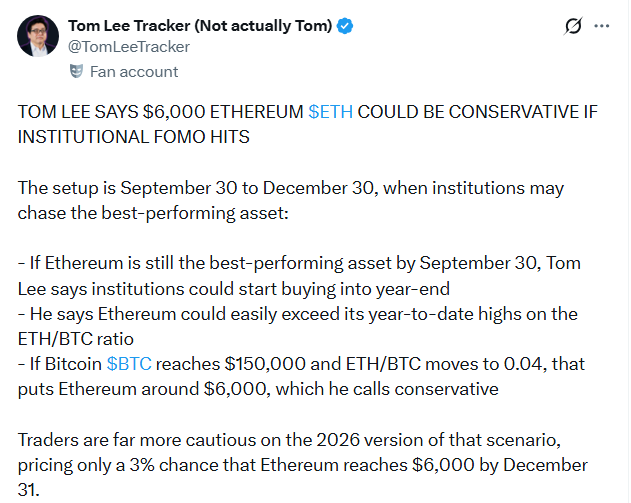
A significant pillar of Tom Lee’s $6,000 ETH price target is its correlation with Bitcoin’s performance. He posits that a surge in Bitcoin’s price to $150,000 would create a strong tailwind for Ethereum. This relationship is not merely coincidental; as the flagship cryptocurrency, Bitcoin often leads the market, and its upward movements tend to create a positive ripple effect across the broader altcoin market, with Ethereum often being the primary beneficiary.
Lee believes that Ether possesses the inherent capability to outperform Bitcoin (strengthen against BTC) as adoption levels rise. This outperformance is anticipated to be driven by several key developments:
- Tokenization: The increasing use of blockchain technology for tokenizing real-world assets, such as real estate, stocks, and bonds, is expected to predominantly leverage Ethereum’s infrastructure due to its established smart contract capabilities and developer ecosystem.
- Institutional Utility: Beyond investment vehicles, institutions are exploring the practical applications of blockchain technology for various use cases, including supply chain management, digital identity, and cross-border payments. Ethereum’s robust platform is well-positioned to support these evolving institutional needs.
- On-Chain Activity: The growth of decentralized applications (dApps), DeFi protocols, and NFTs on the Ethereum network directly translates to increased network usage and demand for ETH for transaction fees (gas). This organic demand is a fundamental driver of value.
"If Bitcoin reaches $150,000, it implies a significant influx of capital into the crypto space," Lee explained. "In such a scenario, Ether’s market strength is expected to increase substantially. The current market capitalization ratio between Bitcoin and Ethereum, combined with Ethereum’s expanding use cases and the potential for further upgrades, suggests that Ether can indeed strengthen its position relative to Bitcoin. This strengthening, coupled with the overall market momentum, makes the $6,000 target for ETH a conservative estimate given the potential for a Bitcoin surge to $150,000."
Ethereum’s Current Market Standing and Near-Term Outlook
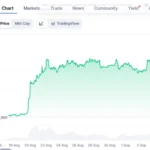
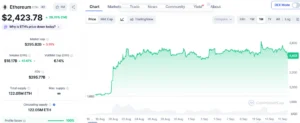
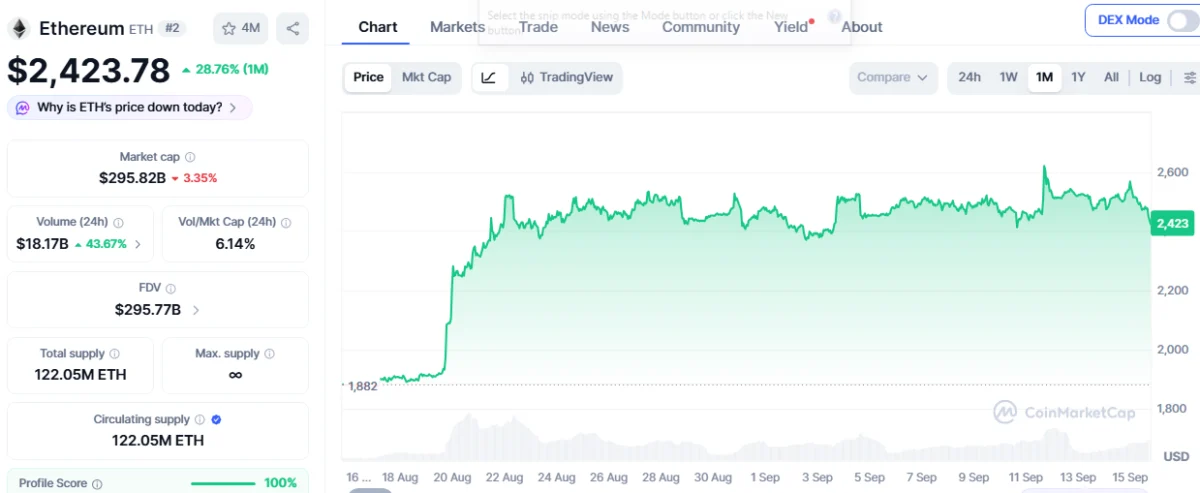
As of the latest reports, Ether is trading around the $2,400 mark, exhibiting a degree of consolidation after a recent rally that saw it touch approximately $2,600 in the previous week. This period of consolidation above the $2,400 support level is viewed by many analysts as a healthy pause, allowing the market to digest recent gains and build momentum for the next upward move.
The current trading range suggests that Ethereum’s bullish underlying structure remains intact. Technical indicators and market sentiment analysis point towards continued institutional interest, with projections indicating a potential push towards the $2,546 resistance level in the short term. Beyond this immediate target, analysts are watching the $2,600 to $2,670 range closely, as sustained movement above these levels would further validate the bullish thesis and potentially pave the way for more significant price appreciation.
The ongoing consolidation can be attributed to several factors, including profit-taking by short-term traders, market participants awaiting further clarity on regulatory decisions regarding Ether ETFs, and the natural ebb and flow of market sentiment. However, the underlying demand, fueled by institutional interest and the ongoing development of the Ethereum ecosystem, appears to be robust.

Broader Implications for the Digital Asset Ecosystem
The potential approval of spot Ether ETFs in the United States would represent a monumental step forward for the entire digital asset industry. It would solidify the narrative that cryptocurrencies, particularly those with established utility and robust ecosystems like Ethereum, are becoming increasingly integrated into the mainstream financial system.
- Increased Legitimacy and Trust: The involvement of established financial institutions like BlackRock and Fidelity lends significant credibility to the cryptocurrency market. This can help to alleviate lingering concerns among risk-averse investors and attract a broader spectrum of capital.
- Enhanced Liquidity: The introduction of ETFs typically leads to increased trading volumes and liquidity for the underlying asset. This can result in tighter bid-ask spreads and a more efficient market for Ether.
- Democratization of Access: ETFs offer a familiar and accessible investment vehicle for a wide range of investors, including retail investors and those who may not have the technical expertise or inclination to manage digital assets directly.
- Innovation and Development: The influx of institutional capital and increased market activity could spur further innovation and development within the Ethereum ecosystem, leading to the creation of new applications and services.
However, it is crucial to acknowledge the inherent volatility and risks associated with cryptocurrency investments. While the prospect of Ether ETFs is exciting, investors should remain cautious and conduct thorough due diligence before making any investment decisions. Regulatory landscapes can change, and market conditions can be unpredictable.
In conclusion, the confluence of institutional ambition, regulatory developments, and optimistic price projections paints a compelling picture for Ethereum’s future. The ongoing dialogue surrounding spot Ether ETFs and the ambitious targets set by industry experts like Tom Lee underscore the growing maturity and significance of Ethereum within the global financial arena. The coming months will be critical in determining whether these aspirations translate into tangible market movements and a new chapter of growth for the digital asset space.